The Baguette arrived in 1997, tucked under Carrie Bradshaw's arm three seasons later, and promptly refused to leave
The Baguette arrived in 1997, tucked under Carrie Bradshaw's arm three seasons later, and promptly refused to leave. One could argue — and the resale market does, loudly — that it never really did. But step past the mythology for a moment and consider the object itself: a compact shoulder bag, roughly the dimensions of a half-baguette, engineered to sit snug against the ribs. The clasp mechanism varies by season. The strap drops at a precise angle. What reads as whimsy from a distance is, up close, a study in deliberate proportion.
That tension — between Roman exuberance and atelier rigour — defines Fendi more accurately than any single accessory ever could. The house was founded in 1925 by Adele and Edoardo Fendi as a fur and leather workshop on Via del Plebiscito. Five daughters joined the business, each overseeing a division. In 1965 they hired a young Karl Lagerfeld to reimagine fur, and he stayed for fifty-four years. The double-F logo — Fun Furs, allegedly, though the house has never confirmed — appeared in 1965. By the time LVMH acquired a stake in 1999, Fendi had long since moved beyond pelts into a broader language of texture, craft, and a particular strain of irreverence that Rome, not Milan, seems to generate.
What the house does, and what it does not
Fendi operates across ready-to-wear, leather goods, shoes, and accessories. Fur remains part of the offering, now produced under stricter protocols and sold primarily in markets where demand persists. The atelier on Via Solari in Milan handles leather; the Rome headquarters oversees design and archives. Silvia Venturini Fendi, daughter of one of the original five sisters, has led accessories and menswear since the early Nineties. Kim Jones arrived in 2020 to direct womenswear and couture, a pairing that raised eyebrows — Jones's streetwear fluency felt, on paper, orthogonal to Fendi's more mannered codes. In practice, the collaboration has been less disruptive than amplifying. Jones leans into logo play, oversized silhouettes, and collaborations (Skims, Versace, Marc Jacobs), while Venturini Fendi continues to refine the house's leather vocabulary.
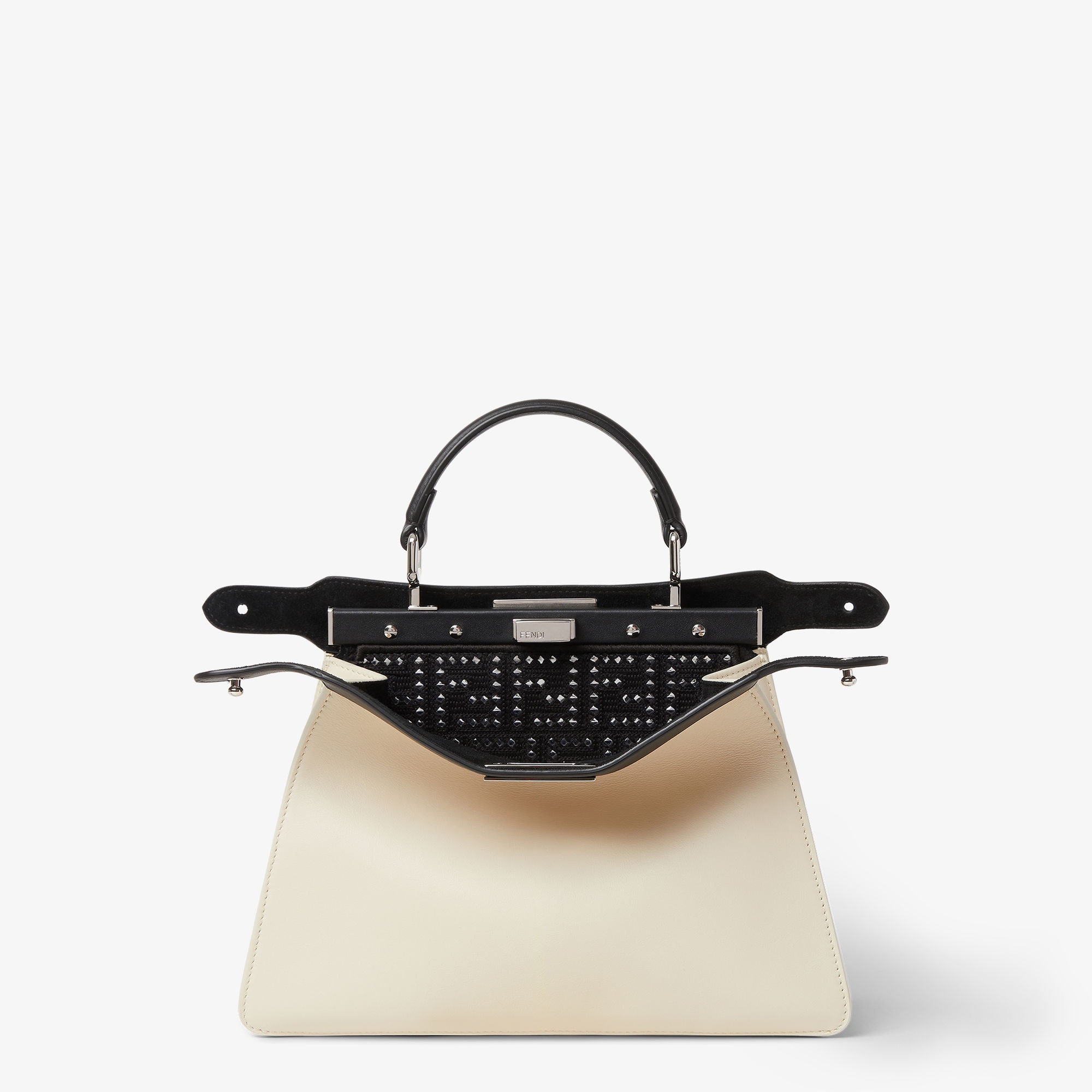
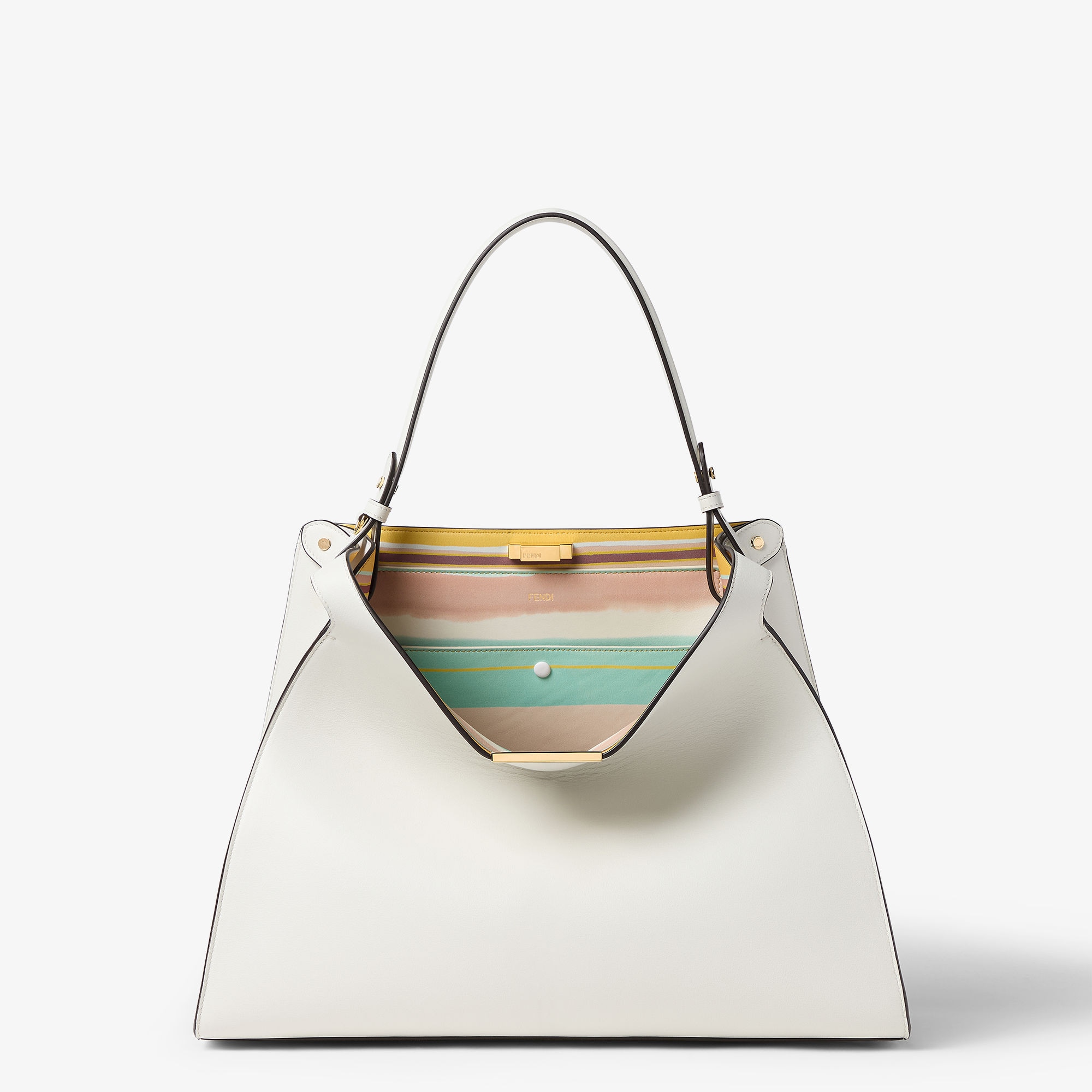
What Fendi does not do, at least not consistently, is quiet. The Peekaboo, introduced in 2008, is arguably the house's most restrained silhouette — a structured tote with an interior frame that reveals itself when opened. Even so, it comes in shearling, python, iridescent calfskin, and a rotating cast of seasonal treatments. Subtlety here is relative. If one seeks the whisper-weight neutrals of, say, The Row, Fendi will feel like a different conversation entirely.
The bags: where to begin
The Baguette remains the most recognised entry point, and the archive now spans hundreds of variations. Current retail begins around $2,800 for canvas or nylon versions, climbing past $4,500 for leather and well beyond for exotic skins or embellished editions. Proportions have shifted slightly over the years — the 2023 iterations run marginally larger than the 1997 originals — but the core gesture holds. One wears it under the arm or cross-body via an optional strap. It does not pretend to be practical. A phone, cardholder, keys, and lipstick fit; a laptop does not.
The Peekaboo, by contrast, was designed for function. The frame construction keeps contents secure; the double compartments separate work from personal items. Sizes range from mini (decorative, barely functional) to regular (a true work bag). Pricing starts near $5,000 and ascends rapidly depending on material. The lock mechanism — a twist closure that doubles as structural support — is the detail worth examining in person. Fendi's leather finishing, particularly the hand-painted edges and the way seams align at stress points, separates house-level work from licensed diffusion.
For those testing the waters, the First bag offers a quieter proposition. Introduced in 2021, it's a soft shoulder style with a single metal clasp, no logo beyond a discreet embossment. Leather options include grainy calfskin and suede; prices hover around $3,200. It lacks the Baguette's cultural baggage, which may be precisely the point.
Beyond bags: shoes, small leather, RTW
Fendi's shoe line divides into two modes: the sculptural (see: the Vertigo platform, the Flow sneaker with its exaggerated sole) and the wearable (loafers, ankle boots in smooth or grained calf). The former photographs well; the latter actually functions for daily wear. A pair of leather ankle boots in black or tan calf, minimal hardware, will run $1,100 to $1,400 and prove more versatile than the Instagram-friendly styles.
Small leather goods — cardholders, continental wallets, coin purses — start around $350 and climb past $700 depending on embellishment. The quality is consistent across the range; a $400 cardholder receives the same edge-finishing and interior lining as a $5,000 Peekaboo. For someone entering the house, a small leather piece offers a material education without the four-figure commitment.
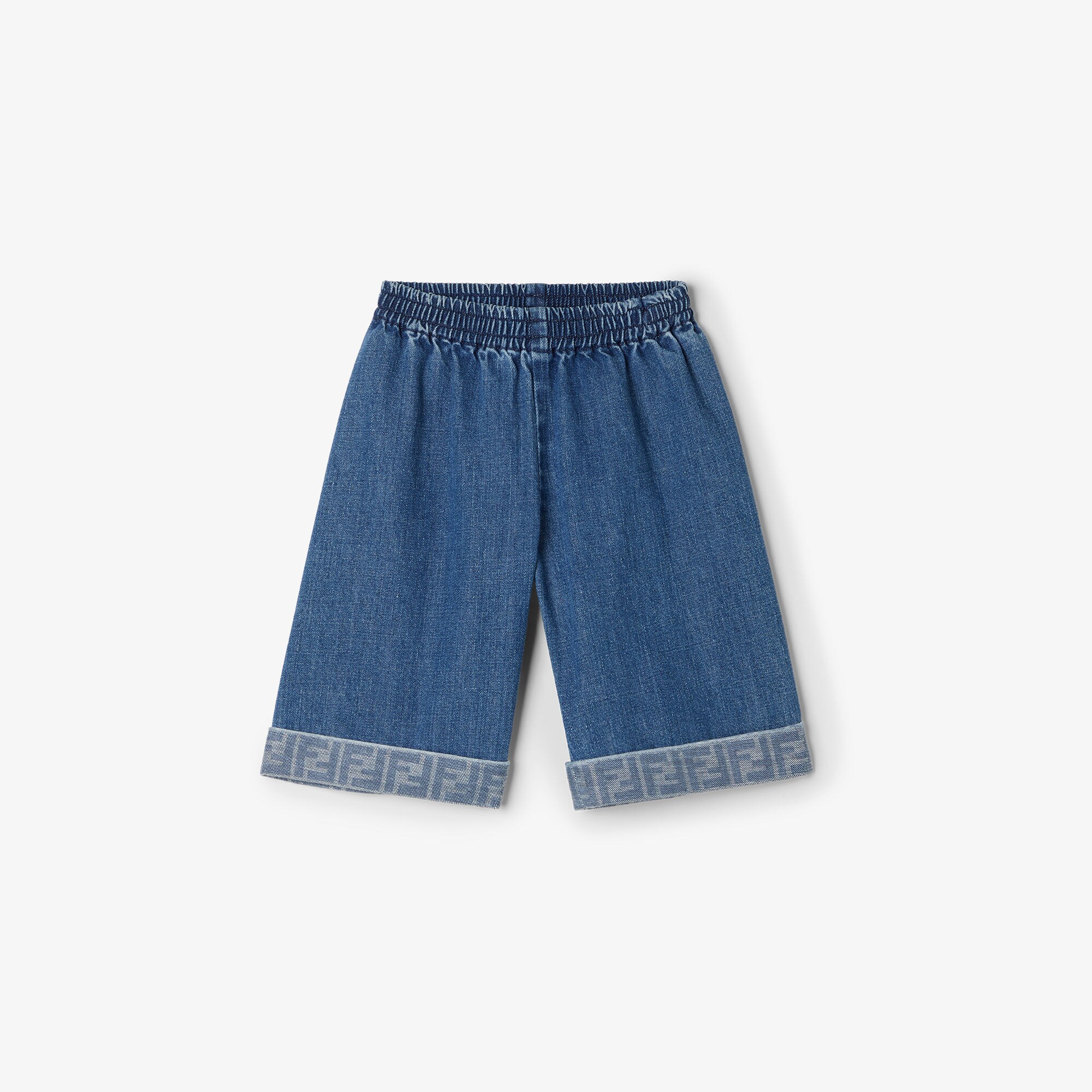
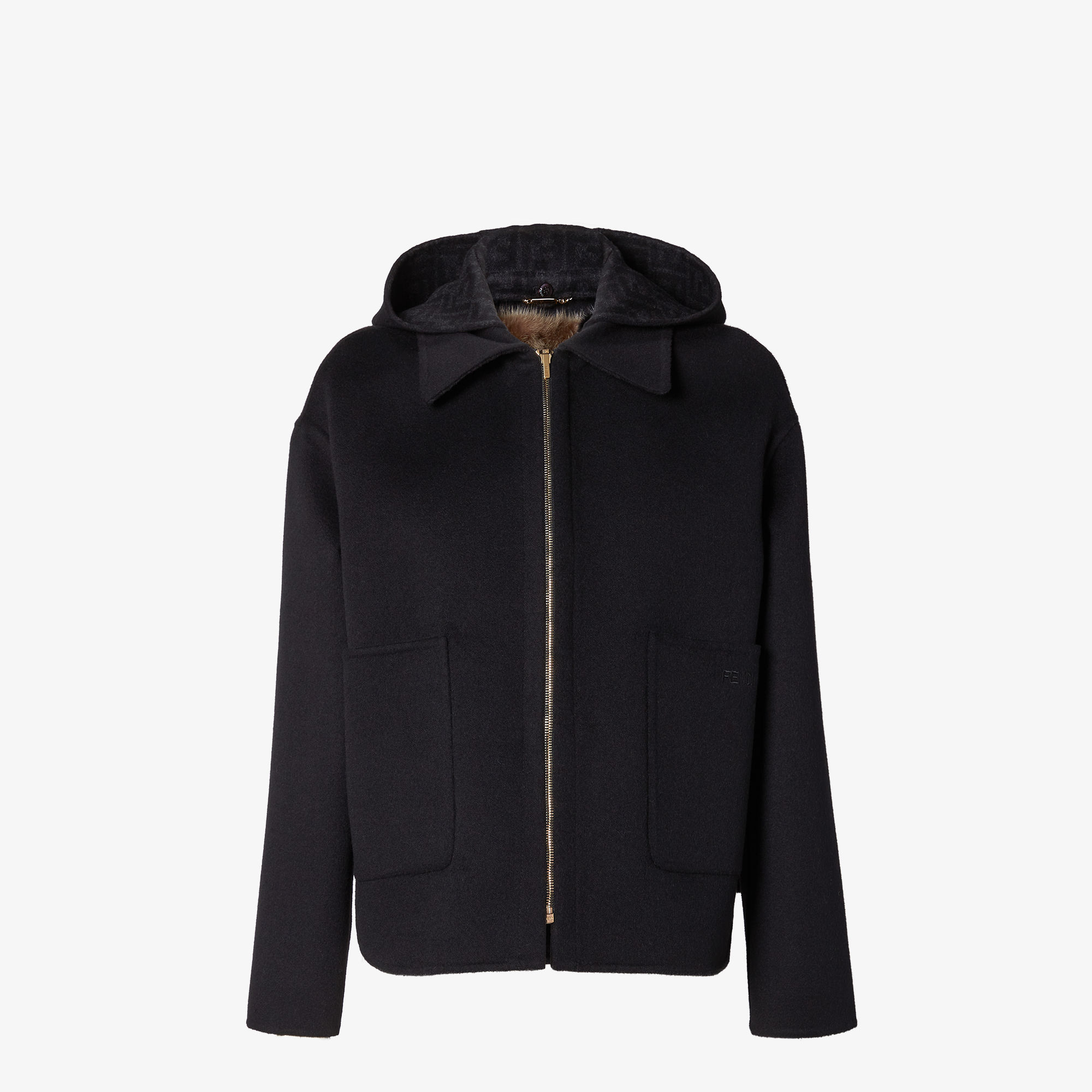
Ready-to-wear is where Fendi's identity grows more diffuse. Jones's collections oscillate between tailored suiting, logo-heavy knitwear, and collaboration-driven capsules. A cashmere sweater might land at $1,800; a leather trench easily exceeds $8,000. The question is less about quality — the facture is there — and more about whether one wants to wear a house's aesthetic across an entire silhouette, or anchor it with a single accessory.
What to know before the purchase
Fendi's resale market is robust but uneven. Baguettes hold value if the style or collaboration is distinctive; standard leather iterations depreciate like most contemporary bags. Peekaboos fare better, particularly in neutral tones and classic sizes. Exotic skins, counterintuitively, can be harder to move — the pool of buyers narrows, and ethical considerations shift faster than the market does.
Authentication remains straightforward for recent pieces. Hardware should feel substantial, never hollow. Stitching on leather bags runs at a consistent gauge; any wobble in the saddle stitch suggests a problem. The interior lining, typically a grosgrain or leather, should sit taut without puckering. Serial numbers appear on a leather tag inside; format and placement have varied over the decades, so cross-reference with the house's archive if provenance is uncertain.
Seasonal sales exist but rarely touch core styles. Outlet locations (Fendi has a presence in several European and American outlet malls) carry previous-season stock and diffusion pieces, often at thirty to fifty percent below retail. Quality on outlet goods can be inconsistent — examine stitching and hardware closely.
The house's position now
Fendi occupies an unusual spot within LVMH's portfolio. It is neither the tentpole (that's Vuitton) nor the avant-garde outlier (Loewe, arguably). It generates significant revenue — leather goods alone account for the majority — but lacks the aspirational stranglehold of Hermès or the streetwear cachet of Balenciaga. The double-F logo had a resurgence in the late 2010s, buoyed by logomania's return and strategic collaborations. Whether that momentum sustains or recedes depends partly on how Jones navigates the next few seasons, and partly on whether the market's appetite for overt branding continues.
Silvia Venturini Fendi's tenure offers continuity. She has been with the house since childhood, quite literally grew up in the atelier, and her work on accessories demonstrates a sustained interest in construction over concept. The Peekaboo's frame, the Baguette's clasp variations, the First's single-gesture closure — these are not intellectual exercises. They are problems solved in three dimensions, using leather and metal, by someone who understands what a bag must do before it can mean anything.
One afternoon in Rome, years ago, I watched a craftsman at Fendi's Via Borgognona atelier hand-stitch a Peekaboo frame. Six millimetres per stitch, advancing in a rhythm so steady it seemed autonomous. The leather was a deep ochre, the kind that patines rather than scuffs. He worked without a pattern in front of him. When I asked how long he'd been making this particular bag, he paused, counted silently, and said fifteen years. Fifteen years of the same frame, the same stitch interval, the same ochre calf arriving in sheets from the tannery. Whether one finds that dedication or monotony likely determines whether Fendi, as a house, makes sense at all.