The black velvet suit on the second floor of Bergdorf's has been there for three weeks
The black velvet suit on the second floor of Bergdorf's has been there for three weeks. I know because I've watched the same woman circle it twice, each time lifting the sleeve, checking the lining, then walking away. Last Tuesday she bought it. The transaction took four minutes. That is how Tom Ford works — not as impulse, but as inevitability.
For those approaching the house now, a decade after its founder's departure and two years into Haider Ackermann's tenure, the question is no longer why Tom Ford, but which Tom Ford. The archive is deep, the price of entry is real, and the contemporary offer sits at an odd angle to the mythology. What follows is not a manifesto but a map.
Ce qu'il faut savoir d'abord
Tom Ford the brand began in 2005, though Tom Ford the designer had already spent a decade remaking Gucci and four years at Saint Laurent. The house launched with menswear, added womenswear in 2010, and by 2022 had become a $2 billion entity before Estée Lauder absorbed it entirely. Ford himself stepped back from design in 2023. Ackermann arrived in early 2024.
This matters because you are buying into a house in transition. The Tom Ford of the aughts — liquid jersey, plunging necklines, that white halter gown Gwyneth wore to the Oscars — is not the Tom Ford of now. Ackermann's first two collections have leaned into structure, a cooler palette, and a kind of Mitteleuropean severity that sits oddly against the brand's reputation for American glamour. Whether this holds or softens remains to be seen.
Prices reflect the house's positioning in the luxury tier just below Hermès and Chanel but decidedly above contemporary labels. A Black Orchid eau de parfum runs €140 for fifty millilitres. A silk blouse starts at €890. The entry-level handbag, a small grain-leather crossbody, sits around €1,200. Ready-to-wear coats and tailoring routinely cross €3,000. Evening pieces can approach five figures.
You are paying for Italian manufacture, full-grain leathers, and a degree of hand-finishing uncommon at this scale. You are also paying for the name, which carries weight in certain rooms and means nothing in others. Know which room you're entering.
Les pièces qui tiennent
If you buy one thing, buy tailoring. Ford built his reputation on the cut of a jacket, and the house still makes a peak-lapel blazer better than most. The single-button silhouette — narrow through the ribs, nipped at the waist, just long enough to cover the hip — remains the house signature. Expect to pay €2,400 to €3,200 depending on fabric. Wool-silk blends wear better than pure wool and press cleaner after travel.
The other piece worth considering is the Whitney bag, introduced in 2018 and still in production. It is a top-handle style in box calf or crocodile-embossed leather, structured but not stiff, with a turn-lock closure that recalls Hermès without imitating it. The small version, at roughly €2,100, works as a day bag if you carry little. The medium, at €2,600, is more practical. Both hold value on resale better than most of the house's other leather goods, though nowhere near an Hermès or Bottega equivalent.
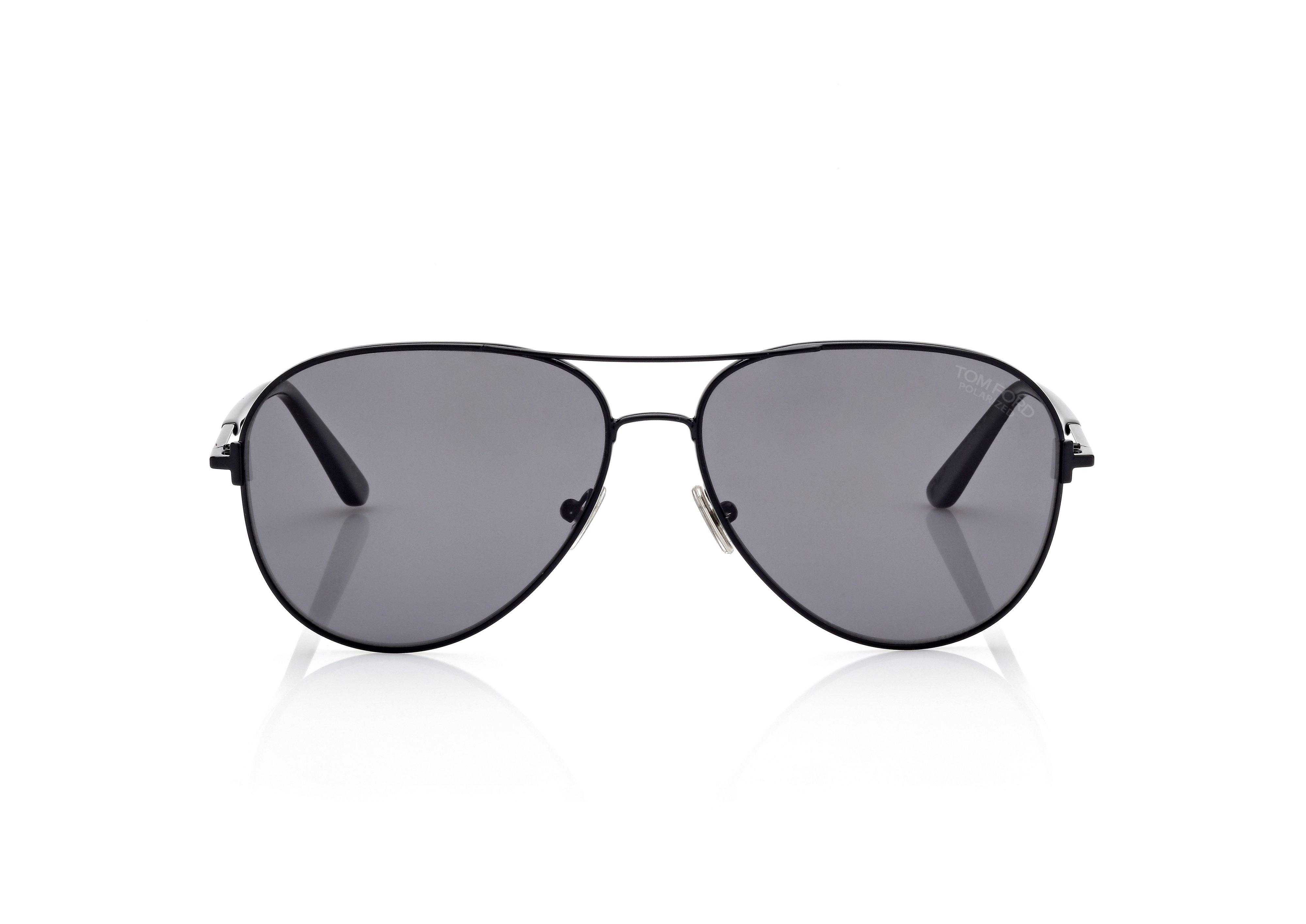
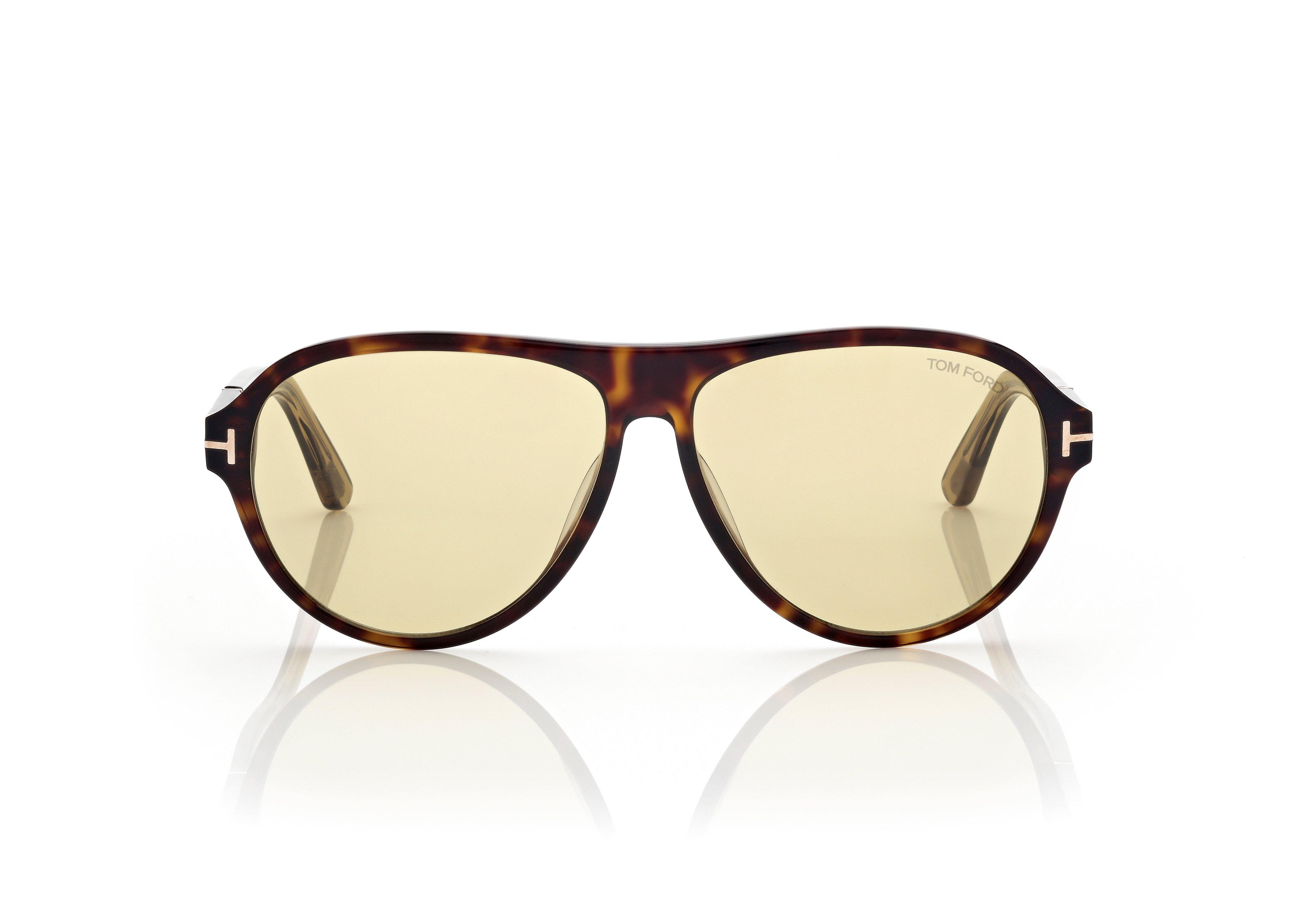
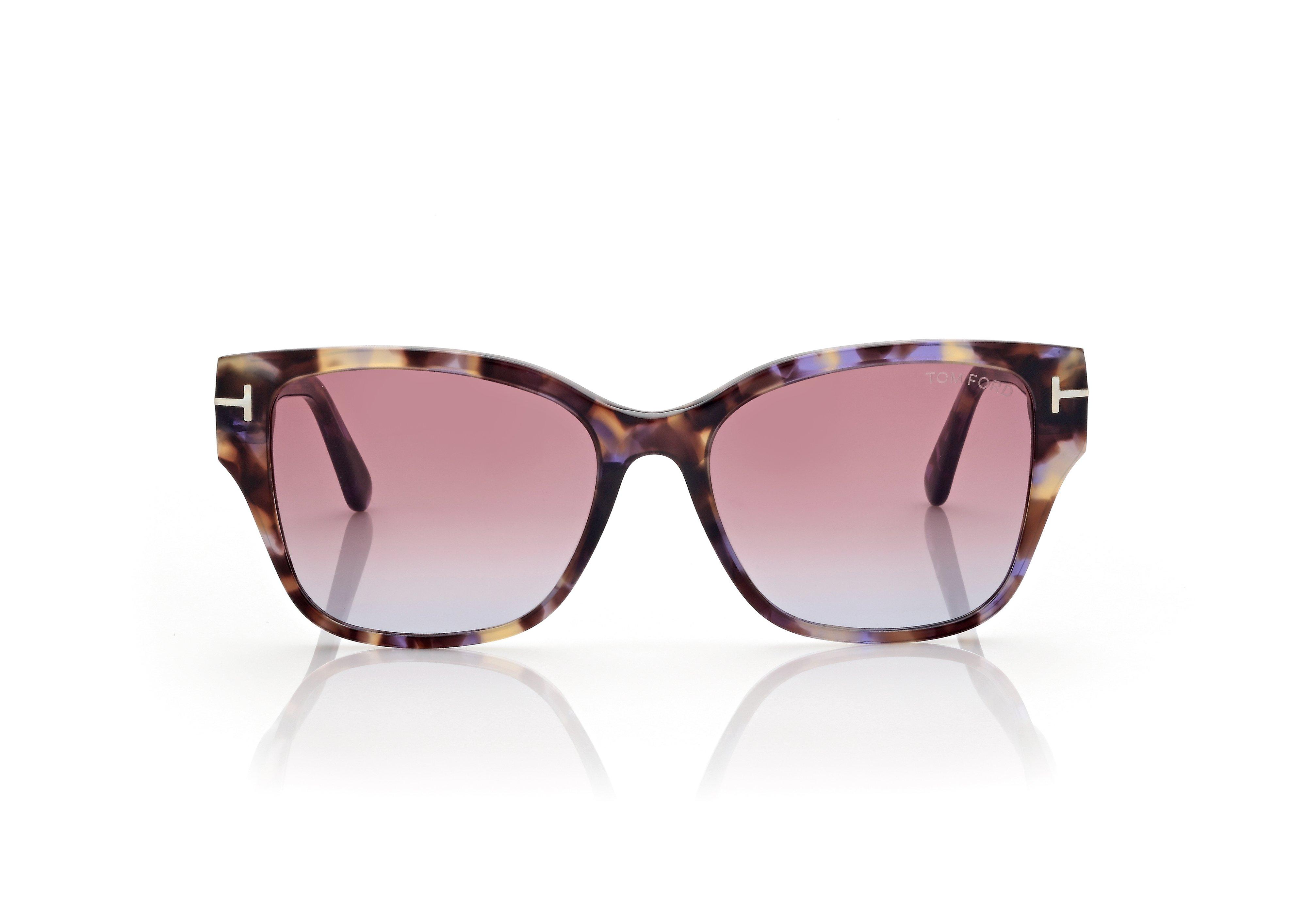
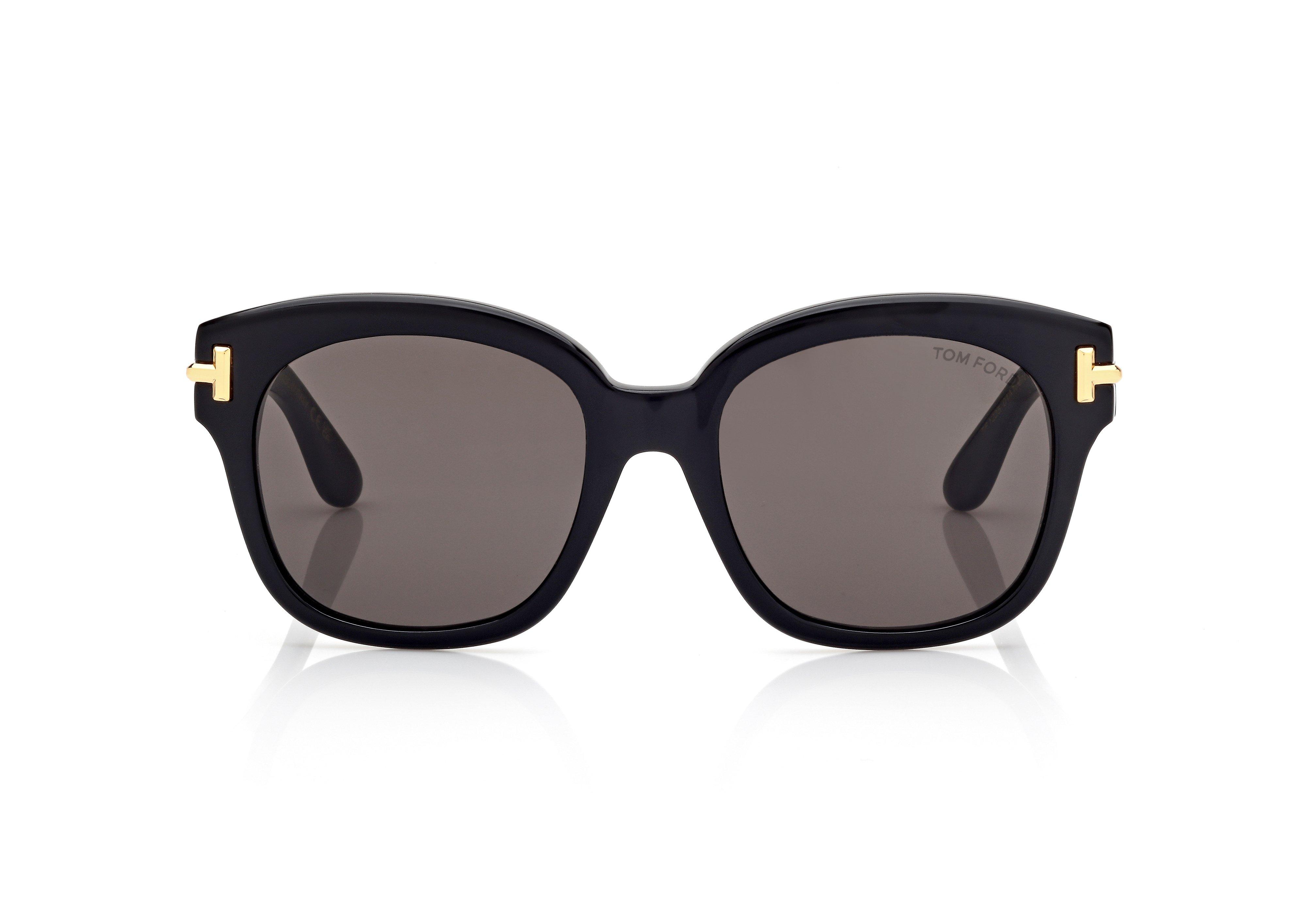
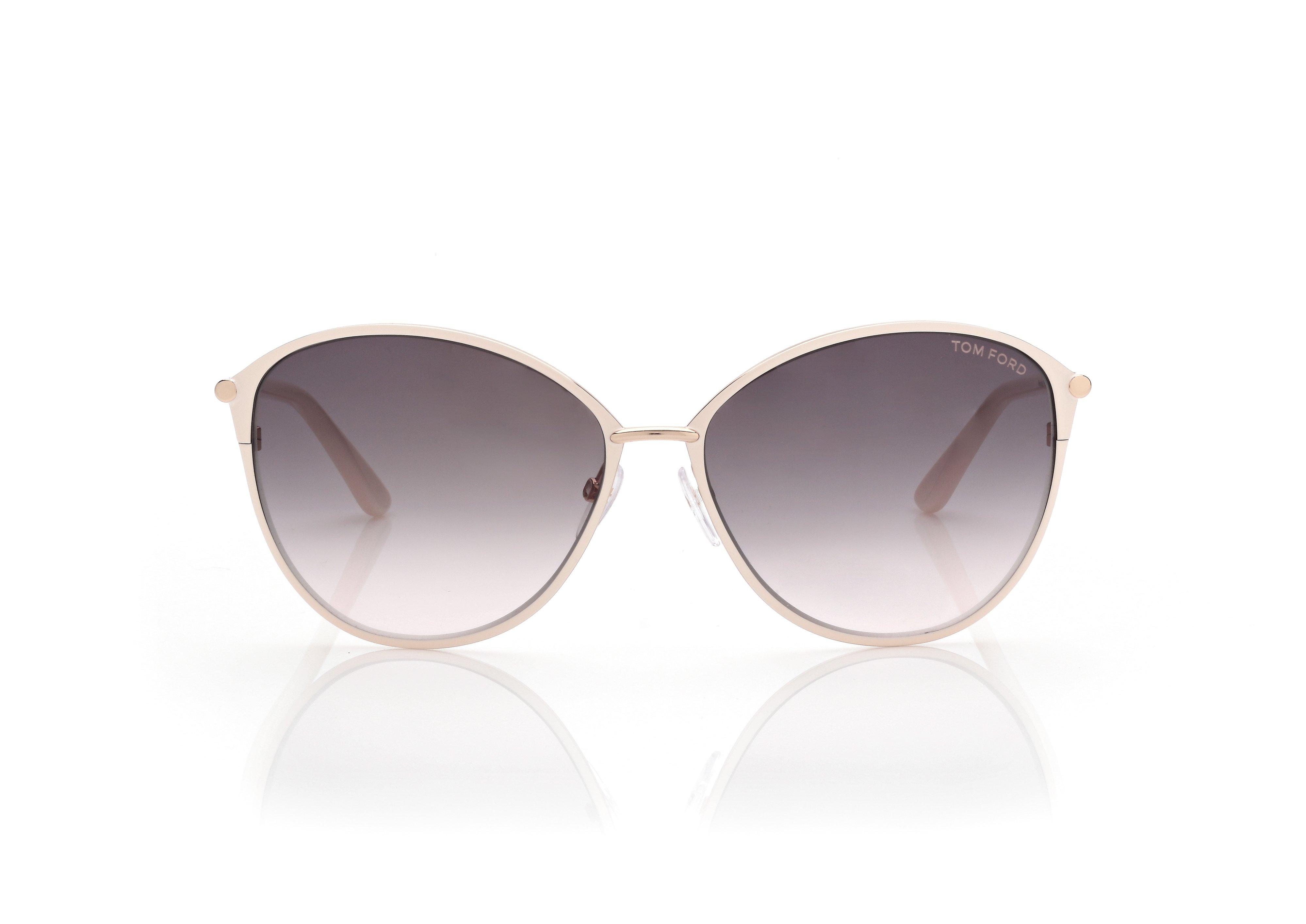
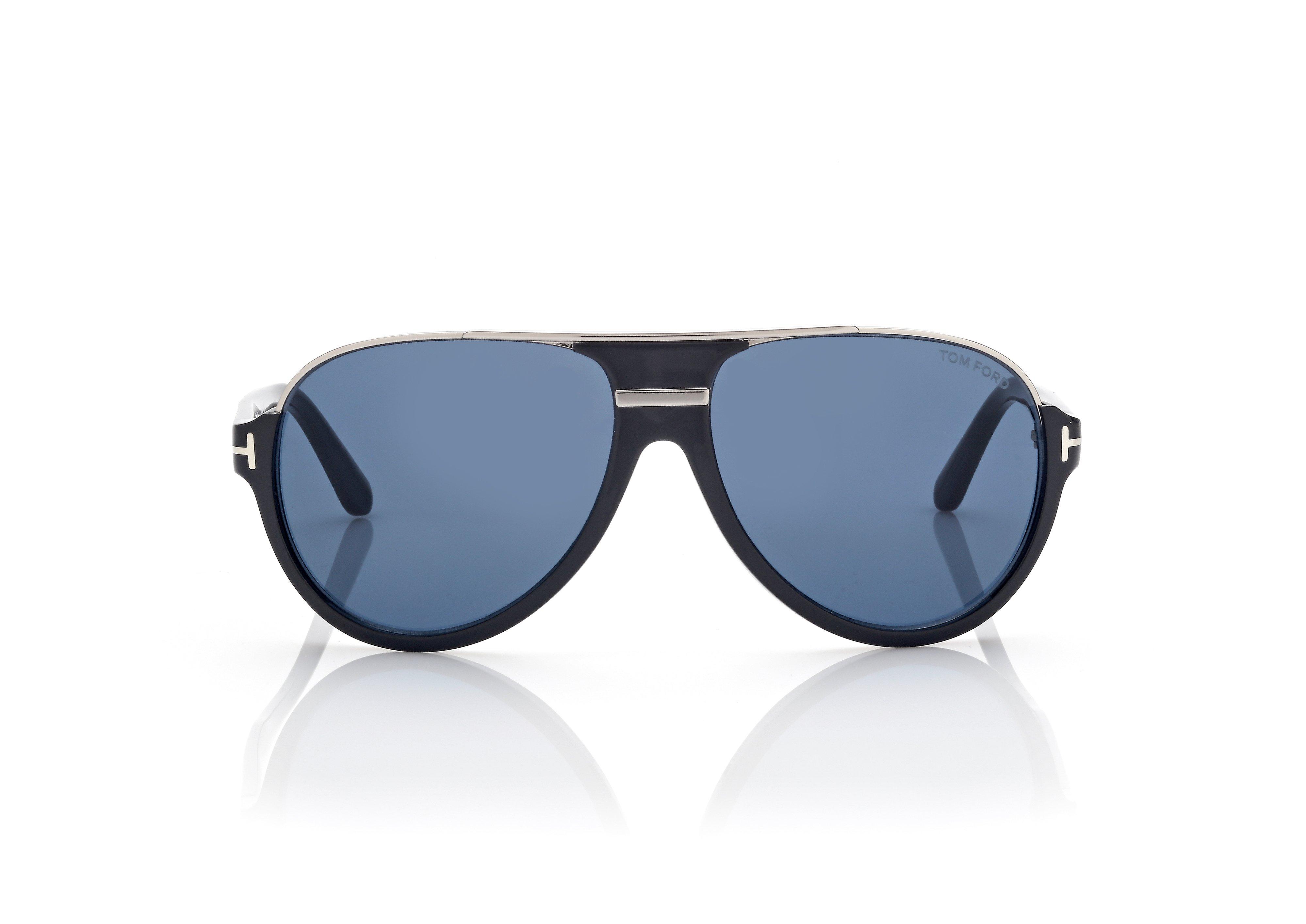
Sunglasses are the accessible entry point, and for good reason. Tom Ford eyewear, licensed to Marcolin, is well-made and holds its shape. The oversized acetate frames — particularly the Jennifer and the Anoushka styles — photograph well and last years if you don't sit on them. Expect €350 to €500. Not cheap, but defensible.
Evening wear is trickier. The liquid jersey gowns that defined the house in the 2010s were, and remain, extraordinary on the right frame. But they are unforgiving. A size too small and you cannot breathe. A size too large and the drape collapses. If you are buying archive or resale, try it on in person. These pieces do not translate through a screen.
Ackermann's evening work is still finding its register. His autumn 2024 collection included several strong coats and a series of bias-cut slip dresses in matte silk that felt more Phoebe Philo than Tom Ford, which may be the point. Whether the house's existing client base follows him there is an open question.
Ce qui ne vaut pas le prix
Avoid the logo pieces. Tom Ford has never been a house that traffics heavily in monograms, but the TF-plaque bags and belts that proliferated in the late 2010s feel dated now and resell poorly. If you want a logo, buy Chanel or Gucci. Tom Ford's strength has always been in the unbranded gesture — the cut of a lapel, the weight of a silk, the way a heel shifts your posture.
The house's denim and casual separates are competent but not compelling. A white cotton shirt at €680 is well-made, but so is one from Charvet at similar cost, and Charvet has been making shirts since 1838. Tom Ford's casual offer feels like an afterthought, which it may well be.
Fragrance is a separate calculus. Black Orchid, Tobacco Vanille, and Oud Wood are legitimately good perfumes, and the private blend line offers complexity you won't find at Sephora. But you are also paying a significant markup for the bottle and the name. If you love the scent, buy it. If you are buying it to own something from the house, spend the money on a scarf instead.
Où acheter, et comment
Tom Ford operates standalone boutiques in major cities — Paris, London, New York, Milan, Los Angeles — and maintains shop-in-shop presence at Harrods, Bergdorf, and Galeries Lafayette. The in-store experience is polished, occasionally obsequious, and geared toward clients who already know the house. If you are uncertain, go to a department store. The sales staff are less invested in the mythology and more willing to speak plainly about fit and price.
Resale is active but volatile. Vestiaire Collective and The RealReal both carry Tom Ford, and prices on tailoring and bags can drop thirty to forty per cent below retail within two years. Evening wear fluctuates wildly depending on season and size. Archive pieces from the Gucci and Saint Laurent years appear occasionally and command premiums, but authentication is essential. There are good fakes.
Sample sales happen twice a year, typically in New York and London, and offer genuine discounts — forty to sixty per cent off past-season stock. You will wait in line. You will not find your size in everything. But if you know what you want and can move quickly, it is the most efficient way to buy into the house without paying full freight.
Où en est la maison maintenant
Ackermann's second collection for autumn 2024 showed a surer hand than his debut. The tailoring was sharper, the colour palette — charcoal, rust, deep navy — felt more resolved, and the evening pieces, while still searching for a signature, had a kind of Weimar elegance that suited the moment. Whether this represents a permanent shift or a transitional phase is unclear.
What is clear is that Tom Ford the brand is no longer Tom Ford the man, and that distance creates space for reinterpretation. Ackermann is not trying to recreate the plunging necklines and liquid jersey of the 2010s, nor should he. The question is whether the house's existing clients — women who bought into a very specific vision of American glamour — will follow him into something cooler, more European, less explicitly seductive.
For a newcomer, this is not necessarily a problem. You are not burdened by nostalgia. You can assess the work on its own terms, which at present means well-cut tailoring, solid leather goods, and a fragrance line that remains one of the stronger commercial offerings in luxury perfume. The mythology is there if you want it. But the object, as always, is what you take home.
The woman at Bergdorf bought the velvet suit, and I expect she will wear it for years. Not because it is Tom Ford, but because it fits.