The bumster sat four inches below the navel
The bumster sat four inches below the navel. Not as provocation — though it provoked — but because Lee McQueen had apprenticed on Savile Row and understood that moving a waistline changed how a body moved. Lower the rise, tilt the pelvis forward, suddenly a woman's gait sharpened. The trousers first appeared in his 1993 graduate collection and reappeared, in various fabrics and cuts, for the next fifteen years. You don't see them much now. But they rewrote how we think about proportion.
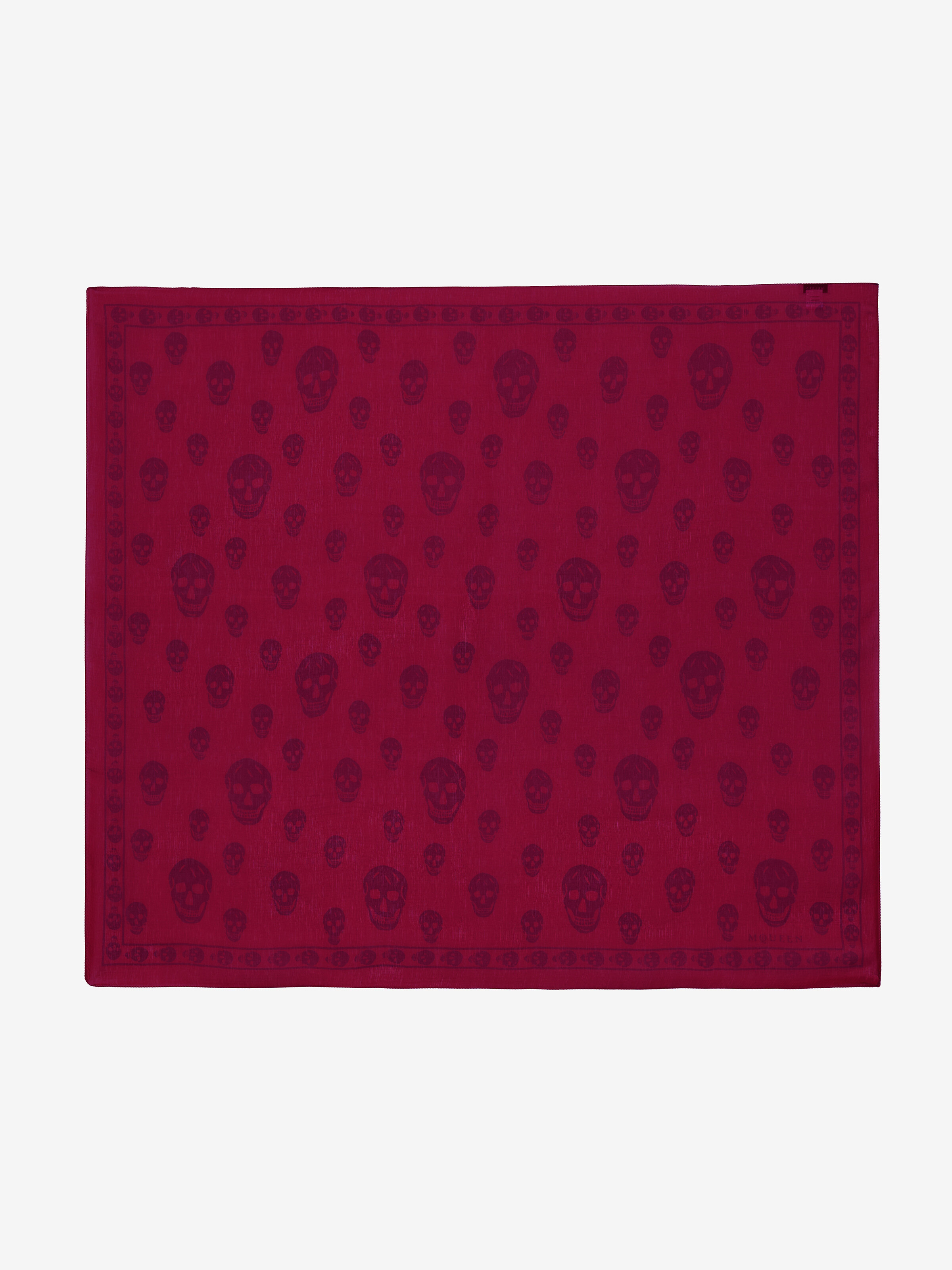
We remember the skull scarves. The Armadillo boots. The spray-paint finale. These are McQueen's monuments, and rightly so — they photograph well, they auction well, they anchor retrospectives. But monuments aren't codes. A code is something built into the grammar of a house, something that recurs not because it sells but because it solves a problem the founder cared about. McQueen cared about structure, about aggression tempered by precision, about making clothes that didn't sit politely on the body. Some of that vocabulary has persisted. Much of it hasn't.
The tailoring that wasn't polite
McQueen trained under Anderson & Sheppard and Gieves & Hawkes. He could cut a clean shoulder. He chose not to. His tailoring pulled tight across the back, nipped savagely at the waist, exaggerated the lapel or flattened it entirely. A 1996 jacket might have sleeves set so high they forced the shoulders back, a gesture borrowed from military dress but rendered unsettling by the sharpness of the cut. The effect was confrontational. You couldn't wear a McQueen blazer and disappear into a room.
This was tailoring as argument. It acknowledged the codes of Savile Row — the clean canvas, the considered dart — then bent them past comfort. A coat from the Dante collection in 1996 featured a waist so tight it changed how you breathed. The Joan collection a year later sent corsetry over suiting, boning visible through sheer panels. These weren't costumes. They were wearable, technically flawless, and utterly uninterested in making the wearer feel at ease.
The house still tailors well. But the edge has softened. A contemporary McQueen blazer is sharp, yes, but it doesn't challenge the body wearing it. The proportions have normalised. The waist sits where a waist is expected to sit. You can walk into a meeting in it without starting a conversation about the jacket itself. That's commercially sound. It's also a retreat from one of McQueen's core convictions: that clothing should do more than flatter.
The print no one talks about
Everyone knows the skull. Fewer remember the oyster print from Spring 2005, or the jellyfish that drifted across chiffon in 2010, or the photographic florals that looked like they'd been left underwater too long. McQueen worked with printmaker Simon Ungless early in his career, and later with Sarah Burton and the in-house studio, developing prints that weren't decorative so much as narrative. A floral wasn't just a floral. It was decayed, oversized, printed off-register so the image felt unstable.
The natural world appeared constantly, but never in a way that suggested harmony. Birds were shown mid-decomposition. Flowers were x-rayed or magnified until they looked alien. A print of feathers from 2008 was so hyperreal it read as unsettling. This was nature as memento mori, not as pastoral escape. McQueen wasn't interested in the countryside as refuge. He was interested in it as a site of transformation and decay.
Under Sarah Burton, who worked alongside McQueen for fourteen years before taking over as creative director in 2010, the natural references have remained but the tone has shifted. Prints are still detailed, still rooted in the archive's obsession with the organic. But they're softer. A 2018 collection featured embroidered wildflowers that were straightforwardly beautiful. A 2021 show used mycelium-inspired jacquards that felt more curious than confrontational. The craft is extraordinary. The unease is gone.
Burton's McQueen is technically fearless — the embroidery alone justifies the price of entry — but it no longer uses beauty as a trapdoor. A McQueen print used to be something you looked at twice because the first glance didn't tell the whole story. Now it tends to tell you everything up front.
The shoe that wasn't the Armadillo
The Armadillo boot is in the permanent collection at the Met. It's also unwearable, which was partly the point. But McQueen made plenty of shoes you could actually walk in, and many of them carried a signature that's since been abandoned: the curved heel.
From around 2008 onward, McQueen's footwear often featured heels that bent inward or outward, destabilising the usual vertical line between sole and ankle. Some curved like a talon. Others angled backward, forcing the wearer onto the ball of the foot in a way that changed posture entirely. These weren't novelty shapes. They were engineered, often in collaboration with the technical team at the atelier, to be functional within their strangeness. You could wear them. You couldn't ignore them.
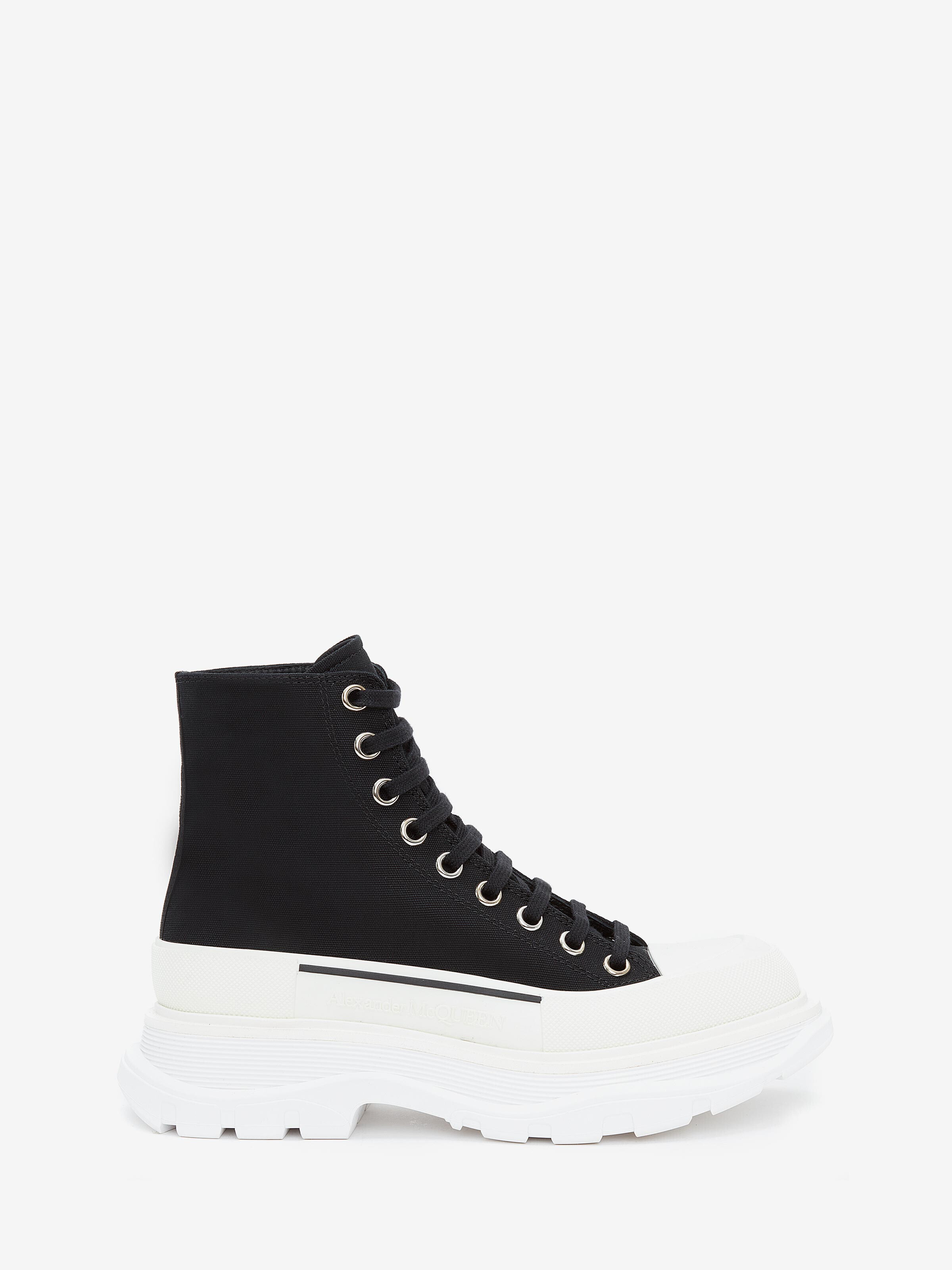
The curved heel has mostly disappeared from the house's current output. McQueen's shoes now are well-made, often chunky-soled, occasionally studded. They're recognisable as McQueen in the way that a logo-jacquard sneaker is recognisable as any luxury house: through branding, not through form. The structural experimentation that made a McQueen shoe distinct beyond its label has been replaced by something safer. Again, this makes sense if you're trying to sell shoes at scale. It also flattens one of the house's sharper formal languages.
What Burton kept
It would be wrong to suggest Sarah Burton abandoned McQueen's codes entirely. She didn't. The sawtooth hem — that jagged, uneven finish that appeared on skirts and jackets throughout the 2000s — still surfaces in her collections. The interest in volume, particularly in skirts that billow or collapse in unexpected ways, remains. And the craftsmanship, especially in embroidery and lacework, has if anything intensified. A Burton-era McQueen gown can take hundreds of hours to finish. The atelier's technical ability hasn't diminished.
But craft and code aren't the same thing. McQueen's vocabulary was built on tension: beauty and violence, precision and chaos, the body idealised and the body constrained. Burton has kept the beauty and the precision. The violence and chaos have been curated out. Her McQueen is easier to live with. It's also easier to forget.
The house is in transition now. Burton departed in 2023 after thirteen years, and Seán McGirr was appointed creative director late that year. His first collection landed in early 2024 to mixed response — some of the aggression has returned, though it's not yet clear whether it's McQueen's aggression or a new designer's interpretation of it. A leather jacket with an exaggerated shoulder recalled the 1990s tailoring, but without the same precision in the cut. A print of distorted roses gestured at the darker florals, but felt more referential than urgent.
It's too early to say what McGirr's McQueen will become. What's certain is that the house he's inherited has spent over a decade moving away from its most uncomfortable ideas. Some of that was inevitable — McQueen himself was already softening certain edges before his death in 2010, exploring romanticism alongside the brutality. But the codes that made the house formally distinct — the destabilised tailoring, the uneasy prints, the confrontational shoe — have largely been retired in favour of a more accessible, less adversarial version of luxury.
The jacket you don't remember
There's a jacket from the Widows of Culloden collection, Autumn 1006. It's cut from charcoal wool, double-breasted, with a waist so sharp it looks like it was drawn with a compass. The sleeves are set slightly too far back, pulling the shoulder blades together. The lapels are wider than they should be, almost Edwardian, but the silhouette is pure 1990s aggression. It photographs badly — too much tension, too many competing lines. In person, it's flawless.
You won't find it referenced in most retrospectives. It didn't walk a runway that gets replayed in documentaries. It's not in a museum. But it's more McQueen than the skull scarf ever was, because it does what McQueen's best work always did: it refuses to let you wear it without thinking about what wearing it means. That refusal, more than any logo or signature piece, was the code. And it's the one we've mostly forgotten.