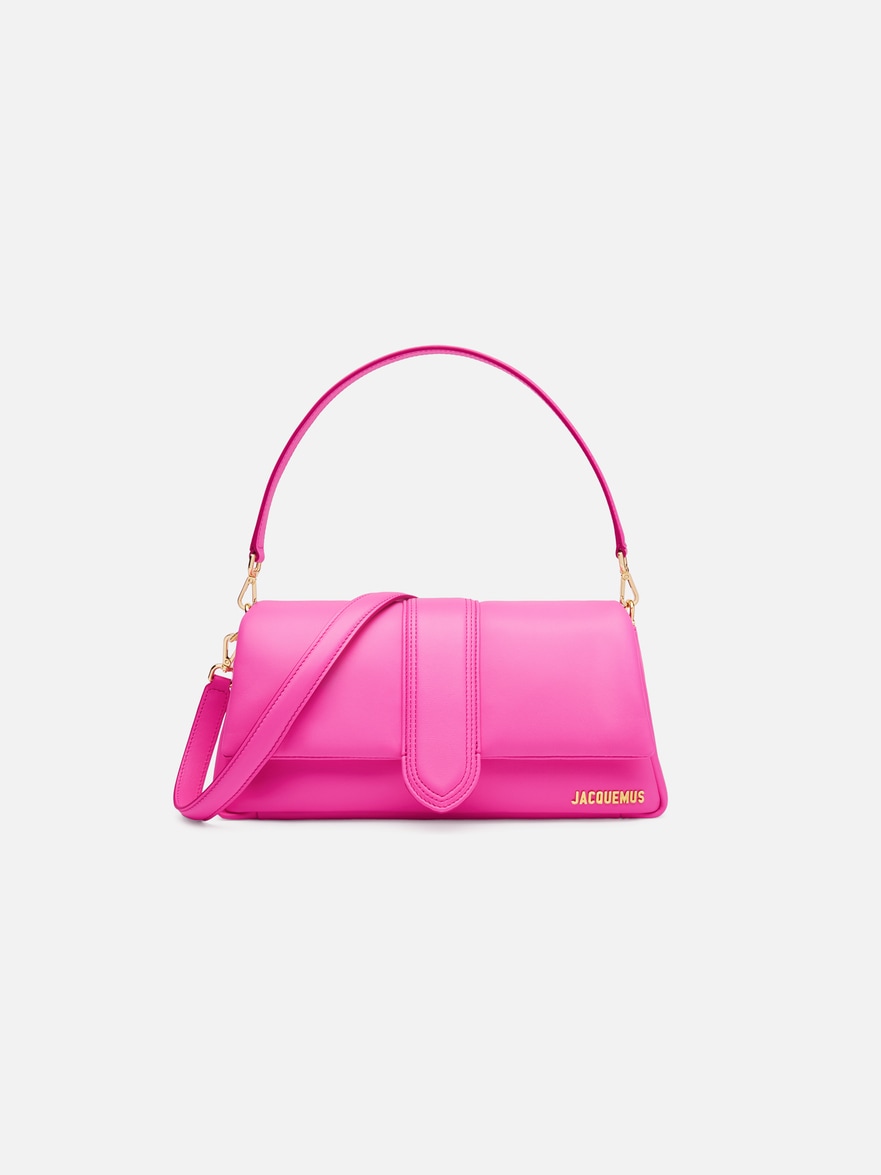
The Chiquito measures eleven centimetres across
The Chiquito measures eleven centimetres across. When Simon Porte Jacquemus sent it down the runway in January 2019, it was too small to hold a phone. Too small, in fact, to hold much beyond a single card and perhaps a folded note. Within three months, it was everywhere — slung across shoulders in Paris, strapped to wrists in Seoul, pinned to belt loops in Los Angeles. Jacquemus had done what few independent houses manage: turned a sight gag into a commercial engine.
But the bag was never really about function. It was about announcing that you understood the terms. That you got the wink.
L'Année de Mes Vingt Ans
Simon Porte Jacquemus founded his house in 2009 at nineteen, naming it after his mother's maiden name. She had died the year before. The early collections were shown in his apartment, then in borrowed spaces around Paris, and they carried the unpolished sincerity of someone working without a safety net. The clothes were simple — cotton shirting, denim cut wide, straw hats that looked lifted from his childhood in the Var. The palette leaned into sun-bleached whites and faded indigo.
It was fashion made by someone who had not yet learned to second-guess himself. The industry noticed, but slowly. Jacquemus was operating outside the established pipelines — no design school pedigree, no atelier apprenticeship, no backing from a conglomerate. For the first five years, the maison survived on small stockists and the occasional editorial placement. It was scrappy, undercapitalised, and it worked because Porte Jacquemus had figured out early what many designers spend decades chasing: a legible point of view.
By 2015, the house had developed a vocabulary. Asymmetry, yes, but not as a formal exercise — as a way of making the body look like it had moved through the garment rather than been arranged inside it. One-shoulder tops. Skirts that wrapped and tied. Trousers that sat somewhere between workwear and resort. The silhouettes were loose but not shapeless, relaxed but not sloppy. And always, always, that sense of sun and heat and the Mediterranean as something other than a luxury cliché.
The shows began to pull focus. Not because they were technically flawless — they weren't — but because they felt like they came from somewhere. A wheat field in Valensole. A salt flat in Provence. Locations that read as both deeply personal and instantly, almost irritatingly, photogenic.
Le Chiquito and the Apparatus
The Chiquito arrived at a pivot point. By 2019, Jacquemus had built a recognisable aesthetic, but the business was still small. The bag changed that. It was absurd, impractical, and it sold faster than the house could produce it. More importantly, it became a meme — the kind of organic, unforced virality that most brands spend six figures trying to engineer. The bag didn't need a campaign. It needed a picture of Rihanna holding one next to a regular-sized handbag for scale.
What followed was a masterclass in turning cultural momentum into commercial infrastructure. Jacquemus expanded the bag line — Le Chiquito grew into Le Grand Chiquito, then Le Bambino, then a dozen variations in woven leather, croc-embossed calf, and neon canvas. The house opened its first standalone boutique in Paris in 2020, a spare, sunlit space on Rue Saint-Honoré that felt less like retail and more like a showroom designed for someone's very chic second apartment.
The ready-to-wear sharpened. Tailoring entered the lineup — blazers with exaggerated lapels, trousers cut high and wide, shirts that played with proportion without tipping into costume. The clothes were still referencing that same Southern French ease, but now they were doing it with pattern-cutters who knew how to make a shoulder sit just so. The house was maturing, but it was doing so without losing the thing that had made it compelling in the first place: that sense of someone making clothes for a version of life they actually wanted to live.
Porte Jacquemus also understood something most designers either ignore or bungle: the value of a well-placed spectacle. The runway shows became events. A show staged on a lavender field. A show set on a salt lake with models walking a long pink runway that stretched into the horizon. A show in a wheat field at sunset. These weren't just backdrops. They were the entire point — images engineered to move through Instagram and TikTok and Pinterest with the frictionless ease of a very good meme.
Critics called it gimmicky. They weren't entirely wrong. But the gimmick worked because it was consistent. Jacquemus wasn't pivoting to streetwear one season and Edwardian tailoring the next. The house had a thesis — Provence as aspiration, ease as luxury, the body in motion — and it stuck to it.
La Maison at Fifteen
Jacquemus is now a €200 million business. The house has boutiques in Paris, London, and Seoul. It produces four main collections a year, plus capsules, collaborations, and a men's line that launched in 2018. In 2022, Porte Jacquemus sold a minority stake to Groupe Bastille, a move that brought in capital without handing over creative control. The maison is still independent in the ways that matter.
The question now is what happens when the momentum steadies. When the spectacle becomes expected. When the bag that was once a joke becomes part of the uniform.
The Spring 2024 collection offered some answers. Shown in Versailles — a choice that could have read as overreach — it pulled back slightly. The silhouettes were quieter. Tailoring took up more space. The colour palette stayed warm but moved away from the high-contrast brights that had become a signature. There were still asymmetrical cuts, still that sense of ease, but the clothes felt more considered. Less about the image, more about the garment.
It's a delicate recalibration. Jacquemus built its reputation on being the house that didn't take itself too seriously, that understood fashion as play as much as product. But fifteen years in, the maison has infrastructure. Employees. Stockists. Investors. The scrappy independence that once felt like an asset now has to be managed, protected, kept legible even as the business scales.
The risk is that Jacquemus becomes what it once stood against — another brand trading on a founder's biography, on an aesthetic that worked once and now gets repeated in diminishing returns. The advantage is that Porte Jacquemus has shown a willingness to move before the audience gets bored. To shift just enough that the house stays interesting without alienating the people who bought in early.
The Wheat Field
There's a photograph from the Spring 2020 show. A model in a butter-yellow dress, walking through a wheat field in Provence. The dress is simple — a slip cut on the bias, nothing structural, nothing that would photograph well on a hanger. But in motion, in that light, with the wheat shifting in the same wind that's pulling at the fabric, it works. It looks like the platonic ideal of a summer dress, the kind of garment you remember later as better than it actually was.
That's the thing Jacquemus does well. The house makes clothes that photograph beautifully but also seem to promise something beyond the image. A version of life that's sunnier, easier, less complicated. It's aspirational, but it's not cold. It's not about status in the traditional sense. It's about looking like you have somewhere better to be.
Whether that holds at €200 million — whether it holds at €500 million — is the question the next five years will answer. For now, the house is still making dresses that look good in wheat fields. And the wheat fields are still full.