The double-G buckle catches light differently now
The double-G buckle catches light differently now. Not the hardware itself — that remains unchanged, stamped and polished to the same spec since the Seventies — but the context in which one encounters it. A decade ago, it arrived trailing irony and references, stitched onto a loafer that quoted a slipper that nodded to a courtier's shoe. Today it sits quieter. The logo is still there, naturally, but the noise around it has dropped several decibels.
Gucci is not in crisis. The numbers, while softer than the Alessandro Michele peak, remain substantial. But the house is in that peculiar state familiar to anyone who has watched French fashion long enough: between chapters, searching for the next sentence.
Guccio and the porter's trunk
The founding story is tidier than most. Guccio Gucci, a porter at the Savoy in London, handled enough monogrammed luggage to understand what wealth looked like when it travelled. He returned to Florence in 1921 and opened a leather-goods shop. The logic was simple: make what the guests at the Savoy carried, but make it in Tuscany, where the tanners were.
The house built its reputation on equestrian hardware repurposed for city use — the horsebit, the stirrup webbing in green and red, the bamboo handle originally a wartime substitution for scarce metal. These were not metaphors. They were solutions that became signatures because they worked and because they repeated.
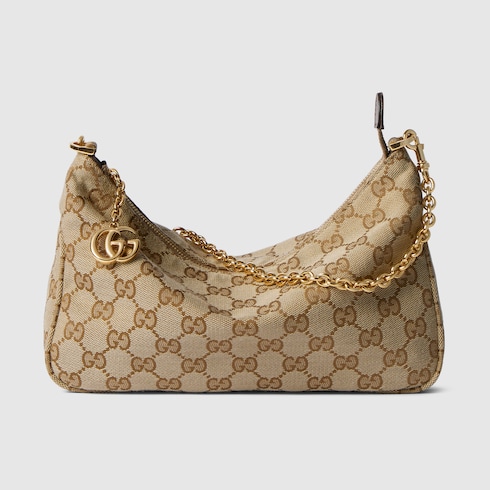
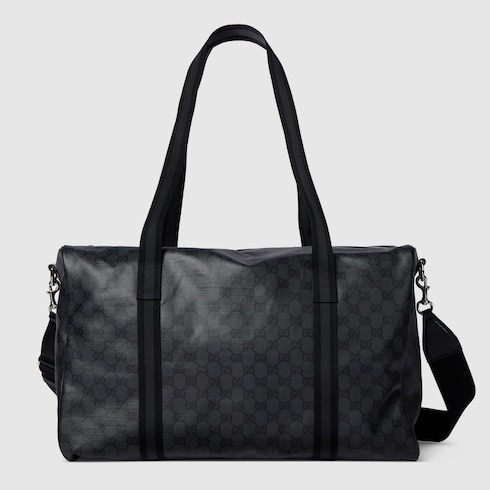
By the Fifties, the flora and fauna of the Italian leisure class had migrated onto Gucci canvas: the flora print, the GG monogram, the Jackie bag named after a First Lady who didn't commission it but carried it enough. The American market opened wide. Gucci became the first Italian house to mean something in New York, which in those years meant it meant something everywhere.
Tom Ford and the turn
The Eighties and Nineties were less kind. Family disputes, overextension, the monogram slapped onto keychains and lighters until the name softened. By 1994, the house was directionless and Maurizio Gucci — grandson of the founder — was a year from being shot on the steps of his Milan office.
Enter Tom Ford in 1994, promoted to creative director in '94 after a stint as womenswear lead. What he did is now design-school lore, but it bears repeating because it's often misremembered. Ford didn't save Gucci by making it respectable. He saved it by making it fuckable. The velvet hip-huggers, the satin shirts unbuttoned past any reasonable latitude, the ad campaigns shot by Mario Testino in which models looked like they'd just stepped out of someone else's bed — this was not a return to heritage. It was a controlled detonation.
The strategy worked because Ford understood that Gucci had been a punchline, and punchlines can't be salvaged by good behaviour. You kill a joke by telling a better one. Revenue grew from $230 million in 1994 to $3 billion by 2003, the year Ford and CEO Domenico De Sole left after Kering's predecessor bought the company outright.
Frida Giannini and the long interregnum
Frida Giannini held the role from 2006 to 2014, a period the industry tends to skim past. This is unfair. Giannini steadied the house after Ford's exit, leaned into equestrian codes and a certain Florentine restraint, and kept the business growing through the 2008 crisis. Her crime, if one can call it that, was not being Tom Ford — which is to say, not rewriting the house every eighteen months.
By 2014, Gucci's sales had plateaued. Kering needed a new story. They found one in a thirty-two-year-old accessories designer from Fendi named Alessandro Michele.
Michele and the maximalist correction
Michele's first show, assembled in five days after his January 2015 appointment, is remembered now as a pivot point. Pussy-bow blouses, oversized glasses, clashing prints, models who looked like they shopped in their grandmother's attic and their grandfather's closet on the same afternoon. The press called it "geek chic." The market called it a miracle.
What Michele understood — and what Giannini, for all her skill, had not been permitted to explore — was that Gucci's strength was never restraint. The house made its name on more: more colour, more pattern, more logo, more hardware. Michele turned that appetite into an aesthetic system. He borrowed from everywhere — Renaissance portraiture, Seventies glam rock, Japanese street style, his own Roman Catholic upbringing — and let it collide on the runway.
The revenue numbers followed. Gucci's sales doubled under Michele, reaching €9.6 billion by 2019. The waiting list for a Dionysus bag stretched months. The house became, for a moment, the centre of a particular kind of cultural attention: memed, dissected, worn by everyone from Jared Leto to the kids outside Comme des Garçons in the Marais.
But maximalism is expensive to sustain. By 2021, the collections felt overstuffed. The references piled up faster than one could parse them. Michele's Gucci had become, in the words of one buyer who spoke off the record, "a mood board that never ended." In November 2022, Kering announced his departure.
Sabato De Sarno and the quiet rebuild
Sabato De Sarno arrived from Valentino in January 2023 with a brief no one envied: follow Alessandro Michele. His first collection, shown that September, proposed something close to heresy in the current climate — simplicity.
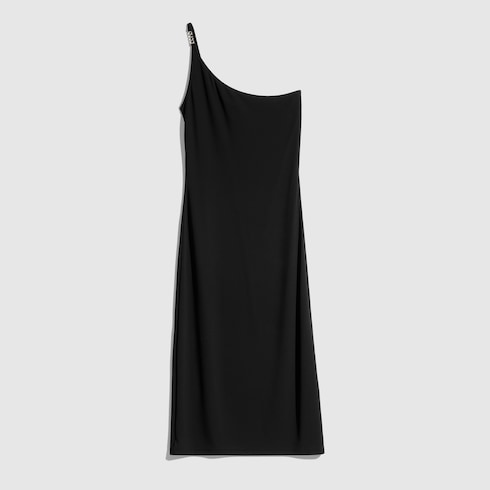
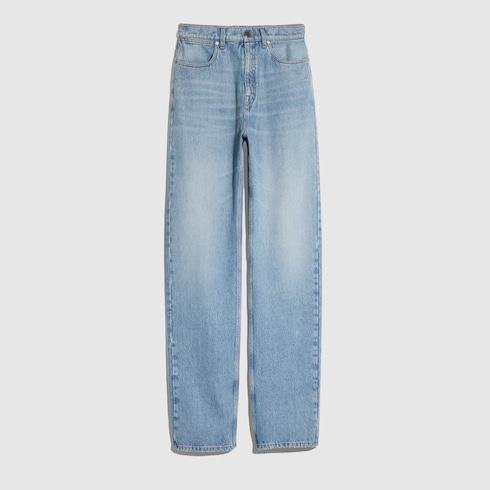
Gone were the clashing prints and archival collages. In their place: clean leather jackets, fluid trousers, dresses in single colours, the occasional horsebit rendered without commentary. The palette leaned into rosso ancora, a specific shade of red De Sarno described as both "joyful and sophisticated." The reviews were mixed. Some praised the restraint. Others found it thin.
The commercial response has been cautious. Gucci's revenue dipped 18% in the first quarter of 2024, part of a broader luxury slowdown but also a signal that De Sarno's vision has not yet caught fire. Kering's CEO, François-Henri Pinault, has called for patience. The house, he noted in an earnings call, is "in transition."
One can read that several ways. Transition suggests movement, which is optimistic. It also suggests a state that is not yet resolved, which is simply accurate.
Where the house stands
Walk into a Gucci boutique today and you'll find the Blondie bag — a structured top-handle with an oversized interlocking-G clasp — positioned at eye level. It's well made, recognisably Gucci, priced at €2,400. It is also, in a sense, a placeholder. The house is waiting to see what lands.
De Sarno has spoken about "everyday emotion," a phrase vague enough to mean little and flexible enough to mean anything. His second collection, shown in February 2024, pushed further into this territory: softer tailoring, more knitwear, a general sense that Gucci might, for the first time in fifteen years, be a house one could wear without performing.
Whether that's what the market wants from Gucci remains unclear. The brand built its contemporary identity on spectacle — first Ford's sex appeal, then Michele's archival excess. De Sarno is proposing something closer to ease, which is a harder sell when ease is what Loro Piana and The Row have already claimed.
There's also the question of cultural temperature. Gucci's influence, at least in the Michele years, extended past fashion into music, film, the way people assembled an Instagram grid. Harry Styles in a feather boa. Lana Del Rey in a logo belt. That kind of diffusion doesn't happen by accident, and it doesn't happen around clothes that whisper.
The house has time. Kering is not in the business of panic, and Gucci remains its largest revenue driver by a wide margin. But time in fashion is a strange quantity. A house can lose momentum in eighteen months and spend five years trying to recover it.
For now, Gucci is a house between sentences. The double-G buckle still catches light. One waits to see what it illuminates next.