The first thing you notice in a Givenchy boutique is the height of the ceilings
The first thing you notice in a Givenchy boutique is the height of the ceilings. The second is the absence of clutter. Racks are spaced wide enough that you can see each garment in full. Nothing touches. The aesthetic is deliberate restraint, which is also the aesthetic of the clothes.
Givenchy is not a house built on revolution. It is built on refinement. Hubert de Givenchy opened his atelier in 1952 with a collection called 'Separates' — blouses you could pair with different skirts, day pieces that moved. Cristóbal Balenciaga, his mentor, reportedly told him the work was too simple. Givenchy kept going. Within two years, Audrey Hepburn walked into the atelier for a fitting. She wore his clothes for the next forty years.
That partnership is the reason most people know the name. Hepburn in Breakfast at Tiffany's, in the black sheath with the opera gloves. Hepburn at the Oscars, in white floral embroidery with a mandarin collar. The house dressed her because she understood what Givenchy was offering: not decoration, but architecture. A dress that let you be seen.
What the house is now
Givenchy today is under the direction of no one. Matthew Williams left in December 2023 after three years as creative director. The house is in a transitional moment. Pre-fall and cruise collections continue. The atelier is active. But there is no single vision steering ready-to-wear.
This is not unusual. Givenchy has had eight creative directors since Hubert de Givenchy retired in 1995. Some tenures lasted eighteen months. The house has moved through John Galliano's theatrics, Alexander McQueen's darkness, Riccardo Tisci's gothic romanticism, Clare Waight Keller's clean modernism, Williams's streetwear-inflected edge. Each designer left pieces in the archive that feel entirely separate from what came before.
What remains consistent is the tailoring. Givenchy constructs its blazers and coats with the same precision it did in 1952. The shoulder is always clean. The sleeve sets without a pucker. The lapel lies flat. If you are buying Givenchy, you are buying that — the house's ability to engineer a jacket that does not shift when you move.
The handbags also remain. The Antigona, introduced under Tisci in 2010, is still in production. So is the GV3, launched under Waight Keller. These are not seasonal pieces. They are part of the permanent collection, updated in new leathers and hardware but structurally unchanged.
Where to begin
If you are new to Givenchy, start with the Antigona. It is a trapezoid tote in calfskin or goatskin, available in small, medium, and large. The structure is rigid. The bag stands on its own when you set it down. It has a top handle and a detachable shoulder strap. No exterior pockets. The interior is suede-lined, with a single zip pocket and two open compartments.
The medium Antigona measures thirty-two centimetres across. It fits a laptop, a book, a change of shoes. The small measures twenty-seven centimetres and holds what you need for a day. Prices begin at €1 950 for the small and €2 250 for the medium in smooth leather. Embossed crocodile or python finishes push past €3 000.
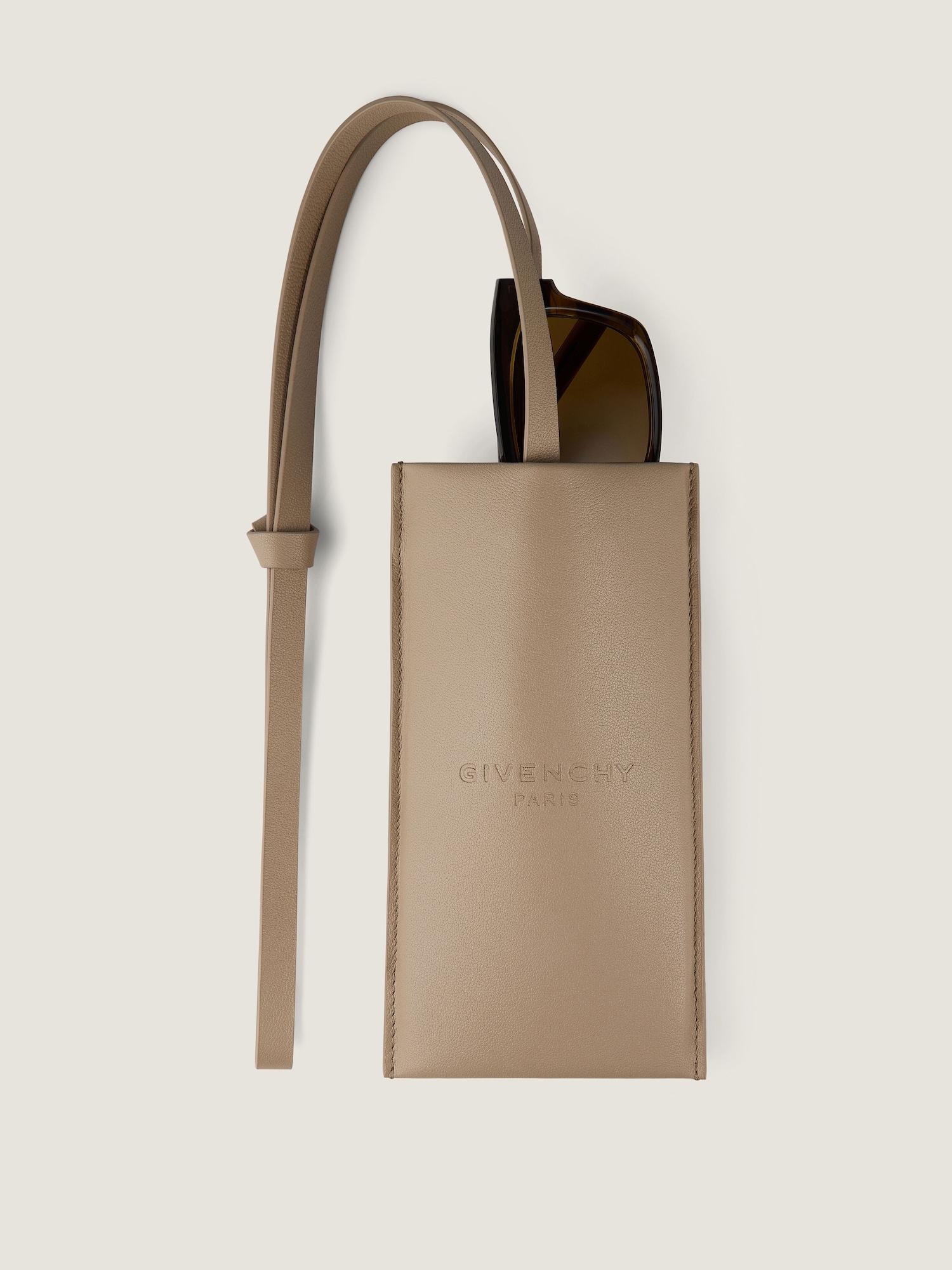
The bag is not subtle. The Givenchy name is debossed across the front in capital letters. The trapezoid shape is recognisable from across a room. But it is not loud in the way a logo print is loud. The bag's volume comes from its geometry, not from branding.
If you want something quieter, the GV3 is smaller and rounder. It has a chain strap and a metal clasp shaped like the house's initials. The leather is softer. The bag slumps slightly when empty. It works as an evening bag or a crossbody for errands. Prices start at €1 650.
Both bags are widely available on the resale market. You can find an Antigona from 2015 in good condition for €900 to €1 200. The GV3 resells for slightly less. Givenchy does not hold value the way Hermès or Chanel does, which means you can enter the house's archive without waiting lists or markups.
The tailoring
Givenchy's suiting is where the house shows its construction. A single-breasted blazer in wool crepe starts at €1 850. The jacket is unlined or half-lined, depending on the season. The shoulder is natural — no padding, just a clean sleeve head. The buttons are horn or corozo. The pockets are functional.
This is not the place to buy your first blazer. Givenchy's cuts assume you already know how a jacket should sit. The armholes are high. The waist is defined. If the fit is wrong, the jacket will pull across the back or gap at the collar. Tailoring this precise does not forgive.
But if you know your measurements and the jacket fits, it will last. Givenchy uses wool from Italian mills — Loro Piana, Vitale Barberis Canonico. The cloth has weight. A blazer from the house does not wrinkle in transit. It does not lose its shape after a year of wear. You can have it tailored down if you lose weight. You can have the buttons replaced. The garment is built to be maintained.
Trousers follow the same logic. Wide-leg wool pants start at €790. Slim-cut trousers in technical gabardine run €690. The waistband is faced, not elasticised. The hem is left unfinished so you can have it adjusted to your inseam. Givenchy assumes you will take the garment to a tailor.
What to skip
The logo T-shirts. Givenchy produces a rotating selection of cotton jersey T-shirts printed with the house name in Gothic or sans-serif type. These retail for €390 to €590. They are not worth it. The cotton is fine but not exceptional. The print cracks after repeated washing. You are paying for the name, and the name does not improve the shirt.
The same applies to the logo sweatshirts and hoodies, which range from €690 to €950. The fleece is mid-weight. The construction is standard. You can find equivalent quality at a quarter of the price elsewhere.
The sneakers are similarly skippable. Givenchy's Jaw and TK-360 runners retail for €595 to €750. They are bulky, logo-heavy, and not particularly comfortable. The house is not known for footwear. If you want Givenchy shoes, buy the leather ankle boots or the slingback pumps — styles rooted in the house's tailoring tradition, not in the athleisure market.
The dresses
Givenchy's evening wear is where Hubert de Givenchy's influence remains most visible. The house still produces column gowns in duchess satin and silk faille. These are not embellished. No beading, no appliqué. The dress is the cloth and the cut.
A sleeveless sheath in black wool crepe starts at €2 100. A floor-length gown in silk satin runs €3 800 to €5 500, depending on the complexity of the drape. These are garments for women who do not want to be remembered for their dress. They want to be remembered for what they said while wearing it.
The day dresses are softer. Shirt dresses in cotton poplin retail for €1 250. Midi-length styles in crepe or jersey start at €1 450. The house uses darts and princess seams rather than gathers or elastic. The fit is tailored, even in casual pieces.
If you are buying a Givenchy dress, buy it for an event where you will be photographed. The garments are engineered to read well in images. The seams are placed where they will not create shadows. The hemlines fall at points that elongate the leg. This is not accidental. Givenchy has been dressing women for cameras since 1953.
What remains
Hepburn kept a wardrobe of Givenchy pieces until she died. Not the gowns — those went to auction. The day clothes. The separates. A white cotton blouse. A black wool skirt. She wore them at home, in her garden in Switzerland, when no one was looking. That is the test of whether a piece is worth keeping.