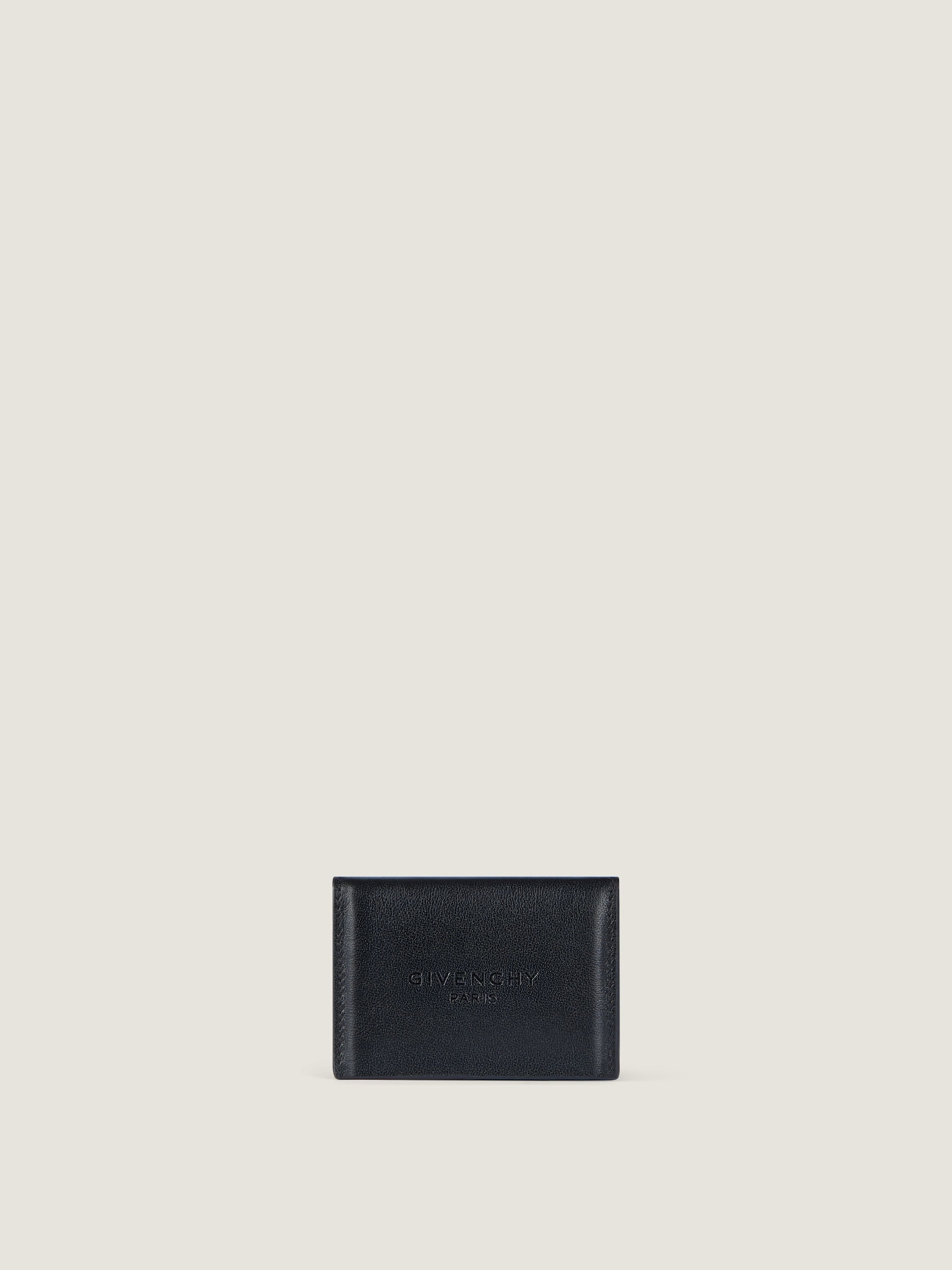
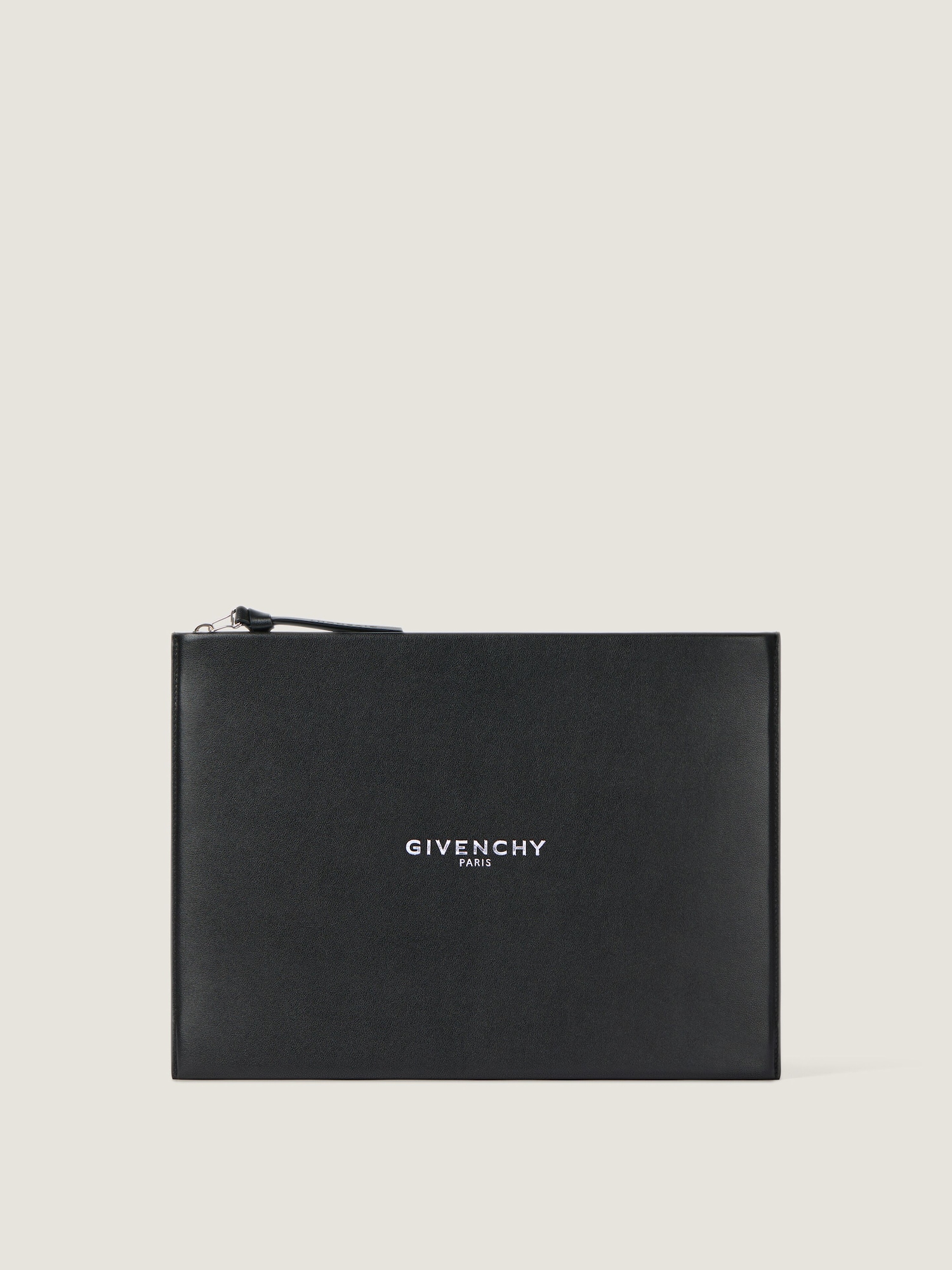
The first thing you notice in a Givenchy boutique is the silence
The first thing you notice in a Givenchy boutique is the silence. Not the hush of reverence—the structural quiet of a room built around proportion. The clothes hang with space between them. The handbag sits alone on its plinth. There is no music. There is no need to fill the air.
Givenchy has always worked this way. The house opened in 1952 with Hubert de Givenchy's conviction that elegance was a form of editing. He showed separates when Paris wanted gowns. He cut blouses that moved when the industry wanted armour. Audrey Hepburn wore his clothes because they didn't announce themselves before she did.
That restraint is still the through-line. Seventy years later, Givenchy remains a house built on the idea that luxury is not ornament. It is clarity.
Ce qu'il faut savoir avant d'entrer
Givenchy sits in a particular position within LVMH's portfolio. It is not Dior, which carries the weight of an entire aesthetic era. It is not Celine, which rebuilt itself as the antithesis of logomania. Givenchy has moved through several creative directions in the past two decades—Riccardo Tisci's gothic romanticism, Clare Waight Keller's clean modernism, Matthew Williams's hardware-forward utilitarianism—and what remains constant is a kind of Parisian reserve.
The house does not chase trends. It sets a line and holds it.
Matthew Williams, who took over as artistic director in 2020, comes from a background in technical sportswear and collaborative streetwear. His Givenchy is precise, architectural, often severe. The silhouettes are sharp. The hardware is visible. A coat closes with industrial snaps. A bag handle locks with a mechanism you can hear.
This is not the Givenchy of Hepburn's little black dress, but it shares the same logic: form serves function, and both serve the wearer.
If you are approaching the house for the first time, understand that Givenchy does not perform softness. It performs structure.
Les pièces pour commencer
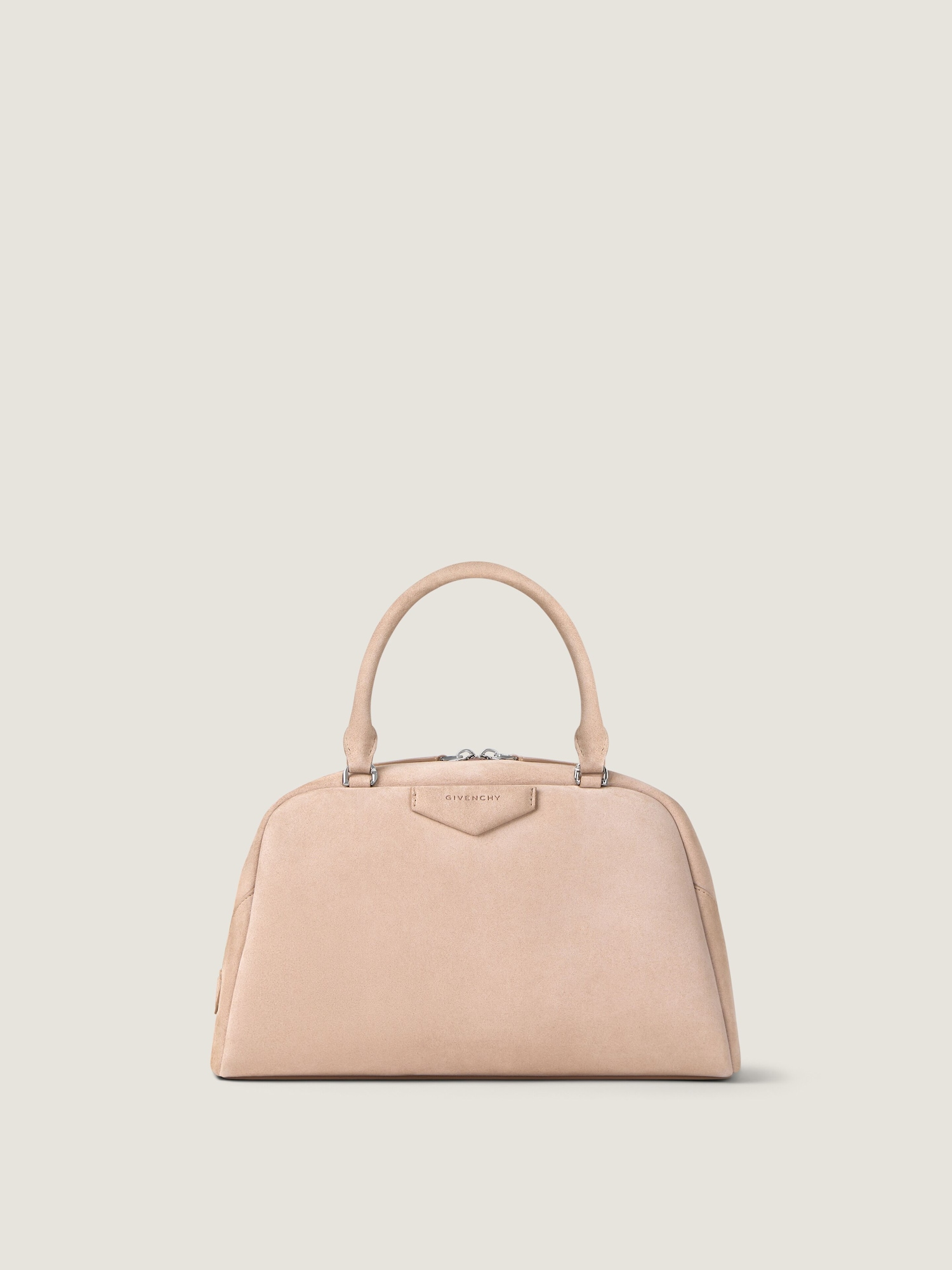
The Antigona remains the most recognizable entry point. Launched in 2010 under Tisci, it has outlasted his tenure and two successors. The bag is a rigid trapezoid with a top handle and a shoulder strap. It does not slouch. It does not apologize for taking up space.
The small Antigona starts around €1 850. The medium, which holds a 13-inch laptop, lands near €2 100. These are not accessible prices, but within the landscape of Parisian leather goods, they sit below Hermès, below Chanel, below Dior's signature styles. Givenchy offers a foothold.
The bag comes in smooth calfskin, grained leather, and seasonal canvas. If you are buying your first, choose black or dark brown in the grained finish. It wears invisibly. The corners do not scuff. You will carry it for a decade without thinking about it, which is the point.
Beyond the Antigona, consider the house's knitwear. Givenchy's sweaters and cardigans are cut with a menswear shoulder and a clean ribbed hem. A black wool crewneck runs about €650. A cashmere version, €950. These are pieces that sit in a wardrobe as anchors—plain enough to disappear, structured enough to shape everything around them.
The house also produces a line of logo T-shirts and hoodies, priced between €350 and €590. These carry the Givenchy Paris mark in a sans-serif block. They are popular. They are visible. They are not where I would begin. A logo is a signal, and if you are still learning the house's language, start with grammar before syntax.
L'époque Tisci et ce qui reste
Riccardo Tisci's twelve years at Givenchy, from 2005 to 2017, redefined the house for a generation. He brought a dark romanticism—rottweilers, religious iconography, lace paired with leather. He dressed Beyoncé, Rihanna, Kim Kardashian. He made Givenchy a house that moved through both haute couture and street culture without code-switching.
The Antigona was his. So was the Nightingale, a softer, gathered bag that has since receded from the main collection. So was the Pandora, a compact shoulder style with a structured base and a curved top—still in production, still relevant, priced around €1 650 for the small.
Tisci's influence has not disappeared. The house still produces pieces with gothic detailing: a coat with a high collar and concealed placket, a boot with a silver-toe cap, a belt with a double-ring closure. These are not loud, but they carry a certain edge. If you respond to that vocabulary, it is still present in the men's and women's lines.
Clare Waight Keller followed Tisci in 2017. She brought a cooler, more minimalist sensibility. She designed Meghan Markle's wedding dress—a bateau neckline, long sleeves, no lace, no embellishment. It was the most-watched garment of 2018, and it was almost austere.
Waight Keller's tenure was short. She left in 2020. But her imprint remains in the tailoring. Givenchy's blazers still cut close to the body with a defined shoulder and a narrow lapel. A single-breasted wool jacket runs about €1 850. A double-breasted version in a heavier twill, closer to €2 200. These are investment pieces in the literal sense—they do not date because they do not reference a moment.
Williams et la direction actuelle
Matthew Williams's Givenchy is not for everyone. It is uncompromising. It is technical. It treats clothing as equipment.
His runway shows feature models in padlock chokers, chain harnesses, and boots with metal-capped toes. The bags often include carabiner clips, industrial zippers, and visible hardware that would feel at home on climbing gear. This is not decorative—it is structural. The hardware works. The locks close. The straps adjust with the same mechanism you would find on a parachute rig.
For some, this reads as cold. For others, it is clarifying.
The current Givenchy collection includes several accessible pieces that carry Williams's design language without requiring full commitment. The G-Lock bag, a small shoulder style with a prominent metal clasp, starts around €1 250. The TK-360 sneaker, a chunky-soled trainer with a sock-like upper, runs about €595. A nylon bomber jacket with a utility pocket and a two-way zip, around €1 450.
These are not subtle, but they are not costumes. They function. You can wear them in rain. You can wear them on a bicycle. You can wear them into a meeting. That practicality is part of the house's current ethos.
If you find this direction too severe, the house still produces quieter pieces. A black wool trench coat with a belted waist and no visible hardware, priced around €2 400. A pair of straight-leg trousers in a wool-cotton blend, about €690. A leather tote with a single top handle and no logo, around €1 950.
Givenchy has always held multiple registers at once. You do not need to wear the runway to wear the house.
Où acheter et comment entrer
Givenchy operates standalone boutiques in major cities and maintains a presence in department stores—Galeries Lafayette, Printemps, Harrods, Bergdorf Goodman. The website ships internationally and offers the full range, including pieces that do not make it to wholesale.
If you are uncertain, start in person. The boutiques are not intimidating. The staff are trained to explain construction, not to upsell. You can handle an Antigona, feel the weight of the leather, test the strap drop against your shoulder. You can try on a sweater and see how the shoulder sits.
Givenchy also appears in the resale market. Vestiaire Collective, The RealReal, and Rebag all carry authenticated pieces, often at 30 to 50 percent below retail. A pre-owned Antigona in good condition runs between €900 and €1 400, depending on size and finish. This is a reasonable entry if you want to learn the house's vocabulary without committing to full retail.
One warning: Givenchy's logo styles are heavily counterfeited. If you are buying resale, use a platform with authentication guarantees. A fake Antigona is easy to spot in person—the leather feels thin, the stitching is uneven, the hardware is lightweight—but harder to catch in photos.
Ce qui reste
Hubert de Givenchy retired in 1995. He died in 2018. The house has passed through six creative directors since his departure. It has been owned by LVMH since 1988. It has weathered shifts in taste, in ownership, in cultural relevance.
What has not changed is the house's belief that clothing should not shout. A Givenchy piece enters the room after you do. It supports without dominating. It structures without constricting.
This is not the easiest philosophy to sell in an industry built on spectacle. But it is a durable one.
There is a photograph from 1954: Hubert de Givenchy standing in his atelier, hands in pockets, surrounded by white muslin toiles. The room is sparse. The light is even. He is looking at a sleeve, not at the camera.
That is still the posture of the house. The work is in the sleeve.