The first thing you notice is the absence of a logo
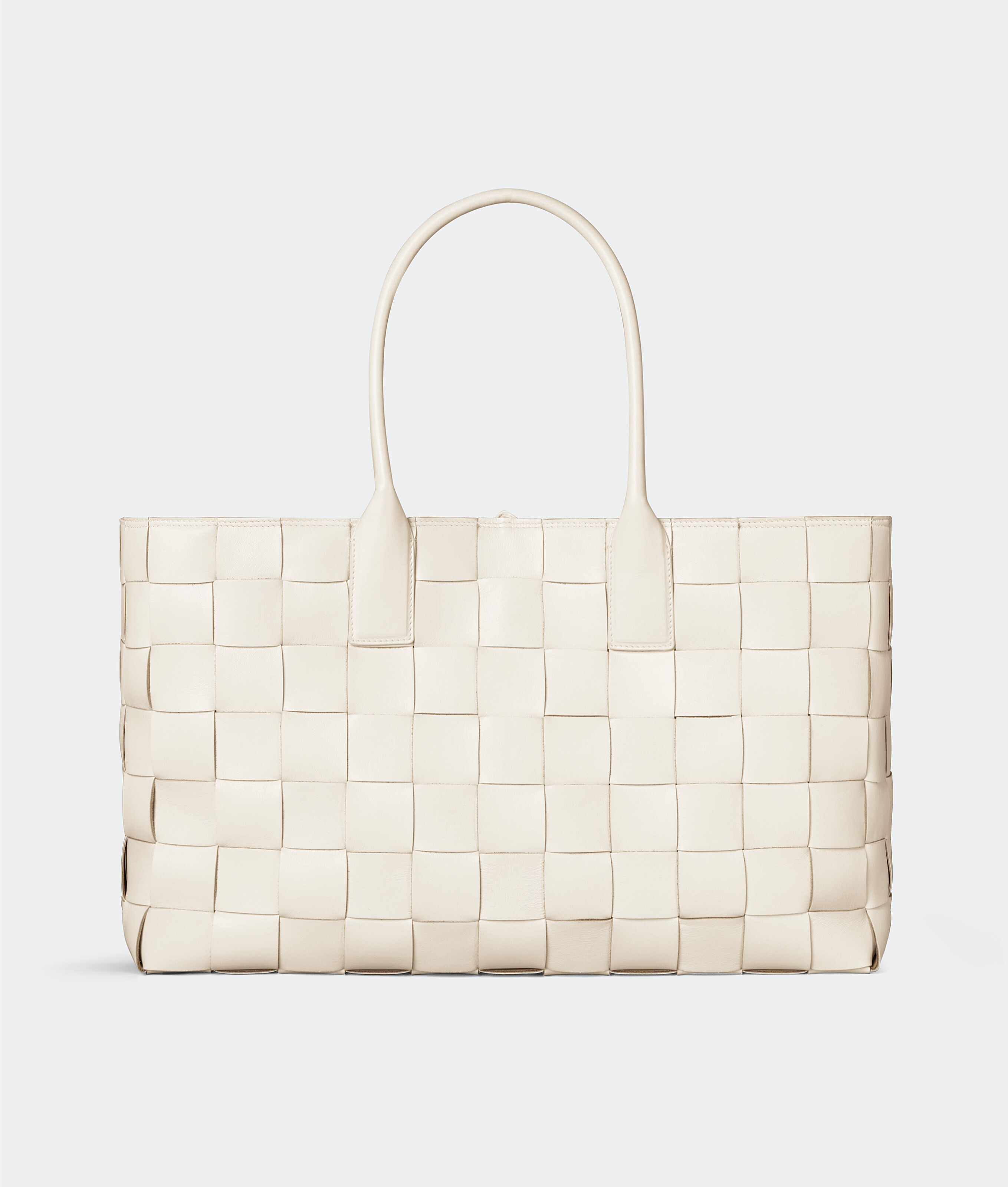
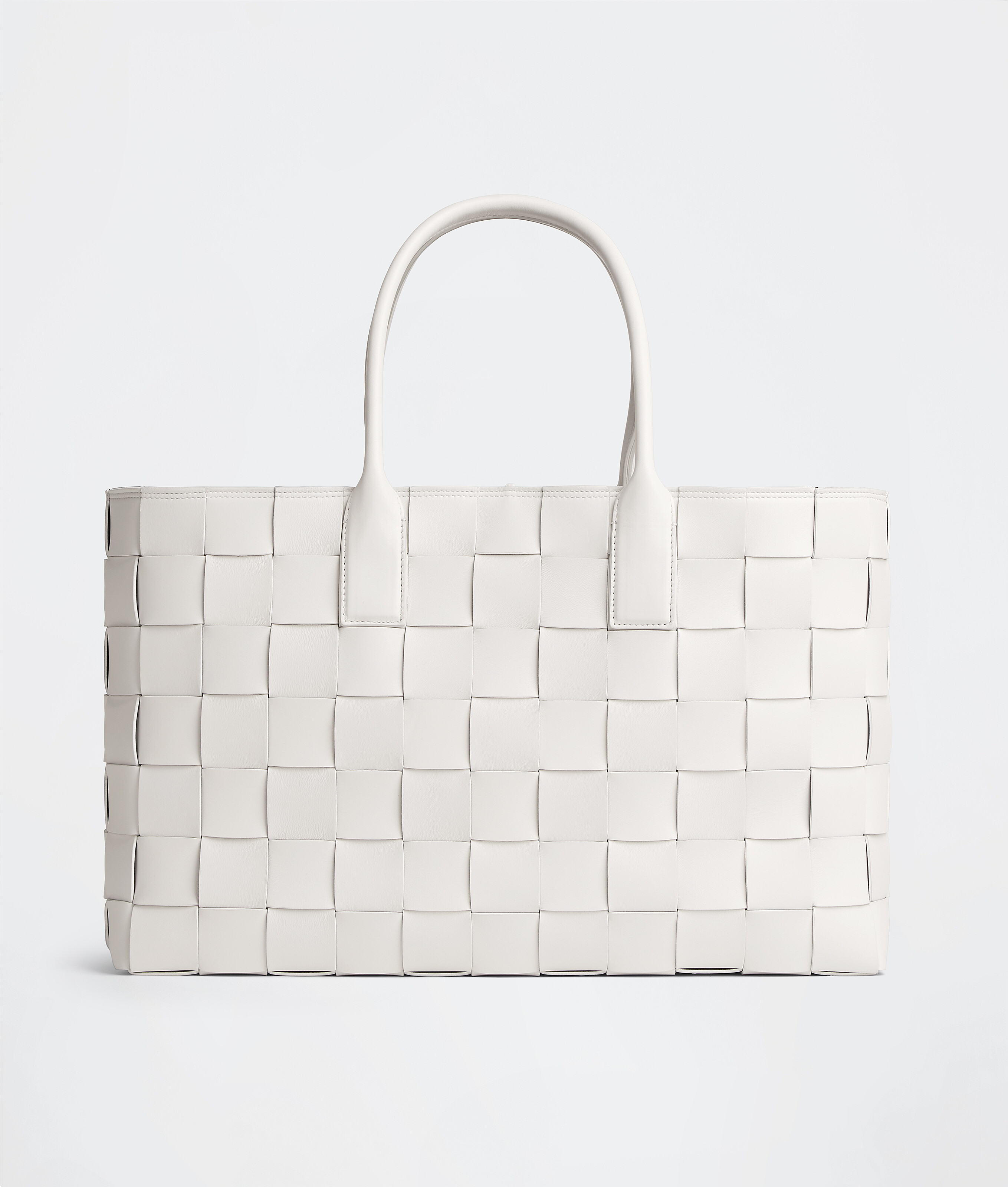
The first thing you notice is the absence of a logo. The second thing is the weight. A Bottega Veneta Cassette bag, held in the hand, has the density of something made rather than assembled. The intrecciato weave — narrow strips of leather plaited at right angles — creates a surface that gives slightly under the thumb. It is tactile in a way that asks to be touched, and that is the point.
Bottega Veneta was founded in Vicenza in 1966 by Michele Taddei and Renzo Zengiaro. The city sits in the Veneto, a region with centuries of leather craft infrastructure. The house built its reputation on that weave, the intrecciato, which was originally a structural solution. Woven leather is stronger than a single hide. It also requires more labour, more time, and more material. In an industry increasingly driven by branding and advertising, Bottega Veneta positioned itself as the house for people who did not need to announce what they were carrying.
The tagline, used for years, was "When your own initials are enough." It was effective because it was true. Through the eighties and nineties, the house became shorthand for a specific kind of discretion. Wealth that did not need to be loud. Taste that could afford to be quiet.
The Tomas Maier era and the return to craft
By the early 2000s, Bottega Veneta had lost direction. The Gucci Group acquired it in 2001 and installed Tomas Maier as creative director. Maier, a German designer trained in Paris, spent the next seventeen years rebuilding the house from its own archive. He did not reinvent. He refined.
Under Maier, the intrecciato became a language with multiple dialects. There was the classic weave, tight and geometric. There was a larger, softer version for evening bags. There were hybrid constructions that mixed woven panels with smooth leather. The Cabat tote, introduced in 2001, became the house signature: no lining, no hardware, no logo, just intrecciato formed into a large open vessel with knotted handles. It retailed above $4,000 and had a waiting list.
Maier also expanded the vocabulary beyond bags. Ready-to-wear became a study in controlled volume and precise tailoring. Shoes were architectural but wearable. Jewellery was minimal, often just leather cord or burnished metal. The palette was earthy — tobacco, rust, slate, cream. Bottega Veneta under Maier felt like a house that understood materials before it understood trends.
He left in 2018. What followed was a sharp turn.
Daniel Lee and the Bottega reset
Daniel Lee arrived in June 2018. He was thirty-two, largely unknown outside the industry, and had spent years at Celine under Phoebe Philo. His first collection for Bottega Veneta showed in February 2019, and it moved fast.
The intrecciato was still there, but it had been pushed. Lee introduced the Pouch, a soft clutch with an exaggerated gathered top that looked like a deflated cloud. It was minimal in construction — no hardware, no structure — but maximal in presence. The shape was immediate and recognizable, which was new for Bottega Veneta. It also retailed at $1,790 for the small version, making it one of the more accessible entry points into the house.
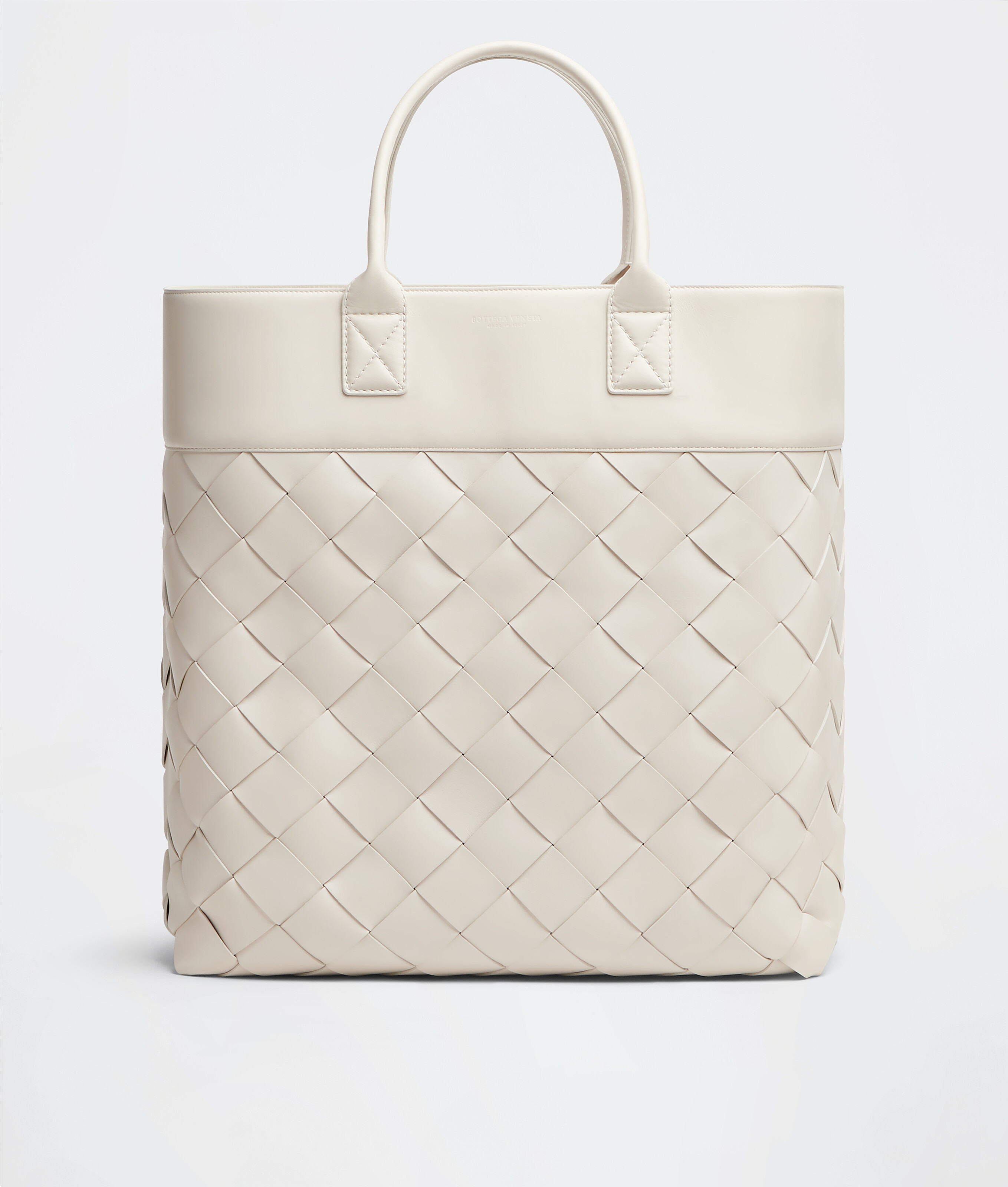
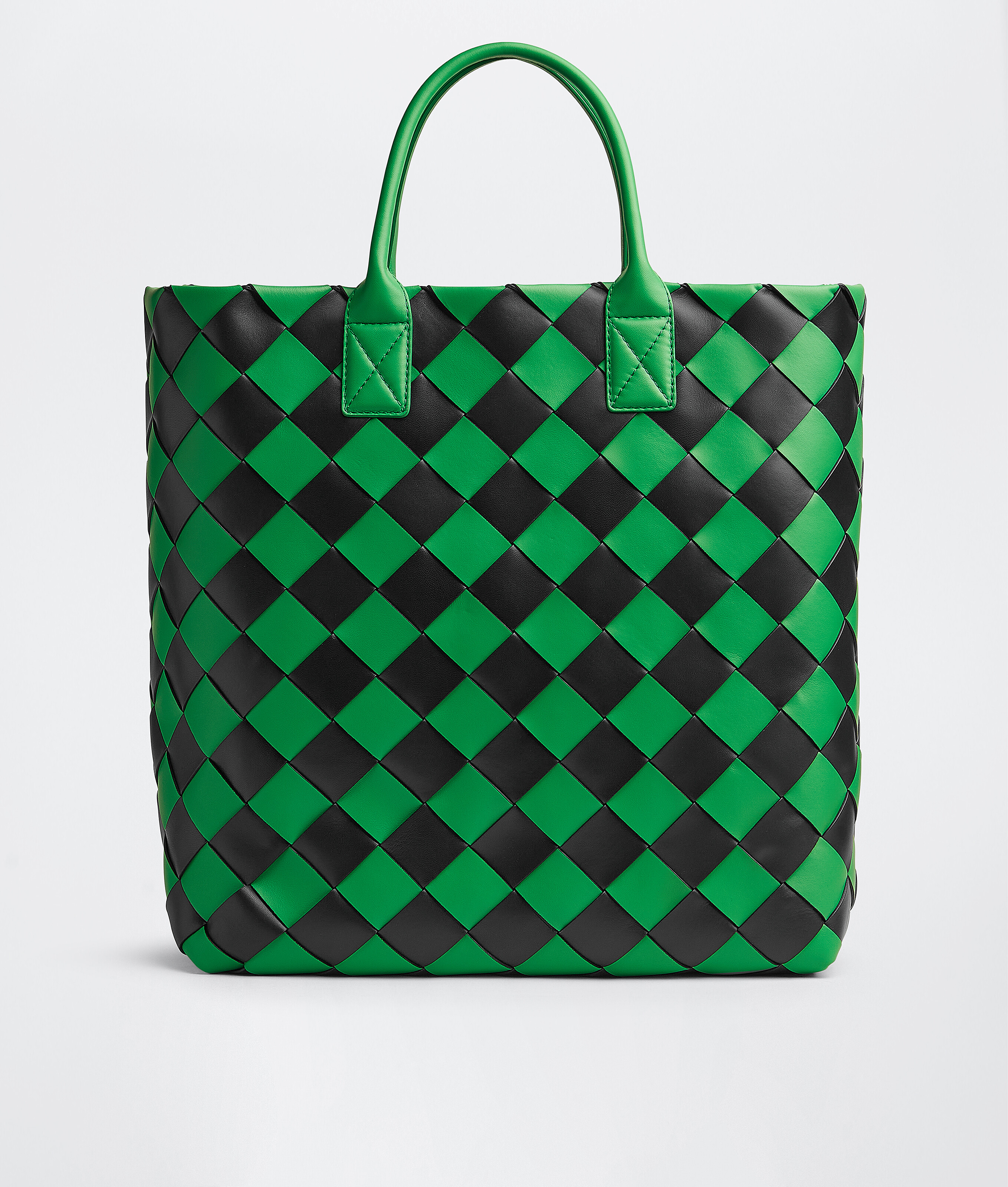
Lee also brought the Cassette, a padded bag with square intrecciato panels that created a quilted effect. The bag had weight and dimension. It photographed well. It came in a range of sizes, from a small shoulder bag at $2,400 to a larger tote above $4,000. The Cassette became the house's most visible piece during Lee's tenure.
Footwear shifted as well. The Puddle boot — a knee-high rubber Chelsea with an exaggerated square toe — became an instant reference. The Lido slide, a woven leather sandal with a square toe and padded footbed, was copied across the industry within a season. Lee understood that shoes, more than bags, could define a silhouette.
He also introduced the Tire boot, a Chelsea with a thick tread sole, and the Stretch sandal, a minimal heeled mule that looked like it had been shrink-wrapped onto the foot. These were not quiet pieces. They were declarative. Bottega Veneta, under Lee, became visible again.
He won the LVMH Prize in 2019 for emerging talent, though he was already leading a major house. He left in November 2021. The reasons were not made public. Matthieu Blazy, who had been working under Lee as ready-to-wear director, was named his successor.
Matthieu Blazy and the return to garment
Blazy's Bottega Veneta is less about the single statement piece and more about the construction of the garment itself. His background is in pattern-making — he studied at La Cambre in Brussels and worked at Maison Margiela and Celine before joining Bottega Veneta. His work reads like someone who thinks through cloth first.
The intrecciato, under Blazy, has been applied to unexpected surfaces. Leather woven into denim. Woven panels set into tailoring. Bags that look like they were folded from a single piece of material, though they were not. The technique is still central, but it is quieter again. Less logo, more hand.
Ready-to-wear has become the focus. Blazy's collections show an interest in volume, drape, and the way fabric moves on the body. There are oversized coats with dropped shoulders. Trousers with a high waist and a wide leg. Shirts that are slightly too large, slightly too long, in a way that feels intentional. The palette has shifted back toward earth tones — olive, sand, charcoal, cream — with occasional bursts of rust or deep green.
The bags remain, but they are not leading the conversation. The Andiamo, introduced under Blazy, is a structured top-handle bag with a clean geometric shape. It retails around $3,800 and reads as more classic than the Pouch or Cassette. The Kalimero, a small drawstring bag, is softer and less formal. Both are well-made, but neither has the immediate visual shorthand of Lee's designs.
What Blazy has brought back is the idea of Bottega Veneta as a house for people who care about how things are made. The focus is on seams, hems, the way a sleeve is set, the weight of a lining. It is not flashy. It rewards looking closely.
Where to begin
If you are new to Bottega Veneta, start with the Cassette. It is still in production, available in multiple sizes and colours, and it holds its value. The small version, worn crossbody, works as an everyday bag. The larger version functions as a work tote. The intrecciato weave is durable and ages well — the leather softens but does not crack.
The Pouch, if you can find it secondhand, is worth considering. It was produced in large quantities during Lee's tenure, and the resale market is active. Prices range from $800 to $1,200 depending on size and condition. It is less structured than the Cassette, which makes it easier to pack but harder to organize.
For shoes, the Lido slide remains in the current collection and retails around $750. It is a summer piece, but it is also a clear introduction to the house's approach to footwear: minimal design, high-quality leather, and a shape that is recognizable without being loud. The Tire boot, if you are willing to spend more, is a year-round option at approximately $1,200. It works with denim, with tailoring, and with the kind of oversized trousers that Blazy has been showing.
Ready-to-wear is harder to recommend as a starting point. The pieces are expensive — shirts begin around $1,000, outerwear above $3,000 — and they require a wardrobe that can support them. A Bottega Veneta coat is not a standalone purchase. It is part of a larger approach to dressing.
Jewellery, on the other hand, is accessible. The house produces leather bracelets, simple silver rings, and woven leather necklaces that retail between $300 and $600. They are small gestures, but they carry the same material sensibility as the larger pieces.
What you are buying into
Bottega Veneta is not a house that chases trends. It moves slowly, even when it appears to move fast. The intrecciato weave has been in continuous production for nearly sixty years. The commitment to leather craft has not wavered. What has changed is the way the house presents itself — sometimes loud, sometimes quiet, but always rooted in the same material intelligence.
When you buy a piece from Bottega Veneta, you are buying into that continuity. You are also buying into a specific kind of visibility. The house does not put logos on its products, but the shapes are recognizable. The Cassette reads as Bottega Veneta. The Pouch reads as Bottega Veneta. The Lido slide reads as Bottega Veneta. It is branding through form rather than through text.
The question is whether that matters to you. If you want something that announces itself, Bottega Veneta will do that. If you want something that sits quietly in a wardrobe and performs well over time, Bottega Veneta will also do that. The house operates in both registers, depending on the piece.
What it does not do is compromise on material. The leather is thick, vegetable-tanned, and sourced from Italian tanneries with long relationships to the house. The construction is clean. The hardware, when present, is solid brass or steel. These are not details you notice immediately, but they are details you feel after six months of use.
A Bottega Veneta bag does not fall apart. The stitching holds. The leather develops a patina rather than cracking. The intrecciato weave, because it distributes stress across multiple points, is more durable than a single-panel construction. You are paying for that durability, and you are paying for the labour that makes it possible.
The house is currently in a transitional moment. Blazy's vision is still forming. The pieces from the Lee era are still circulating in the resale market. The Maier-era bags, particularly the Cabat and the Veneta hobo, are now considered vintage and command high prices. It is possible to enter Bottega Veneta at multiple points in its history, and each entry offers a different version of the house.
The intrecciato, though, remains constant. Woven leather, tight and geometric, forming a surface that gives slightly under the thumb. That is where the house began, and that is where it continues.