The fur-lined sleeve of a coat, glimpsed in passing on the Rue de Grenelle last month, stopped me mid-stride
The fur-lined sleeve of a coat, glimpsed in passing on the Rue de Grenelle last month, stopped me mid-stride. Not because it announced itself — quite the opposite. The lining was sable, worked in horizontal bands no wider than a child's finger, visible only when the wearer raised an arm to hail a taxi. By the time I'd registered what I'd seen, she was gone. The coat itself was charcoal wool, double-breasted, entirely unremarkable from the back. But that flash of honey-coloured fur, hidden where only the wearer would feel it, was pure Fendi.
We speak often of Fendi's monogram, the interlocking Fs that Karl Lagerfeld sketched in 1965 on the back of a cigarette packet. We speak of the Baguette, that armpit-snug phenomenon that turned a handbag into a proper noun. What we neglect — what the house itself sometimes neglects — are the codes that predate the logo, the gestures that defined Fendi before it needed to shout its name.
Pelleteria, not just fur
Adele and Edoardo Fendi opened their Roman workshop in 1925 as a leather-goods atelier. Fur came later, almost as an accident of ambition. By the time their five daughters took over in the mid-fifties, the house had built its reputation on a specific technical feat: inlaying fur into leather in such a way that the seams disappeared. Not appliqué, not trim — true intarsia, where mink or fox became part of the hide's architecture.
This is not the sort of work that photographs well. You have to hold the thing, turn it in your hands, run a thumb along the join where chinchilla meets calfskin. The stitching sits inside the construction, invisible from either side. It is the opposite of a logo.
Lagerfeld understood this when he arrived in 1965, hired by the five sisters to reimagine what fur could be. His first collection for Fendi included a mink coat perforated like lace, each hole bound by hand to prevent fraying. Madness, technically speaking. The atelier required three months to complete a single piece. But it announced a principle: fur need not be solemn. It could be light, even playful, if one had the skill to make it so.
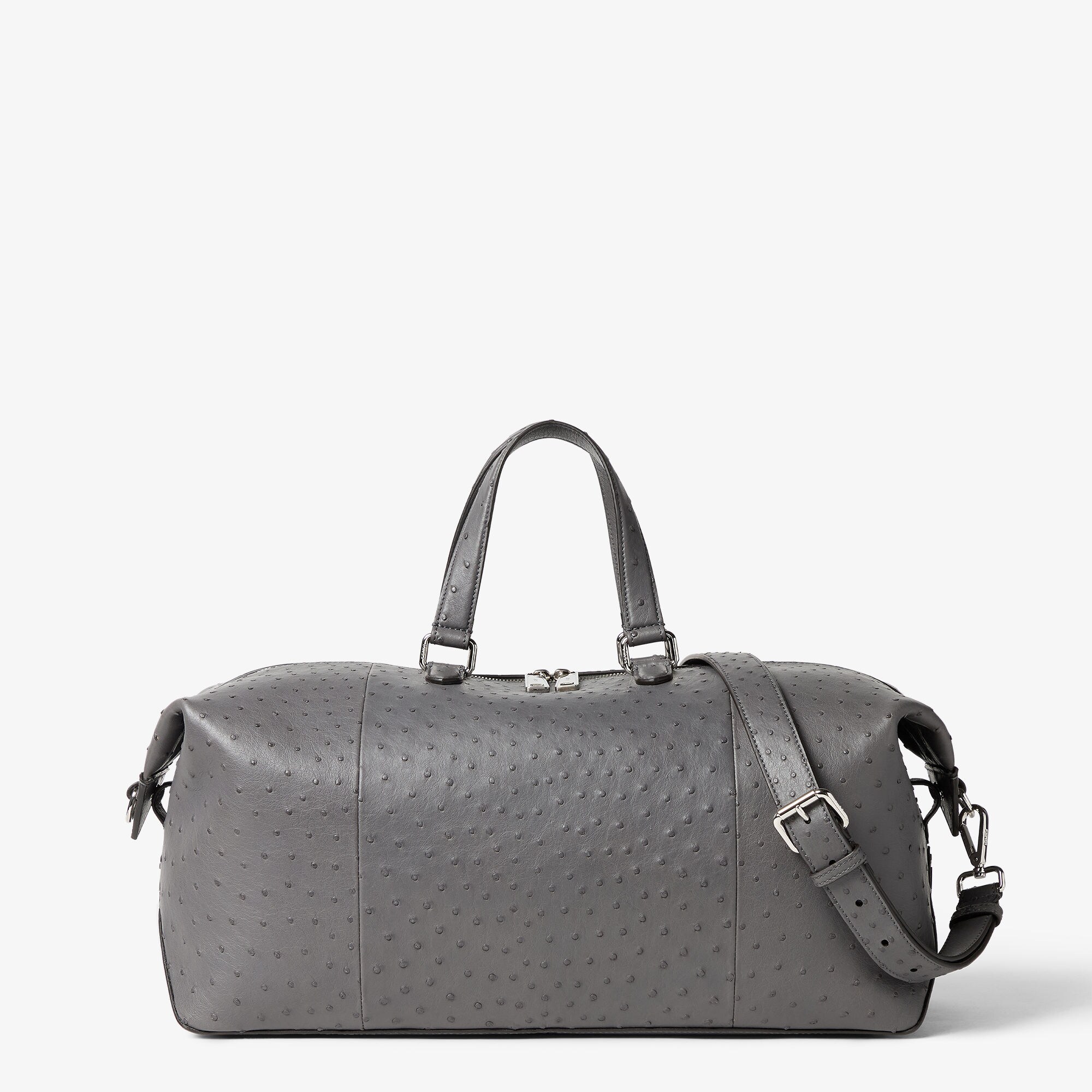
The intarsia technique remained. So did the house's fondness for what the French call facture discrète — workmanship that whispers. A reversible coat, fur on one side and suede on the other, with a single seam running the length of the spine. A bag whose interior lining matches the exterior leather so precisely that turning it inside-out reveals a second, equally finished design. These are not the gestures of a house chasing attention. They are the gestures of a house that assumes you will look closely.
The Pequin stripe, before it became a logo
Long before the Baguette made Fendi a household name, the house had another signature: a narrow stripe in tobacco and black, woven through canvas or leather in varying widths. The pattern first appeared in the late sixties on the interior of handbags, a maker's mark visible only to the owner. By the seventies it had migrated to luggage, then to ready-to-wear — always as a detail, never as the main event.
The Pequin stripe is not, strictly speaking, a logo. It does not spell anything. It does not require you to know what you are looking at. And yet, for a certain customer in the eighties and nineties, it functioned as a kind of password. You either recognised it or you didn't.
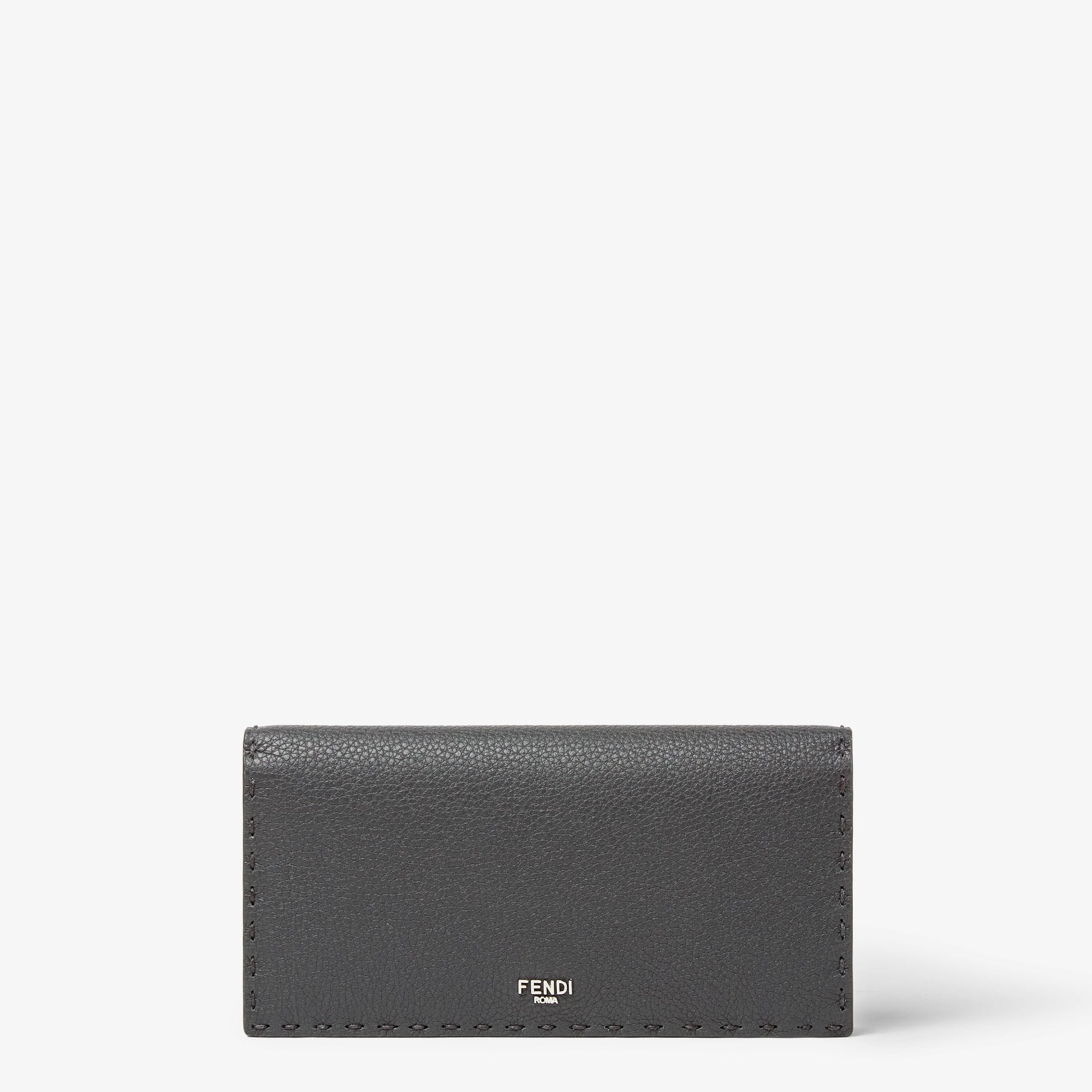
Silvia Venturini Fendi, who joined the house in 1994 and now oversees accessories and menswear, has kept the stripe alive in her collections, though often in ways that require a second glance. A wallet's inner card slots. The underside of a belt. The gusset of a tote, visible only when the bag is open. This is not nostalgia — or not only nostalgia. It is a reminder that a house code need not be external to function.
Kim Jones and the question of restraint
When Kim Jones took over womenswear in 2020, following the brief, ambitious tenure of Silvia's predecessor, the fashion press waited to see whether he would double down on the house's louder codes — the logo jacquard, the FF hardware, the Baguette in all its viral permutations — or reach for something quieter.
He has done both, which is perhaps the only honest answer. His second collection for Fendi included a series of coats with fur linings that echoed, almost exactly, the piece I saw on the Rue de Grenelle. Shearling dyed to match the outer fabric, so that the coat read as monochrome until you saw it open. Sable worked in narrow bands, visible only in motion. These were not showpieces. They were not photographed for the runway overview. But they were there, and they sold.
Jones has also leaned into the house's history of collaboration — not the celebrity kind, but the artisan kind. His third season featured a series of bags hand-painted by Roman craftsmen using techniques borrowed from eighteenth-century bookbinding. The paint sits inside the leather, not on top of it, absorbed through a process that takes four days per panel. You cannot see the brushstrokes. You can only see the colour, which shifts slightly depending on the light.
This is Fendi at its most confident: technical to the point of obsession, visible only to those who care to look. Whether the market rewards that confidence is another question.
What remains when the logo fades
I spoke recently with a former atelier director at Fendi's Rome headquarters, a man who spent thirty years overseeing the house's fur workshop before retiring in 2018. He was careful not to criticise the current direction — he is fond of Silvia, respectful of Jones — but he admitted that certain techniques have been quietly retired. The perforated mink, for instance, requires a kind of hand-stitching that fewer and fewer artisans know how to execute. The house still maintains the knowledge, he said, but deploys it rarely. There is no commercial case for a coat that takes three months to make.
What survives, he suggested, are the codes that can scale. The Pequin stripe, yes. The intarsia, in simplified form. The reversible construction, which has become a Jones signature. These are not compromises, exactly. They are translations. A house that wants to remain a house, and not a museum, must translate.
Still, I think of that coat on the Rue de Grenelle. The woman wearing it almost certainly did not need the sable lining. The wool alone would have been warm enough. But someone at Fendi — a cutter, a designer, perhaps Silvia herself — decided that the lining mattered. Not because it would be seen, but because it would be felt. That is a code worth remembering.