The grey melange sweatshirt hanging in the Stockholm flagship bears no logo
The grey melange sweatshirt hanging in the Stockholm flagship bears no logo. Turn it inside-out and you find a single label, sewn flat against the back neck seam, that reads 'Acne Studios' in sans-serif capitals. The price — €280 — sits on a small card clipped to the sleeve. One might call this restraint, or one might call it confidence. Either way, it is deliberate.
Acne Studios occupies a peculiar position in the current landscape. Not quite streetwear, not quite tailoring, not quite Scandi minimalism despite the passport. The house has spent two decades resisting category, and the question now is whether that resistance still pays.
Ambition Noire, 1996–2006
Jonny Johansson founded the house in 1996 as part of a creative collective called ACNE — Ambition to Create Novel Expressions, a name that has aged about as well as late-nineties web design. The first product was a run of 100 raw denim jeans with red stitching, given to friends. The jeans moved. By 2006, Acne had become Acne Studios, shown its first Paris collection, and attracted investment from a Belgian private equity firm. The denim stayed, but the house had begun to articulate something broader: a kind of louche, art-school pragmatism that mixed Helmut Lang's severity with a younger, less polished sensibility.
Johansson, who remains creative director, has never been a theorist. His references are personal rather than conceptual — Nan Goldin photographs, Swedish punk, the particular shade of institutional beige found in certain Stockholm public buildings. The result is clothing that feels inhabited before you wear it. A shearling jacket from the autumn 2012 collection, for instance, had sleeves cut long enough to cover the knuckles and a collar that sat low on the nape. It suggested someone who had borrowed it from an older sibling and never given it back.
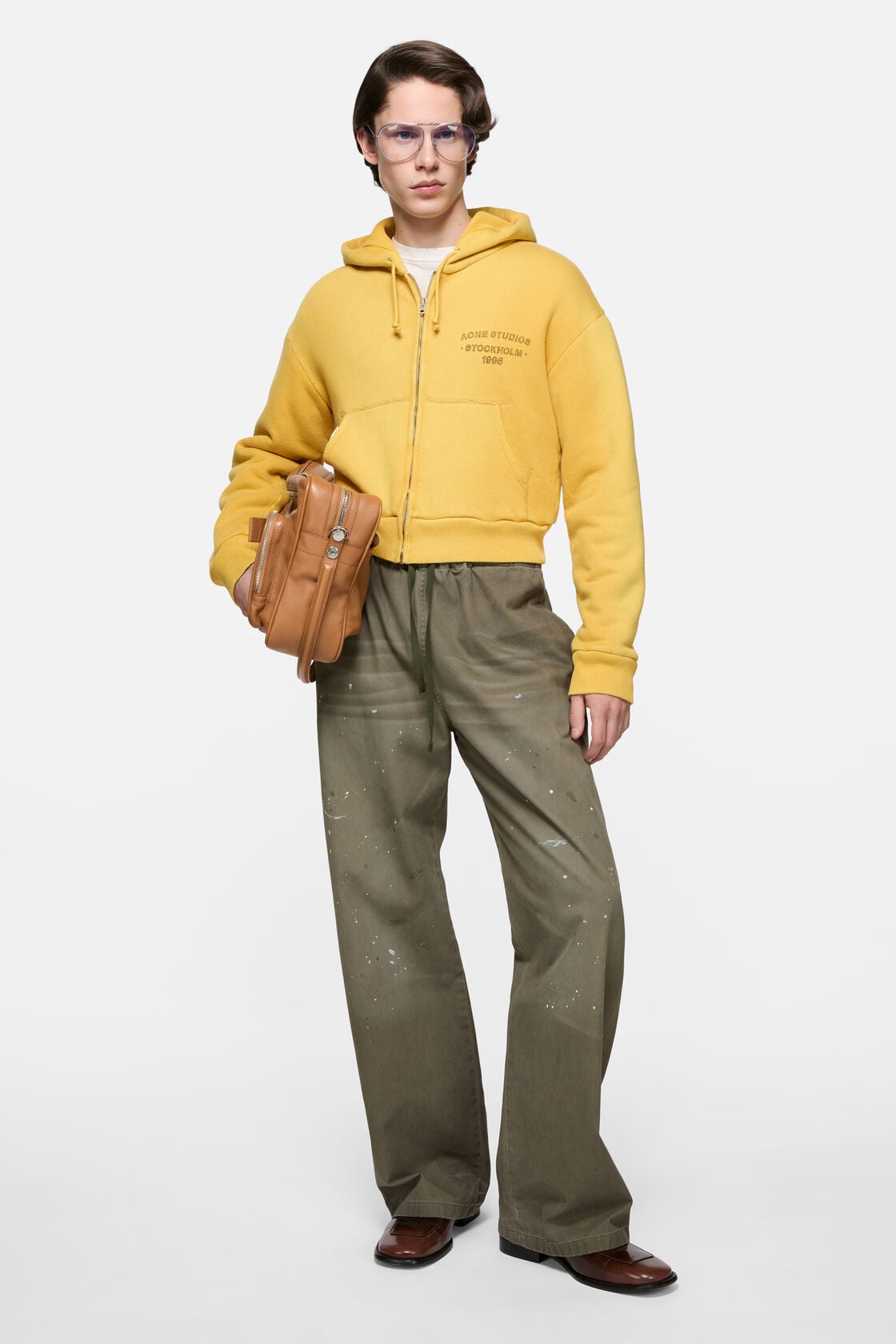
This approach worked, commercially and critically, through the 2010s. Acne Studios became the house you recommended when someone asked for 'something interesting but not difficult'. The Pistol boot — a Chelsea with an almond toe and stacked heel — sold steadily for a decade. The Canada scarf, an oversized wool square with fringe, became the kind of item people bought twice because they lost the first one at a dinner party.
2024: Le Moment Actuel
Walk into the new Paris flagship on rue Saint-Honoré and the atmosphere has shifted. The space, designed by British architect Max Lamb, is all poured concrete and brushed aluminium. The clothing hangs on steel rods suspended from the ceiling by thin cables. It is handsome, even austere, and it raises a question: who, exactly, is this for?
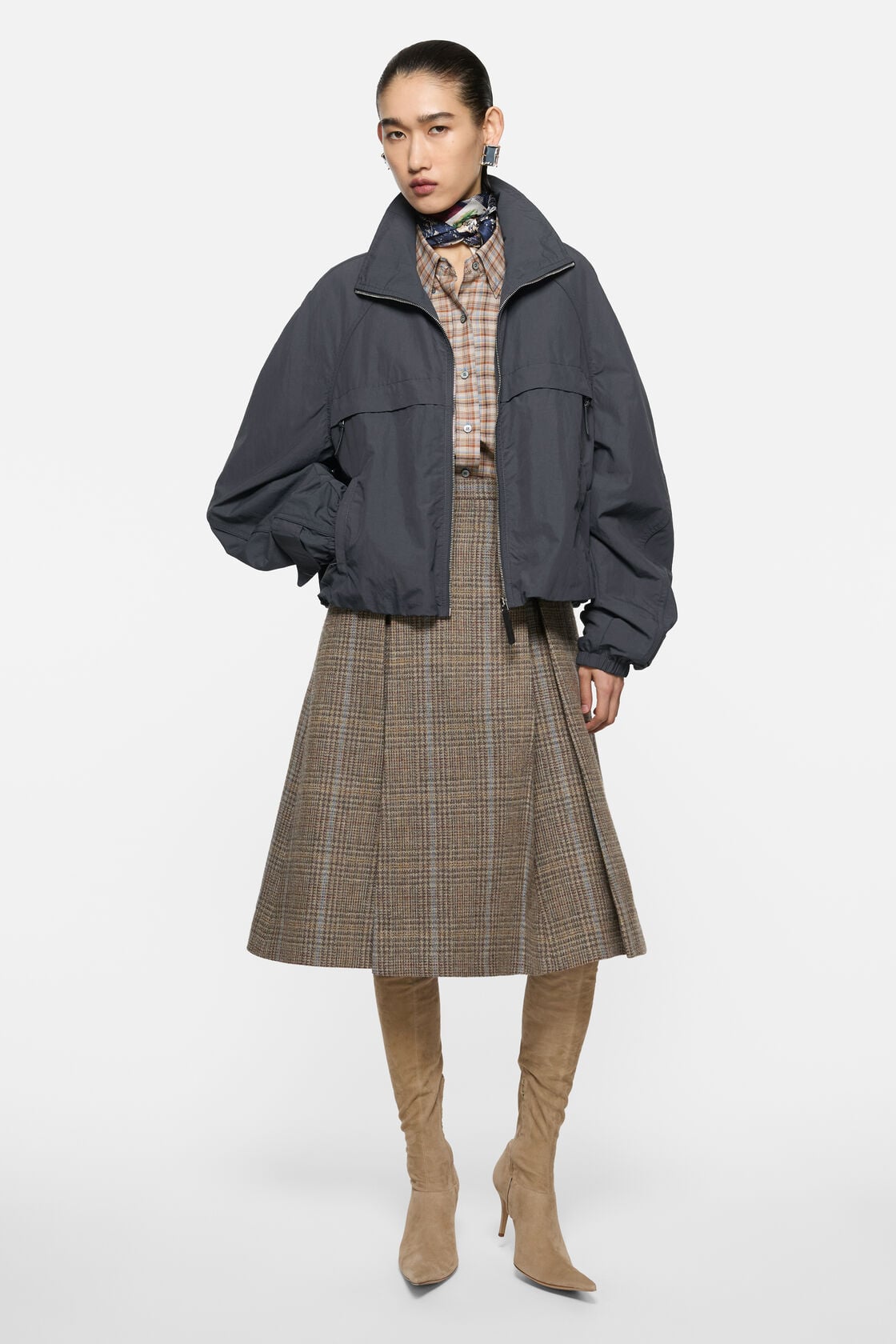
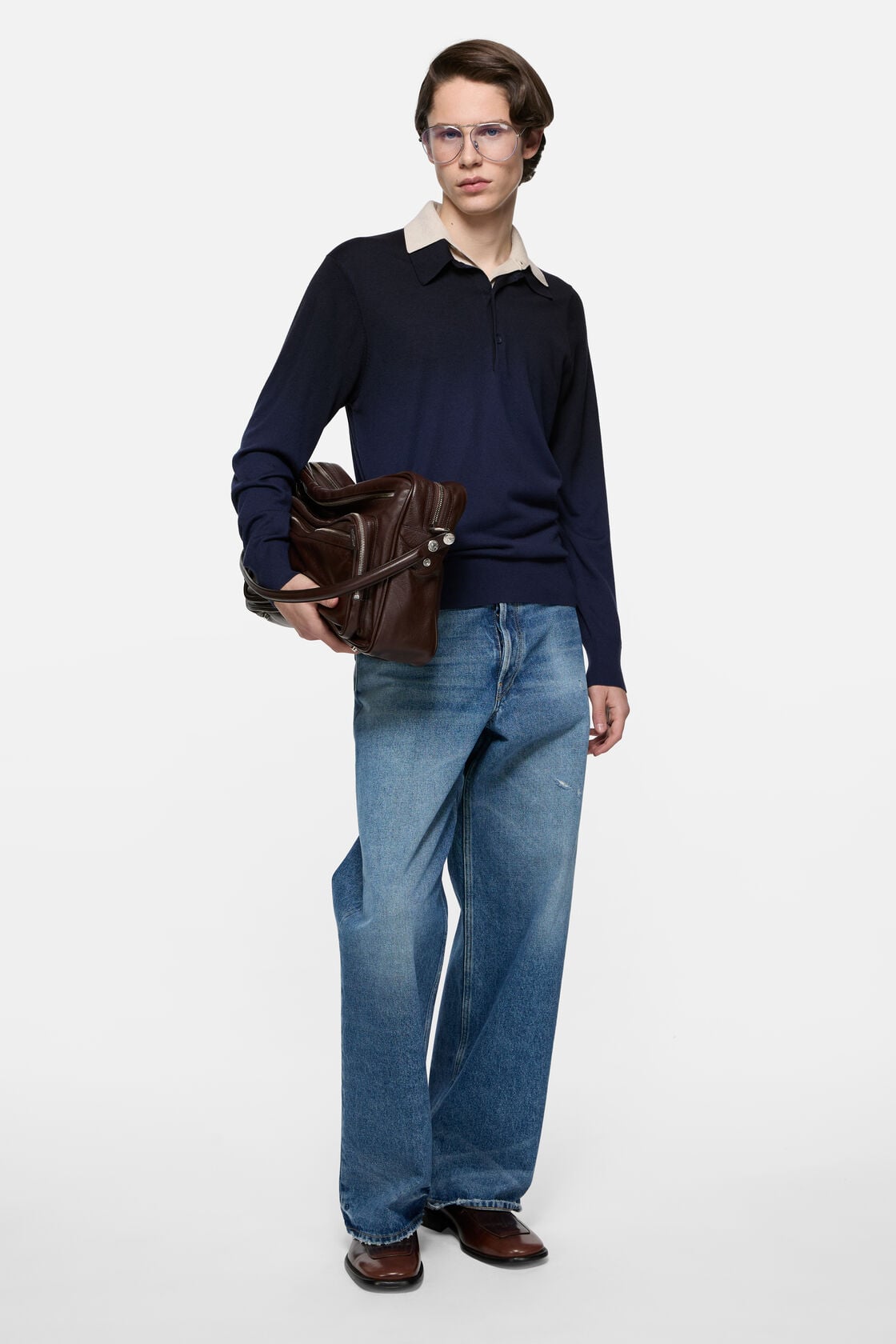
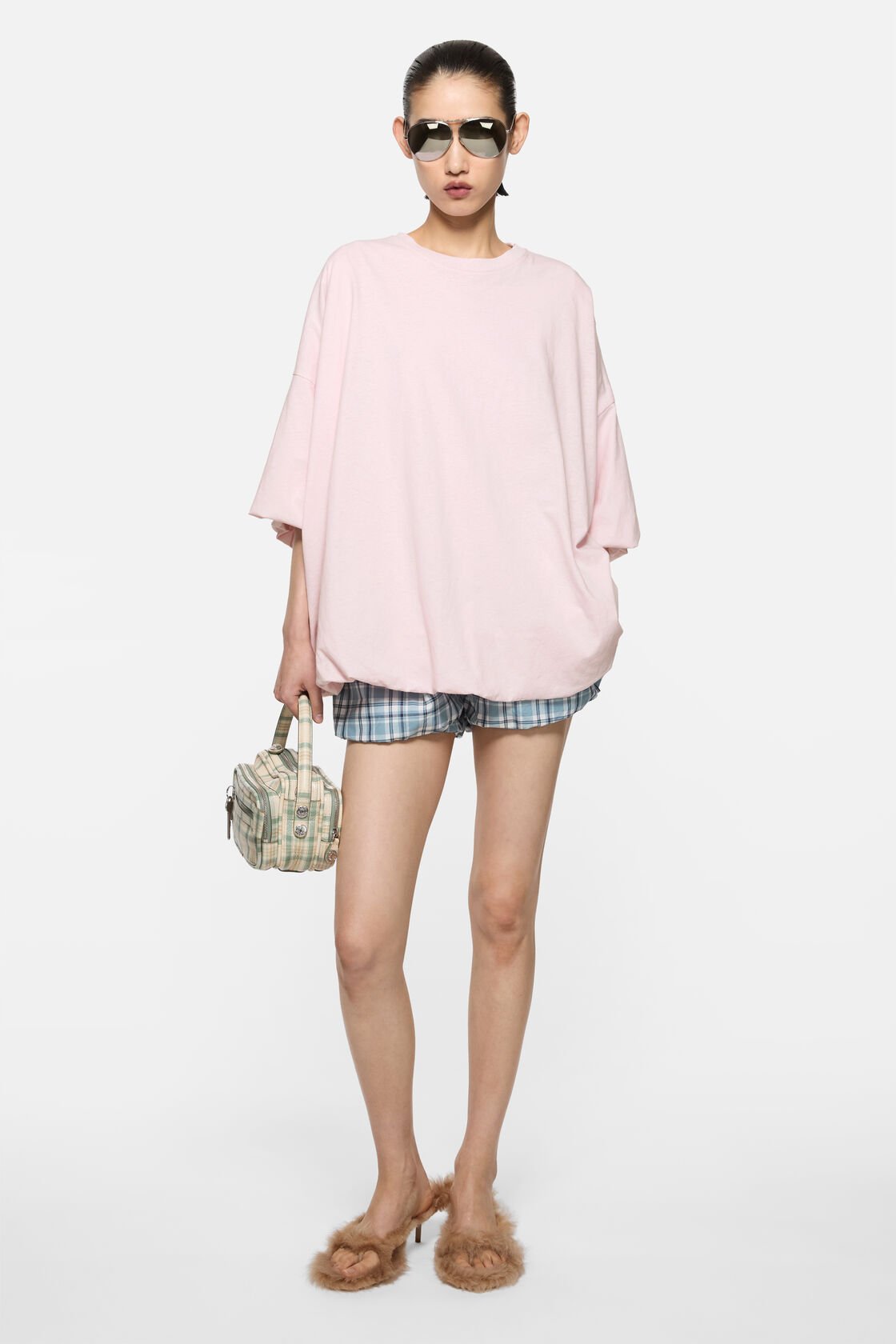
The spring 2024 collection offered some clues. Johansson leaned into tailoring — double-breasted blazers with exaggerated lapels, pleated trousers cut wide through the leg, a trench coat in washed cotton that looked like it had been left out in the rain and then pressed flat. The palette was muted: stone, charcoal, a particular shade of dusty pink that read as almost grey under certain light. On the runway, worn by models with severe centre parts and minimal makeup, the effect was striking. In the shop, one suspects, it may read as simply expensive.
Acne Studios reported revenues of approximately €240 million in 2023, a modest increase over the previous year but below the growth rates seen by peers like Ganni or Totême. The house remains independent — a rarity at this scale — but independence requires cash flow, and cash flow requires product that moves. The Pistol boot still sells. So does the Canada scarf. But the newer pieces, the ones that define the current creative direction, are harder to parse. A quilted leather jacket from the autumn 2024 collection retails at €3,200. It is beautifully made — diamond stitching at two-centimetre intervals, a lining in cupro that slides on like water — but it competes in a bracket occupied by houses with far deeper craft legacies.
La Question de l'Identité
Part of the difficulty is that Acne Studios has always been easier to describe by negation than affirmation. Not minimal, not maximal. Not streetwear, not couture. Not trend-driven, but not immune to trends either. This worked when the market rewarded ambiguity, when consumers wanted clothing that signalled taste without announcing it. Now, with the rise of what one might call legibility — logos, house codes, instantly recognisable silhouettes — Acne Studios finds itself in a bind. The house built its reputation on subtlety, and subtlety does not photograph well on a phone screen.
Johansson has responded by pushing further into idiosyncrasy. The autumn 2024 show featured models walking on a set covered in crumpled aluminium foil, wearing oversized parkas with sleeves that extended past the fingertips and trousers that pooled around the ankles. It was odd, and oddness is valuable. But oddness also limits reach. One can admire the vision and still wonder whether it translates to the kind of sales growth required to sustain a house of this size without outside investment.
There is also the matter of the Face emoji — the lowercase 'a' inside a circle, rendered in a smiling typeface, that appears on certain Acne Studios pieces. Introduced in 2019, it functions as a kind of logo-that-isn't, a wink at the idea of branding without committing to it fully. Some find it charming. Others find it twee. Either way, it suggests a house still negotiating its relationship to visibility.
Où en Sommes-Nous?
Acne Studios is not in crisis. The Paris and Stockholm flagships are busy. The e-commerce site moves product. Collaborations — a recent capsule with Mulberry, another with the Swedish brand Our Legacy — generate attention. But attention is not the same as momentum, and momentum is what separates a house that endures from one that plateaus.
The challenge, as ever, is to remain interesting without becoming inaccessible, to grow without diluting. Johansson has managed this for two decades, which is no small feat. Whether he can manage it for another two depends, in part, on whether the market continues to reward the kind of clothing Acne Studios makes: thoughtful, well-constructed, resistant to easy categorisation. Right now, the answer is unclear.
Stand in the Stockholm flagship on a Saturday afternoon and watch who buys what. The Canada scarf, yes. The Pistol boot, always. The €3,200 quilted jacket? It hangs on the rail, untouched, catching the light from the window. Beautiful, certainly. Consequential, perhaps. But to whom, and for how long, remains an open question.