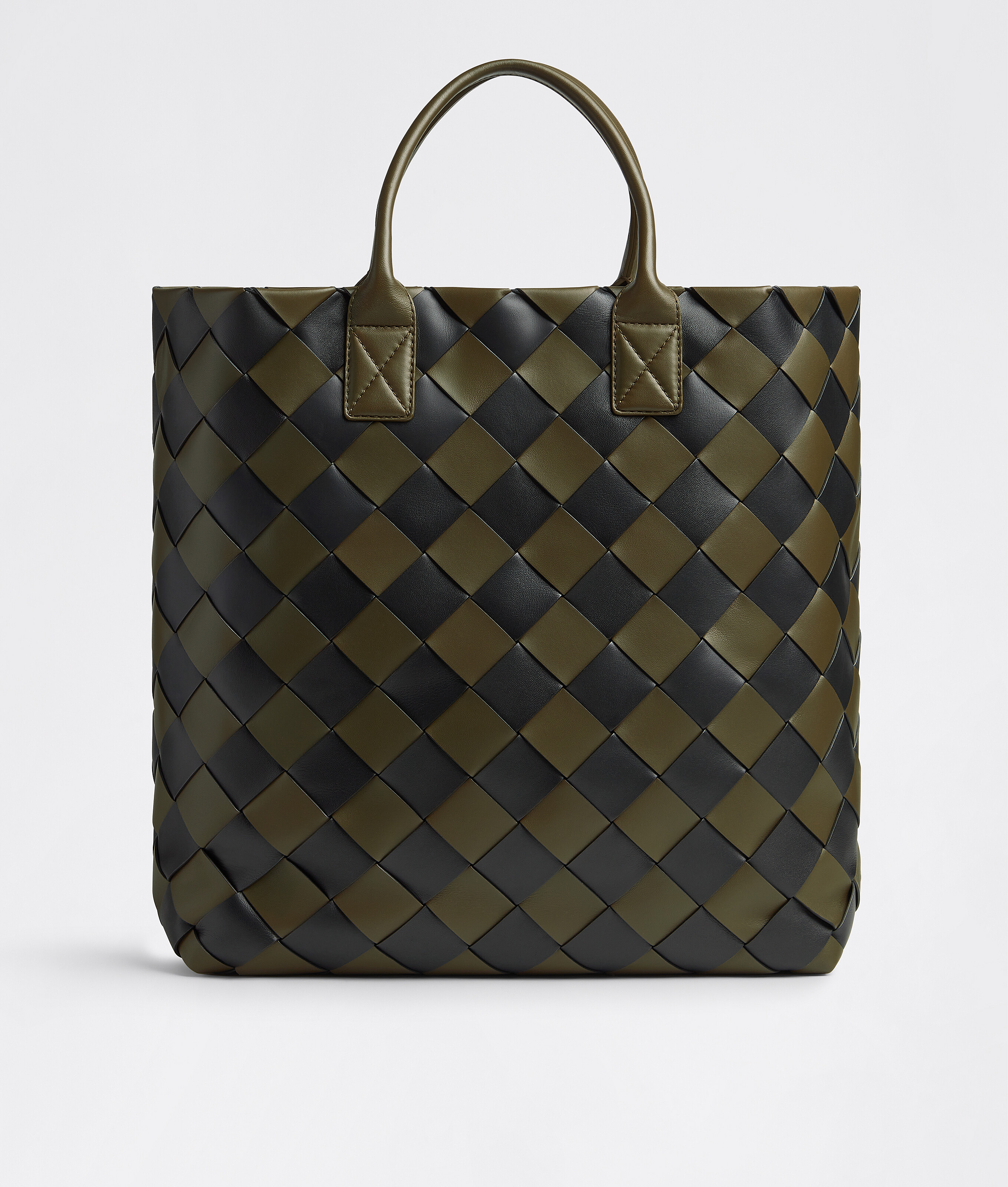
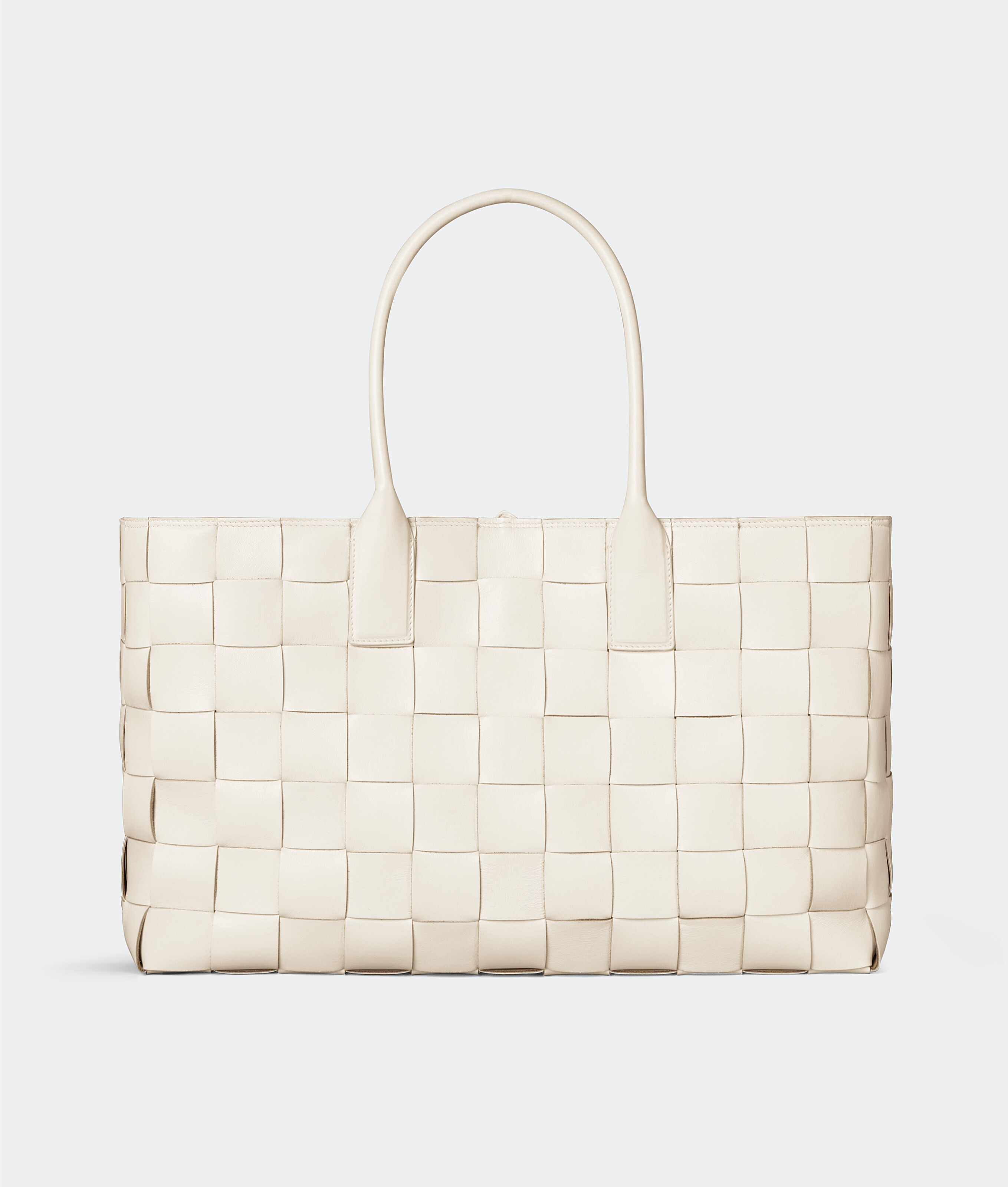
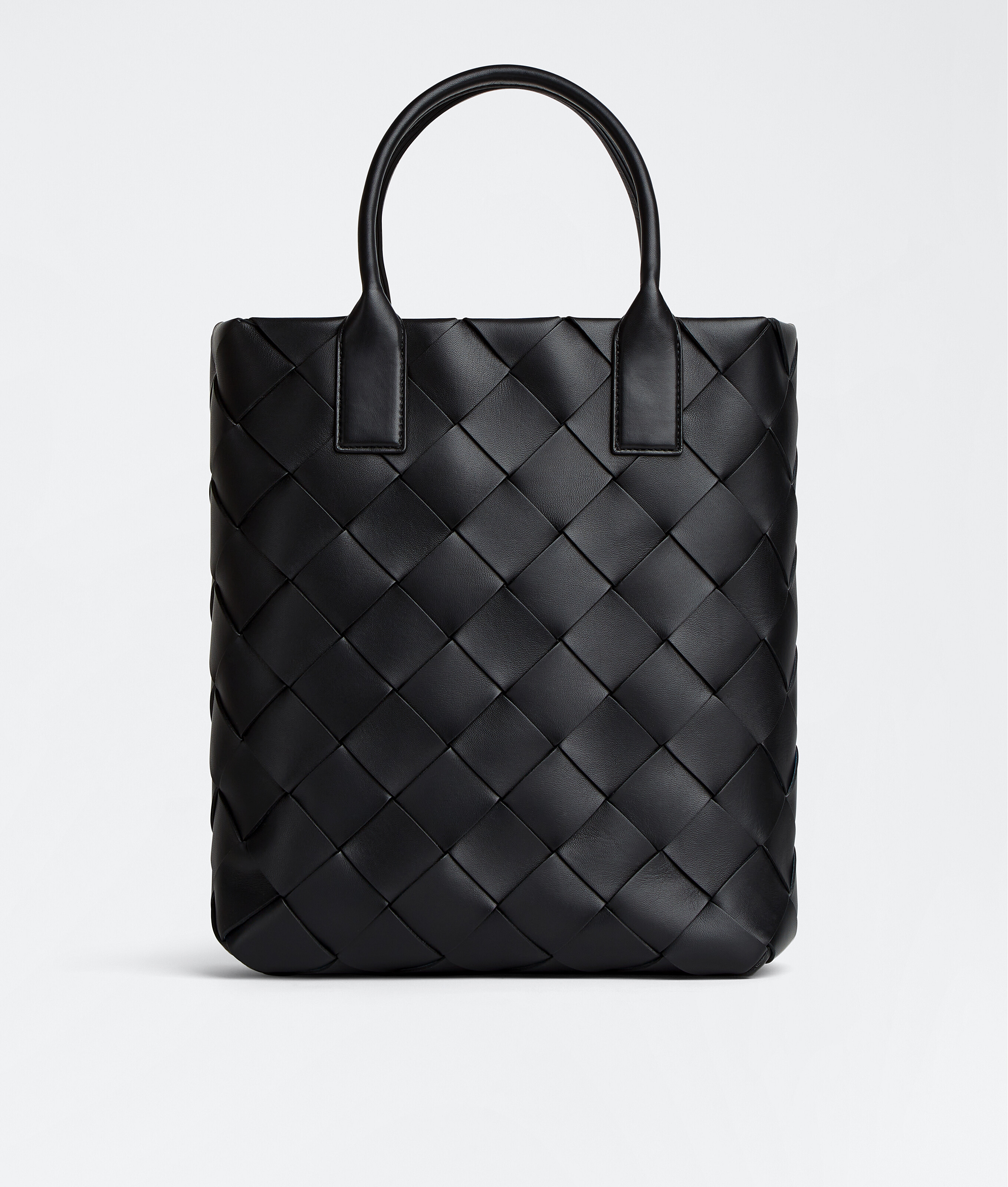
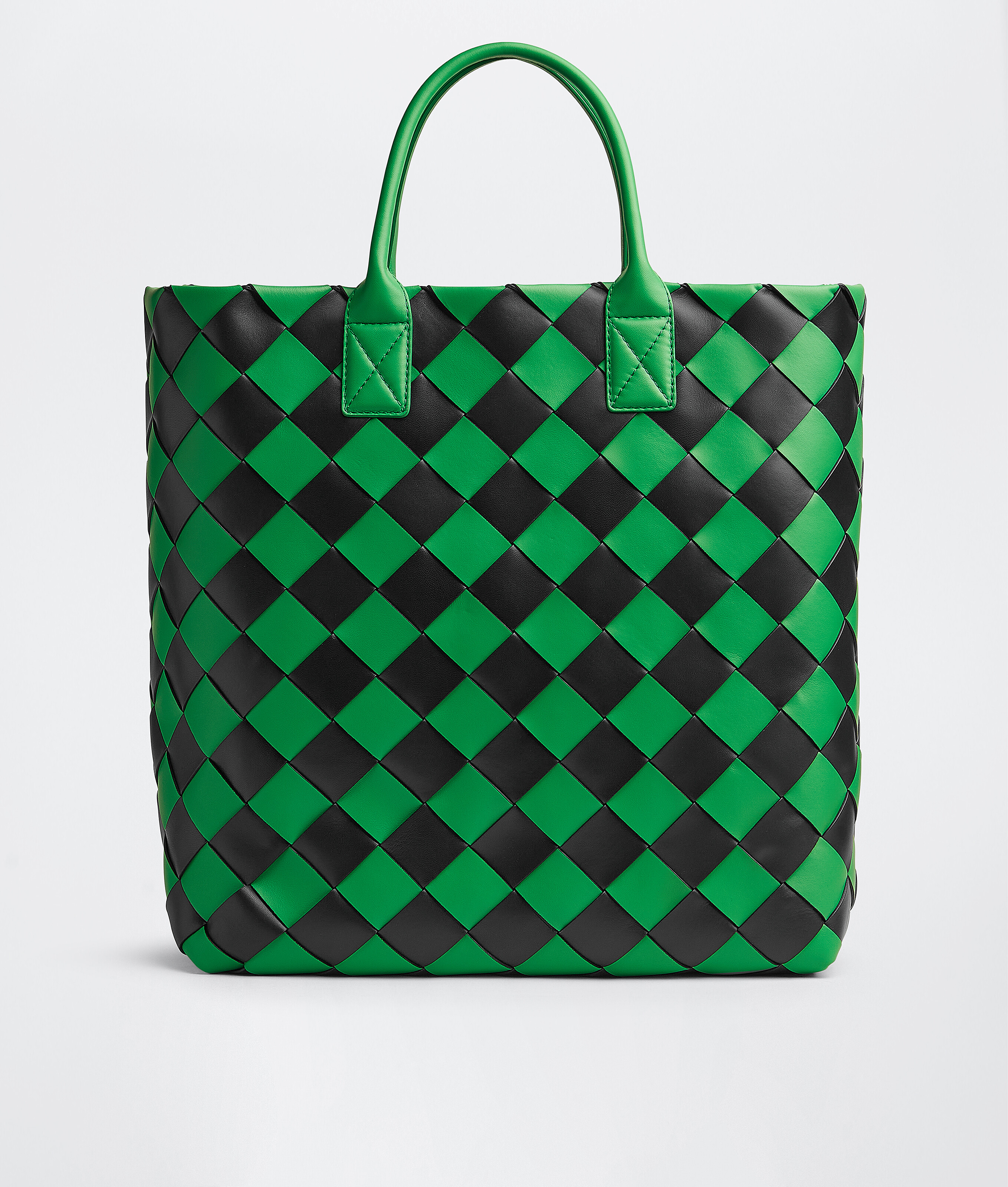
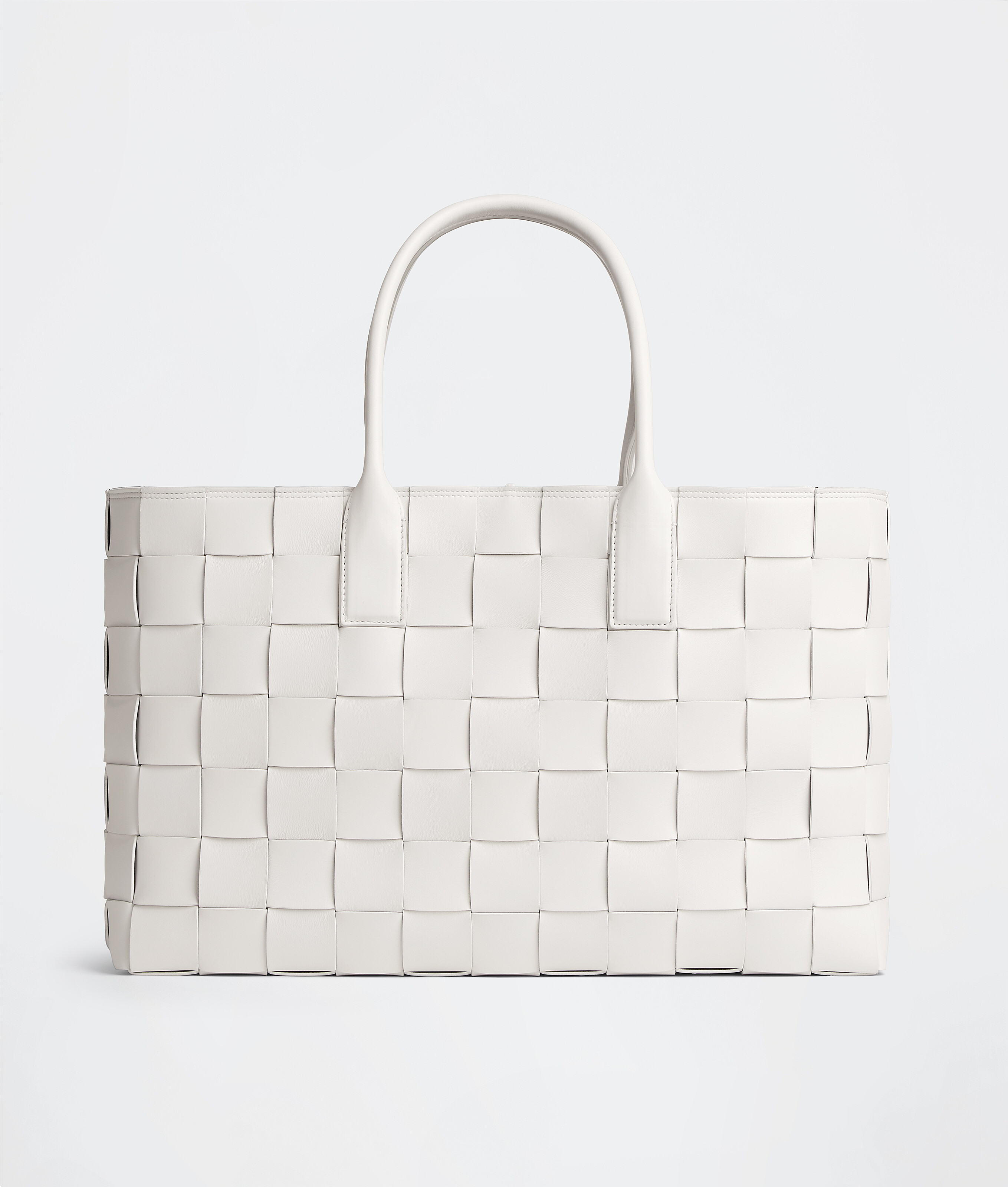
The intrecciato weave takes eight hours to complete on a single bag
The intrecciato weave takes eight hours to complete on a single bag. Sixteen leather strips, each cut to the same width, woven by hand into a pattern so consistent it reads as texture rather than construction. The technique is sixty years old. It is, depending on who you ask, either the most recognisable signature in luxury goods or proof that you can build an empire on discretion.
Bottega Veneta was founded in 1966 in Vicenza, a city known more for Palladio than for fashion. Michele Taddei and Renzo Zengiaro opened the atelier with a simple premise: make leather goods using Venetian craft traditions, sell them without logos, and trust that quality would speak for itself. The intrecciato was not invented as a signature. It was a solution. Woven leather is stronger than a single piece. It also happens to look like nothing else.
Through the seventies and eighties, the house built a reputation among people who did not need to announce what they carried. The work was meticulous, the prices reflected that, and the clientele included exactly the sort of women who would never say they shopped at Bottega Veneta. By the time the brand was sold to Gucci Group in 2001, it had become a case study in how far you could go on craft alone. The answer, as it turned out, was not quite far enough.
Tomas Maier and the Doctrine of Quiet
When Tomas Maier arrived as creative director in 2001, Bottega Veneta was solvent but irrelevant. The intrecciato was still made by hand. The bags were still expensive. But luxury had moved toward monograms and marketing, and a house built on discretion had become invisible.
Maier's solution was to double down. He kept the intrecciato, expanded it into ready-to-wear, and articulated a philosophy that would define the brand for seventeen years: "When your own initials are enough." It was positioning as much as design. Bottega Veneta would be the house for people who did not need logos because they already had everything else.
The Cabat tote, introduced in 2001, exemplified the approach. No hardware, no lining, no visible seams. Just intrecciato leather in a shape so simple it looked inevitable. It retailed for several thousand dollars and became the kind of bag that signalled not wealth but a particular kind of taste. Maier extended the language into clothing: clean lines, rich materials, construction you could feel but not always see. A cashmere coat in charcoal. Woven leather trousers. Shoes with no branding beyond the quality of the last.
The strategy worked. By 2015, Bottega Veneta was generating over a billion euros in revenue. Maier had turned discretion into a business model. But discretion, it turns out, has a ceiling. The house was profitable, respected, and—by the late 2010s—predictable. The intrecciato had become shorthand for a very specific customer, and that customer was not getting younger.
Daniel Lee and the Collapse of Discretion
Daniel Lee lasted three years. He arrived in 2018, thirty-two years old, from Celine under Phoebe Philo, and immediately dismantled the doctrine of quiet. His first collection for Bottega Veneta included squared-toe boots, padded woven clutches the size of throw pillows, and a coat made entirely of intrecciato leather. The shapes were assertive. The proportions were strange. The intrecciato was still there, but it had been pushed into forms that looked nothing like the Cabat.
The Pouch, introduced in his debut collection, became the defining object of Lee's tenure. It was an intrecciato clutch with no structure, designed to be carried by hand or tucked under the arm. It photographed beautifully. It also represented a fundamental shift in how Bottega Veneta thought about itself. The Pouch was not discreet. It was sculptural, immediately recognisable, and within a year it was everywhere.
Lee's Bottega Veneta was not interested in quiet luxury. It was interested in craft expressed through volume and tension. He kept the artisanal techniques—every bag was still woven by hand in Vicenza—but used them to make things that looked contemporary rather than timeless. The squared-toe boot, initially divisive, became one of the most copied silhouettes of 2019. The padded Cassette bag, with its quilted intrecciato, turned the house signature into something plush and tactile.
Revenue climbed. So did visibility. Lee deleted Bottega Veneta's Instagram account in 2021, a move that generated more press than any campaign could have. The message was clear: the work would speak for itself, but it would speak loudly.
Then, in November 2021, Lee left. Kering gave no explanation beyond the usual language about mutual agreement and future opportunities. The collections had been commercial successes. The critical reception had been strong. But three years is not long enough to embed a vision, and Lee's Bottega Veneta had been built almost entirely on his instincts.
Matthieu Blazy and the Return to Craft
Matthieu Blazy, who took over in 2021, had spent five years as design director under Lee. His first collection as creative director was presented in February 2022, and it opened with a coat made from repurposed leather scraps, each piece hand-stitched into a patchwork that looked like abstract painting. The intrecciato was still present, but it shared space with other techniques: smocking, ruching, leather treated to look like denim or canvas.
Blazy's Bottega Veneta is quieter than Lee's but not in the way Maier's was. The shapes are softer, the palette more muted, but the craft is more visible. A dress made from leather strips woven into a mesh. A bag constructed from scraps of previous bags, each piece still identifiable. The work is meticulous, but it does not announce itself. It waits for you to notice.
The Andiamo bag, introduced in Blazy's second collection, is smaller than the Pouch, more structured than the Cabat, and woven in a way that makes the intrecciato look almost liquid. It is not trying to replace either of those bags. It is simply offering a third option, one that feels both familiar and new.
Blazy has also leaned into the archive, not as nostalgia but as material. His collections reference Maier's clean lines and Lee's sculptural instincts without replicating either. The result is a version of Bottega Veneta that feels less like a single vision and more like an accumulation of craft knowledge. The atelier in Vicenza still weaves every bag by hand. The difference is what they choose to weave.
There is a photograph from the Spring 2023 show: a model in a leather trench, the panels cut and stitched so the grain runs in different directions, catching the light in a way that makes the coat look like it is moving even when it is not. It is not the intrecciato. It is not a logo. It is simply what happens when you have sixty years of craft and no interest in standing still.