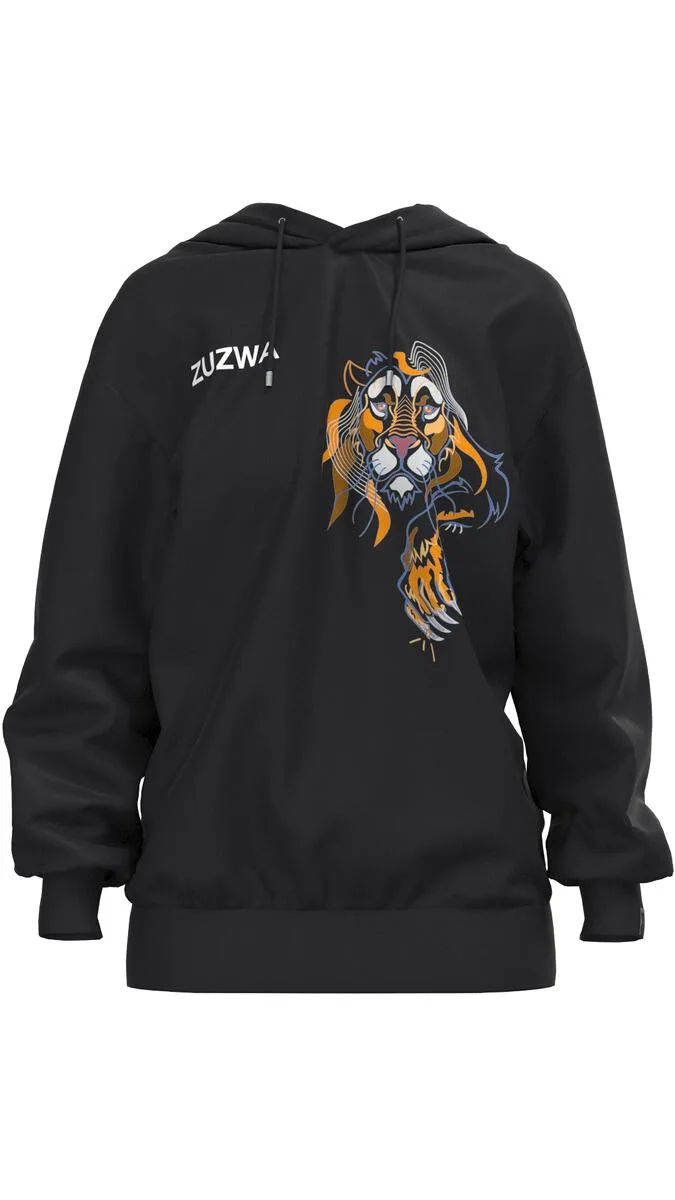
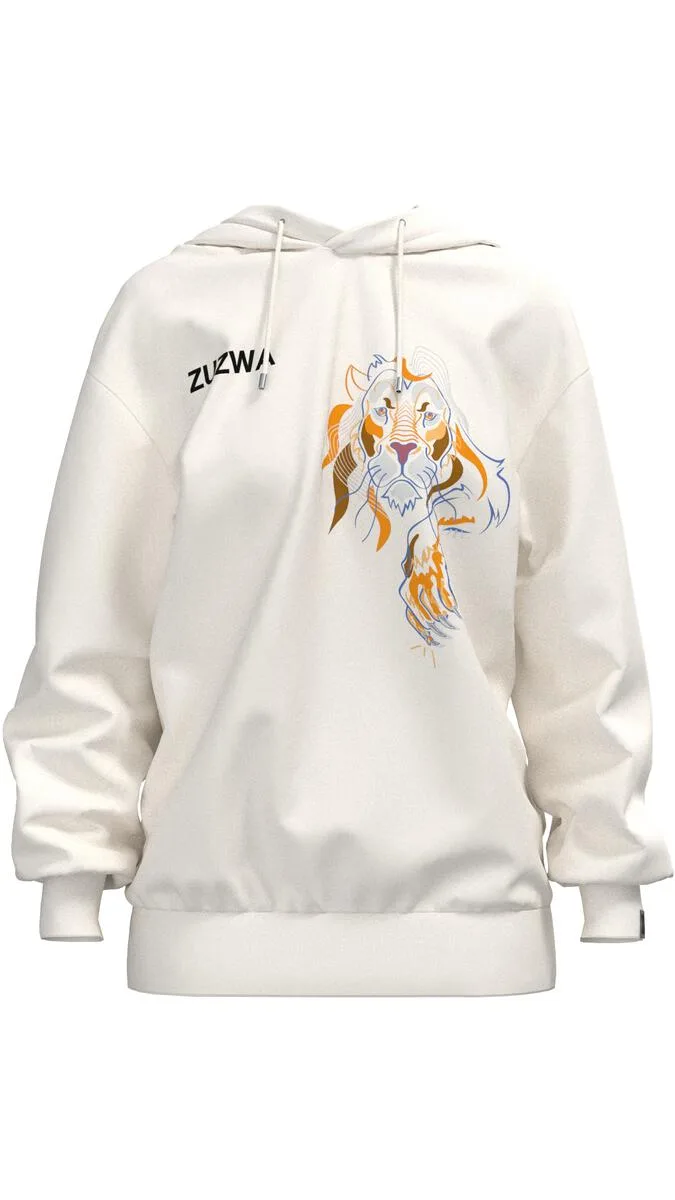
The jacket arrives folded, not hung
The jacket arrives folded, not hung. Inside the box, a note in pencil: Merci de le porter avec soin. The garment is unlined. When you lift it, the weight surprises—heavier than it looks, lighter than you expect. This is ZUZWA in miniature: deliberate contradiction, refusal of ease.
The house began in 2011, in a converted garage in Antwerp. Founder Zoë Uwimana had worked pattern-making for Dries Van Noten and spent two years at a small atelier in Kyoto learning to construct without interfacing. She returned to Belgium with a single conviction: that structure could exist without rigidity. The first collection was seven pieces. Five were variations on a single coat. The coat had no buttons. It closed with a system of interior ties that required the wearer to understand its geometry.
ZUZWA did not announce itself. There was no runway, no lookbook. Uwimana showed the work in her studio by appointment. You came, you saw the garments on a rail, she explained the construction if you asked. The first stockist was Graanmarkt 13, which took three pieces on consignment. They sold in two weeks. The buyer called and asked for more. Uwimana said no—she was working on the next collection.
This was not strategy. It was capacity. The atelier was Uwimana and one assistant. Every garment was cut by hand. Seams were felled or bound, never overlocked. The house worked in natural fibres: linen from Belgium, wool from Scotland, cotton from Japan. Uwimana did not use synthetic thread. She did not use fusible interfacing. These were not ethical positions—they were technical ones. She wanted the cloth to move as cloth moves.
L'ère de la construction
Between 2013 and 2017, ZUZWA built a vocabulary. The silhouette was consistent: dropped shoulder, extended sleeve, hem that fell below the hip. Trousers sat low and broke long. The palette was limited—black, grey, ivory, occasional rust. What changed season to season was the interior.
A 2015 jacket had twelve pattern pieces in the body alone. The sleeve was set with a technique borrowed from tailoring, then the armscye was finished with a Hong Kong seam. You could turn the garment inside out and wear it that way; both sides were considered. Uwimana called this réversibilité conceptuelle—not that the piece was literally reversible, but that the making was visible from any angle.
Press began to arrive. System magazine ran a six-page feature. Dover Street Market placed an order. Uwimana expanded the atelier to four people, then six. She did not expand the output. ZUZWA produced two collections per year, roughly forty pieces each. Production runs were small: ten units of a shirt, fifteen of a coat. The work sold through, but slowly. Retailers learned not to expect reorders.
This was the period when ZUZWA established its reputation for difficulty. The clothes required understanding. A dress that looked simple on the hanger revealed itself in wear: the neckline sat forward, the sleeve pulled back, the whole garment moved around the body rather than with it. You had to learn how to inhabit it. Some clients returned pieces. Others bought multiples.
Uwimana was uninterested in comfort as ease. She was interested in comfort as rightness—the sensation of a garment doing exactly what it was built to do. A ZUZWA coat is not easy to put on. The sleeves are narrow at the bicep, wide at the wrist. You have to feed your arm through carefully. Once on, the coat sits exactly where it should. The shoulder seam lands two inches back from the natural shoulder. This is intentional. It changes how you hold yourself.
Le tournant collaboratif
In 2018, ZUZWA began working with other makers. Not as collaboration in the capsule-collection sense, but as consultation. A ceramicist in Limoges asked Uwimana to advise on the structure of a new kiln. A furniture maker in Copenhagen wanted to understand how she thought about weight distribution. These were not commissions—they were conversations.
The work began to shift. The spring 2019 collection introduced curved seams. Not princess seams, not darts—curves cut into the pattern itself, following lines that had no relation to the body's geometry. A jacket had a seam that ran from the left shoulder to the right hip. It served no structural purpose. It was there because Uwimana wanted to see what happened when a straight-grain fabric was interrupted by a bias curve.
The collection also introduced color. Not many: a specific blue, a particular green. The blue was mixed custom, a shade between indigo and slate. Uwimana had it dyed in Italy, then over-dyed in Antwerp to deepen the tone. The green came from a Japanese mill that specialized in persimmon tannin. Both colors shifted in different light. Clients asked what to call them. Uwimana said to call them blue and green.
This period brought ZUZWA its largest audience. The house opened a studio-shop in Antwerp's Kloosterstraat, a single room with a table and a rail. No signage outside. If you knew, you knew. The space hosted occasional workshops—not on how to wear the clothes, but on how to read construction. Uwimana would take apart a vintage garment and explain its making. She did not teach sewing. She taught seeing.
By 2021, the atelier employed eleven people. ZUZWA was stocked in fourteen cities. The work appeared in museum exhibitions on contemporary craft. Uwimana was invited to speak at design schools, which she declined. She did not want to explain the work in language. She wanted the work to explain itself.
Maintenant
The current collection—autumn 2024—is the quietest yet. Eighteen pieces. No new shapes. Every garment is a refinement of something ZUZWA has made before. A coat from 2014, rebuilt with a different shoulder. A trouser from 2017, cut wider through the thigh. The palette is back to grey and black.
In interviews, Uwimana says she is less interested in development than in precision. She has spent thirteen years building a vocabulary. Now she wants to speak it fluently. This is not repetition—it is deepening. A writer does not abandon syntax once they have learned it. They use it with greater care.
The atelier has not grown. Eleven people is the right number. ZUZWA still produces two collections per year, still works in natural fibres, still finishes every seam as if it will be seen. The house is not scaling. It is sustaining.
What has changed is patience. The work no longer needs to announce itself. A ZUZWA client in 2024 is someone who has worn the clothes for years, who understands that a jacket is not finished when you buy it but when you have worn it enough to know its tendencies. The cloth softens. The seams settle. The garment becomes specific to your body.
There is a coat in the current collection—a long wool coat with a shawl collar and no closures. It hangs open. You can belt it if you want, but it is not designed to be belted. It is designed to move as you move, to open and close with your stride. Uwimana has made versions of this coat since 2012. Each iteration is slightly different: the collar width, the sleeve pitch, the placement of the pockets.
She says this will not be the last version. There is no final version. There is only the version she is working on now.