The jeans were raw denim, cut straight, and came in a run of one hundred pairs
The jeans were raw denim, cut straight, and came in a run of one hundred pairs. Jonny Johansson gave them to friends in Stockholm in 1996. No logo, no branding—just a red thread along the inseam and a fit that sat somewhere between workwear and the sort of studied nonchalance that, at the time, didn't yet have a name in Swedish fashion. The friends wore them. Others noticed. Within eighteen months, Acne Studios existed not as an acronym for a creative collective but as a label with a point of view.
That point of view, from the start, was oblique. Johansson had studied at Stockholm's Konstfack, worked in advertising, and approached garments less as statements than as problems worth solving in cloth. The jeans were followed by denim jackets, then knitwear, then outerwear that leaned into Scandinavian utilitarianism without announcing it. By 2001, the first Paris showroom opened. By 2006, Acne Studios showed on-schedule during Paris Fashion Week. The trajectory was neither meteoric nor accidental—it was methodical, built on a refusal to perform what the industry expected from a Nordic brand.
L'époque fondatrice : Stockholm, denim, et l'anti-branding
The early years operated on a logic that now reads as prescient but at the time felt merely stubborn. Acne Studios declined the obvious moves—no Scandi-minimalism clichés, no overt logomania, no attempt to court the It-bag market. Instead, Johansson and his small team worked in denim and jersey, in leather treated to look lived-in from the first wear, in silhouettes that borrowed from military surplus and art-school uniforms in equal measure.
The name itself—Ambition to Create Novel Expressions—was backronymed from ACNE, the collective Johansson co-founded in 1996 with three others. The collective dissolved, but the name stuck, and with it a certain wry distance from fashion's self-seriousness. Early campaigns featured friends, artists, musicians. No models in the conventional sense. No aspiration, at least not the kind that required a yacht or a château in the background.
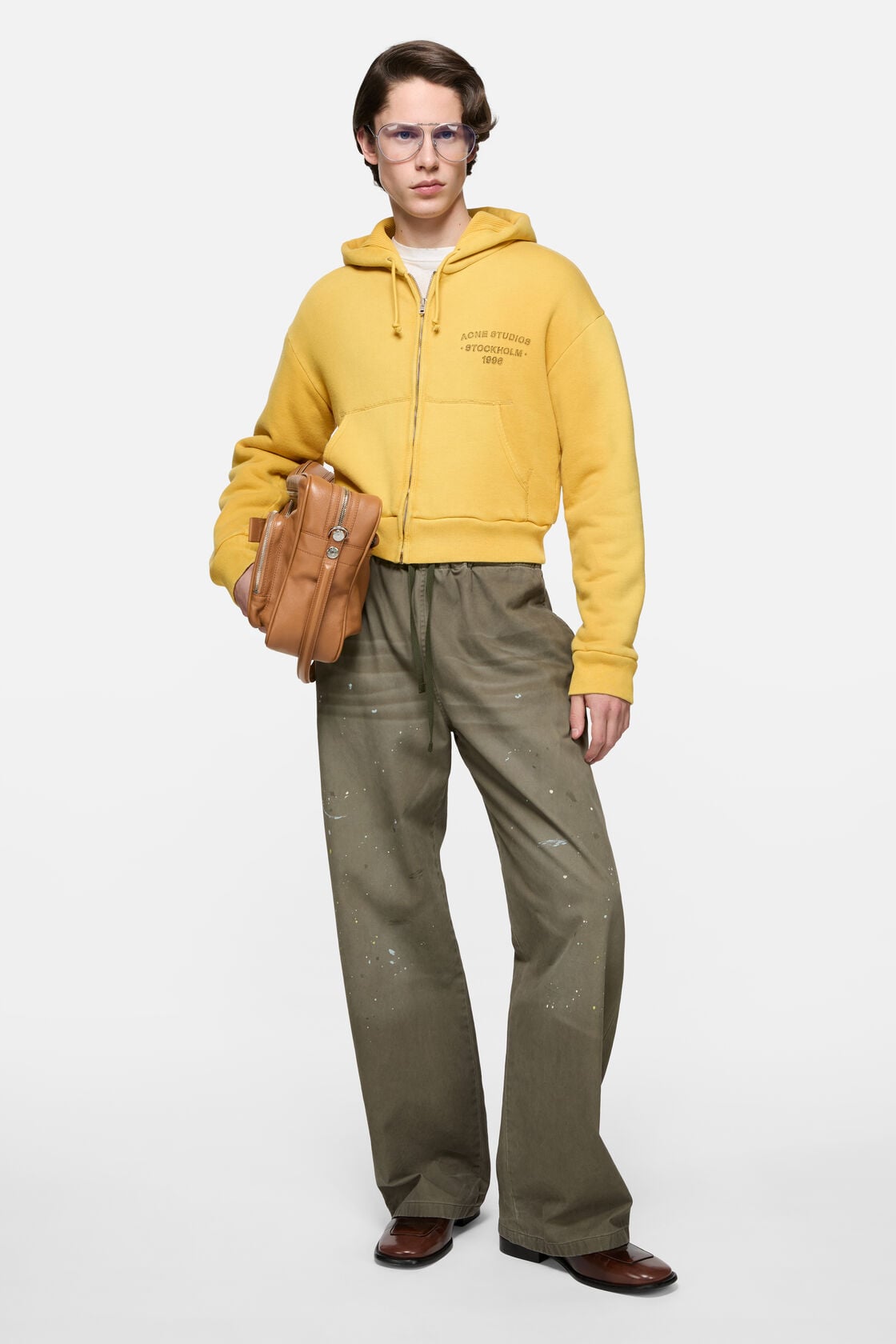
What Acne Studios did sell, and sold well, was a kind of intelligent dishevelment. The jeans fit in a way that suggested you'd owned them for years. The leather jackets—often in shades of oxblood or washed black—came pre-broken-in, the hides tumbled and oiled until they moved like fabric. Knitwear arrived oversized, asymmetric, occasionally inside-out. It was, in the language of the time, anti-fashion. In retrospect, it was simply fashion that trusted its audience to do some of the work.
By the mid-2000s, the maison had opened stores in Paris, London, New York. The interiors were sparse—concrete, steel, the occasional Brutalist gesture—but never cold. Johansson's background in art direction showed. Each space felt like a gallery where the product happened to be wearable. The clothes themselves remained resolutely unshowy. A black wool coat. A grey crewneck. A pair of trousers with a single pleat and no visible branding. One suspects this was intentional.
L'ère de consolidation : Paris, la reconnaissance, et les baskets Jensen
The second act began quietly, around 2010, when Acne Studios stopped being a well-kept secret and became, for a certain demographic, a wardrobe lingua franca. The Jensen sneaker—a low-top in tumbled white leather with an exaggerated toe and a discreet gold stamp—landed in 2012 and became the sort of thing one saw on every other foot in Marais cafés by 2014. Not quite a phenomenon, but close.
What separated Acne Studios from the wave of Scandi brands that followed was a willingness to complicate the narrative. Johansson showed tailoring that referenced Helmut Lang, then undercut it with a raw hem or an off-kilter lapel. He worked in pink—not blush, but a saturated, unapologetic fuchsia—on outerwear and suiting alike. He cast older models, younger models, models who didn't look like models. The runway shows in Paris were never about a single idea. They were about ten ideas in conversation, sometimes argument, with each other.
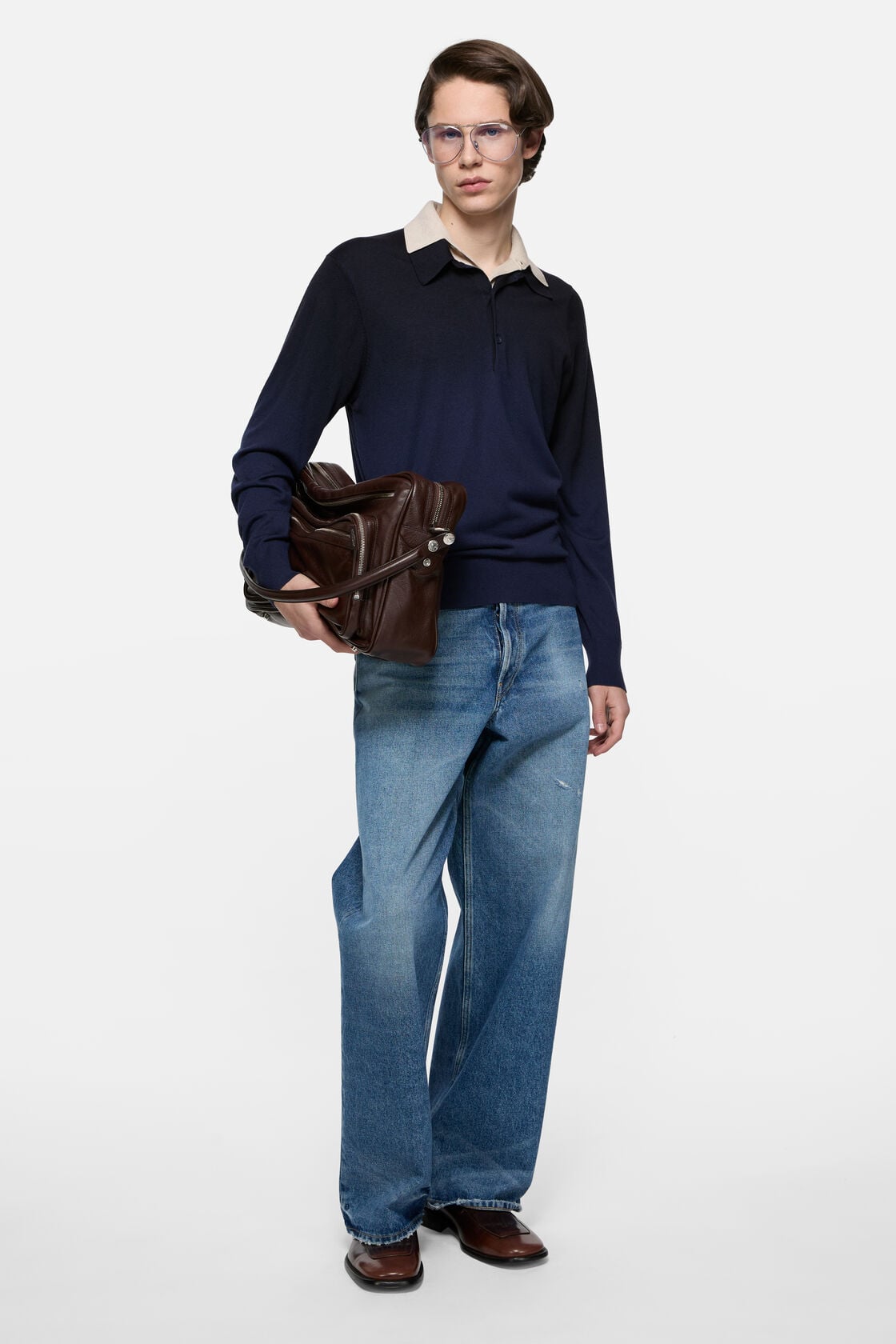
In 2015, the maison launched denim under the Blå Konst imprint—blå meaning blue in Swedish, konst meaning art. The line leaned harder into craft: selvedge from Japanese mills, natural indigo, cuts that referenced everything from 1940s workwear to 1990s rave culture. It was, in a sense, a return to the original jeans, but with three decades of fashion history folded into the cloth.
The same year, Acne Studios opened a flagship on rue Saint-Honoré. The space was vast, almost austere—raw concrete, brushed steel, a central staircase that felt more sculpture than function. Clothes hung on minimal racks. No music. No scent. The effect was less retail than installation, and it worked. By then, the maison had stores in Seoul, Tokyo, Hong Kong. The footprint was global, but the sensibility remained stubbornly specific.
La direction actuelle : Johansson, toujours, et l'équilibre précaire
Jonny Johansson is still at the helm. This is worth noting. In an industry that churns through creative directors at a rate that would embarrass most corporations, Acne Studios has had one vision for nearly three decades. The consistency shows—not as repetition, but as a kind of cumulative intelligence. Johansson knows what the house does well, and he knows when to push against it.
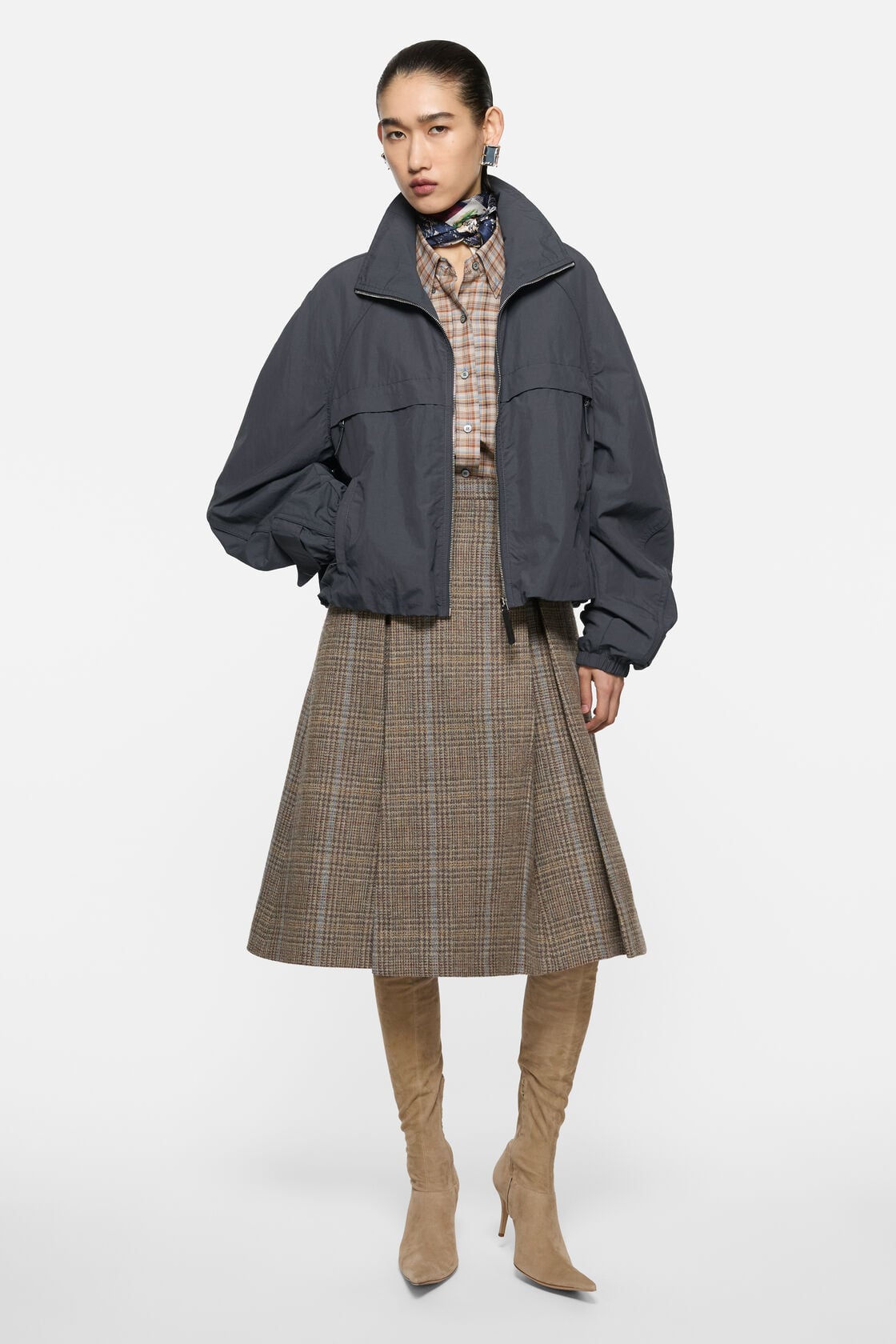
Recent collections have leaned into tailoring with a sharper edge. Suits in Prince of Wales check, cut with a longer jacket and a higher waist. Trench coats in rubberised cotton, belted tight and worn over wide-leg trousers. The palette has shifted, too—more camel, more tobacco, more of the earthy tones that photograph poorly but wear beautifully. There's less reliance on the house codes—the oversized scarf, the biker jacket—and more willingness to let a season stand on its own terms.
The sneaker line has expanded. The Jensen remains, but it's been joined by the Bolzter, the Perey, the Manhattan—each with its own logic, each avoiding the trap of looking like every other luxury trainer on the market. Materials matter here. Calfskin that creases in the right places. Rubber soles with enough heft to feel substantial. Laces that don't fray after a month.
Acne Studios has also, in recent years, leaned into collaboration without diluting the brand. A capsule with Mulberry in 2021 reinterpreted the British house's archival bags through a Nordic lens—softer leathers, muted hardware, silhouettes that felt less structured, more lived-in. A partnership with Fjällräven in 2022 revisited technical outerwear with an eye toward actual utility, not just the aesthetic of utility. Both felt considered. Neither felt like a cash grab.
The business itself has shifted. In 2020, Acne Studios opened a new headquarters in Stockholm—an old brewery converted into studios, showrooms, and a store. The same year, the maison was acquired by a European investment group, though Johansson retained creative control. The move raised eyebrows, as these things do, but the output hasn't wavered. If anything, the collections have grown more confident, less concerned with proving anything to anyone.
Ce qui reste
There's a photograph from the Spring/Summer 2023 show in Paris. A model in a pale grey suit, the jacket unbuttoned, the trousers pooling slightly at the ankle. No jewellery. No bag. Hair pulled back, face bare. The suit itself is unremarkable—good cloth, clean lines, nothing revolutionary. But the way it sits on the body, the way it suggests a kind of earned ease, is everything Acne Studios has been working toward since those first hundred pairs of jeans.
One could argue that the maison's greatest achievement is making thoughtfulness look effortless. The seams are straight, the leather is good, the fit is considered. But none of it announces itself. You have to look, and then look again, to see what's happening. In an industry that rewards the immediate, the shoppable, the Instagrammable, this is a gamble. So far, it's paid off.
Johansson, in a rare interview last year, was asked what he hoped people would remember about Acne Studios. He paused, then said something about wanting the clothes to feel like they'd always been there. Not new, not trend-driven, just—there. Present. It's a modest ambition, on the surface. But sustaining it for thirty years, across continents and market shifts and the endless churn of fashion's appetite for the next thing, is anything but.