The Kalimero bag arrived in stores this spring without a press release
The Kalimero bag arrived in stores this spring without a press release. No campaign teaser, no influencer unboxing, no countdown grid. It simply appeared—a quilted half-moon in butter-soft lambskin, named after a French cartoon chick—and sold through in a fortnight. That quiet launch is more telling than any runway spectacle. Bottega Veneta doesn't announce. It suggests, and the suggestion lands.
The house has spent the past five years rebuilding itself as the opposite of noise. No logo, no social media, no collaboration with the artist everyone else is chasing. What remains is craft, and the question of whether craft alone can sustain a luxury house in 2025.
Intrecciato and after
Bottega Veneta opened in Vicenza in 1966, founded by Michele Taddei and Renzo Zengiaro. The intrecciato weave—narrow strips of leather plaited by hand—became the house signature not because it was decorative, but because it was structural. Woven leather is stronger than stitched panels. It also requires time, which in the Seventies still carried commercial value.
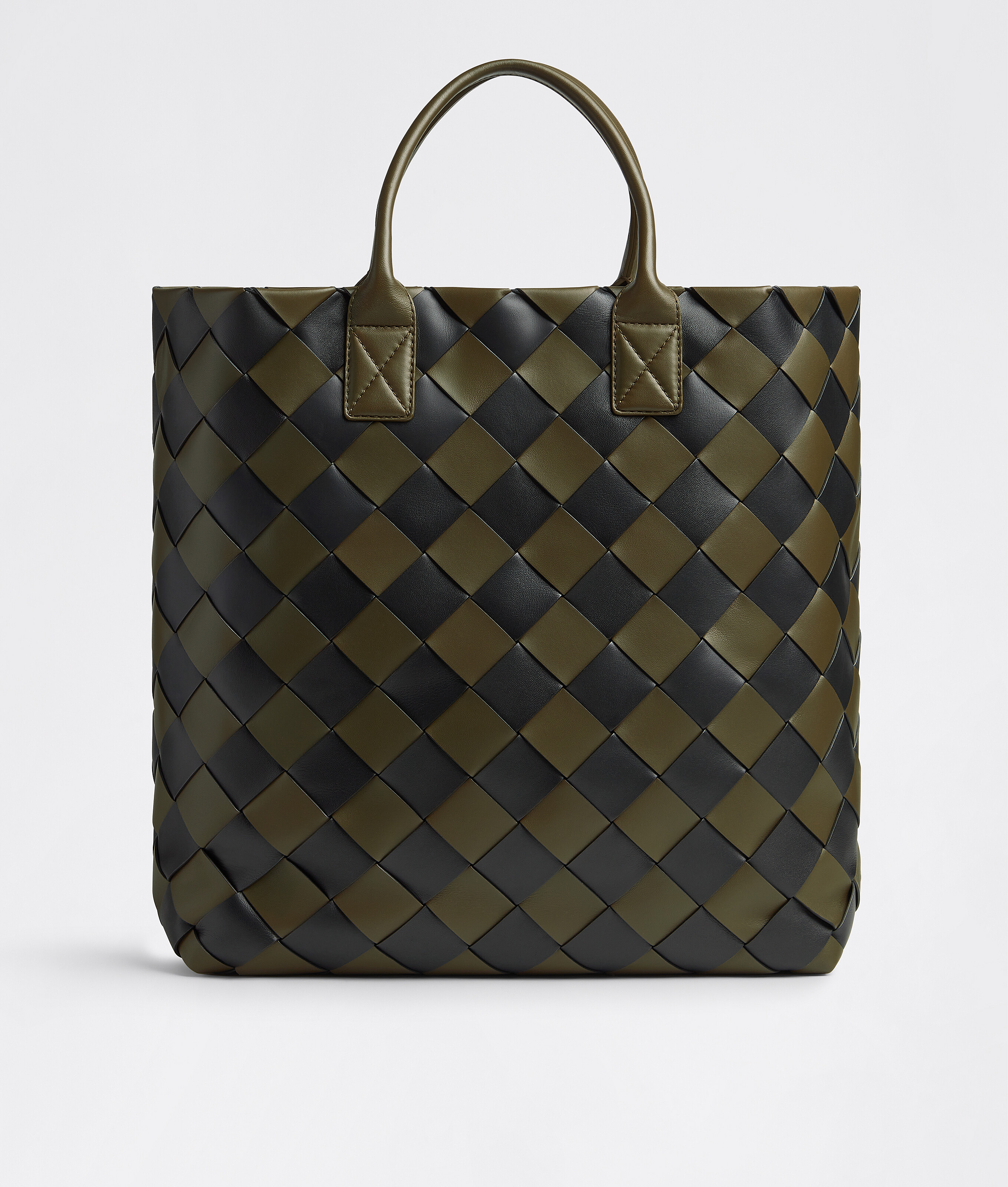
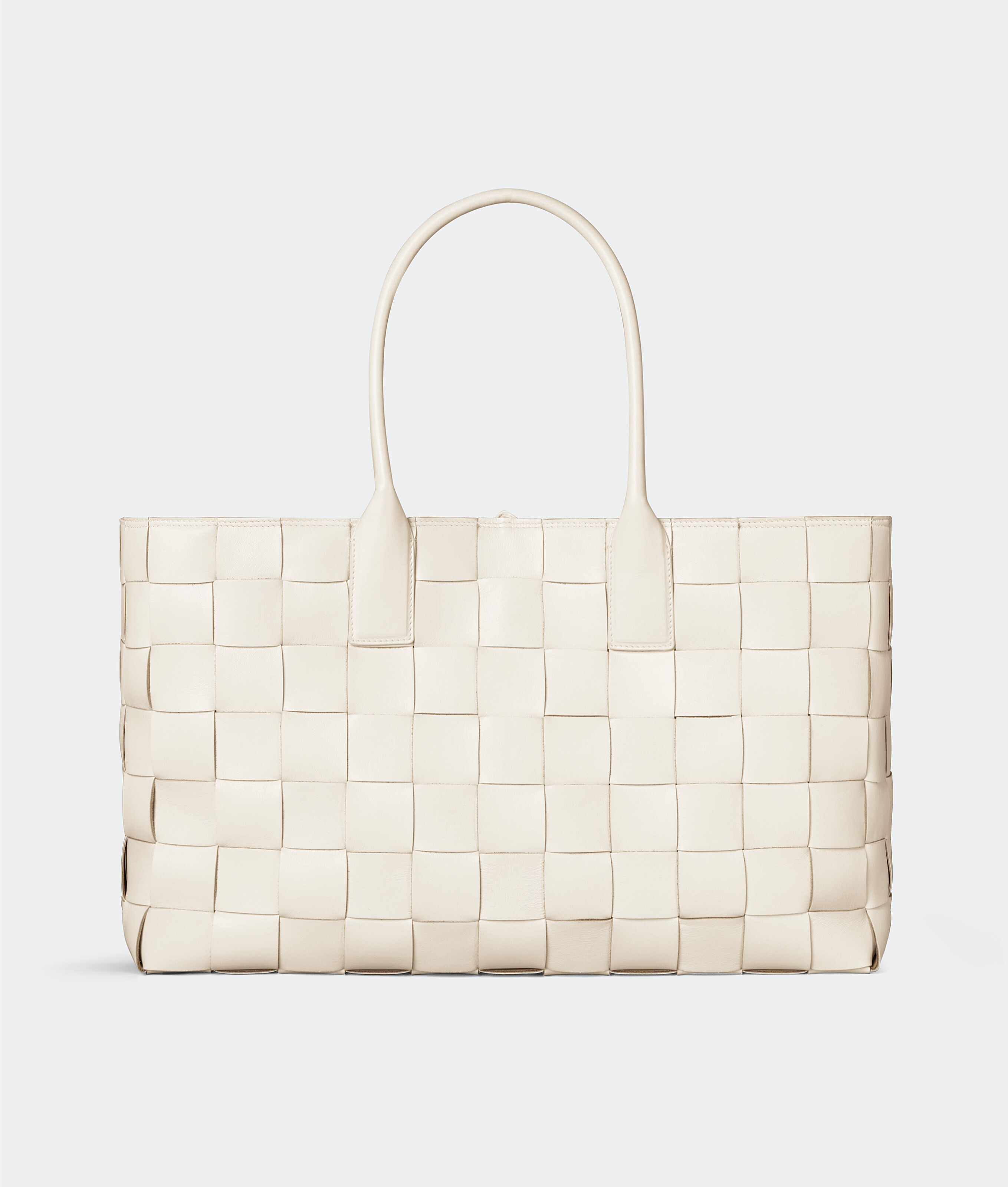
The Cabat tote, introduced in the early Seventies, remains in production. No hardware, no lining, no logo plate. Just woven calfskin and two handles. It takes two artisans roughly 12 hours to complete one bag. You can still commission it in 30 colours, though the waitlist now stretches past six months.
By the Nineties, the house had drifted. Tomas Maier arrived in 2001 and spent 17 years pulling Bottega back to its own logic. He reinstated the intrecciato as the house code, expanded it into ready-to-wear, and built a vocabulary of muted tones and unshowy silhouettes. His work was elegant and disciplined. It was also, by the end, predictable. When he left in 2018, the house had become synonymous with quiet luxury, but quiet had begun to sound like background music.
The Blazy era
Matthieu Blazy took over as creative director in November 2021, after Daniel Lee's three-year sprint through viral handbags and sculptural heels. Lee had made Bottega Veneta loud again—the Pouch, the Puddle boot, the Jodie—but his vision leaned hard into shape over substance. The bags photographed beautifully. They also wore badly. Handles stretched, leather creased in odd places, and the intrecciato became a decorative detail rather than a structural principle.
Blazy, who had spent six years at Céline under Phoebe Philo, came in with a different proposition. He kept the intrecciato but pushed it past leather. His debut collection in February 2022 featured woven denim, woven raffia, woven metal mesh. A trench coat arrived with sleeves made from plaited cotton tape. A column dress in intrecciato viscose moved like jersey but caught the light like wicker. The technique became a lens, not a logo.
The clothes are specific. A leather shirt-jacket with a drawstring waist and patch pockets, cut from a single hide so the grain runs unbroken from shoulder to hem. A pair of jeans with the intrecciato woven into the denim itself, not appliquéd on top. A coat in double-faced cashmere where the intrecciato pattern is pressed, not stitched, into the cloth. These are not investment pieces. They are things you would actually wear, provided you can justify the price.
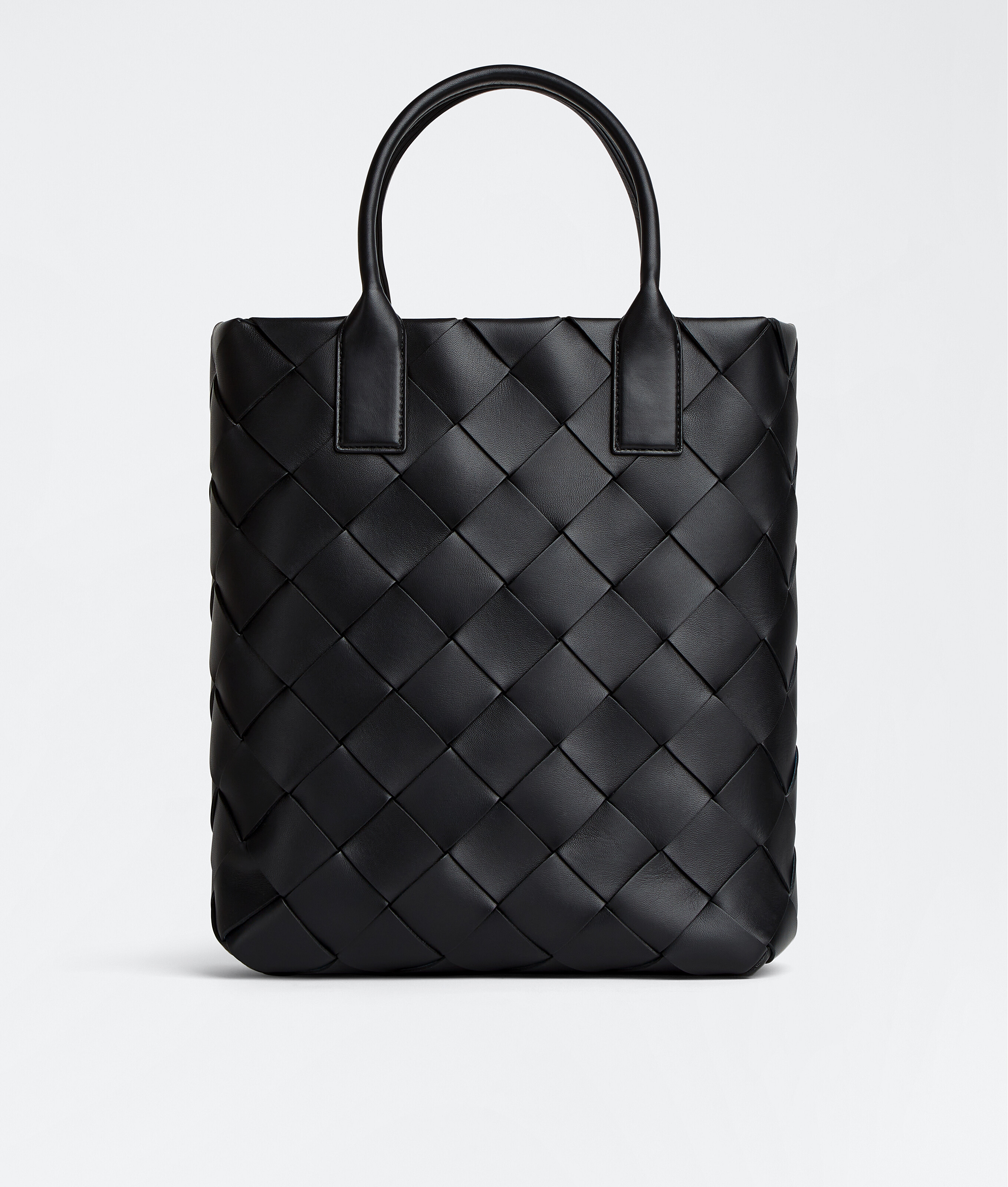
Blazy's handbags follow the same logic. The Andiamo, introduced in his second collection, is a structured top-handle with a curved base and a single leather knot as closure. No buckle, no clasp, no logo hardware. It sits upright on a table and holds its shape when empty. The Gemelli, a small shoulder bag with two interlocking compartments, works as an evening bag or a daily carry depending on how you style the strap. Both are selling faster than Bottega can produce them, and neither has been pushed on Instagram because Bottega still refuses to return to the platform.
The anti-strategy strategy
Bottega Veneta deleted its Instagram account in January 2021, a month before Lee's final show. The move was framed as a stand against social media's grip on fashion, though it also conveniently erased three years of content that no longer aligned with where the house was headed. Blazy has kept the account dark. No grid, no stories, no behind-the-scenes reels. The house communicates through print editorials, word of mouth, and the occasional cryptic outdoor billboard.
It is a expensive position to hold. Bottega's parent company, Kering, reported that the brand's revenue grew 3% in 2023, a notable slowdown after the double-digit jumps under Lee. In the first half of 2024, sales declined slightly in Asia, though Europe and North America held steady. Analysts have questioned whether the no-logo, no-social strategy can scale beyond a core clientele of fashion insiders and HNWIs who already know the intrecciato by touch.
Blazy seems unbothered. His collections grow more specific with each season. Spring 2025 featured leather trousers with a drawstring waist and a slightly dropped crotch, cut to puddle over loafers. A series of coats in bonded nappa, stiff enough to hold a sculptural silhouette but soft enough to pack into a weekend bag. A clutch made from a single piece of leather, folded and secured with a hidden magnet. These are not crowd-pleasers. They are proposals for people who already speak the language.
The risk is that the language becomes too interior. Bottega's aesthetic is now so refined, so free of obvious signifiers, that it risks disappearing into its own sophistication. A woven leather bag reads as Bottega only if you already know what intrecciato looks like. A tailored coat in charcoal wool could come from anywhere unless you recognise the house's particular shoulder line and sleeve pitch. Stealth wealth works until it becomes invisible.
What remains
The Milan flagship on Via Sant'Andrea reopened last year after a two-year renovation. The ground floor is clad in pale terrazzo, the walls in book-matched marble. Bags sit on plinths like sculpture. Upstairs, the ready-to-wear is arranged by colour, not by category—all the browns together, all the creams, all the blacks. It is beautiful and slightly austere, the kind of space that makes you lower your voice.
On a visit in October, the sales floor was quiet. Two clients, both women in their forties, both examining the Andiamo in different sizes. One asked about the leather weight. The assistant pulled a sample swatch from a drawer and explained the difference between the 2.5mm calf and the 3mm. The client nodded, ran her thumb over the intrecciato, and asked to see it in fondente, a brown so dark it reads as black unless you hold it under direct light. She left with the bag and a pair of woven leather mules. No deliberation, no Instagram check, no request for a logo dust bag. She knew what she wanted before she walked in.
That is the wager. Bottega Veneta is betting that enough people will walk in already knowing, and that the ones who do will spend enough to carry the house through the noise everyone else is making. It is a narrow path, and it requires Blazy to keep delivering clothes and bags that justify the faith. So far, he has. The Kalimero sold out. The Andiamo has a waitlist. The intrecciato still takes 12 hours, and no one has found a shortcut.