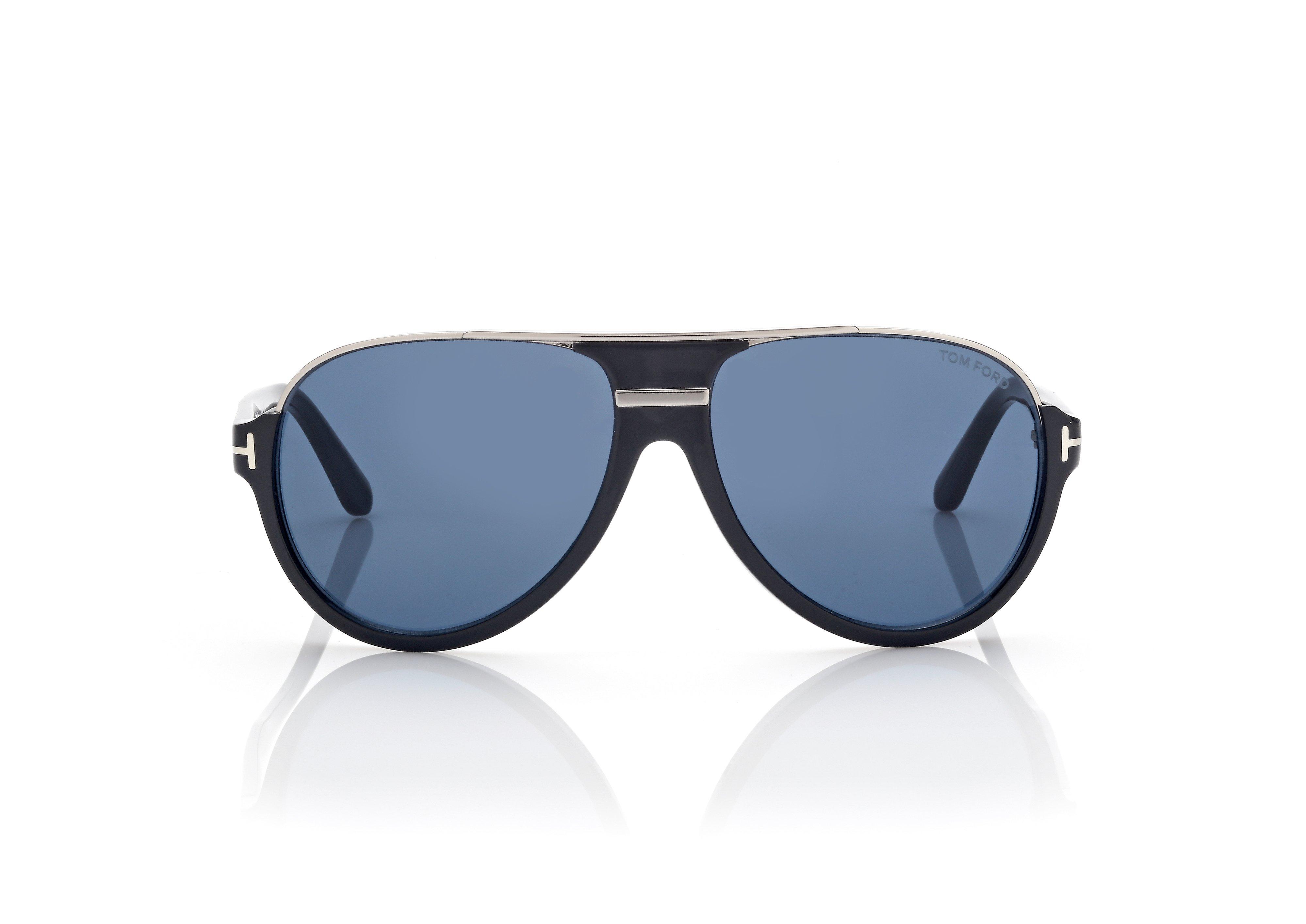
The last Tom Ford show I saw in person was autumn/winter 2019
The last Tom Ford show I saw in person was autumn/winter 2019. Front row filled with actors who'd been dressed by the house for years, a soundtrack that felt like it had been mixed in a hotel bar at two in the morning, and a parade of lapels so sharp you could have used them to open envelopes. Ford himself took the bow in a navy suit that probably cost what most people spend on a car. Six months later, Estée Lauder bought the brand outright for $2.8 billion. Four years after that, Ford stepped back entirely, and the house that bore his name became something it had never been before: someone else's problem.
Ce qui a été construit
Tom Ford launched his eponymous label in 2005, a year after leaving Gucci Group. He'd already proven he could turn a house around — Gucci's revenue went from $230 million to $3 billion under his watch — but this was different. No legacy to wrestle with, no archive to reinterpret, no Italian atelier tradition to either honour or ignore. Just Ford's own taste, which leaned toward the kind of controlled sensuality that photographs well and wears even better. The early collections were menswear-first: a tailored jacket with a suppressed waist, trousers cut close through the thigh, shirts that required cufflinks. Women's came later, in 2010, and it carried the same logic. A Tom Ford dress didn't apologise for being obvious.
The business model was just as deliberate. Ford kept production limited, prices high, distribution tight. No diffusion line, no logo T-shirts, no collaborations with sportswear giants. The brand opened standalone stores in cities that could support them — New York, London, Milan, Hong Kong — and built a beauty division that eventually outpaced ready-to-wear by a factor of ten. Lipstick in a gold case with your name on it turns out to be a better revenue engine than a $4,000 cocktail dress, even when the dress is perfect.
What Ford understood, and what gave the house its spine, was that American fashion didn't need to look Italian or French to be credible. It needed to look expensive, well-constructed, and like it knew exactly what it was doing. A Tom Ford suit in charcoal wool with a peak lapel wasn't trying to be Savile Row. It was trying to be better than what you could get anywhere else on Madison Avenue, and for a long time, it was.
Le départ et ce qui a suivi
Ford announced his exit in November 2023. The language was polite, the timing less so. Estée Lauder had owned the brand for four years by then, and while beauty was printing money, ready-to-wear was harder to read. No creative director had been hired to shadow him. No succession plan leaked to WWD. He was simply done, and the house would figure it out.
What followed was a year of silence punctuated by product. The autumn/winter 2024 collection — Ford's last — shipped to stores in February. Spring/summer 2025, designed by the in-house team, showed in September with no designer credit attached. The press release named nobody. The clothes were fine. A black column dress, a white shirt with exaggerated cuffs, tailoring that looked like it had been traced from the previous season's patterns. Nothing was wrong with it, which was also the problem. A Tom Ford collection used to feel like someone had made a series of decisions you wouldn't have made yourself but immediately wanted to live inside. This one felt like a committee had decided not to decide.
Estée Lauder hasn't named a creative director yet. The company has said it's searching, that it wants someone who understands the codes, that it's in no rush. The longer the silence goes on, the more it starts to feel like the house is hedging. A big name would cost serious money and bring their own vision, which might not align with what the conglomerate needs the brand to be. A quieter hire would keep the machine running but wouldn't generate the kind of press that moves product. In the meantime, the atelier keeps cutting jackets, the beauty counters keep restocking, and the brand exists in a strange state of operational continuity without creative authorship.
Où en sont les ventes
The numbers tell two stories. Beauty is still growing. Tom Ford fragrances — Black Orchid, Oud Wood, Fucking Fabulous if you're feeling unsubtle — sold $1.8 billion worth of product in 2023, and that figure hasn't softened. The lipsticks, the compacts, the skincare line that launched in 2020: all performing. Estée Lauder has no reason to touch that part of the business. It works, and it works because the products feel like they cost what they cost. The packaging is heavy, the colour payoff is immediate, and the brand name sits on your bathroom counter in a way that signals something specific about how you want to be seen.
Ready-to-wear is harder to parse. The house doesn't break out those figures separately, but retail sources suggest the category has been flat since 2022. Not collapsing, not irrelevant, just not growing. Part of that is the wider luxury slowdown — fewer people are buying $3,000 blazers in 2024 than they were two years ago — but part of it is that Tom Ford as a fashion proposition was always tied to Tom Ford as a person. His taste, his aesthetic, his face in the ad campaigns. Without that centre of gravity, the clothes start to feel like very expensive approximations of themselves.
The stores are still open. The website still ships. You can still walk into the Milan flagship on via Verri and buy a black leather jacket that will last you fifteen years. But the energy has shifted. It's less of a destination now, more of an option.
Ce que l'image porte encore
Tom Ford's legacy in fashion isn't just the suits or the dresses or the way he made tailoring feel like a form of armour. It's that he proved you could build a luxury house from scratch in the 21st century without pretending to have a nineteenth-century founder or a couture heritage you didn't actually possess. The brand was always honest about what it was: a vehicle for one man's taste, executed at the highest level the market would bear, sold to people who wanted to look like they had their lives together even if they didn't.
That honesty is harder to maintain now. A house without its founder either needs to find a new authorial voice or accept that it's become a catalogue of gestures. Tom Ford, the brand, is currently somewhere in between. The tailoring is still impeccable. The leather goods still use vacchetta that smells right when you open the box. The evening wear still photographs like a dare. But the centre is missing, and no amount of operational competence can fake that.
There's a Tom Ford tuxedo jacket hanging in my closet. I bought it in 2018, and it still fits the way it did then, which is to say: like someone measured me and then made a series of decisions I wouldn't have made but am grateful they did. The silk lapels have softened slightly, the lining has started to pull at one shoulder seam, and I have no idea who I'd call if I needed it repaired now. The house is still there, the ateliers are still running, but the person who would have cared about that specific jacket the way I care about it — he's gone. What remains is a brand searching for what it's supposed to be when the man who made it isn't in the room anymore.