The Marmont bag sits on the counter at the Printemps beauty hall, waiting while its owner tests a lipstick
The Marmont bag sits on the counter at the Printemps beauty hall, waiting while its owner tests a lipstick. The chevron quilting catches the overhead light. The double-G hardware—oversized, almost cartoonish in its clarity—does what it was hired to do: announce. It's not subtle. It was never supposed to be.
That bag is often the first piece someone buys when they decide Gucci is the next step. Not because it's the best bag the house makes. Because it's the most legible.
Gucci rewards clarity. It also punishes hesitation. The house operates at a register louder than most of its Florentine neighbours, and if you walk in expecting the quiet restraint of Bottega or the intellectual remove of Loro Piana, you'll leave confused. Gucci works when you meet it where it lives: in colour, in pattern, in the belief that more is often exactly enough.
What you're buying into
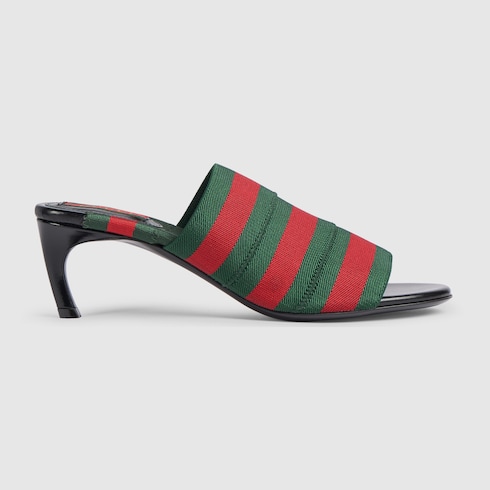
Gucci Guccio founded the house in Florence in 1921, returning from London's Savoy Hotel with a taste for the kind of luggage English aristocrats carried and the Italians didn't yet make. He started with saddlery, then trunks, then handbags that borrowed equestrian details—the horsebit, the web stripe in green-red-green taken from a saddle girth. The house built its reputation on leather and hardware, not cloth.
By the mid-century, Gucci had become the first Italian house to mean something outside Italy. The bamboo-handle bag appeared in 1947, using a material that didn't require rationed metal. The Flora scarf came in 1966, commissioned for Grace Kelly. The interlocking double-G logo—designed by Aldo Gucci in the sixties—became the kind of mark people recognised three metres away. Logomania wasn't invented at Gucci, but the house refined it into doctrine.
The nineties brought Tom Ford, who turned a near-bankrupt leather-goods atelier into the decade's most visible fashion engine. He made Gucci sexy in a way that felt contemporary and slightly amoral: the satin shirts unbuttoned past any reasonable stopping point, the hip-slung trousers, the ad campaigns shot by Mario Testino that looked like the morning after a party you weren't invited to. Ford understood that Gucci's strength was never in whispers. When he left in 2004, the house spent a decade trying to remember what it was.
Then came Alessandro Michele in 2015. He turned Gucci into a magpie's archive: floral brocades, mismatched prints, Sylvie bags with grosgrain stripes, loafers lined in kangaroo fur, tracksuits embroidered with tigers. It was maximalist, nostalgic, vaguely ironic, and it worked so well the house's revenue doubled in three years. Michele built a language—geek chic, vintage remix, more-is-more—that became the house vocabulary for nearly a decade.
Michele left in 2022. Sabato De Sarno, previously at Valentino, arrived in 2023 with a mandate to streamline. His Gucci is quieter: less print, more leather, a return to the kind of pieces you might actually wear on a weekday. The Blondie bag—a reworked version of a seventies original—became the new anchor. The runway shows feel less like costume parties and more like a wardrobe being rebuilt in real time. It's too early to say if this version will hold, but the pivot is clear. Gucci is trying to grow up without losing volume.
Where to start
If you're looking at Gucci for the first time, you're likely looking at bags. The house makes excellent shoes and increasingly solid ready-to-wear, but leather goods are still the entry point for most people. Three bags dominate the current lineup, and each one telegraphs a different version of the house.
The Marmont remains the most visible. Introduced under Michele in 2016, it's quilted chevron leather with an oversized double-G clasp. It comes in a dozen sizes, from a card case to a top-handle tote. The mini and small crossbody versions run between €1 200 and €1 600. The leather softens quickly—sometimes too quickly. The quilting can look puffy if the bag isn't stuffed, and the hardware scratches. But it photographs well, and it codes as Gucci faster than anything else in the range. If you want people to know what you're carrying, this is the bag.
The Jackie is older and, in some circles, more respected. Originally designed in the fifties, it became famous when Jackie Kennedy carried it in the sixties. Gucci revived it in 2020 with a curved hobo shape and a single piston closure. The 1961 version, which is the current standard, starts around €2 300 in calfskin. It's softer than the Marmont, less structured, and it doesn't announce itself as loudly. The leather ages better. If you want a bag that will look more like yours in five years than it does today, this is the better bet.
The Blondie, De Sarno's reintroduction, splits the difference. It's a rounded shoulder bag with a circular double-G clasp—less ornate than the Marmont, less subdued than the Jackie. Prices start around €2 000. It's meant to feel contemporary without rejecting the archive. Early returns suggest it wears well, but it hasn't been in circulation long enough to know how it holds up past the first season.
Beyond bags, the Horsebit loafer is the house's most enduring shoe. Introduced in 1953, it's been in continuous production longer than most of Gucci's handbag lines. The current version runs around €750 in leather, more in suede or exotic skins. It's a flat shoe that works in an office or at dinner, and it doesn't look like you're trying. If you're going to own one piece of Gucci, this is the one that won't date.
What to skip
Gucci makes a lot of things it probably shouldn't. The logo T-shirts and sweatshirts that proliferated under Michele—often priced above €600 for a cotton jersey print—are hard to justify unless you're deeply committed to the bit. The canvas GG Supreme bags, while less expensive than leather (starting around €900), wear poorly. The coated canvas scratches, the trim oxidises, and after two years the bag looks worse than a leather piece twice its age.
The sneakers—Ace, Rhyton, Screener—became ubiquitous during Michele's tenure, but they're also where the house's quality control slips most visibly. Stitching comes loose. Soles separate. At €600 to €900, they're priced like luxury but built like fast fashion with better materials. If you want Gucci shoes, buy the loafers.
Buying secondhand
Gucci moves volume, which means the resale market is deep. Vestiaire Collective and Rebag both carry significant Gucci inventory, and you can often find a Marmont or a Jackie in good condition for 30 to 40 per cent below retail. The risk is condition. Gucci's leather, especially on the Marmont, shows wear quickly. Check the interior for pen marks, the hardware for scratches, and the stitching along the quilting for any looseness.
Vintage Gucci—particularly pieces from the seventies and eighties—can be excellent value if you know what you're looking at. The bamboo-handle bags from that era were made in Italy with full-grain leather and brass hardware. They cost a fraction of what a new Jackie runs, and they age better. The Tom Ford era is trickier. Those pieces were designed for impact, not longevity, and a satin shirt from 1997 rarely survives in wearable condition.
Where the house is now
Gucci is in transition, which makes it both more interesting and harder to read. De Sarno's first collections have been met with cautious approval from buyers and muted enthusiasm from press. The clothes are wearable. The bags are well made. But the house hasn't yet found the next big gesture—the equivalent of Michele's floral suits or Ford's unbuttoned everything.
What's clear is that Gucci is trying to reclaim the customer who wants a handbag, not a manifesto. The prices have crept up (a Marmont that cost €980 in 2016 now starts at €1 350), but the house is betting that clarity and leather quality will hold the line. Whether that works depends on how well De Sarno can make quiet feel like enough.
For now, Gucci remains the loudest room in Italian fashion. It's not the most refined. It's not the most intellectual. But it's the one where you'll know, within thirty seconds, whether you belong.
The Marmont is still on the counter. The lipstick has been chosen. The bag gets picked up, slung over a shoulder, and carried toward the exit. It looks exactly like what it is.