The Marmont doesn't need you to know its name
The Marmont doesn't need you to know its name. You see it in the metro, at aperitivo, slung across the back of a chair in a Brera café. Quilted chevron leather, double G hardware in antique gold. It's the bag your colleague bought after her first promotion, the one your sister saved for over six months. It's also, quietly, the piece that tells you the most about what Gucci has become: a house that moves product at scale while still holding onto enough of the mythology to make that product feel like it means something.
If you're starting with Gucci, you're starting with that tension.
The archive you inherit
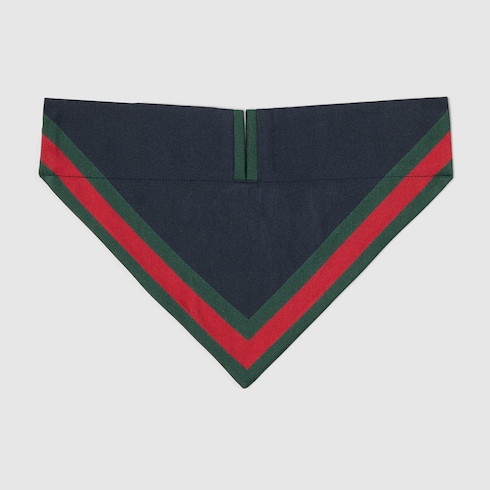
Guccio Gucci opened his first shop in Florence in 1921, selling leather luggage and saddlery to the kind of client who travelled by rail and still used the word portmanteau. The house spent its first fifty years building a vocabulary of signs: the horsebit, the green-red-green webbing, the interlocking Gs, the bamboo handle on a structured top-handle bag introduced in 1947. These weren't metaphors. They were identifiers, designed to work at a distance, on a dock or across a hotel lobby.
By the seventies, Gucci had done what only a handful of houses manage: it became both exclusive and recognisable. The Flora scarf. The loafer. The Jackie bag, named retroactively after a client who happened to be photographed carrying one in 1961. You didn't need to explain the references. They had escaped into common knowledge.
Then came the long unravelling. Family infighting, overextension, logo fatigue, a decade when Gucci meant duty-free mediocrity and monogrammed canvas no one particularly wanted. By the mid-nineties, the house was a case study in what happens when distribution overtakes desirability.
Tom Ford and Domenico De Sole pulled it back. Ford's 1995 arrival is still the turnaround the industry measures others against: hyper-sexualised, precise, shamelessly commercial, and so visually coherent that even people who didn't buy Gucci could describe what it looked like. Velvet hipsters. Satin shirts unbuttoned past any reasonable margin. A return to the archive, but remixed with enough provocation that it felt like theft, not homage.
Ford left in 2004. Frida Giannini steadied the ship for a decade without setting it on fire. Then came Alessandro Michele.
What Michele built, and what he left behind
Michele's Gucci — the one that ran from 2015 to 2022 — is the Gucci most people under forty think of first. Maximalist, nostalgic, gender-fluid, eclectic to the point of chaos. Embroidered bees, Dionysus bags with tiger-head closures, crushed velvet suits, loafers lined in kangaroo fur. It was costume and commerce at once, and it worked because Michele understood that in the age of the algorithm, a house needs to be extremely itself.
The product exploded. Marmont. Dionysus. Princetown slippers. Ace sneakers with embroidered snakes or bees or, if you wanted, custom initials. Silk twill scarves that referenced everything from Japanese woodblock prints to seventies wallpaper. The waiting lists were real. So were the revenues: Gucci became the engine that powered all of Kering.
But by 2021, the formula was legible. You could spot a Michele-era Gucci piece in a resale listing from the thumbnail alone. The house had become a genre, and genres have half-lives. When Michele exited in November 2022, the industry was surprised only by the timing, not the fact.
Sabato De Sarno took over in January 2023. His first collection showed that February, which meant he had six weeks. What he delivered was a correction: clean lines, bourgeois restraint, a return to the kind of Milanese polish that doesn't photograph as well as it wears. The Blondie bag — a soft shoulder shape with a round interlocking-G clasp — became the early signature. Relaxed tailoring. Matte leather. Colours that didn't fight for attention.
The reviews were mixed. The customer response has been slower. De Sarno is building for the medium term, which means you're walking into Gucci at a moment when the house is between eras. The archive is still there. The Michele pieces are still in circulation, heavily. And the new direction hasn't yet accumulated enough authority to feel inevitable.
Which is useful information if you're trying to decide what to buy.
Where to start, and what it will cost
The entry point most people take is small leather goods. A cardholder runs €250 to €350. The GG Marmont zip-around wallet sits around €550. You get the logo, the leather, the hardware, and a way to test whether you actually want to carry Gucci before committing four figures.
If you want a bag, the Marmont is still the safest play. The small matelassé shoulder bag starts at €1.750, the mini at €1.450. It's been in production since 2016, which means it's survived one creative director transition already. The shape works. The quilting hides wear. The chain strap doesn't dig into your shoulder the way some of the Dionysus iterations do.
The Blondie — De Sarno's answer to the Marmont — starts at €2.300 for the small size. It's softer, rounder, less structured. The interlocking-G hardware is larger, more sculptural. It doesn't have seven years of street presence behind it yet, which means you're making a bet on where the house is going, not where it's been.
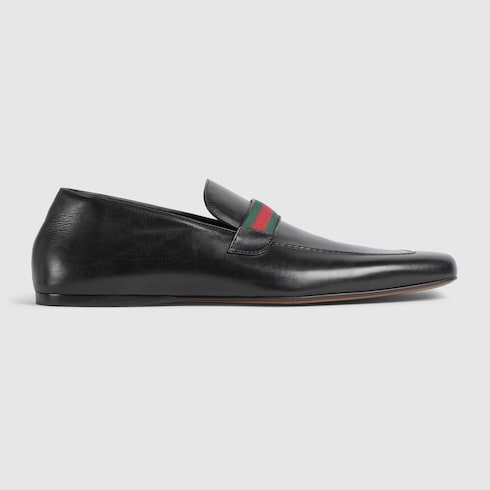
Shoes: the Horsebit loafer is the piece that has survived every creative director since the fifties. Leather versions start around €730, the Princetown slipper mule at €650. Both have been knocked off so many times that the original now functions as a kind of archetype. You're not buying novelty. You're buying the template.
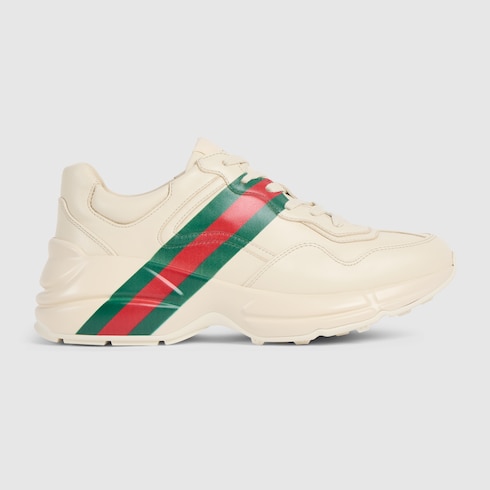
The Ace sneaker — low-top, leather, with or without embroidery — runs €590 to €750 depending on details. It's a Michele legacy piece, which means it still reads as recent Gucci, but the plain leather version is neutral enough to survive the transition.
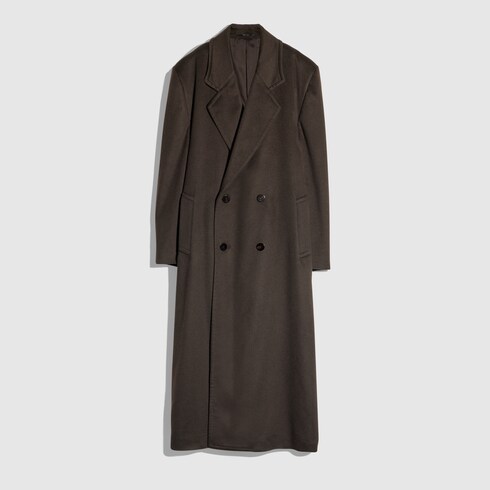
If you're looking at ready-to-wear, expect €800 and up for knitwear, €1.200 and up for tailoring, €2.500 and up for outerwear. De Sarno's cuts are generous, which is a polite way of saying they're sized for a body that doesn't exist in most contemporary womenswear. Try before you buy, or make peace with alterations.
What you're actually buying into
Gucci doesn't make things the way Hermès makes things. The leathers are good — often very good — but you're not paying for hand-stitched construction or atelier finishing. You're paying for design, for hardware, for the logo, and for the fact that Gucci has managed to remain both accessible and desirable in a way that most houses can't hold in balance.
The resale market is deep, which cuts both ways. You can find a Marmont for 30 per cent under retail if you're patient, but that also means your own bag won't hold value the way a Chanel or a Bottega does. Gucci moves volume. Volume depresses resale.
The house also operates on a different calendar than the smaller ateliers. New colours, new hardware finishes, new sizes — they arrive every season, which means the bag you bought in March might be joined by four siblings by November. Some people find that energising. Others find it dilutive.
What Gucci does well, still, is make you feel like you're participating in something. The campaigns are big. The stores are theatrical. The product is designed to be seen, recognised, and understood quickly. It's fashion that works in motion, which is what most of us actually need.
What to know before you go in
Gucci's sale calendar is predictable: private sales in June and November, public markdowns shortly after. If you're buying at full retail, you're buying for access or for a piece that won't make it to markdown. The core icons — Marmont, Horsebit loafer, GG canvas — rarely go on sale in current colours.
The monogram canvas is cheaper than leather, but it's also more obviously Gucci, which is either the point or the problem depending on what you want the bag to do. The GG Supreme canvas starts to crack at the edges after two or three years of daily use. The coated finish doesn't absorb conditioner the way leather does, so when it goes, it goes visibly.
Gucci's customer service is competent but not precious. They'll repair hardware, replace a zipper, condition leather if you ask. But this isn't a house that treats every bag like an heirloom. They made too many for that.
If you're buying online, the return window is tight — fourteen days in Europe, and the item has to come back in the condition it shipped. The packaging is part of the product, which means you'll want to keep the dust bag, the box, and the ribbon if you think you might resell.
The stores themselves vary wildly. The Via Montenapoleone flagship in Milan is worth seeing once, even if you don't buy. The airport boutiques are depressing. The outlet in Barberino has last season's stock at 30 to 40 per cent off, but the selection is unpredictable and the experience is pure volume retail.
The piece that holds
There's a Horsebit loafer in the Gucci archives from 1968. Black leather, low heel, gold-toned hardware. It looks identical to the one in the window today. Fifty-six years, five creative directors, two near-collapses, and the shoe hasn't moved.
That's the part of Gucci that survives the churn. Not the campaigns, not the controversy, not the waiting lists. The pieces that were designed to be recognised, worn thin, resoled, and recognised again. If you're starting with Gucci, start there. The rest is optional.