The Musubi bag sits on the counter at Dover Street Market — compact, knotted, vaguely anthropomorphic
The Musubi bag sits on the counter at Dover Street Market — compact, knotted, vaguely anthropomorphic. A customer picks it up, sets it down, photographs it. She does not buy. This scene repeats itself across three continents, in flagships from Seoul to Los Angeles, and it tells you something about where Acne Studios stands in 2025: widely recognised, frequently photographed, and in the middle of working out what comes next.
The Stockholm house turns twenty-four this year. That makes it neither legacy nor upstart — an awkward age in fashion, where the founding narrative has calcified but the institution has not yet acquired the institutional weight to coast on patrimony alone. Jonny Johansson, who started Acne Studios in 1996 with a run of raw-denim jeans (the name, famously, stood for Ambition to Create Novel Expressions), remains creative director. This is rare. Most houses at this revenue scale — north of €300 million annually, by recent estimates — have cycled through two or three designers by now, each installed to 'revitalise the codes'. Johansson is still here, which means the codes are his to complicate or abandon as he sees fit.
The Defining Era, and What It Defined
Acne Studios built its reputation in the 2000s on a specific mix: Scandinavian restraint laced with just enough strangeness to register as a point of view. The jeans were cut wide and sat low. The knitwear was oversized before oversized became algorithmic. The tailoring was soft-shouldered, often in washed-out pastels or sulfur-dyed blacks that looked like they had survived a decade in a cupboard. Johansson worked intuitively, without formal training, and the clothes reflected that — considered but not overthought, with the occasional lapse into pure idiosyncrasy. A shearling coat in bubblegum pink. A bomber jacket screen-printed with a Flemish still life. You either understood or you didn't.
The house also understood, earlier than most, that a certain kind of customer wanted to buy into a sensibility rather than a logo. The branding was minimal: a sans-serif wordmark, occasionally a face emoji borrowed from the house's in-house magazine (also called Acne Paper, now defunct). No monograms. No hardware you could spot across a room. This was, at the time, a form of luxury signalling that felt new — or at least newly viable at scale. By the early 2010s, Acne Studios had become the uniform of a specific milieu: art directors, gallerists, the sort of person who flew to Basel for the fair and bought their knitwear in muted tones.
Then scale arrived in earnest. In 2015, the Canadian investment firm Catterton — backed by LVMH — acquired a minority stake. New flagships opened. The product range expanded. Leather goods, which had been an afterthought, became a category. Eyewear launched. Sneakers. The house was no longer a cult; it was a business, with the attendant pressures to perform quarter over quarter.
The Musubi Moment
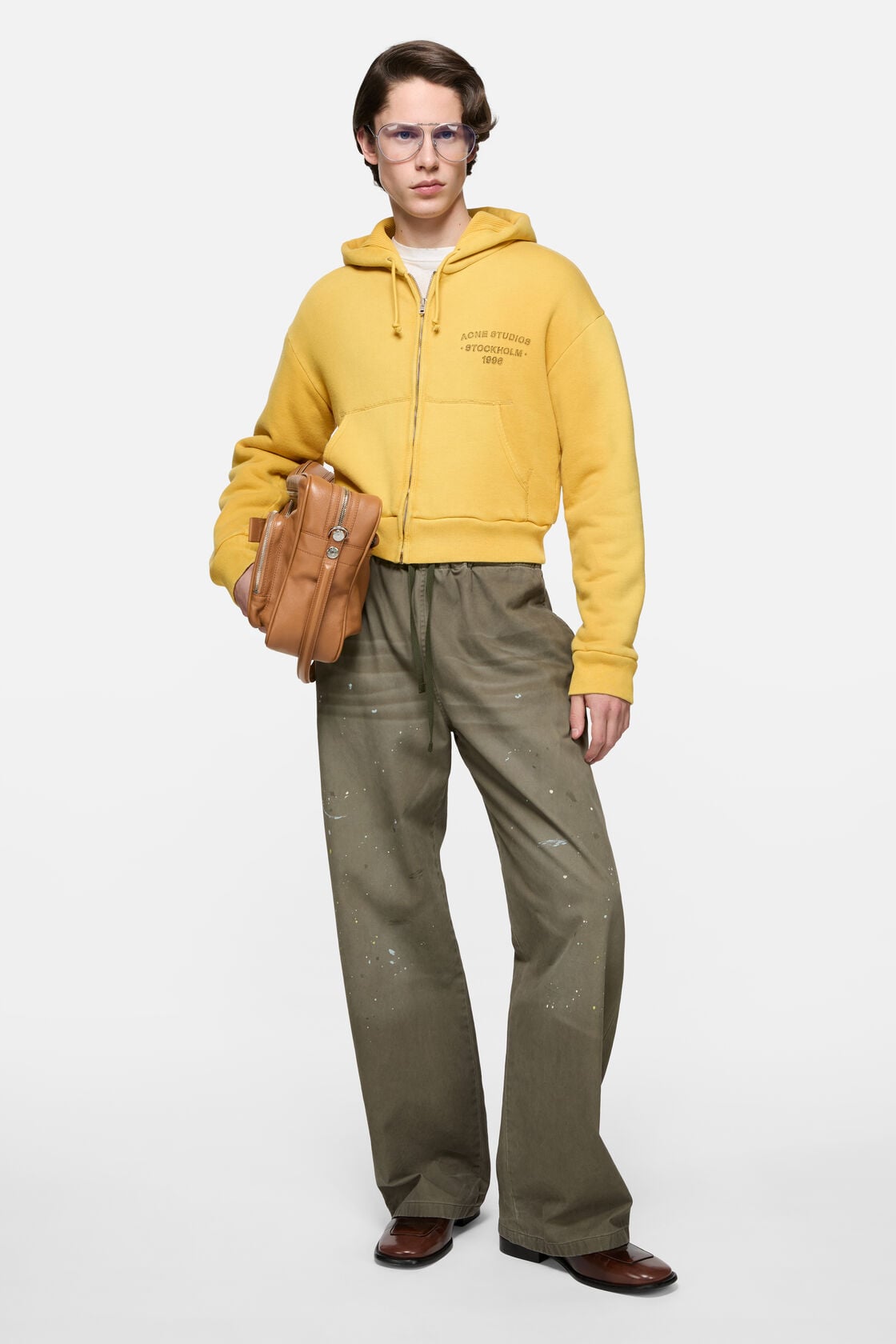
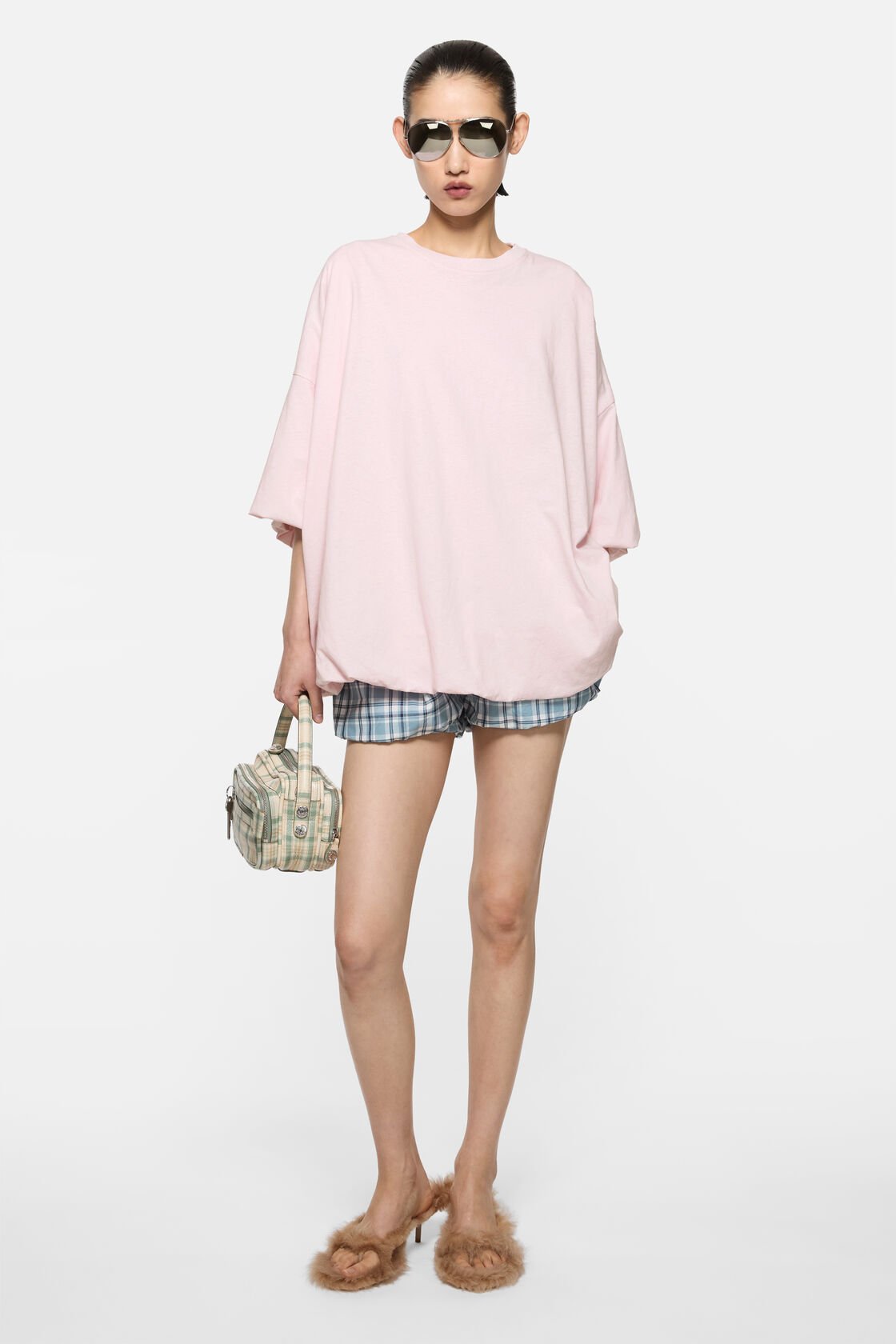
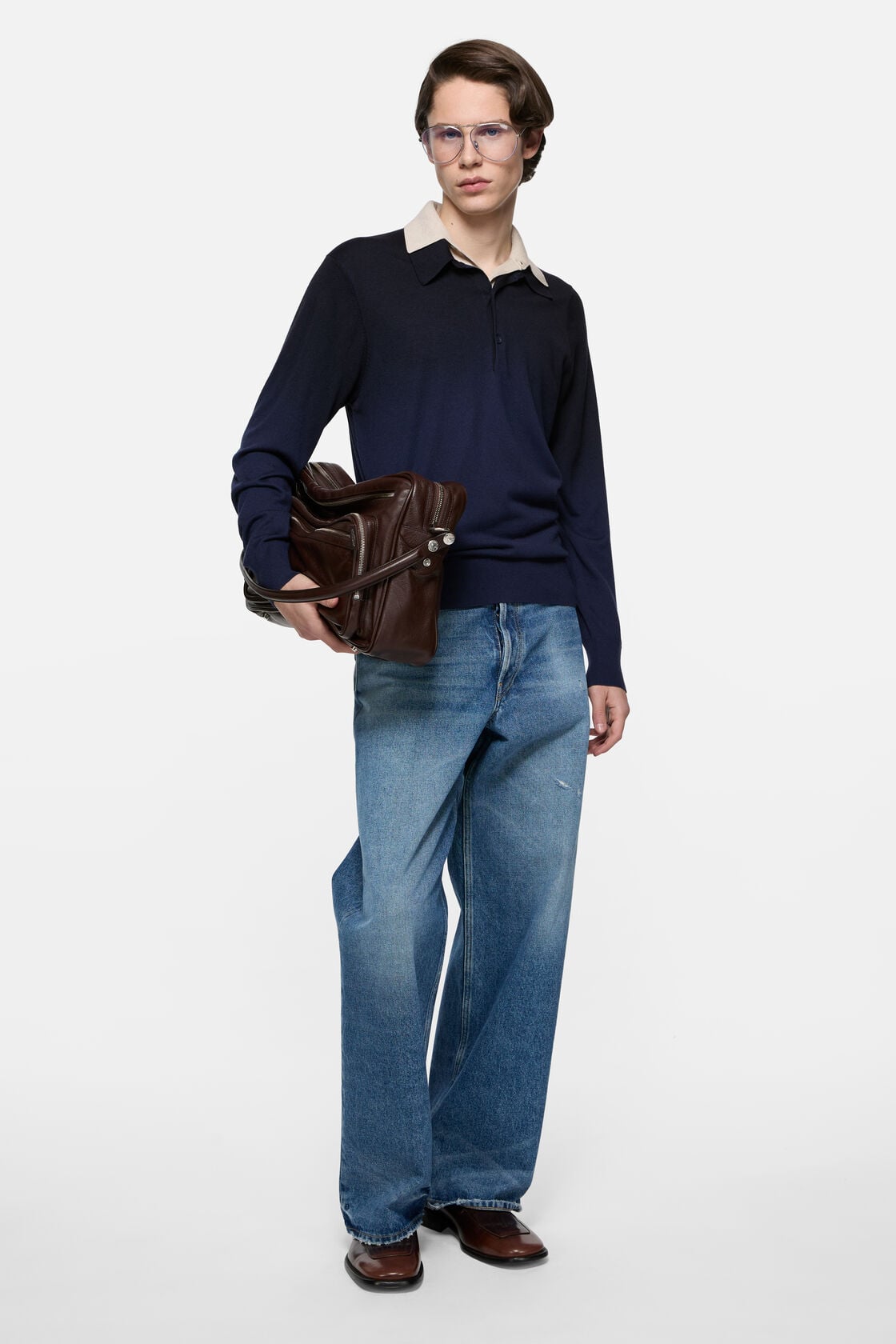
The Musubi bag, introduced in 2018, is the clearest expression of that shift. Johansson has said the design was inspired by the Japanese obi knot, though the silhouette also recalls a wrapped bento box or a very chic kidney bean. It is, in any case, legible — a shape you can identify at a glance, which is what a house at this scale requires from its accessories. The bag sold. It still sells. You see it on the arm of a certain kind of shopper: mid-thirties, probably works in something adjacent to the creative industries, owns at least one Lemaire piece and several Toteme basics.
But the Musubi also marks a departure. Where early Acne Studios felt like it resisted easy categorisation, the Musubi is designed to be recognised. It is a signature piece in the way that, say, a Proenza Schouler PS1 was a signature piece — which is to say, it performs a function beyond carrying your wallet. It announces affiliation. This is not a criticism, exactly. Houses need signatures to survive. But it does raise the question of what happens when a brand built on a certain elusiveness begins to make itself legible.
Where the Work Stands Now
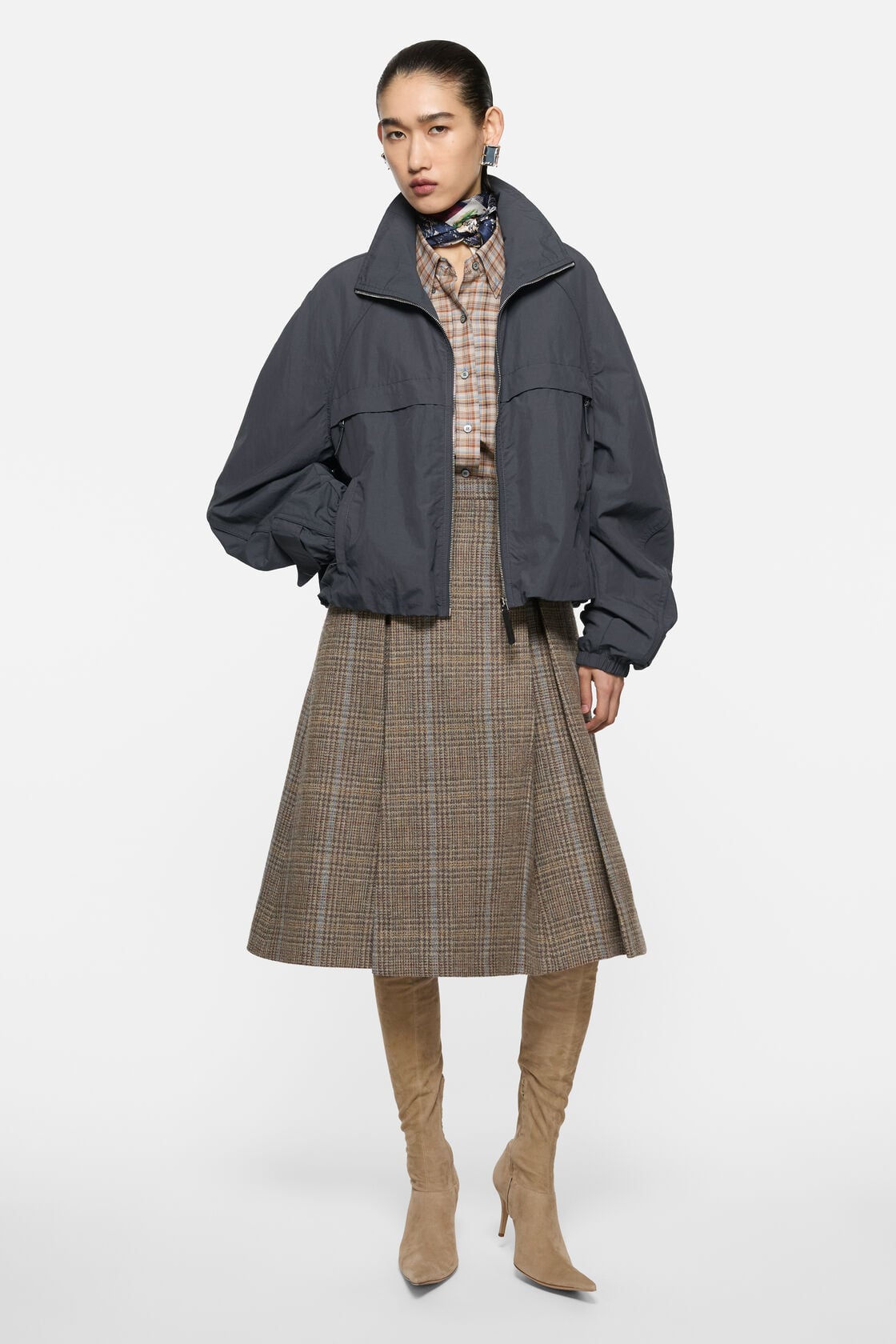
Johansson's recent collections have oscillated between restraint and excess, often within the same look. For Autumn/Winter 2024, he sent out models in oversized trench coats worn over shrunken knits, paired with trousers that pooled at the ankle. The palette was muted — camel, charcoal, a washed-out olive — but the proportions were destabilising. A leather jacket appeared with sleeves that extended past the fingertips. A Fair Isle sweater was shown half-tucked into jeans that looked two sizes too large. The effect was studied carelessness, which is harder to pull off than it sounds.
The clothes still feel like Acne Studios, which is to say they feel like Johansson. But there is a sense, watching the runway films or walking through the stores, that the house is caught between two impulses: the desire to remain insular, to make clothes for a narrow band of initiates, and the need to reach a customer base large enough to justify the infrastructure. This tension is not unique to Acne Studios. Every mid-sized house faces it. But few have a creative director who has been in place long enough to feel the weight of his own legacy while still, presumably, trying to move past it.
The most recent financials, such as they are, suggest the house is stable. Revenue has grown steadily, though not explosively. The store count hovers around fifty, concentrated in Europe and Asia. The e-commerce business is solid. Wholesale remains a significant channel, which means the house is still legible to buyers at multi-brand retailers — a good sign, generally, though it also means Acne Studios must compete for floor space with labels that have far larger marketing budgets.
The Image Problem (or Non-Problem)
One hears, in certain quarters, that Acne Studios has an image problem. The criticism goes something like this: the house has lost its edge, become too accessible, too safe. The clothes are well-made but no longer surprising. The brand has been 'Instagrammed to death', a phrase that means different things depending on who is saying it but generally implies over-exposure and dilution.
This assessment is not entirely wrong, but it may not be entirely relevant either. Acne Studios was never, despite its reputation, an avant-garde house. It was always a commercial proposition, just one that happened to align with a certain aesthetic sensibility at a moment when that sensibility felt under-served. The fact that the sensibility has since been adopted (and adapted) by countless other labels does not mean Acne Studios has changed. It means the context has.
Johansson seems unbothered. In interviews, he speaks carefully, without the performative humility or grandiosity that characterises many designer profiles. He talks about fabric, about fit, about the specific shade of grey he is working with this season. He does not talk about disrupting the industry or redefining luxury. This may be the most Scandinavian thing about him.
What Remains
There is a photograph from the Spring/Summer 2023 campaign: a model in a pale-blue shirt and wide-legged trousers, standing in an empty room with light coming in low through a window. The styling is minimal. The expression is neutral. Nothing in the image announces itself. You could walk past it in a magazine and not register it, or you could stop and look at it for a long time. Either response feels correct.
That ambiguity, one suspects, is what Acne Studios still does well — and what it will need to protect as it grows. The house has not yet calcified into a set of references that can be endlessly remixed. Johansson is still making choices, season to season, that feel personal rather than algorithmic. Whether that remains viable at this scale is an open question. But for now, the work continues. The Musubi bag sits on the counter. Someone picks it up.