The padlock sits at the base of the zipper, small and gold-plated, stamped with the designer's surname in capitals
The padlock sits at the base of the zipper, small and gold-plated, stamped with the designer's surname in capitals. It is the kind of detail one notices only after the fact — after the handbag has been opened, closed, carried across a restaurant floor, photographed from three angles. Then, later, alone with the object, you notice the lock. It serves no function. It announces everything.
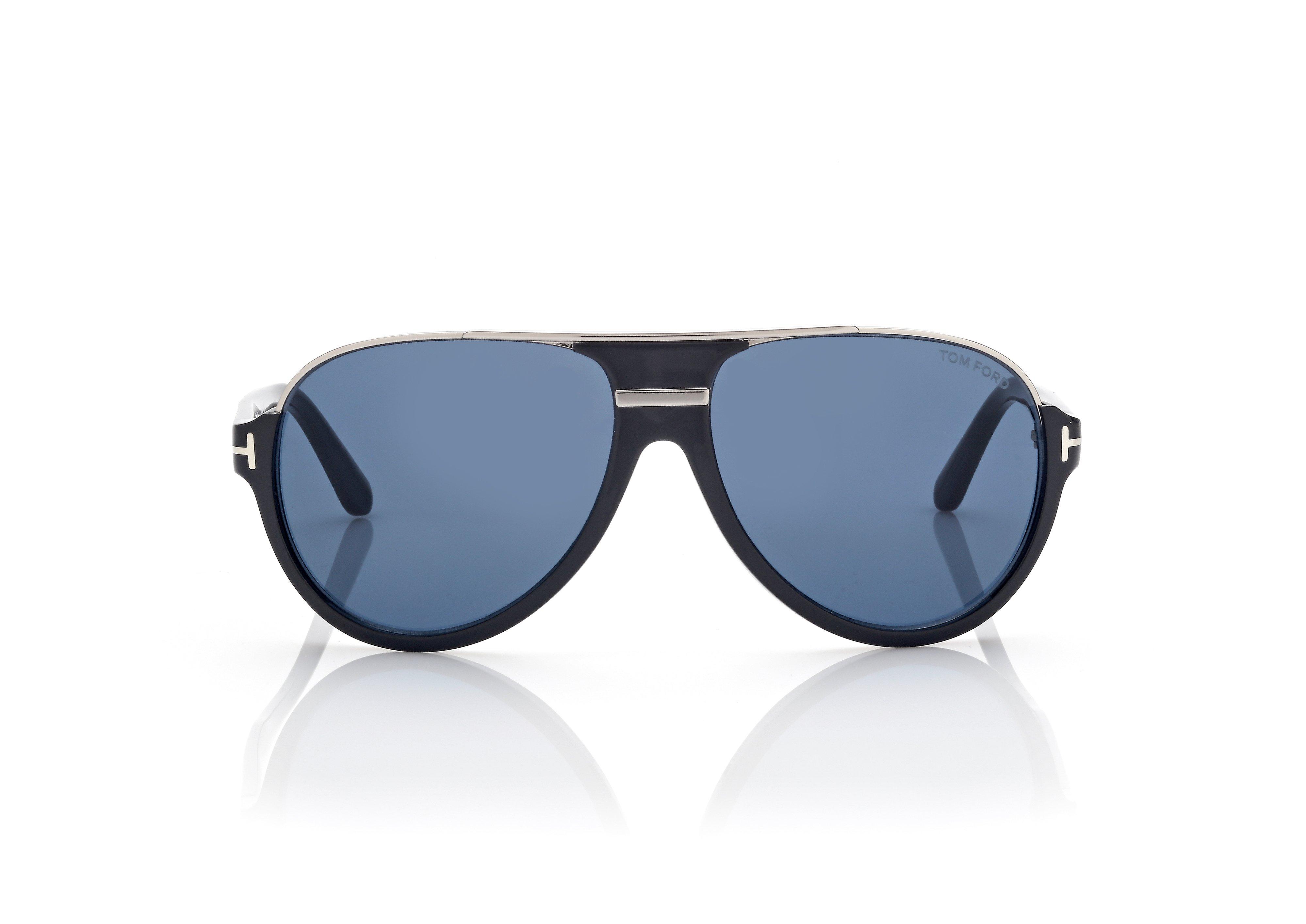
Tom Ford, the brand, operates in this register. The work is not subtle. It does not ask to be discovered slowly. It presents itself with the kind of confidence that, in another context, might read as aggression. Here, in the realm of luxury accessories and ready-to-wear, it reads as clarity. You know what you are buying. The question, for someone approaching the house for the first time, is whether that clarity aligns with what you want to say.
Founding and the Gucci years
Tom Ford the man built his reputation elsewhere. Between 1994 and 2004, he served as creative director at Gucci, then at Yves Saint Laurent, transforming both into commercial successes by leaning into a specific vision of sex, power, and surface. The work was unapologetic. Velvet hipsters, satin shirts unbuttoned to the sternum, advertising so provocative it courted scandal. It worked. When Ford left, he took the template with him.
The Tom Ford label launched in 2005, backed by Domenico De Sole, Ford's former partner at Gucci. The first collection showed in 2007. By then, Ford had spent two years building the infrastructure — atelier, production, retail strategy — with the kind of control he had not enjoyed under LVMH or Kering. The result was a house that felt, from the start, fully formed. No experimental phase. No searching. Just a clear point of view, executed at the highest level of finish the market would bear.
The aesthetic borrowed liberally from Ford's own archive: Studio 54, 1970s Halston, the kind of American sportswear that, in the right hands, reads as evening wear. Tailoring was sharp, often shiny. Dresses clung. Shoes were high. The colour palette leaned toward black, white, jewel tones, and metallics. If you wanted something discreet, you looked elsewhere.
What defines the house now
Ford sold the business to Estée Lauder in 2022, for $2.8 billion, then stepped back from day-to-day creative duties in 2023. The announcement was handled quietly. No farewell collection, no retrospective. He simply stopped. Peter Hawkings, who had worked alongside Ford for decades, was named creative director. The transition was, by luxury standards, seamless. Hawkings knows the codes. He was there when they were written.
Under Hawkings, the work has softened slightly — not in construction, but in volume. The silhouettes are cleaner. The colour palette has expanded to include more neutrals. The advertising, while still polished, no longer courts controversy. One suspects this is intentional. The brand is now part of a beauty conglomerate. The priorities have shifted. That said, the core vocabulary remains intact: sharp tailoring, body-conscious dresses, accessories that function as statements.
The handbags, in particular, hold the line. The Whitney, the 001, the Medium T Twist — these are not quiet bags. They feature oversized hardware, high-gloss leather, and proportions that announce themselves across a room. The construction is sound. The leathers, sourced primarily from Italian tanneries, take a high polish without looking synthetic. The hardware, often gold or palladium-plated, carries weight. These are not bags designed to disappear into a wardrobe. They are designed to anchor it.
Entry points and what they cost
If you are new to Tom Ford, the question is not whether the work suits you — you likely know already — but where to begin. The answer depends on budget and tolerance for visibility.
The most accessible category is small leather goods. A card holder runs around $250. A zip-around wallet, $550 to $650. These are entry-level in price only. The finishing is identical to what you find on the bags: clean stitching, metal logo plaques, linings in grosgrain or suede. The leather, typically calf, develops a patine over time, though not as dramatically as vegetable-tanned stock. If you want to test the house without committing four figures, this is the route.
Handbags start at roughly $1,800 for a small crossbody and climb quickly. The Medium T Twist, one of the house's more recognisable styles, sits around $3,200. The Whitney, a top-handle bag with a sculptural silhouette, approaches $4,000. The 001, a boxy tote with oversized turn-lock closures, can exceed $5,000 depending on size and finish. These are not inexpensive. They are, however, priced in line with comparable work from Bottega Veneta, Saint Laurent, and Loewe. You are paying for Italian construction, a recognised name, and a very specific design language.
Shoes follow a similar logic. Pumps and sandals range from $900 to $1,400. Boots can reach $2,500. The heels are high — often 100mm or more — and the shapes are unforgiving. A Tom Ford pump is not a shoe you break in gradually. It either fits or it does not. The upside is that the silhouettes photograph exceptionally well. The downside is that comfort, in the conventional sense, is not the priority.
Ready-to-wear is where the price climbs steeply. A tailored blazer starts around $3,500. A cocktail dress, $4,000 and up. Evening gowns can exceed $10,000. The construction justifies the cost — these are garments made to fit closely, with internal boning, French seams, and linings that allow the exterior fabric to drape without clinging. But the audience is narrow. If you are considering ready-to-wear as a first purchase, you likely already know whether this is your idiom.
What to know before you buy
Tom Ford does not do understatement. This is not a house for someone building a wardrobe of versatile neutrals. The work is designed to be seen. The logo — a simple serif nameplate — appears on nearly everything, often in metal hardware. The shapes are bold. The finishes are high-gloss. If you prefer patinated leather, hand-stitched details, and the kind of craft that reveals itself slowly, look to Hermès or Bottega. Tom Ford operates in a different register.
That said, the quality is consistent. The leathers do not crease prematurely. The hardware does not tarnish after a season. The stitching holds. These are not fragile objects. They are built to withstand regular use, provided you are not looking for something that ages into softness. The aesthetic is polished, not lived-in.
Resale is mixed. Certain styles — the Whitney, the 001 — hold value reasonably well, particularly in classic colourways. Limited editions and seasonal pieces depreciate faster. The market for Tom Ford is smaller than for Chanel or Hermès, which means liquidity is lower. If you are buying with an eye toward resale, choose carefully.
One final note: the house does not offer much in the way of repair services. Unlike Hermès or Goyard, which maintain ateliers dedicated to restoration, Tom Ford directs customers to third-party specialists. This is not unusual for a relatively young house, but it is worth knowing. If you crack a handle or scratch the hardware, you will be managing the repair yourself.
Where the house stands
Tom Ford, the brand, exists in a curious position. It is not heritage. It is not avant-garde. It is not particularly concerned with sustainability, craft narrative, or the kind of storytelling that defines contemporary luxury marketing. It is, instead, a house built on a single, unwavering idea: that polish, precision, and a certain kind of unapologetic glamour still have a place in the market.
Whether that idea endures without Ford himself remains to be seen. Hawkings is capable. The infrastructure is sound. But the brand was always inseparable from the man — his taste, his biography, his willingness to court controversy. Without him, it risks becoming simply another line of well-made, expensive accessories. Which may be enough. Or it may not.
For now, the work holds. The bags are still sharp. The shoes still photograph well. The tailoring still fits like a second skin. If that is what you are after, the house delivers. If you want something quieter, something that whispers rather than announces, you will find it elsewhere. Tom Ford has never whispered. That, in the end, is both its limitation and its appeal.