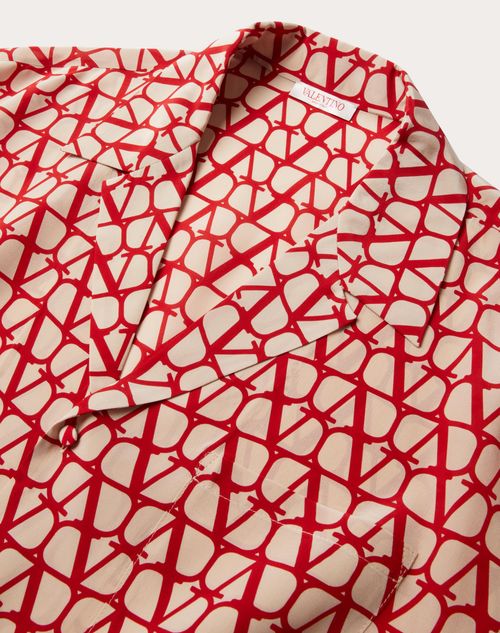
The red is still there
The red is still there. Valentino Red — Pantone 18-1663 TPX, if you need the coordinates — hasn't shifted since Valentino Garavani registered it in the early Sixties. What has shifted is how often you see it. Walk through the spring 2024 collection and you'll count perhaps six exits in that particular shade. The rest is cream, black, a run of blush pink that wouldn't have looked out of place in 1968. This is not an accident.
Valentino Garavani opened his atelier on Via Condotti in 1960 with backing from his father and a Milanese businessman. The timing was clean: Rome had just hosted the Olympics, Cinecittà was pulling in American productions, and the city needed a couturier who could dress women who weren't interested in looking Parisian. Garavani gave them volume without stiffness, embroidery that sat flat, and that red. By 1962 he'd dressed Jacqueline Kennedy. By 1968 the white collection — all ivory, no prints, no colour — had made him unavoidable. He understood proportion in a way that photographers loved: the clothes moved, but the silhouette held.
He sold the business in 1998 to HdP, which flipped it to Marzotto, which sold it to Permira in 2007 for what was then the largest European private equity buyout in fashion. Mayhoola, the Qatari fund, took over in 2012 for €700 million and still owns it. Garavani retired in 2008. Maria Grazia Chiuri and Pierpaolo Piccioli took over as co-creative directors that same year, working as a pair until Chiuri left for Dior in 2016. Piccioli has been alone at Valentino since.
The Piccioli era
Piccioli's first solo collection for autumn 2016 was pink. Not blush, not coral — fuchsia, hot pink, a shade that doesn't apologise. It ran through forty-two of the fifty-two exits. The response was immediate, and not entirely kind. But the clothes sold, the imagery landed, and Valentino's ready-to-wear revenue began to climb in a way it hadn't under the shared tenure. By 2019, when he sent an all-couture ready-to-wear show in a palette that looked like a paint shop exploded, the house had found a gear it hadn't touched since the Nineties.
What Piccioli does well is volume that doesn't read as costume. The autumn 2022 collection — shown in July, during couture week, though it was technically ready-to-wear — put models in cocoon coats, dropped-waist dresses, and trousers with a 34-inch inseam that somehow didn't drag. The proportions were extreme, but the clothes didn't shout. They assumed you had somewhere to wear them, which is half the work of making people believe they do.
He also loosened the house codes without discarding them. The rockstud, which Piccioli and Chiuri introduced in 2010 on a flat pump, is still in production and still sells. The VLogo hardware, launched in 2019, is now on bags, belts, and slides that account for a measurable slice of accessories revenue. But Piccioli hasn't let either motif define the line the way, say, the GG defines Gucci. Valentino under his direction is recognisable by cut and colour before hardware.
The numbers reflect that. Valentino's revenue hit €1.4 billion in 2022, up from €1.27 billion in 2021. Mayhoola doesn't break out profit, but the growth has been consistent since 2018, even through the two years when half the customer base couldn't leave their apartments. Ready-to-wear and accessories are doing most of the work. Couture is still a small fraction of turnover, though it does the majority of the image-building.
The current tension
Here is the tension: Valentino is selling well, but it is not generating the kind of frenzy that moves the stock price of LVMH or Kering. It is not Bottega in 2020, or Phoebe Philo–era Céline, or Jacquemus when Simon Porte first put a bag on a crane in the middle of a French wheat field. It is a serious, profitable house with a designer who knows what he's doing and a product line that doesn't embarrass anyone. That is both the strength and the problem.
Piccioli's work is consistent. You can walk into a Valentino boutique in May and find pieces that will still feel current in November. The autumn 2023 collection, shown in March, leaned into outerwear: double-breasted topcoats in camel, oversized trenches, a shearling jacket with sleeves wide enough to fit a second jacket underneath. It was handsome, wearable, and entirely without gimmick. It was also, in the context of a fashion week that included Chemena Kamali's first Chloé show and Jonathan Anderson's Loewe spectacle, somewhat easy to forget.
This is not a critique of the clothes. It is an observation about the climate. Fashion, particularly at this price point, rewards volatility. A designer who delivers the same level of quality every season without a sharp left turn risks becoming background. Piccioli has avoided that so far by shifting his palette and his references — the spring 2024 show nodded to early Seventies Halston, the autumn 2023 to Nineties Jil Sander — but he hasn't yet had his reset moment. The question is whether he needs one.
Where the house stands
Valentino's store count is up. The house opened a flagship on New Bond Street in 2022, refurbished the Paris flagship on Avenue Montaigne, and expanded in mainland China despite the broader luxury slowdown there. The strategy is clear: fewer, larger stores in primary markets, with an emphasis on ready-to-wear over accessories. That's a harder sell than a hit bag, but it builds a different kind of customer.
The brand's image remains tied to Piccioli's casting. He was one of the first major designers to put older models, visibly pregnant models, and models over a UK size 14 on the runway without making it feel like a separate statement. The spring 2024 show included Kristen McMenamy, Paloma Elsesser, and a then-sixty-three-year-old Benedetta Barzini. The clothes didn't change to accommodate them. That's the point.
The risk is that Valentino becomes the house for people who already know what they want. It is not chasing the 25-year-old buying her first designer piece. It is not particularly interested in streetwear, collaborations, or the kind of product that photographs well on a phone but looks thin in person. Piccioli has made a bet that there is a large enough customer base for well-cut, expensive, relatively quiet clothing that doesn't rely on logo visibility to justify its price. So far, the bet is paying off.
But fashion is not patient. Mayhoola has owned Valentino for over a decade and has yet to take it public or flip it. That suggests either long-term commitment or difficulty finding a buyer at the valuation they want. Piccioli's contract runs through 2025. What happens after that depends on whether the house believes it needs a new narrative or whether it's content to keep doing what it's doing, which is making clothes that a certain kind of woman will pay €3,000 for and wear until they fall apart.
The Valentino Red is still there. You just have to look for it.