The saleswoman at the Bottega Veneta boutique on Via Sant'Andrea folds a leather clutch in half, then in half again
The saleswoman at the Bottega Veneta boutique on Via Sant'Andrea folds a leather clutch in half, then in half again. It does not crease. She opens it, smooths it once with her palm, and sets it on the counter. The surface shows no memory of the fold. This is not a demonstration anyone asked for, but it is the demonstration that matters.
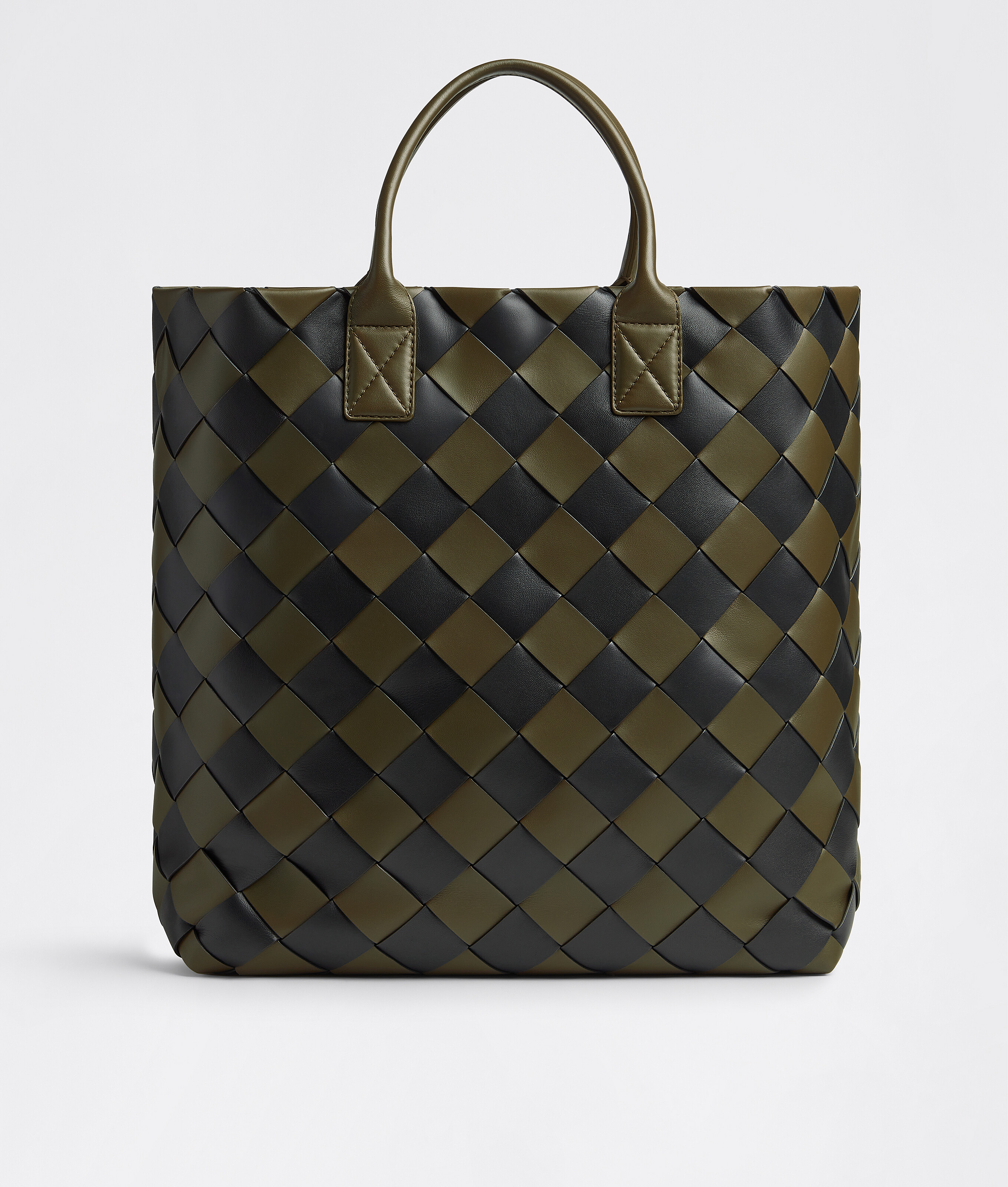
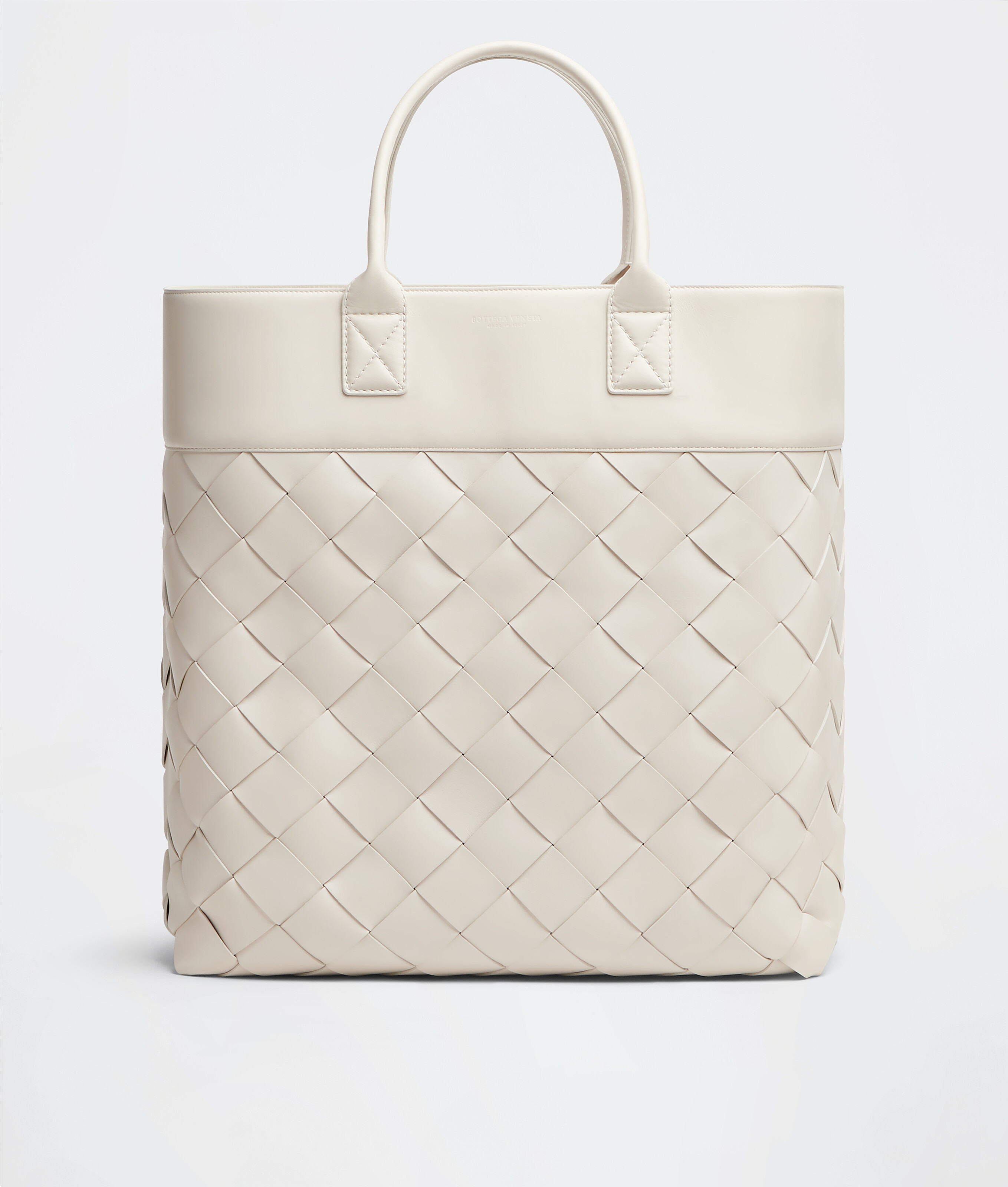
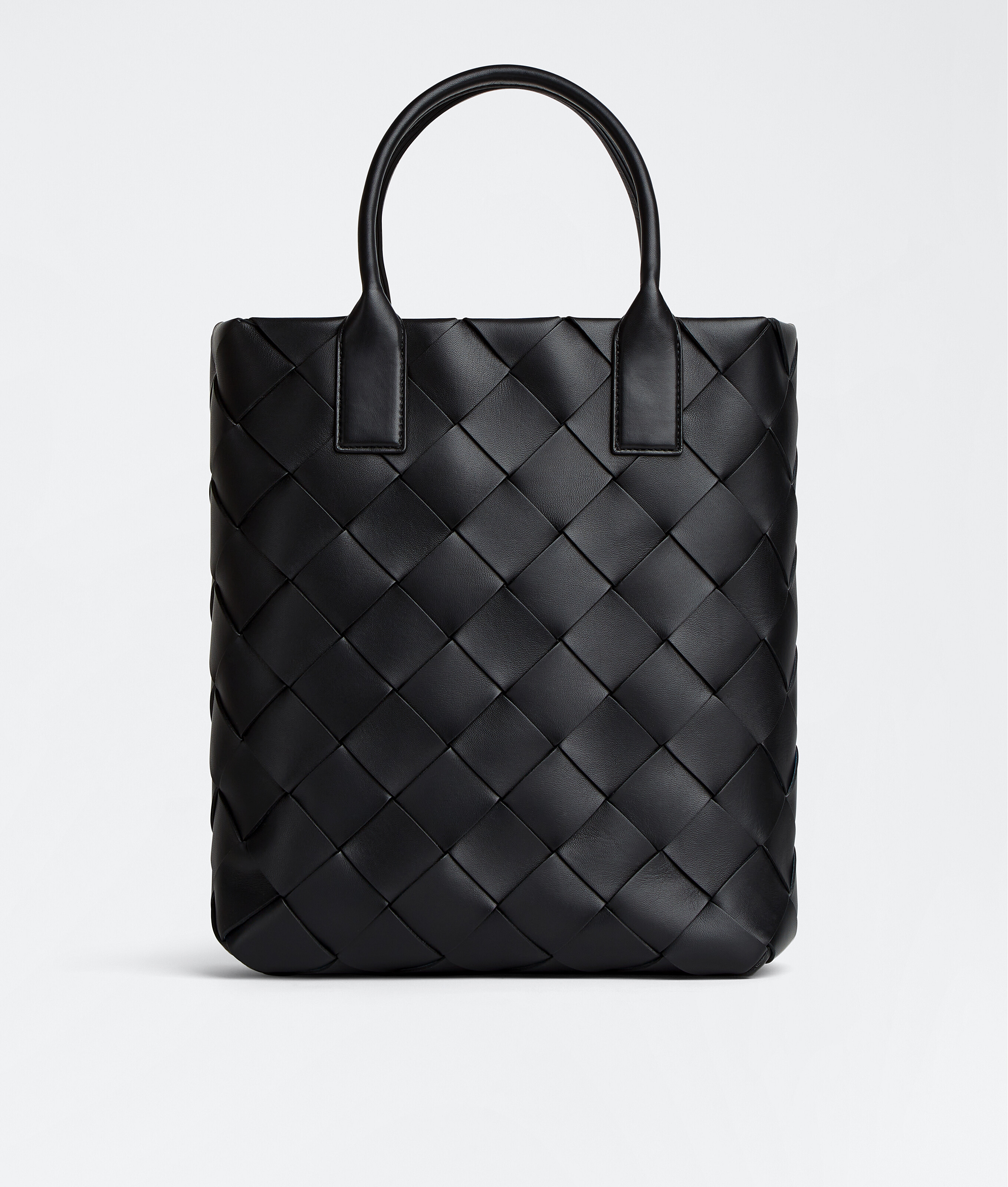
Bottega Veneta does not make noise. It makes things that last through gesture. The house was founded in Vicenza in 1966, in the Veneto region where leather workshops had been stitching saddles and gloves for centuries before fashion had a calendar. The first atelier produced luggage and small goods using intrecciato, a woven leather technique borrowed from furniture and basket-making. The weave was structural, not decorative. It distributed stress across the surface of a bag so that no single stitch carried the weight. You could fill it, carry it, set it down in rain. It performed.
By the 1970s, the house had a customer base that did not require logos. The intrecciato itself became the signature, a pattern you could read from across a room if you knew how to look. The weave appeared on everything: weekend bags, document cases, small evening pouches with no hardware. The leather was vegetable-tanned, which meant it darkened with handling and age. A bag did not stay new. It became yours.
This is the part of Bottega Veneta that fashion tends to skip. The house spent thirty years as a quiet specialist. No runway shows. No ad campaigns with models in improbable locations. The work was in the atelier, where artisans cut leather into strips, soaked them to make them pliable, then wove them by hand on wooden forms. An intrecciato bag required between two and three days to complete, depending on size. The math was simple: fewer bags, higher price, longer lifespan.
The Maier era and what it built
When Tomas Maier arrived as creative director in 2001, Bottega Veneta was profitable but marginal. Maier did not attempt revolution. He tightened the vocabulary. The intrecciato weave remained, but he introduced new weights and scales: a fine weave for evening bags, a chunky weave for totes, a flat weave that read almost as smooth leather until you looked closely. He added the Knot clutch in 2001, a soft pouch gathered into a single sculptural knot of intrecciato. It became the house's first recognisable silhouette since the original woven tote.
Maier also standardised the colour palette. Bottega Veneta had always worked in neutrals, but Maier gave those neutrals names and consistency. Nero for black. Ebano for dark brown. Cement, a grey that leaned neither warm nor cool. And then the seasonal colours, often pulled from the Veneto landscape: moss, rust, a specific shade of ochre he called dark gold. The colours were never bright. They were mixed, like pigments left to dry on a palette.
The house opened ateliers dedicated to leather goods, ready-to-wear, and shoes. Maier introduced a men's line in 2005, and it followed the same logic: soft construction, no logos, materials that improved with wear. A Bottega Veneta jacket had no padding in the shoulder. The sleeve was set in a way that let the arm move forward without pulling the back. Tailoring, but tailoring that acknowledged the body.
What Maier understood, and what the house still understands, is that discretion is not the same as simplicity. A woven leather bag is more complex to produce than a logo-stamped one. It requires more labour, more skill, more time. The customer who buys it is not buying visibility. They are buying proof of work.
The codes that never made it to Instagram
Bottega Veneta's hardware is always matte. Brass, gunmetal, palladium — whatever the finish, it does not shine. This is intentional. Shiny hardware catches light and draws the eye, which means it competes with the leather. Matte hardware recedes. It lets the material do the work.
The house also uses a construction technique called "a doppia cucitura," or double stitching. The seams on a Bottega Veneta bag are stitched twice: once to join the leather, once to reinforce the join. The second line of stitching sits two millimetres from the first. You see it only if you turn the bag over and look at the edge. It is invisible in use, but it doubles the structural integrity of the seam.
Then there is the question of the lining. Bottega Veneta lines its bags in suede, not fabric. Suede is heavier, more expensive, and harder to work with than grosgrain or canvas, but it does not fray and it does not pill. A suede lining also grips the contents of the bag slightly, which means a phone or a wallet does not slide to the bottom when you set the bag down. This is a choice that makes the bag harder to produce and easier to live with.
These are not the details that appear in campaign images. They are not the details that drive social media engagement. They are the details you encounter after you have owned the object for six months.
Blazy and the return to making
Daniel Lee's tenure from 2018 to 2021 brought the house into a different register. He introduced the Pouch, a soft oversized clutch with no structure and no hardware, which became the house's most commercially successful bag in a decade. He also introduced the Puddle boot, the chain Cassette bag, and a series of runway shows that used music, lighting, and set design in ways Bottega Veneta had not done before. Lee made the house visible again, and visibility brought revenue.
Matthieu Blazy, who succeeded Lee in 2021, has pulled the lens back toward the atelier. His first collection for autumn/winter 2022 opened with a leather coat that had been woven in horizontal strips, then tailored like a blazer. The weave was structural — it held the shape of the shoulder and lapel without interfacing. Later in the show, a leather skirt appeared with a trompe-l'œil denim effect, achieved by layering blue-dyed leather in a way that mimicked the warp and weft of selvage denim. The stitching was real. The denim was not.
Blazy is interested in technique made visible, but not loud. His collections reference the intrecciato, but they do not rely on it. A spring 2023 look featured a leather jacket with sleeves that had been fringed into narrow strips, then hand-knotted at intervals to create a netted texture. The knots were structural — they prevented the fringe from unraveling — but they also became the surface of the garment. Function and form arrived at the same time.
Under Blazy, the house has also returned to an older practice: showing garments inside-out on the runway. A coat appears with the seams exposed, the lining facing outward, the construction legible. This is not deconstruction. It is disclosure. The garment is finished, but it is finished in a way that lets you see how it was made.
What remains
Bottega Veneta still does not print its name on the outside of its bags. The logo exists — a discreet stamped mark inside the lining — but it does not appear on the exterior. This is increasingly rare. Most houses now use logo hardware, logo fabric, logo embossing, or logo-adjacent monograms that function as logos without technically being one. Bottega Veneta has none of that.
What it has instead is a vocabulary of gestures. The way a bag closes without a clasp. The way a sleeve is set so that it does not pull when you reach forward. The way a shoe is lasted on a form that allows the foot to sit flat, rather than pitched forward onto the ball. These are not the things you photograph. They are the things you feel when you pick the object up.
There is a Bottega Veneta tote from 1975 in the house archive in Milan. The intrecciato is intact. The handles have darkened to near-black from handling, but the weave has not loosened. Someone carried this bag for years, and it still closes. That is not heritage. That is evidence.