The sample board sits in a corner of the Via Solari atelier, edges frayed from decades of handling
The sample board sits in a corner of the Via Solari atelier, edges frayed from decades of handling. Pale yellow silk, hand-rolled at the hem, a single line of topstitching in burnt orange — not contrast for contrast's sake, but because the thread had been left over from a coat commission in 1968. The archivist who showed it to me said the seamstress's name aloud, as though she might still be working upstairs.
This is not the Fendi anyone discusses at length. Not the Baguette, not Karl's logo play, not the furs that built the business. It is the Fendi of small decisions, accumulated over decades, that never required a press release. The kind of house language that, if you are not looking for it, recedes entirely into the garment.
The five sisters and the question of authorship
Fendi was never a single vision. Adele Casagrande founded the house in 1925; her daughter married Edoardo Fendi; their five daughters — Paola, Anna, Franca, Carla, Alda — ran the business from the Fifties onward, each with a domain. Paola handled furs and leathers. Anna, sales. Franca, customer relations. Carla, business strategy. Alda, the atelier and craftsmanship. No one sister held creative control in the way we now expect of a house.
Karl Lagerfeld arrived in 1965, not as artistic director but as a consultant for furs. The sisters remained. For fifty-four years, until his death in 2019, Karl worked within a structure that was fundamentally collaborative. He proposed; the sisters disposed. Or they amended. Or they let a sketch sit for two seasons before reviving it with a different closure.
This arrangement produced a design language that feels, on close inspection, like a conversation rather than a manifesto. No single authorial hand. Instead, a series of micro-signatures that accrued over time, often tied to technical problems the atelier had solved and then kept solving, because the solution was good.
The double-F and what it hides
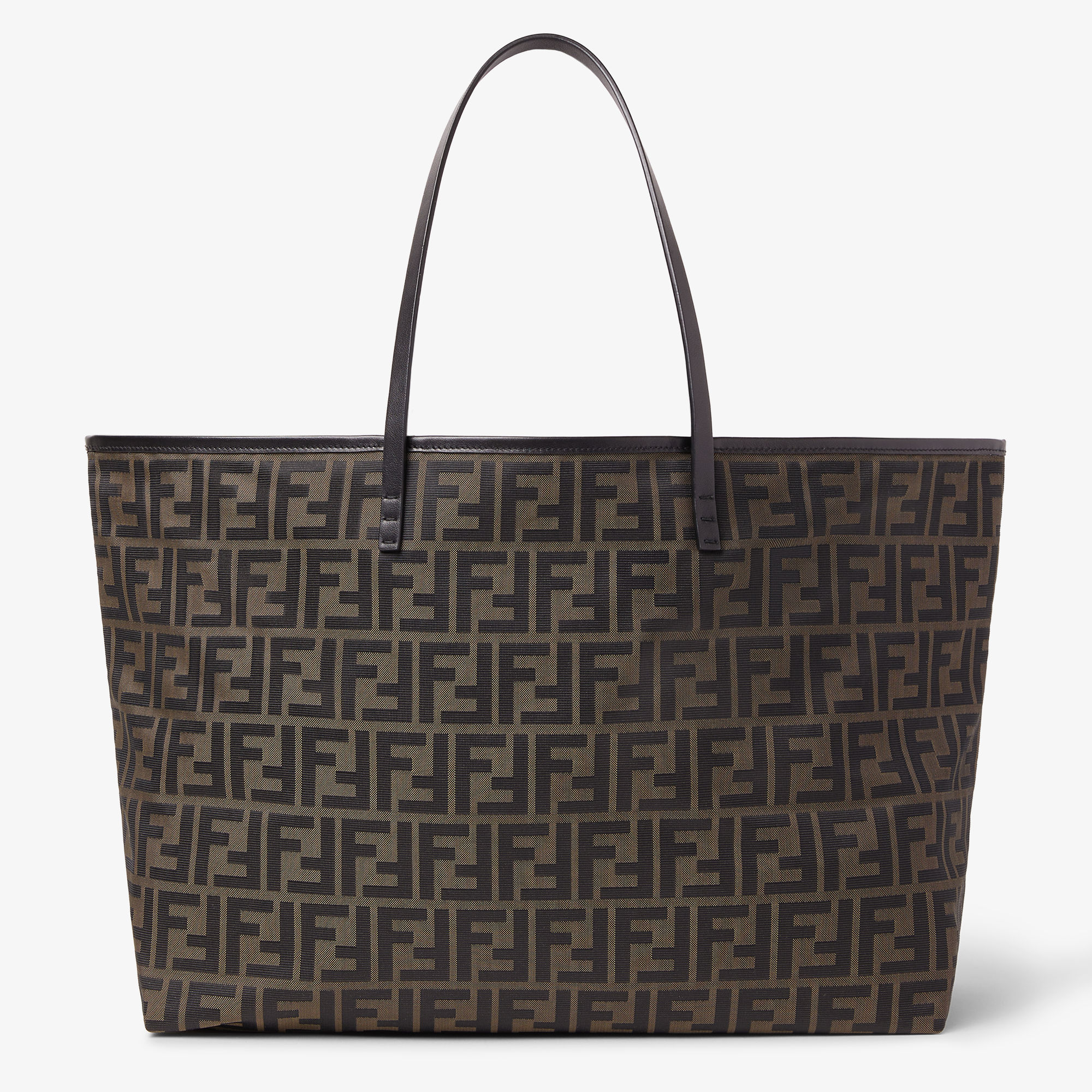
The Zucca monogram — that interlocking double-F — was drawn by Karl in 1965. It became shorthand for the house, especially after the Baguette's debut in 1997. But treat it as the beginning and end of Fendi's visual grammar, and you miss the rest of the sentence.
Look instead at the way Fendi has always handled proportion in its tailoring. The sleeves on a Fendi coat tend to sit slightly higher on the shoulder than you expect, a trick borrowed from men's bespoke cutting. The result is a cleaner line through the upper arm, less bulk at the bicep. It is a small adjustment, invisible until you try the coat on, at which point it reads as fit rather than design.
Or consider the house's approach to lining. Fendi has used printed silk linings since the Seventies — not as flourish but as a way to add weight and structure to lightweight wools without resorting to canvas. The prints themselves are often geometric, occasionally archival florals, never pictorial. They function as an internal skin, giving the garment body without announcing themselves. You see them only when the coat is open or hung on a chair.
This is a different kind of signature. One that operates at the level of making rather than marketing.
Fur as a technical discipline, not a moral one
The fur question is unavoidable. Fendi built its reputation on pelts — specifically, on techniques that treated fur as fabric rather than trophy. Karl and the sisters developed methods for intarsia work, for inlaying mink with grosgrain, for shaving chinchilla down to a suede-like hand. The point was always lightness, wearability, the possibility of throwing a fur jacket over denim without ceremony.
The house stopped using fur in its collections in 2023, a decision that arrived later than some of its peers but earlier than others. What remains is the technical knowledge — how to work with nap and grain, how to marry two materials of vastly different weight without puckering. Those skills have migrated into Fendi's leather program and its textile collaborations. The same hands that once inlaid mink now inlay laser-cut calf. The gesture is identical; the material has changed.
Whether this constitutes progress or pragmatism is not for me to adjudicate. What is worth noting is that the house has not discarded the language it developed over six decades. It has translated it.
Silvia and the question of restraint
Silvia Venturini Fendi, daughter of Anna, has been with the house since 1994. She designed the Baguette. She has overseen accessories and menswear for thirty years. When Kim Jones arrived in 2020 to lead womenswear, Silvia remained, a rare instance of overlapping creative leadership that has not, at least publicly, resulted in friction.
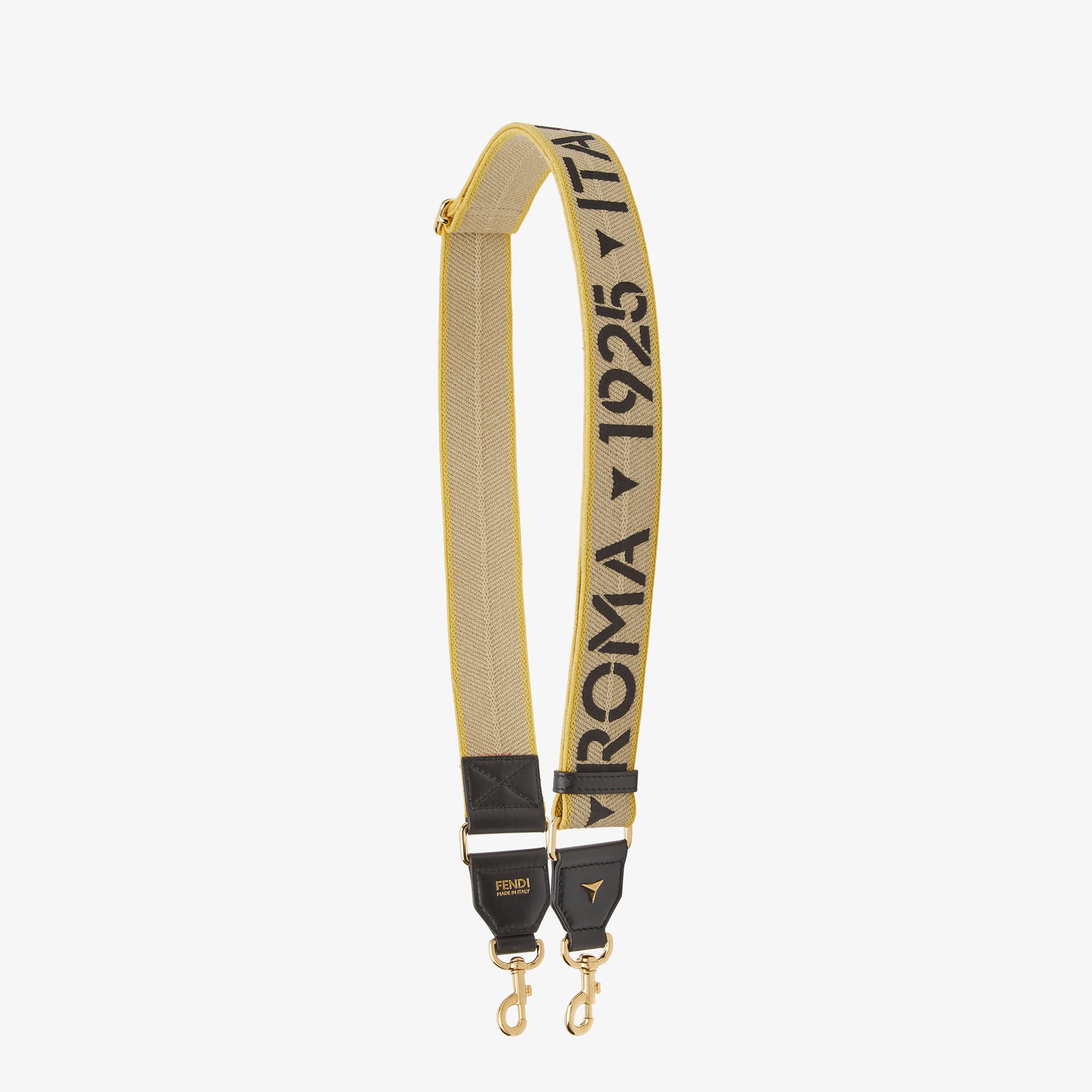
Her influence is harder to photograph than Karl's was. She works at a smaller scale — the engineering of a bag strap, the width of a belt loop, the decision to use a single bar of hardware rather than two. Her work is about utility, or at least the appearance of utility. A Fendi bag under Silvia's direction tends to have more pockets than it strictly needs, but they are placed where your hand naturally falls. The hardware is oversized but matte, never mirror-polished. The leather is treated to look a season old from the start, as though it has already earned its patina.
This is not minimalism. It is something closer to discretion — a quality that has always run through the house but rarely gets named outright.
What remains when the noise recedes
Fendi today occupies an odd position. It is commercially robust, buoyed by accessories and logo-driven collaborations. It is also, if you look past the Baguette and the Peekaboo, a house with an enormous technical vocabulary that it does not always foreground. The atelier still employs seamstresses who learned their trade under the sisters. The leather workshop still uses some of the same tools it used in the Seventies. The sample archive runs deep, and the current team pulls from it often, not as pastiche but as reference.
The risk, and it is a real one, is that this deeper language gets flattened into logo and bag. That the house becomes synonymous with two or three objects, and the rest — the topstitching, the sleeve pitch, the way a lining is cut on the bias to allow for movement — recedes into the background.
But the background is where Fendi has always done its most consequential work. The question is whether anyone is still watching.
There is a photograph, undated, in the Fendi archive. Five women in a workroom, surrounded by bolts of fabric and half-finished coats. No one is looking at the camera. One is pinning a sleeve. Another is holding a length of silk up to the window, checking the weave against the light. It could be 1965 or 1985; the clothes and the tools have not changed enough to tell. What you notice is the posture — heads down, hands busy, no performance. Just the work, which was always the point.