The skull scarf sits in every third wardrobe I know
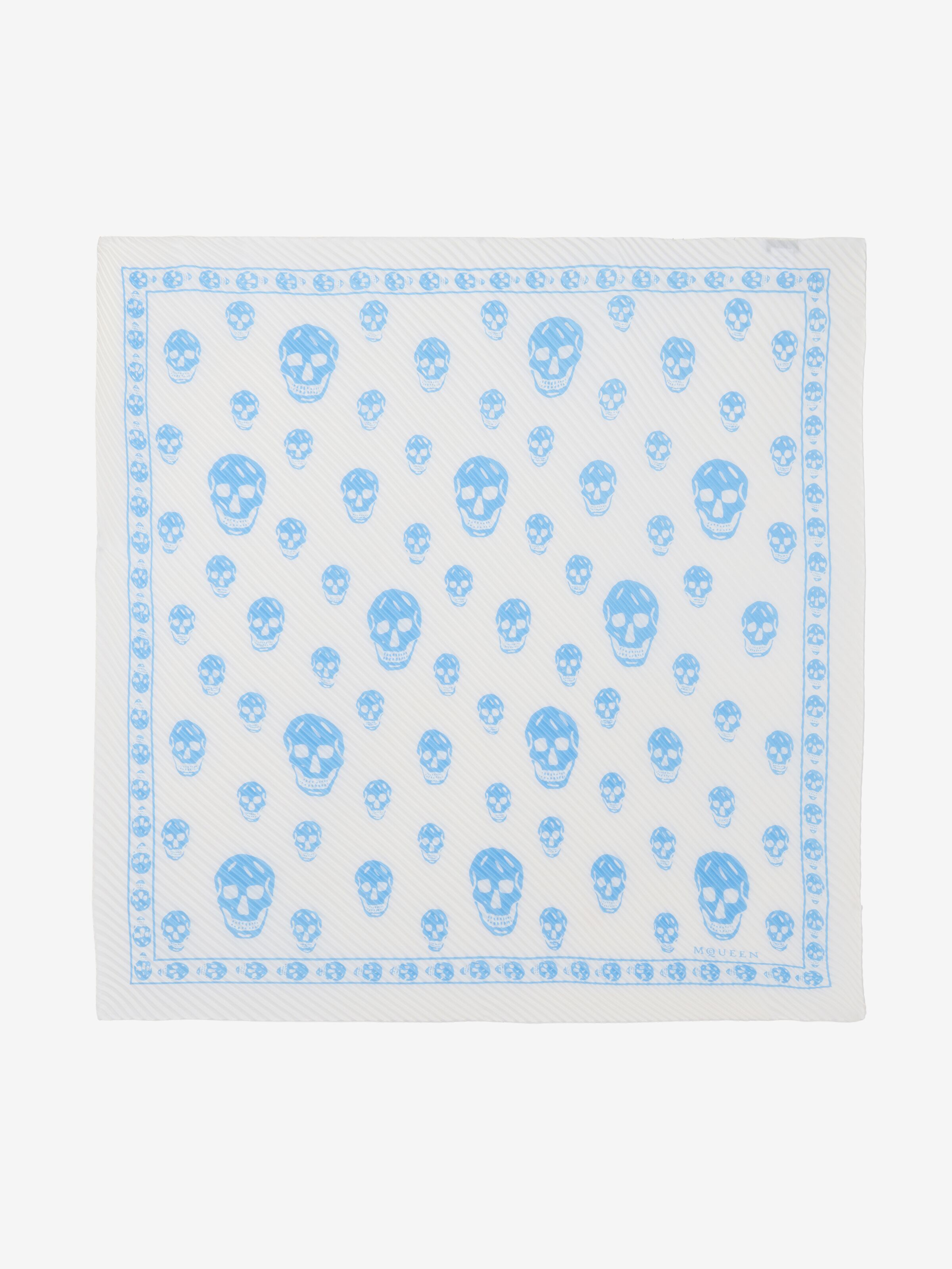
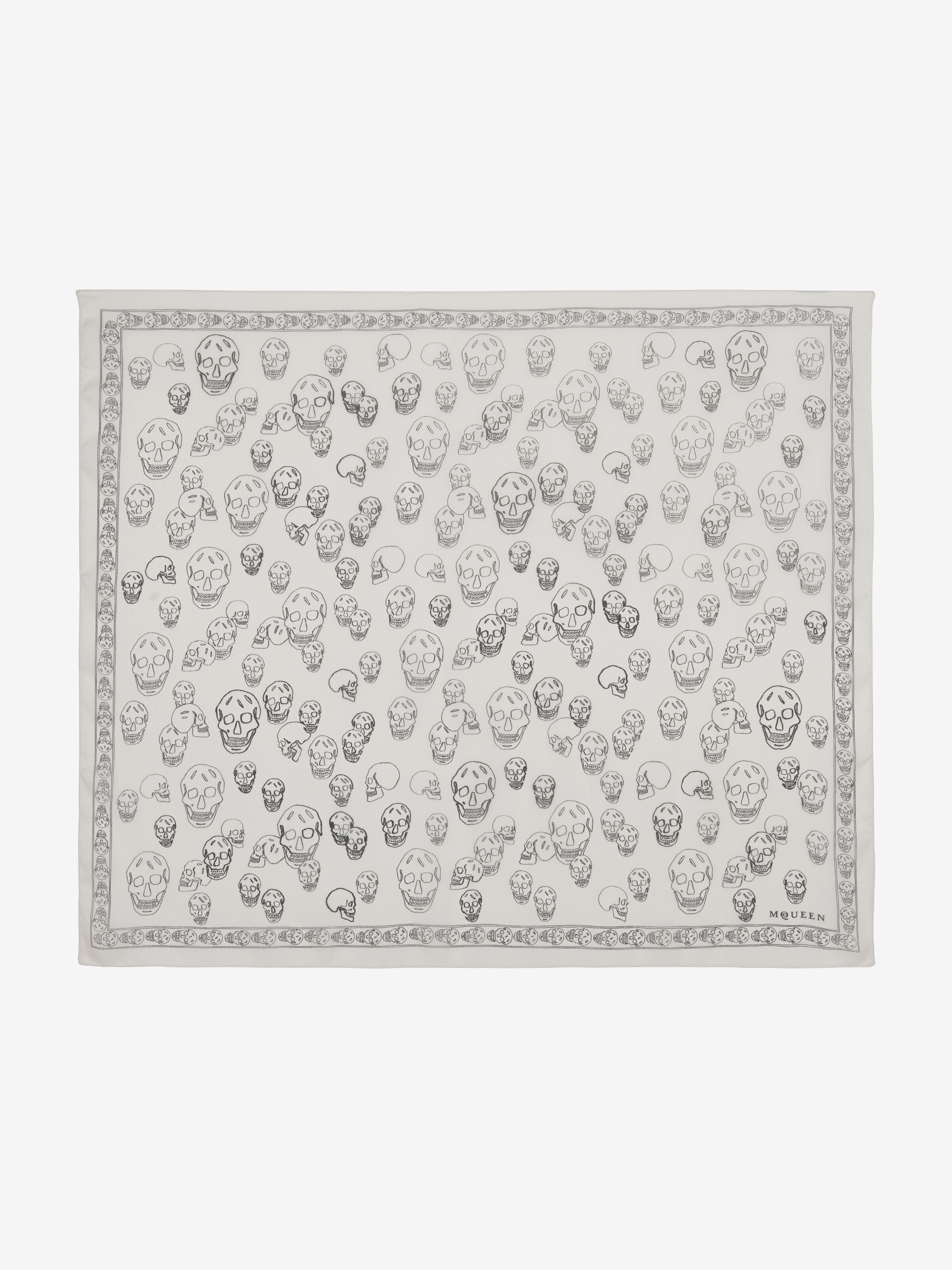
The skull scarf sits in every third wardrobe I know. Silk twill, edge-rolled, printed with anatomical precision — it costs around €400 and has done for a decade. It is not subtle. It is also the single most recognisable entry point into Alexander McQueen, a house built on spectacle and technical rigour in roughly equal measure.
If you are beginning with McQueen, you are beginning with a contradiction. The house that gave us Plato's Atlantis and the hologram of Kate Moss also makes very good trousers. The same atelier that sent models down a runway in antlers now produces handbags that move through airport security without comment. This is not dilution. It is range.
The founding and the myth
Lee Alexander McQueen opened his first studio in 1992 with a Central Saint Martins degree and an apprenticeship at Anderson & Sheppard behind him. The tailoring was Savile Row. The vision was not. His graduate collection, Jack the Ripper Stalks His Victims, featured low-cut 'bumster' trousers that redrew the waistline by four inches and made the pelvis a focal point. It was bought in full by Isabella Blow, who paid in instalments.
What followed was 18 years of collections that treated the runway as theatre and the body as architecture. Highland Rape in 1995. Voss in 2001, with models enclosed in a mirrored cube. Plato's Atlantis in 2009, live-streamed before streaming was common, with prints generated from marine biology and heels so steep they required rehearsal. McQueen died in 2010. The house continued.
The mythology is thick around McQueen, and most of it is true. He was a technician who could cut a sleeve pitch by hand. He was a showman who filled a runway with water and wolves. He was also a businessman who understood that the armadillo boot — unwearable, unforgettable — sold the handbag you could actually carry.
What Sarah Burton built
Sarah Burton took over as creative director in 2010. She had worked beside McQueen since 1996 and understood the house as both spectacle and craft. Her first solo collection leaned into the latter: tailoring with a softer shoulder, embroidery that required 18 months of atelier work, gowns that moved like liquid but held their structure in photographs.
Burton's McQueen was no less rigorous. It was quieter. The silhouettes softened. The palette shifted toward ivory, blush, archive florals. She kept the tailoring sharp and the embroidery obsessive, but the overall effect was less confrontational. When she designed the Duchess of Cambridge's wedding dress in 2011, it was not a departure. It was proof that McQueen could operate at ceremonial scale without losing its edge.
Under Burton, the house became something you could wear to a wedding or a board meeting without explanation. The skull motif remained, but it was joined by botanical prints, knuckle rings, and bags with clean lines. The Jewelled Satchel launched in 2010 and became a bestseller within two years. It was structured, top-handled, and came in black, red, and a rotation of seasonal colours. It cost around €2,000 and required no apology.
Burton left in 2023 after 13 years. The house is currently without a named creative director. Interim collections continue. The atelier has not stopped.
Where to start: the accessible range
If you are entering McQueen now, you are entering a house in transition. The product is stable. The vision is on pause. This is not necessarily a disadvantage. The current offering is legible, and the entry points are clear.
The skull scarf remains the most accessible signature piece. It comes in dozens of colourways, from classic black-on-ivory to seasonal florals. The silk is good — 100% twill, substantial enough to knot without slipping. It is recognisable without requiring context. You wear it, people know what it is, and the conversation moves on.
The Curve bag, introduced in 2021, is quieter. It is a soft, half-moon shoulder bag with a single curved seam and a metal bar closure. It comes in smooth calfskin and quilted nappa, usually in black, cream, or burgundy. Prices start around €1,600. It is not loud. It is also not trying to be.
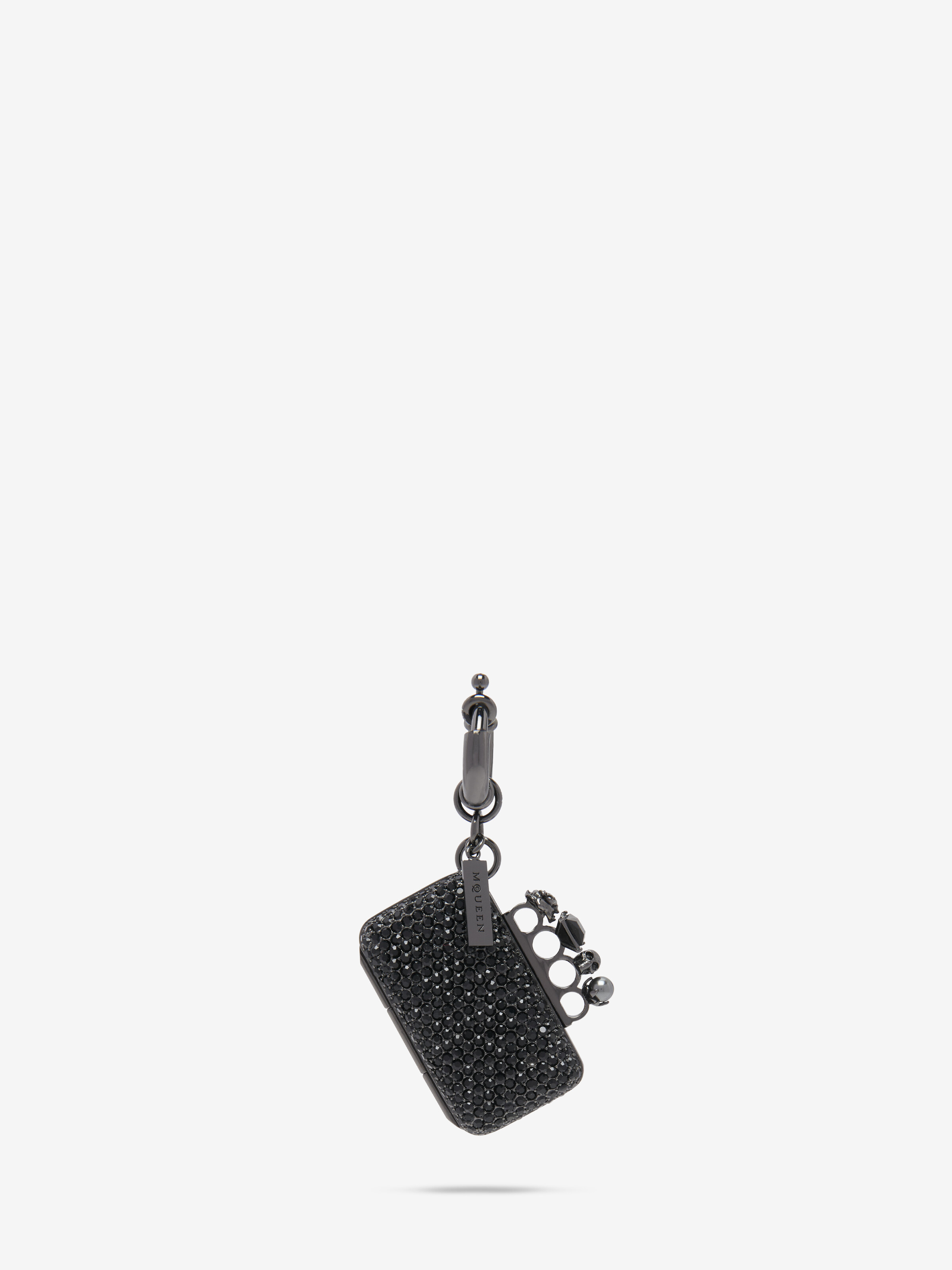
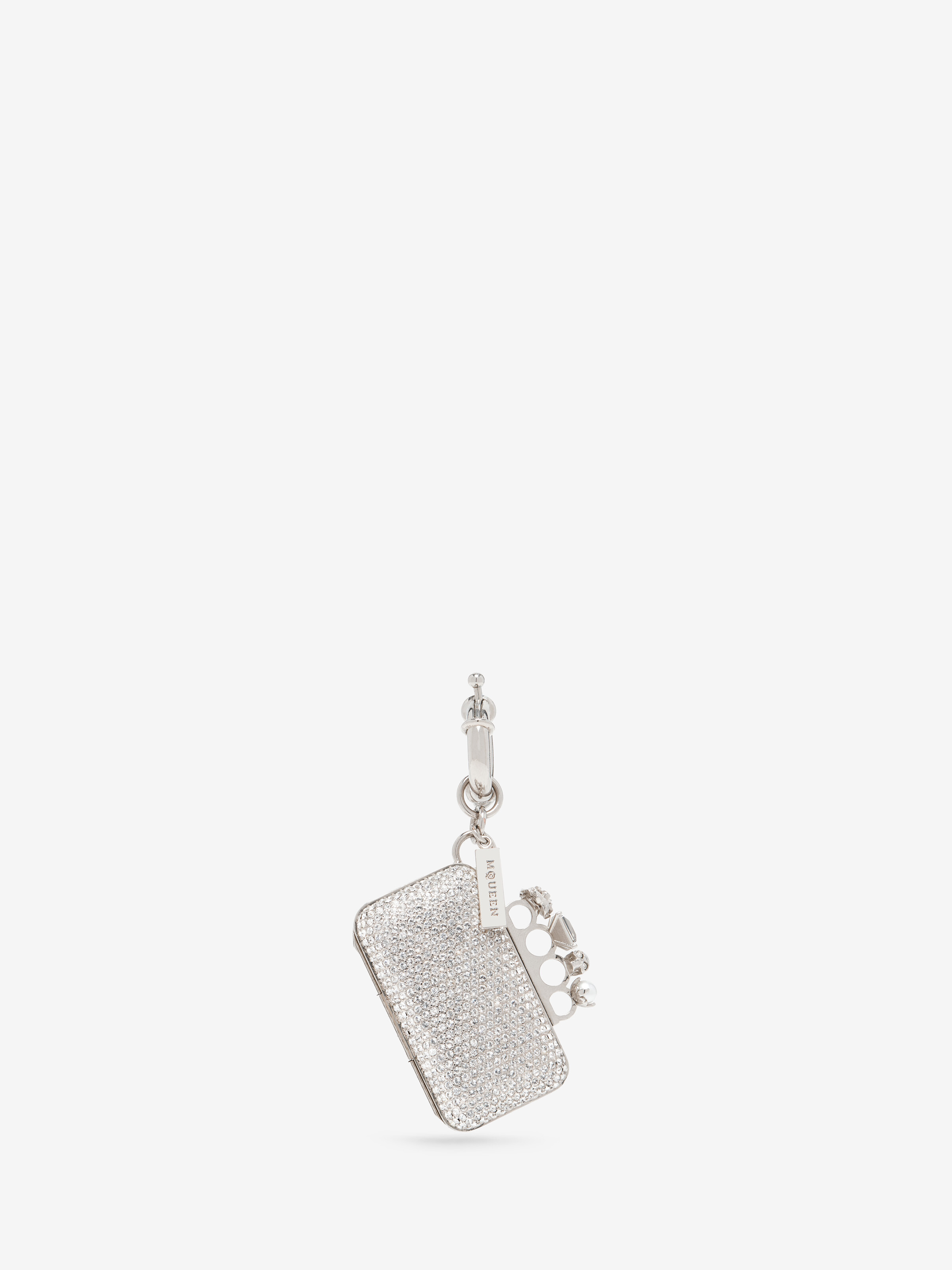
Knuckle rings — four-finger pieces in brass or silver-tone metal, often featuring skulls or botanical motifs — start around €250. They are statement jewellery, but they are small statements. You can wear one to a dinner without it becoming the subject of the dinner.
For ready-to-wear, the tailored trouser is the safest entry. McQueen's tailoring comes from the same tradition that shaped the house: Savile Row construction, updated for a lower rise and a sharper taper. A pair of wool gabardine trousers will cost around €800. They will also last.
The Tread Slick boot, a lace-up combat style with an exaggerated sole, launched in 2019 and became ubiquitous within a year. It is chunky, logo'd at the sole, and costs around €600. It is not subtle. It is also not trying to be anything other than what it is: a boot that works with denim, tailoring, or a slip dress, and announces itself in every context.
The expensive tier and what it buys you
If you have the budget, the Jewelled Satchel remains the house's most coherent handbag. It is a top-handle bag with a structured body, a jewelled clasp, and a detachable shoulder strap. Prices start around €2,200 and climb depending on leather and hardware. It is formal without being stiff. It holds a laptop or a change of shoes. It does not apologise for existing.
The embroidered pieces — gowns, jackets, eveningwear — are where the atelier shows its hand. A hand-embroidered jacket can cost €8,000 and require six months of work. You are paying for hours, not hype. The house still employs the same embroiderers who worked under McQueen. The techniques have not changed.
If you are buying a gown, expect to spend upwards of €5,000 for ready-to-wear, more for something with significant handwork. McQueen's eveningwear is not minimal. It is built for rooms with high ceilings and photographers. If that is not your context, a tailored blazer will serve you better.
What you should know before you buy
McQueen sizing runs slim, particularly in tailoring and knitwear. If you are between sizes, go up. The house uses Italian sizing for most pieces, which means a 40 is roughly a UK 8 or US 4. Try before you buy if possible.
The leather goods are made in Italy, mostly in the Marche region. The quality is consistent. The hardware is heavy, which adds weight to bags but also longevity. A McQueen bag will not fall apart in two years. It will also not disappear into a crowd.
The skull motif is everywhere, and it will date the piece. This is not necessarily a problem — McQueen has been using the skull since the early collections, and it has not lost currency yet. But if you want something that will read as 'McQueen' in 20 years without reading as '2020s McQueen', go for the tailoring or the jewelled hardware, not the printed scarves.
Resale value is strong for bags and jewellery, softer for ready-to-wear unless it is a runway piece. The Jewelled Satchel holds around 60% of retail on the secondary market. Seasonal pieces drop faster.
The house is in flux. Burton's departure leaves a gap, and the next creative director will reshape the offering. If you are buying now, you are buying the tail end of an era. That is not a reason to wait. It is a reason to know what you are getting.
The piece to hold
There is a photograph from McQueen's Spring/Summer 1999 show, No. 13. A model walks through a glass box as two robotic arms spray her dress with yellow and black paint. The dress is white when she enters. It is not white when she leaves. The paint is uneven, industrial, and the model does not flinch.
The dress was never for sale. The idea was. McQueen built a house on the premise that fashion could be confrontational, technical, and commercial all at once. You could make a dress that required robots and still sell a handbag on Monday. You could show antlers on the runway and trousers in the showroom. The skull scarf costs €400 because someone, somewhere, is still buying it. The house continues because the work was never just about Lee Alexander McQueen. It was about what happens when you treat clothing as both craft and provocation, and refuse to choose between them.
If you are starting with McQueen, start with the thing you will actually wear. The scarf, the boot, the black wool trousers. The house will still be here when you are ready for the gown.