The skull scarf sold first
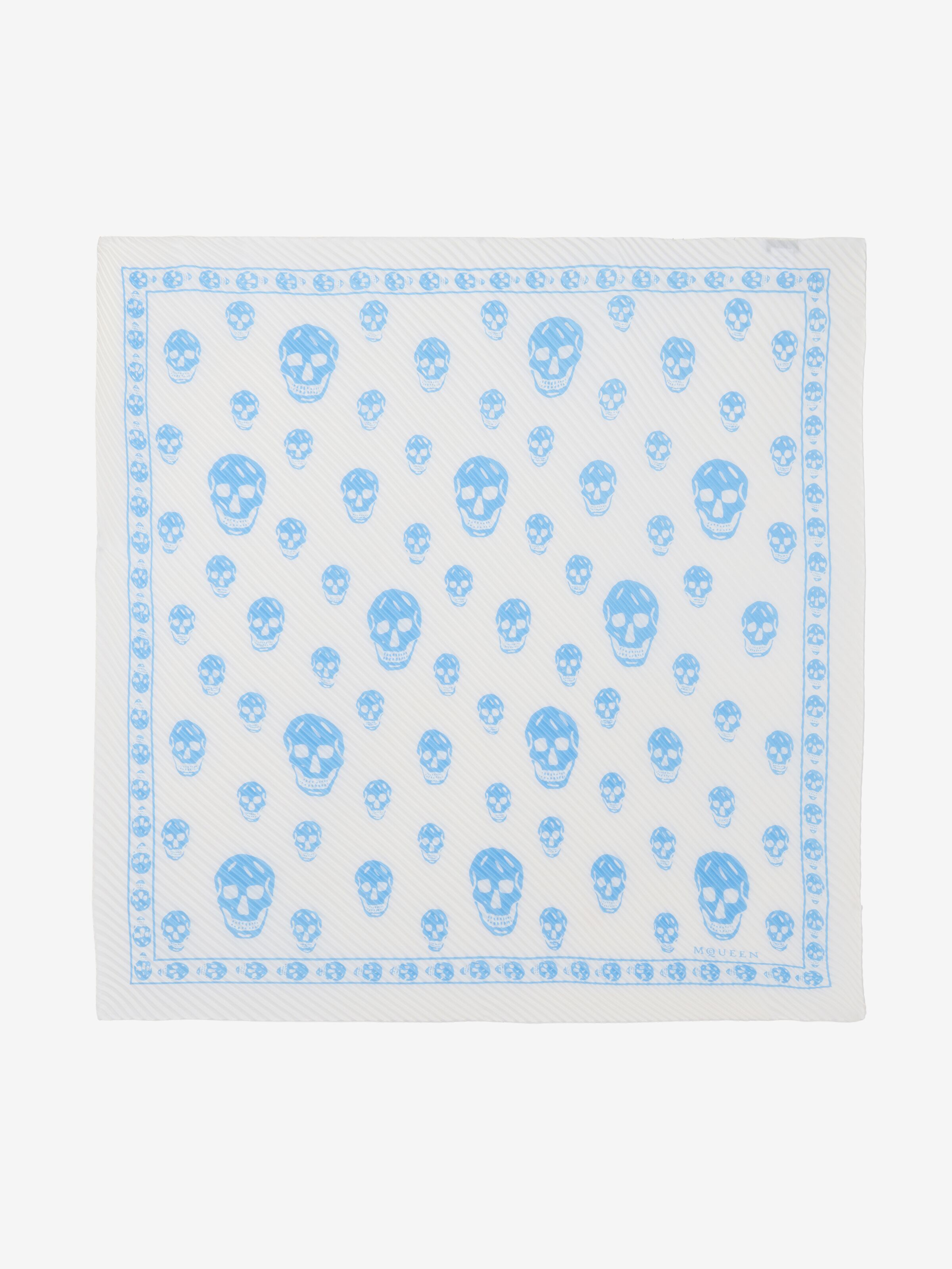
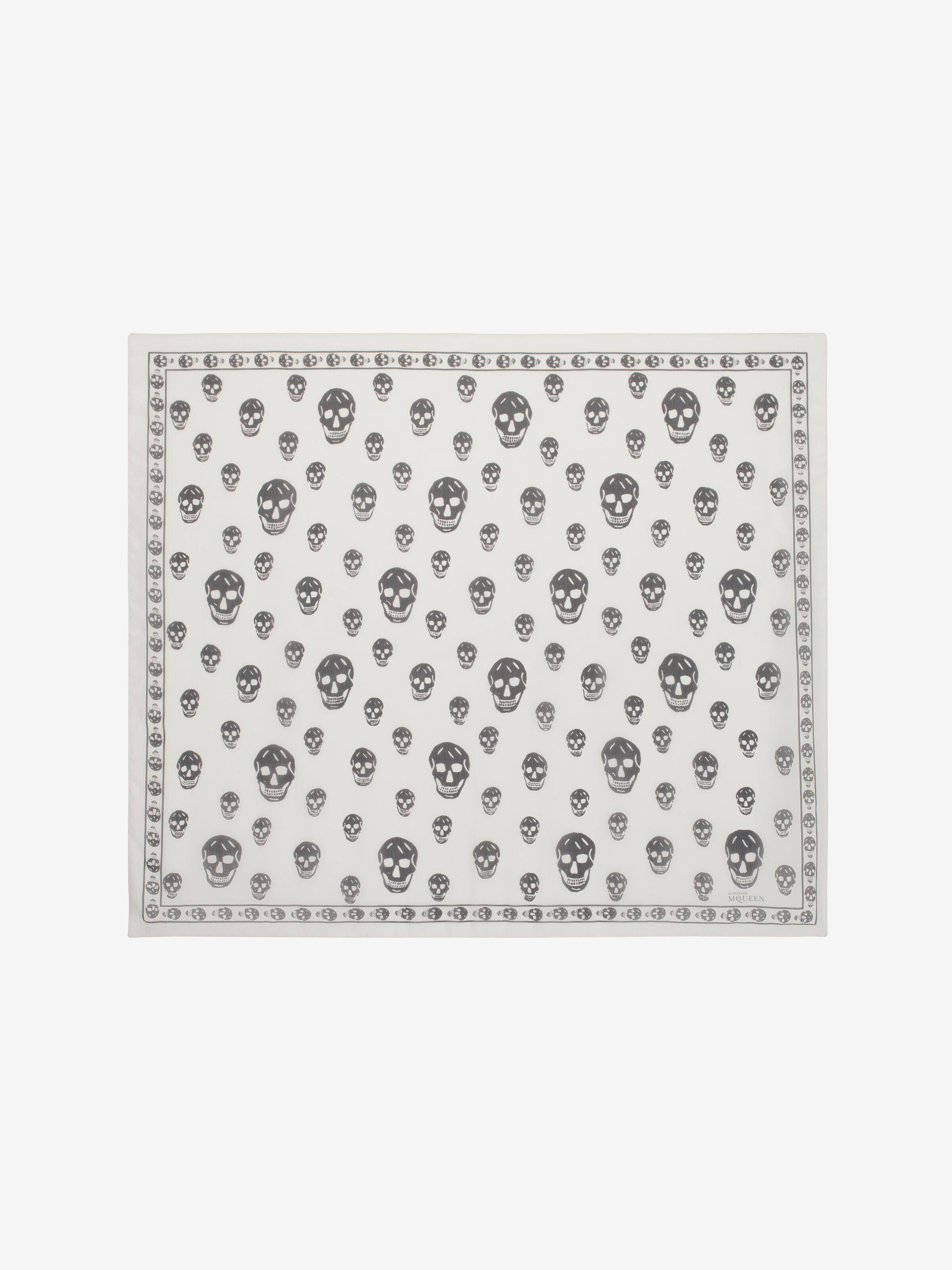
The skull scarf sold first. Not the tailoring, not the bumster trousers that redrew the pelvis, not the antler headdress from VOSS. The scarf — silk twill, printed with a grinning memento mori — became the house's most recognised object within a decade of Lee Alexander McQueen's death. It still is. That tells you something about how a vision travels, and what survives contact with scale.
Alexander McQueen began in 1992 with a graduate collection titled Jack the Ripper Stalks His Victims. The pieces were sharp in both senses: tailoring pulled from McQueen's years on Savile Row, rendered in materials and cuts that refused comfort. He had trained at Anderson & Sheppard and Gieves & Hawkes. He knew how a sleeve should set, how a lapel rolls, how to make a garment hold its architecture on the body. Then he took that knowledge and used it to build something else. The early shows were small, staged in warehouses and car parks, attended by editors who came because they heard something was happening and left because they had seen it.
By the mid-nineties, McQueen was showing in Paris. The bumster trouser appeared in 1993: a pant cut so low on the hip that it exposed the base of the spine, the iliac crest, the beginning of the cleft. It was not about sex, though it was read that way. It was about proportion. McQueen had moved the waistline six inches south and the silhouette collapsed and rebuilt itself around that new anchor point. Tailoring followed. Jackets narrowed and lengthened. The body became a different shape.
The shows were events, then spectacles, then something closer to art installations that happened to contain clothing. Highland Rape in 1995: torn lace, models stumbling, a deliberate confrontation with England's violence toward Scotland. La Poupée in 1997: prosthetics, doll joints, a model's legs carved and reassembled in wood. No. 13 in 1999: the finale where Shalom Harlow stood on a rotating platform in a white dress while two industrial robots sprayed her with black and yellow paint. The dress moved. The robots painted. The audience did not applaud until it was over, because they were not certain what they had seen.
McQueen was not interested in wearability as a starting point. He was interested in the garment as a site of transformation. A jacket could change how you held your shoulders. A heel could redistribute your weight until you walked differently. A corset could make breath a conscious act. The clothing was not passive. It required something from the wearer, and it gave something back.
Givenchy and the return
Between 1996 and 2001, McQueen was creative director at Givenchy. The appointment made sense on paper: a young British talent given the keys to a storied French house. In practice, it was a poor fit. McQueen's work depended on time, on the ability to chase an idea until it bent or broke. Givenchy required four collections a year and a respect for the archive that felt, to him, like restriction. He later called the tenure a mistake. The Givenchy work was competent, occasionally beautiful, never transcendent. The energy was elsewhere.
His own label, meanwhile, became the place where he could build without compromise. The atelier expanded. The shows grew larger. VOSS, spring 2001, took place inside a mirrored cube. The audience sat in darkness, looking at their own reflections, until the lights came up and revealed a padded room inside the cube, models in bandages and feathers, a final tableau of moths covering a naked woman on a psychiatrist's couch. The collection was about beauty and decay, about observation and voyeurism, about the fashion show itself as a site of violence. It was also about sleeve construction and the way tulle can be manipulated to suggest both fragility and weight.
McQueen's tailoring never softened. A 2004 jacket for a fictional widow — black wool, nipped waist, shoulders like architecture — could have walked out of the Row in the 1950s. But the skirt beneath it was shredded. The look held two centuries of British craft in tension with an impulse to destroy. That was the signature: impeccable technique deployed in service of something unsettling.
The house showed in Paris every season. The business grew. Gucci Group acquired a majority stake in 2000, which meant resources, which meant McQueen could stage Plato's Atlantis in 2010 with a runway that looked like a spaceship interior and prints generated by an algorithm that mapped animal patterns onto synthetic fabrics. The finale dress — digitible scales in green and blue, a second skin — was not something a human hand could have painted. McQueen used the technology because it let him see something he could not have imagined alone.
He died in February 2010, a week before that collection reached stores. He was 40 years old.
Burton and the expansion
Sarah Burton had worked beside McQueen since 1996. She had run the atelier, built the gowns, understood the internal logic of the work. When she was named creative director six months after his death, the appointment was not a surprise. The question was what the house would become.
Burton's first collection, spring 2011, opened with a white dress covered in hand-painted feathers. It was delicate in a way McQueen's work rarely allowed itself to be. The tailoring remained sharp — Burton had learned from the same Savile Row tradition — but the tone shifted. Where McQueen used beauty as a tool to access darkness, Burton seemed interested in beauty as its own subject. The gowns became more frequent. The embroidery became more intricate. The house began to look like a place where craft could exist without needing to justify itself through provocation.
She designed the wedding dress for Catherine Middleton in 2011. Lace sleeves, a nine-foot train, a silhouette that referenced Grace Kelly and British royal tradition without replicating either. It was watched by two billion people. The house, already known, became inescapable. The skull scarf, which had been in the collection since 2003, became the recognisable object for customers who would never buy a gown but wanted a piece of the name.
Burton stayed for 13 years. The collections were consistent: exquisite tailoring, gowns that took hundreds of hours to construct, references to the natural world rendered in embroidery and appliqué. Savage Beauty, the Metropolitan Museum's 2011 McQueen retrospective, became the museum's most visited fashion exhibition. The house was now historical and contemporary at once, which is a difficult position to occupy. Burton managed it by focusing on the atelier, on the physical act of making. If McQueen had asked what fashion could destroy, Burton asked what it could preserve.
She left in 2023. Her final collection, fall 2023, included a black coat with sleeves that extended past the hands, embroidered with silver mycelium. It was about growth and decay, about systems that build in the dark. It was her subject, not his, but it came from the same place: the belief that a garment is not decoration but a form of knowledge.
McGirr and the present
Seán McGirr's first collection for Alexander McQueen appeared in March 2024. He had come from JW Anderson, where he had spent 16 years building a reputation for precise, conceptual tailoring. The question facing him was the question facing anyone who inherits a house built by a singular vision: what do you keep, and what do you let go.
The fall 2024 collection opened with a coat in black wool, the shoulder dropped, the sleeve gathered at the cuff. It was a McQueen shoulder, but softer. The tailoring was still there — McGirr knows how to set a sleeve — but the aggression was not. The show included lace, leather, a series of dresses that looked like they had been submerged and pulled from water. The palette was dark. The shapes were familiar. It was competent work, which is not the same as necessary work.
McGirr is working in the shadow of two legacies now: the founder's and Burton's. That is a narrow space. The house has an atelier, a reputation, a customer base that expects a certain level of craft. It also has a history that cannot be replicated, because the conditions that produced it — McQueen's specific combination of training, anger, and vision — do not exist anymore.
The skull scarf is still in production. You can buy it in 22 colours. It is made in Italy, silk twill, the print as sharp as it was in 2003. The house continues because the house is a business, and businesses continue by finding new ways to say the same thing. Whether that thing remains worth saying is a question each collection has to answer.
A student collection in 1992 had a jacket with sleeves that extended a foot past the hands. The wearer could not use their arms. That was the point. McGirr's coat in 2024 had sleeves that gathered, that allowed movement, that made the gesture without the restriction. Both are ways of working. Only one required you to give something up.