The trench coat hanging in the Burberry archive on Horseferry Road weighs less than you'd think
The trench coat hanging in the Burberry archive on Horseferry Road weighs less than you'd think. It's a 1918 officer's model, gabardine still tight, D-rings intact, storm shield lying flat across the right shoulder. You can see where the original owner buckled the sleeve straps against the rain. The cloth has no give. It was built to stop water, not to drape.
That tension — between function and form, between what a garment was made to do and what it has come to mean — runs through everything Burberry makes. The house has spent 168 years trying to resolve it, and the best pieces still haven't.
What you're buying into
Burberry was never meant to be a fashion house. Thomas Burberry opened a draper's shop in Basingstoke in 1856, supplying outdoor professionals with weatherproof cloth. He patented gabardine in 1879 — a tightly woven cotton twill, waterproof but breathable, lighter than the rubberised mackintoshes that came before. The British War Office commissioned trench coats for officers in 1914. Explorers wore Burberry to both poles. The house built its reputation on a single promise: you will stay dry, and you will not overheat.
The fashion part came later. Much later. Rose Marie Bravo repositioned Burberry as a luxury maison in the late Nineties, hiring Christopher Bailey in 2001. Bailey leaned into the archive — the check, the trench, the equestrian references — and rebuilt the house around a very specific vision of Englishness. Polished, nostalgic, a little bit louche. It worked. By the mid-2000s, Burberry was everywhere.
Then it was too everywhere. The check became shorthand for aspiration without taste, copied onto everything from baseball caps to pram liners. The house spent a decade trying to pull back, limiting the archive print, raising prices, chasing credibility. Daniel Lee arrived as creative director in 2022 with a different problem: how do you make Burberry feel necessary again when everyone already knows what it stands for?
His answer has been to strip it back. The current collections feel quieter, more architectural. Less about heritage signalling, more about cut and proportion. The trench is still there — it's always there — but Lee's version sits lower on the hip, skims rather than cinches. The check appears sparingly, often as a lining detail rather than an exterior statement. It's a gamble: can Burberry be Burberry without leaning so hard on the things that made it Burberry in the first place?
The pieces that matter
If you're starting with Burberry, start with outerwear. It's what the house does best, and it's where the price-to-quality ratio still makes sense.
The Heritage Trench runs around €1,990 for the mid-length Kensington fit. That's not entry-level, but it's also a coat you'll wear for 15 years if you treat it properly. The gabardine is still made to the 1879 spec — dense, crisp, holds its shape in rain. The cut has been refined over decades: set-in sleeves, raglan option if you want more room through the shoulders, storm shield, throat latch, all the original military details still functional. You can get it in honey, black, or midnight. Honey is the obvious choice. It's also the right one.
If the trench feels like too much of a commitment, the car coat offers similar construction at a slightly lower price point, around €1,790. Shorter, less formal, easier to wear over knitwear. The Camden fit is the most versatile — hits mid-thigh, works over tailoring or denim, doesn't require you to buckle anything.
Burberry's quilted jackets sit in a strange space. The diamond-quilted style, often lined with the house check, retails around €1,490. It's well-made, but it's also deeply tied to a specific moment in British culture that doesn't translate cleanly outside the UK. If you didn't grow up seeing them on country weekends, they read more as costume than wardrobe.
Scarves are the most accessible entry point. The classic cashmere check scarf runs about €490. It's softer than it looks, substantial without being heavy, and it's one of the few logo pieces that still feels restrained. The giant check — the one everyone recognises — works if you're comfortable being read as someone who owns Burberry. The smaller, tonal check gives you the quality without the announcement.
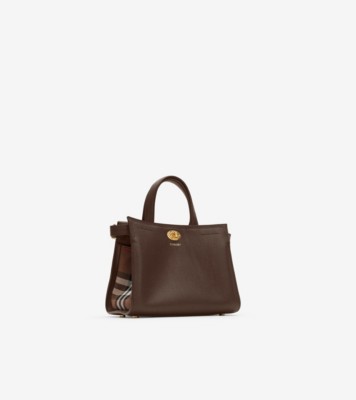
Bags are harder to recommend. Burberry has been trying to establish a signature silhouette for years — the Lola, the Olympia, the Knight — but none have the instant recognition of a Chanel flap or a Bottega pouch. The quality is there, the leather is good, but you're paying luxury prices for a bag that doesn't yet carry luxury cachet. The exception: the Rocking Horse, a structured top-handle that Lee reintroduced. It has a cleaner line than most of the range, and it doesn't try too hard.
Ready-to-wear is where things get complicated. Burberry's tailoring can be excellent — the house knows how to cut a blazer, how to set a sleeve — but it's also inconsistent. A wool-cashmere trench coat might run €2,800, which is fair for the cloth and construction. A cotton poplin shirt with a small embroidered logo might be €590, which is not. You're paying for the name on the latter, not the garment.
Knitwear sits somewhere in between. A cashmere rollneck will cost around €890. That's high, but not absurd if you're comparing it to Loro Piana or Brunello Cucinelli. The merino options, closer to €490, are easier to justify. Avoid anything with large logo placement unless you're very sure that's the statement you want to make.
What to know before you buy
Burberry's sizing runs true to UK standards, which means it's slightly more generous than Italian or French cuts. If you're between sizes on a trench, size down — the coat is meant to have structure, not to drape. If you're between sizes on knitwear, size up — the current collections are cut closer than they were under Bailey.
The house offers alterations on outerwear purchased in-store, which is worth using. A trench that fits perfectly through the shoulders but needs the sleeves shortened is a better investment than one that's merely close. Burberry's tailors know the garments; they'll adjust without losing the original line.
Resale value is uneven. Trench coats hold up well, especially in honey gabardine. You'll recoup 50 to 60 percent of retail if you sell after a few years, more if it's vintage. Bags are harder to move unless they're archive pieces or limited editions. Ready-to-wear drops faster — Burberry doesn't have the resale infrastructure of Hermès or Chanel, and the market is softer.
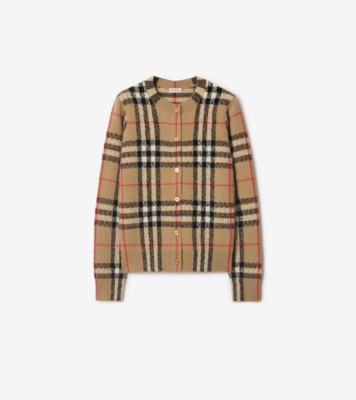
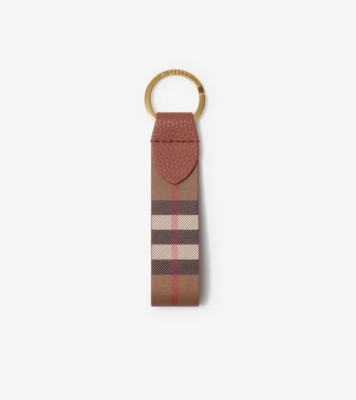
The check is a decision you'll need to make for yourself. It's been overused, pulled back, reintroduced, and repositioned so many times that it no longer has a single meaning. On a scarf lining or a trench interior, it's a quiet nod to the archive. On a tote or a bucket hat, it's a louder statement. Neither is wrong, but they're not the same purchase.
One last thing: Burberry's outlet stores exist, and they're worth visiting if you're near one. You won't find current-season trenches, but you will find previous seasons at 30 to 40 percent off. The quality is identical. The only difference is the timing.
Where the house is now
Daniel Lee's Burberry is still forming. The first collections felt like a reset — pared back, almost austere, focused on shape over decoration. The more recent shows have started to introduce warmth again: richer colours, softer textures, a little more play in the proportions. It's not a full return to the Bailey era, but it's not as severe as the early Lee pieces either.
The challenge is that Burberry is trying to be two things at once: a heritage house with 168 years of history, and a contemporary brand that can compete with Bottega Veneta and The Row. Those aren't incompatible goals, but they require a very careful balance. Lean too hard on the archive, and you're selling nostalgia. Ignore it completely, and you lose the reason anyone cared in the first place.
Right now, Burberry is somewhere in the middle. The trench coats are still exceptional. The scarves are still worth owning. The newer pieces — the sculptural outerwear, the updated tailoring, the quieter accessories — are still proving themselves.
There's a 1956 advertisement in the Burberry archive, black-and-white photograph of a woman in a belted trench, standing in the rain with no umbrella. She's not smiling. She's not trying to sell you anything. She's just dry. That's still the best reason to buy from this house.