The trench coat hanging in the Burberry flagship on Regent Street weighs less than it did in 1999
The trench coat hanging in the Burberry flagship on Regent Street weighs less than it did in 1999. The cotton gabardine is thinner now, the storm shield smaller, the belt buckles lighter. It still carries the same check lining — camel, red, black, white — but the coat itself has been revised seven times in twenty-five years. This is the tension at the centre of the house: how to hold a 168-year-old silhouette steady while everything around it shifts.
What Burberry was built on
Thomas Burberry opened his first shop in Basingstoke in 1856. He was twenty-one. By 1879 he had invented gabardine — a tightly woven, weatherproof cotton that breathed. The fabric was patented. Burberry supplied the British military through two world wars, dressed Shackleton's Antarctic expedition in 1914, and by the 1920s had become the house that outfitted explorers and aviators. The trench coat was regulation issue in the trenches of the First World War. That is where the name came from.
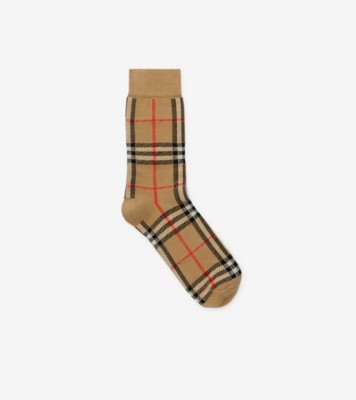
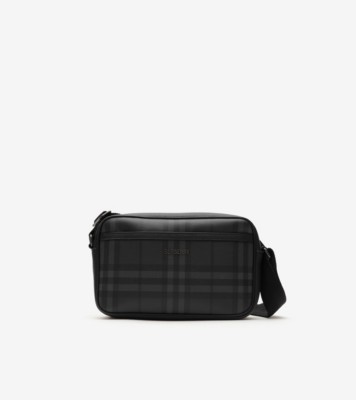
The check appeared in the 1920s as a coat lining. It became the brand's most recognisable asset and, eventually, its largest liability. By the late 1990s, the check had migrated from lining to exterior fabric, printed on everything from baseball caps to bikinis. Burberry was ubiquitous in Britain in ways that eroded the brand's luxury positioning. The association with football culture and tabloid visibility made the check a problem the house would spend the next two decades trying to solve.
The Christopher Bailey era
Christopher Bailey joined Burberry in 2001 as design director. By 2004 he was creative director. By 2014 he was chief creative officer and, briefly, chief executive. His tenure lasted seventeen years.
Bailey understood that Burberry's strength was not in invention but in refinement. He leaned into Britishness — not as pageantry but as a design language rooted in craft and weather. The trench coat became the centre of every collection. He expanded the house's use of its archive: military details, equestrian hardware, the structure of a car coat. He brought in photographers like Mario Testino and Alasdair McLellan. The campaigns featured British actors and musicians shot in recognisably English landscapes. It was heritage, but it was also contemporary.
Bailey also recognised that Burberry needed to control how the check was used. He pulled it back, limited its application, and reintroduced it slowly as an accent rather than a surface treatment. The strategy worked. By the mid-2000s, Burberry was profitable again, its image rehabilitated.
In 2010, Burberry was the first luxury house to livestream its runway show. The digital strategy was early and aggressive: customers could order pieces directly from the runway, the website became a content platform, and the brand invested heavily in social media before most of its competitors understood what that meant. Bailey saw that luxury's relationship to access was changing. He made Burberry a case study in how a heritage house could move fast.
He left in 2018. His final show was in February of that year, held in Dimco Buildings in East London. The collection was called "Time" and featured rainbow-check pieces in tribute to the LGBTQ+ community. It was sentimental in a way Bailey rarely allowed himself to be. When he took his final bow, the entire audience stood.
Riccardo Tisci and the reset that didn't land
Riccardo Tisci was announced as Bailey's successor in March 2018. He arrived from Givenchy, where he had spent twelve years building a dark, romantic, highly referential design language. His Burberry was immediately different: more streetwear-inflected, more logo-driven, more concerned with what was happening at Off-White and Vetements than with what was happening in the archive.
Tisci introduced a new logo and a new monogram, both designed by Peter Saville. The TB monogram — Thomas Burberry's initials — appeared on bags, outerwear, and knitwear. It was meant to signal a break from the check, a new visual identity that could carry the brand forward. The first collection, shown in September 2018, featured oversized tailoring, shearling bombers, and chain-strap bags. The casting was younger. The silhouettes were looser. The show notes referenced British subcultures: mods, skinheads, ravers.
The market response was mixed. Tisci's Burberry sold, but not at the level the company needed. The TB monogram did not replace the check in customers' minds. The product felt caught between two ideas: Tisci's instinct toward decoration and drama, and Burberry's expectation of restraint and function. Revenue grew in some categories and stalled in others. In China, where Burberry had been strong, the brand lost ground to Bottega Veneta and Loewe.
Tisci's final collection was shown in February 2022. He left quietly, with no farewell show and no public statement from the house beyond the standard press release. His tenure lasted four years. It was not a failure, but it was not the reset Burberry had hoped for.
Daniel Lee's Burberry
Daniel Lee was announced as creative director in October 2022. He came from Bottega Veneta, where he had turned the house into one of the most commercially successful and critically lauded brands in luxury. His first Burberry collection was shown in February 2023.
Lee's approach is rooted in garment construction. He is interested in how clothes are made, not in how they reference other things. His Burberry is quieter than Tisci's, more focused on cut and material than on logo or decoration. The trench coat remains central, but Lee has reworked its proportions: wider shoulders, longer length, heavier fabric. He has introduced new outerwear shapes — a rubberised parka, a quilted car coat — that feel like extensions of the archive rather than departures from it.
The check has returned, but sparingly. Lee uses it as a detail, not a statement. A scarf lining. A pocket square. The interior of a bag. He has also introduced a new pattern, a geometric rose motif that appears in jacquard knits and embroidered leather. It is recognisably Burberry — floral, English, tied to the brand's visual history — but it is not the check.
The bags under Lee have shifted toward structure and hardware. The Knight bag, introduced in his second collection, is a top-handle style with equestrian buckles and a rigid frame. It is formal, expensive, and aimed at a customer who is not buying a logo bag. The Rocking Horse bag, shown in September 2023, is a slouchy hobo with metal stirrup details. Both bags are selling well in Europe and the United States. In China, the response has been slower.
Lee's Burberry is performing, but not yet at the level the company needs. Revenue in the fiscal year ending March 2024 was down four per cent year-over-year. The brand is caught in a difficult moment for accessible luxury: customers at the entry level are trading down, and customers at the top are consolidating their spending around fewer, more established houses. Burberry sits in the middle, neither rare enough to command Hermès pricing nor accessible enough to compete with contemporary brands.
Where the house stands
Burberry is not in crisis, but it is not in a moment of clarity either. The brand is 168 years old and has survived worse: the check saturation of the early 2000s, the financial crisis of 2008, the leadership churn of the past decade. It has a strong archive, a recognisable product, and a creative director who understands construction. But it also has a positioning problem.
The trench coat is still the house's most important garment. It is also the garment that defines the house's limitations. A trench coat is not a status object in the way a Birkin is a status object. It is functional, it is well-made, and it is expensive but not prohibitively so. It does not generate the kind of demand that drives waiting lists or resale premiums. Burberry's strength — accessible, wearable luxury — is also what keeps it from moving into the top tier of the market.
Lee's work is careful and considered. His collections are not trying to make noise. They are trying to build a wardrobe. That is a longer game, and it is not clear yet whether Burberry's shareholders will allow him the time to play it.
There is a trench coat in the Burberry archive from 1942. It was made for an RAF officer and still carries his name stitched into the lining. The gabardine is heavier than what the house uses now, the buttons are horn, and the belt is secured with a D-ring that has not been used in production since the 1950s. The coat is displayed in a glass case at the Horseferry House headquarters in London. It is not for sale. It is there to remind everyone who works at Burberry what the house was built on: a piece of clothing that kept someone dry and warm in a war. That is not a small thing. It is also not enough to build a luxury brand on in 2025.