The trench coat hanging in the window at 121 Regent Street has been there, in one form or another, since 1891
The trench coat hanging in the window at 121 Regent Street has been there, in one form or another, since 1891. The gabardine has changed weight—lighter now, more supple—but the storm shield remains, and the throat latch, and the D-rings that once held grenades. You can still buy that coat today for roughly £1,600. It is, by most measures, the least complicated way into Burberry.
But it is not the only way, and if you are looking at the house for the first time, it helps to know what you are actually buying into. Burberry is not a single idea. It is a cluster of them, built over 168 years, some of which contradict each other. There is the military supplier, the country estate signifier, the Britpop emblem, the checked lining that became a hooligan tell, and now the polished, re-centered version under Daniel Lee. All of these are true. None of them is complete.
What Burberry actually is
Thomas Burberry opened his draper's shop in Basingstoke in 1856. By 1879 he had patented gabardine, a tightly woven cotton twill that repelled water without the rubber coating that made Victorian rain gear stiff and airless. The British Army ordered officer coats in the fabric for the Boer War. Shackleton wore it to Antarctica. The word 'Burberry' became interchangeable with 'trench coat' the way 'Hoover' swallowed 'vacuum'.
This is the foundation. Burberry built its reputation on a specific piece of cloth and a specific garment, both designed to keep you dry and alive in bad weather. Everything else—the check, the handbags, the runway shows—came later, and came because the trench worked.
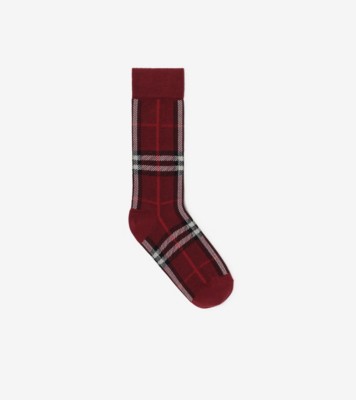
The check itself did not appear until 1924, and even then it was a lining, not a print. It was the interior of the Burberry coat, a four-colour tartan in camel, black, red, and white that you glimpsed when the wearer moved. It stayed there, mostly hidden, until the Sixties, when the house began applying it to umbrellas and scarves. By the Nineties it had escaped entirely. It was on bucket hats, bikinis, baseball caps. It became, for a time, the most visible pattern in British street culture, worn by football casuals and grime MCs and anyone who wanted to signal a particular kind of loudness.
The house spent the better part of two decades trying to pull the check back under control. Christopher Bailey, who led design from 2001 to 2018, used it sparingly, often as an accent rather than an all-over print. He leaned into the heritage pieces—trench coats, cashmere scarves, tailored outerwear—and repositioned Burberry as a luxury house with a military-pastoral past. It worked, commercially. But it also locked the brand into a single aesthetic register: polite, beige, nostalgic.
Daniel Lee arrived in 2022 with no interest in nostalgia. His first collection stripped the trench of its epaulettes and belt, cut it in black leather, paired it with cargo trousers and industrial zips. He brought back the Equestrian Knight logo, which the house had retired in 2018, and put it on everything—bags, knitwear, hardware. The check reappeared, but flattened, digitised, sometimes barely recognizable. Lee's Burberry is harder, more urban, less concerned with the countryside it once dressed for.
This is where the house sits now. Not quite streetwear, not quite tailoring. Somewhere between the two, pulling from both.
The pieces that matter
If you are starting with Burberry, start with outerwear. It is what the house does best, and it is where the design language is clearest.
The Heritage Trench is the obvious entry point. It comes in three fits—slim, classic, and relaxed—and five lengths. The classic mid-length version in honey gabardine runs £1,690. You can find it on sale, occasionally, but not often. Burberry does not discount its core pieces with much regularity. The trench is a purchase you make once, assuming you do not lose it or leave it in a taxi, which people do with alarming frequency.
The Car Coat is shorter, boxier, less formal. It was designed in the Fifties for drivers who needed something that would not crush in a car seat. Lee has kept it in rotation, sometimes with exaggerated shoulders, sometimes cropped above the hip. Prices start around £1,400. It works better than the trench if you are short or if you spend most of your time in cities where a knee-length coat feels like costuming.
Scarves are the other reliable entry. A cashmere check scarf in the classic colourway costs £450. It is a significant amount of money for a scarf, but the weight is substantial—300 grams, roughly—and it lasts. Burberry's cashmere is sourced from Inner Mongolia, milled in Scotland. The check is woven in, not printed. You will see cheaper versions on eBay and Vinted. Some of them are real, most are not. Check the label stitching and the hem finish. Fakes tend to fray.
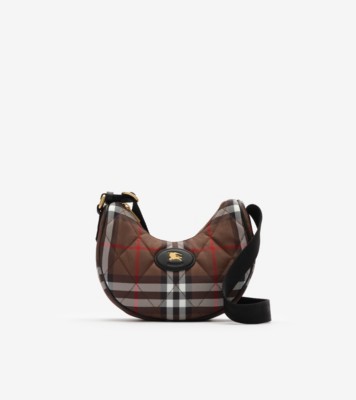
Bags are harder to recommend without caveats. The Knight bag, Lee's signature style, is a soft, slouchy hobo with the Equestrian Knight logo embossed on a leather patch. It comes in several sizes; the medium runs £1,850. It is well made—Italian leather, clean construction—but it is also very much of this moment, and moments pass. The Lola, a quilted nylon crossbody, is more practical and less expensive at £890. Both are fine bags. Neither has the same permanence as a trench.
Ready-to-wear is where things get expensive quickly. A merino wool sweater with the Equestrian Knight intarsia costs £850. A cotton poplin shirt with check trim runs £590. These are not irrational prices for a luxury house, but they are hard to justify unless you are already committed to the aesthetic. Burberry's knitwear is good—clean lines, decent weight, no pilling—but it is not notably better than Loro Piana or Brunello Cucinelli, both of which charge similar amounts.
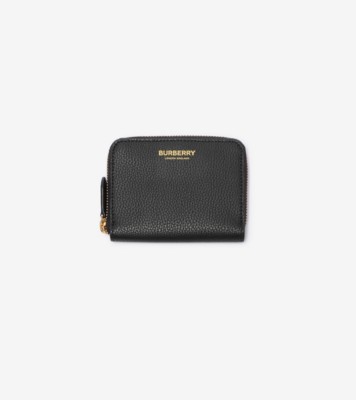
If you want to test the house without spending four figures, go for the small leather goods. A card case in the check costs £250. A leather belt with the Equestrian Knight buckle runs £350. Both are well finished, both will last, and both let you carry a piece of the brand without requiring a trench-sized commitment.
What you are actually paying for
Burberry's prices reflect its position in the market, which is to say: high, but not at the top. It is not Hermès or Loro Piana. It does not have waiting lists or artificial scarcity. You can walk into a Burberry store in London or Paris or New York and buy a trench coat the same day. This accessibility is part of the appeal, but it also means the brand works harder to justify its pricing.
What you get for that price is British manufacturing on some pieces—trenches are still made in Castleford, Yorkshire—and Italian manufacturing on most everything else. The leather goods are produced in Italy, mostly in Tuscany and Veneto. The cashmere scarves are woven in Scotland. The ready-to-wear moves between Italy, Portugal, and Romania, depending on the garment. Burberry is transparent about this in-store, less so online. If country of origin matters to you, ask.
You also get a very efficient repair service. Burberry will re-line a trench, replace buttons, fix a torn sleeve. The cost varies, but the turnaround is usually under three weeks. This is not a minor point. A trench coat you can repair is a trench coat you can keep for twenty years.
What to avoid
Burberry licenses its name for fragrances and eyewear. The perfumes are fine—Burberry Her is a decent woody floral, nothing revolutionary—but you are not buying the same level of craft or oversight. The eyewear is made by Luxottica, which also makes sunglasses for half the luxury market. It is competent. It is not special.
The diffusers and candles, sold in Burberry stores and online, are overpriced room fragrance in nice packaging. A £75 candle does not burn better than a £30 Diptyque.
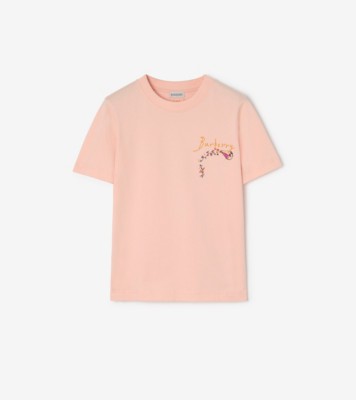
Avoid logo-heavy pieces unless you are very sure of what you are doing. A T-shirt with a large Equestrian Knight print reads differently than a trench with a small embroidered logo. The former is a billboard. The latter is a detail. Burberry's branding works best when it is quiet.
Where the house is headed
Lee's Burberry is still forming. His first collections leaned heavily on the archive—reworked trenches, updated checks, references to the house's military past—but recent shows have started to pull away. There is more black, more leather, more sharp tailoring. The Spring 2025 collection included deconstructed trench dresses, shearling bombers, and a series of bags that looked like they had been pulled from a workshop mid-assembly. It is not a soft vision. It is not trying to be.
Whether this direction holds depends on how the market responds. Burberry's sales have been uneven under Lee. The brand is betting that a harder, more urban identity will pull in younger customers without alienating the ones who still want a classic trench. It is not a safe bet. But it is a more interesting one than playing the heritage card for another decade.
The trench, meanwhile, remains. It is still in the window at Regent Street, still made in Yorkshire, still the same cut it was in 1914. You can argue about Lee's leather trenches or his logo strategy or his use of the check, but you cannot argue with the original. It works in rain. It works over a suit. It works, improbably, over jeans. That is not marketing. That is a century of refinement in a single garment.