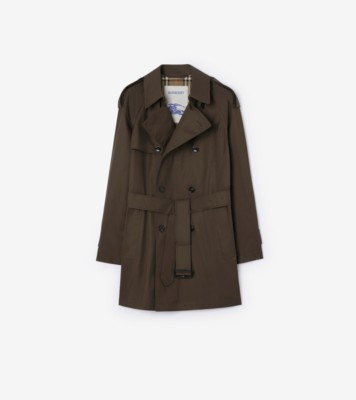
The trench coat hanging in the window on Regent Street weighs less than you expect
The trench coat hanging in the window on Regent Street weighs less than you expect. Pick it up—assuming the floor staff will let you—and the first thing you notice is not the heritage or the check lining, but the fact that it moves. Properly cut gabardine does that. It folds without creasing, settles without bunching, and if you leave it on the back of a chair for a week it will look exactly as it did when you took it off. This is what Burberry has always been: a textile company that happened to make clothes people wanted to wear in the rain.
If you are just now considering the house, you are arriving at an odd moment. Burberry is neither niche nor mass, neither achingly cool nor safely classic. It occupies a space that fashion journalism struggles to describe without falling back on words like "accessible luxury" or "heritage brand"—both true, both useless. What matters more is this: Burberry makes things you can actually use, and it has been doing so since 1856.
What You Are Buying Into
Thomas Burberry did not set out to dress the affluent. He set out to solve a problem, which was that Victorian outdoor wear was either stiff oiled canvas or tightly woven wool, both of which turned their wearers into walking greenhouses. In 1879 he patented gabardine, a twill-weave cotton that was chemically proofed before weaving rather than after. The result was a cloth that breathed, shed water, and moved with the body. It is still the house's most important fabric.
The trench coat came later, during the First World War, when British officers needed something that would work in the muck of Flanders without the weight of a greatcoat. Burberry's version had storm flaps, D-rings for equipment, and a cut that allowed a full stride. After 1918 it migrated to civilian life, where it became the default coat for anyone who needed to look serious in bad weather. Bogart wore one. Hepburn wore one. Your mother probably wore one. This is both the house's greatest asset and its recurring problem: everyone knows what a Burberry trench looks like, which makes it difficult to convince anyone they need a new one.
The check, incidentally, was never meant to be visible. It started as a lining in the 1920s, a discreet marker that you had bought the real thing. By the 1970s it had escaped onto bags, scarves, and eventually everything else. The house spent much of the early 2000s trying to claw it back from market stalls in Camden and official licensees who had applied it to dog leads and pram covers. Under Christopher Bailey, who ran design from 2001 to 2018, Burberry rebuilt itself as a digitally fluent, runway-focused house that still made raincoats. Under Riccardo Tisci, who followed, it leaned harder into streetwear and monogram. Under Daniel Lee, who arrived in 2022, it has returned to a kind of pared-back Britishness that feels less like nostalgia and more like a reset.
Where to Start
If you have £1,000 to spend and no particular loyalty to any one category, buy the Kensington trench. It is the mid-length, slim-fit version of the house's core coat, and it is cut to work over knitwear without looking like you are wearing a tent. The Heritage range runs between £1,590 and £1,990 depending on length and lining, which is not cheap but also not insane for a coat you will wear for a decade. Burberry still makes these in Castleford, Yorkshire, in a factory that has been producing outerwear since the 1990s. Each coat takes roughly three hours to assemble. The seams are sewn, not glued. The buttonholes are worked by hand. This is not marketing copy. You can see the difference when you turn the coat inside out.
If £1,600 feels steep, the Camden and Waterloo models sit around £1,290 and use the same gabardine with slightly simplified construction. You lose some internal structure and the throat latch, but the cloth is identical. The fit skews boxier, which works if you plan to layer heavy knits underneath or simply prefer a looser drape. Both are machine-washable, which the house does not advertise widely but which is true nonetheless. Gabardine was designed for durability, not dry-cleaning bills.
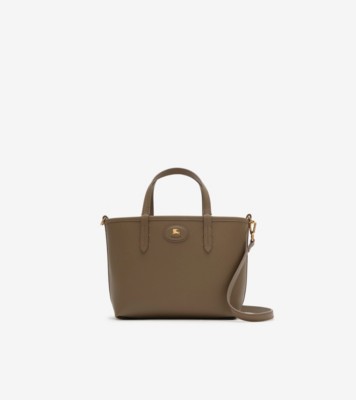
Bags are the other logical entry point, though the landscape here is less clear. The Knight bag, introduced under Lee, starts at £1,790 for the small version and reads as distinctly Burberry without leaning on the check. It is a top-handle shape with equestrian hardware, structured but not stiff, sized to hold a laptop or nothing at all depending on your needs. The leather is Italian. The construction is clean. It does not look like anything else the house has made in the past 20 years, which is either a selling point or a dealbreaker depending on how you feel about continuity.
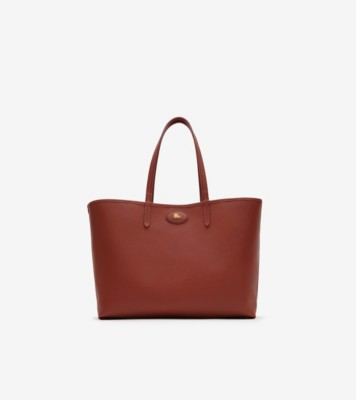
The check bags—Lola, Haymarket tote, various bucket and crossbody shapes—start around £890 and remain the house's volume sellers. They are immediately recognisable, which is the point. If you want people to know you are carrying Burberry, these do that. If you would rather not announce it, look elsewhere.
Scarves occupy a strange middle ground. The classic cashmere check scarf costs £490, which is roughly twice what you would pay for equivalent cashmere from a Scottish mill with no house name attached. You are paying for the pattern and the label, both of which hold value if you ever decide to resell. The giant check versions, which come in wool or cashmere and are large enough to use as a blanket, run between £490 and £590. These are useful in a way that small scarves are not. You can wear them as a scarf, a shawl, or a wrap, and the scale means the check reads as texture rather than logo.
What the House Does Well
Outerwear. This has been true since 1856 and remains true now. Burberry's tailored coats—car coats, duffle coats, pea coats—are cut with the same attention to movement and balance as the trench. The double-faced cashmere coats, which appear every autumn around £2,990, are some of the best-constructed winter coats you can buy outside of bespoke tailoring. The seams are bound, not overlocked. The hems are hand-finished. The cashmere itself is 12-ply, which gives it enough body to hold a shape without stiffness.
Knitwear is less consistent but occasionally excellent. The archive-inspired pieces—Aran knits, fair isle, chunky rollnecks—tend to be better than the logo-heavy styles. Prices run from £590 for merino to £1,490 for cashmere, which is high but not outrageous. The house works with Scottish mills for some of its heavier knits, though an increasing amount is produced in Italy. The quality is there, but so is the brand tax.
Shoes are a newer focus under Lee, and the results are mixed. The riding boots and Chelsea boots, both made in Italy, are well-constructed and priced around £890 to £1,090. The leather is good. The lasts are narrow, which works for some feet and not others. The sneakers, which include both minimalist leather styles and chunkier technical designs, feel less essential. They are fine, but you are paying £490 to £690 for something that does not do anything a Common Projects or New Balance could not do for less.
What You Should Know Before You Go In
Burberry's sizing runs slim, particularly in outerwear. If you are between sizes or plan to layer, size up. The house uses UK sizing for most categories, which means a UK 8 corresponds to a US 4 or EU 36. Try things on. The trench in particular is unforgiving if the shoulders do not sit right.
The check comes in multiple colourways now—archive beige, black, navy, even pink—but the original camel, red, black, and white version is the one that holds value. If you are buying with an eye to resale or longevity, stick with the archive colour.
Burberry's outlet stores, which exist in most major cities and many outlet villages, stock previous seasons at 30 to 50 percent off. The quality is identical. The styles are six months to a year behind current, which matters only if you care about being current. Trenches, scarves, and core bags appear regularly. Logo-heavy pieces and runway samples appear less often.
The house runs two major sale periods: mid-January and mid-July. Discounts range from 30 to 50 percent, though core styles like the Heritage trench rarely see more than 30 percent off. If you are patient and not particular about colour, you can find last season's Kensington for around £1,100. If you want this season's version in a specific length and lining, expect to pay full price.
Where the House Is Now
Daniel Lee's Burberry is quieter than Tisci's and less concerned with digital spectacle than Bailey's. The runway shows feel like fashion shows rather than brand experiences. The clothes themselves—sharp tailoring, outsize outerwear, equestrian references rendered in leather and gabardine—read as a return to the house's roots, though Lee is too smart to call it that. He is building a wardrobe, not a collection of statement pieces. Whether that translates to commercial success remains to be seen. The house's most recent earnings were flat, which in luxury terms means trouble.
What this means for you, as a potential customer, is that Burberry is hungry. The staff are trained to sell but not to oversell. The tailoring in the flagship stores is complimentary if you are buying a trench or tailored coat. The brand is investing in product quality and pulling back on logo saturation, which suggests it is trying to win back customers who drifted away during the monogram years.
If you walk into the Regent Street store now, you will see the trench coats first, hung on brass rails under soft light, each one moving slightly as people walk past. The check lining is still there, folded back at the collar so you can see it without looking for it. The gabardine still feels like gabardine. The coat still works in the rain. Everything else—the runway, the campaigns, the creative direction—is context. The product remains the point.