The Velocite jacket sits in a lot of wardrobes that don't otherwise know what to do with Stockholm
The Velocite jacket sits in a lot of wardrobes that don't otherwise know what to do with Stockholm. Cropped, boxy, supple lamb with an off-centre zip — it's the piece that gets photographed on the arm of someone leaving Merci or leaning against a Vespa in Trastevere. It's also, quietly, the entry point most people take into Acne Studios without realising they've already decided.
If you're starting here, you're starting in the middle. That's fine. Most people do.
What the house actually is
Acne Studios began in 1996 as Acne Jeans, a creative collective in Stockholm founded by Jonny Johansson and three others. The name stood for Ambition to Create Novel Expressions, which tells you everything about the era and nothing about what the house became. They made a hundred pairs of raw denim with red stitching, gave them to friends, and the friends wore them enough that orders arrived. Johansson stayed. The others left. By 2006, it was Acne Studios, and the jeans were already beside the point.
What Johansson built was a house that treats Scandinavian restraint as a starting position, not a conclusion. The palette skews grey, camel, black, navy — but then a sleeve comes in tangerine or the lining in fuchsia. The tailoring reads clean until you notice the shoulder's dropped two centimetres or the trouser's pleated where it shouldn't be. It's not minimalism. It's something more slippery: a sensibility that knows the rules and enjoys small, specific violations.
The house showed in Paris from 2006. It opened a flagship on rue Malte in the Marais in 2010. By then, the aesthetic had settled into what people still reach for now: oversized outerwear, considered knitwear, trousers that somehow work despite proportions that shouldn't, and boots — always boots — with squared toes and block heels that make walking through Copenhagen or Milan feel structurally supported.
In 2015, Johansson sold a majority stake to a Canadian private equity firm. He stayed on as creative director. The house expanded — more stores, more categories, more collaborations. It didn't dilute, exactly, but it did start to occupy more space in more closets. That's when the Velocite became the Velocite: not just a jacket, but the jacket people bought when they wanted one good piece that signalled taste without announcing it.
The pieces that matter
If you're beginning, begin with outerwear. Acne Studios does coats and jackets the way other houses do bags — as the thing that carries the identity. The Velocite remains the most recognised: lamb leather, minimal hardware, a fit that works over knitwear or a slip dress. Retail sits around €1,800. It's not cheap. It's also not the most expensive thing in the category, and it holds value on resale better than most leather at this tier.
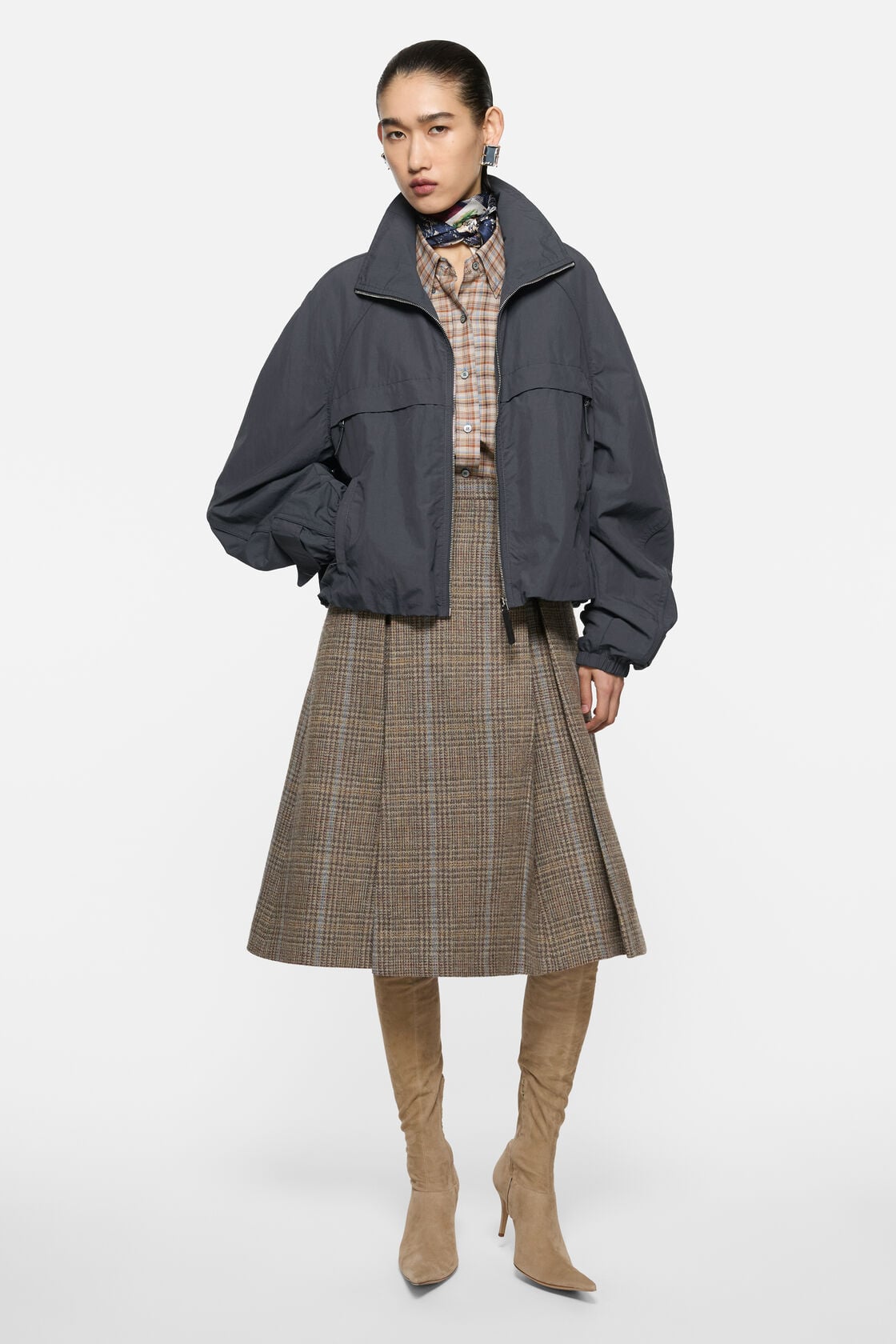
The oversized wool coat — usually a double-breasted style in camel or grey — runs closer to €1,200 and appears every autumn in some iteration. The proportions shift slightly season to season, but the silhouette stays recognisable: dropped shoulder, wide lapel, hits mid-thigh or just below. It's the piece that photographs well and wears better, which is rarer than it should be.
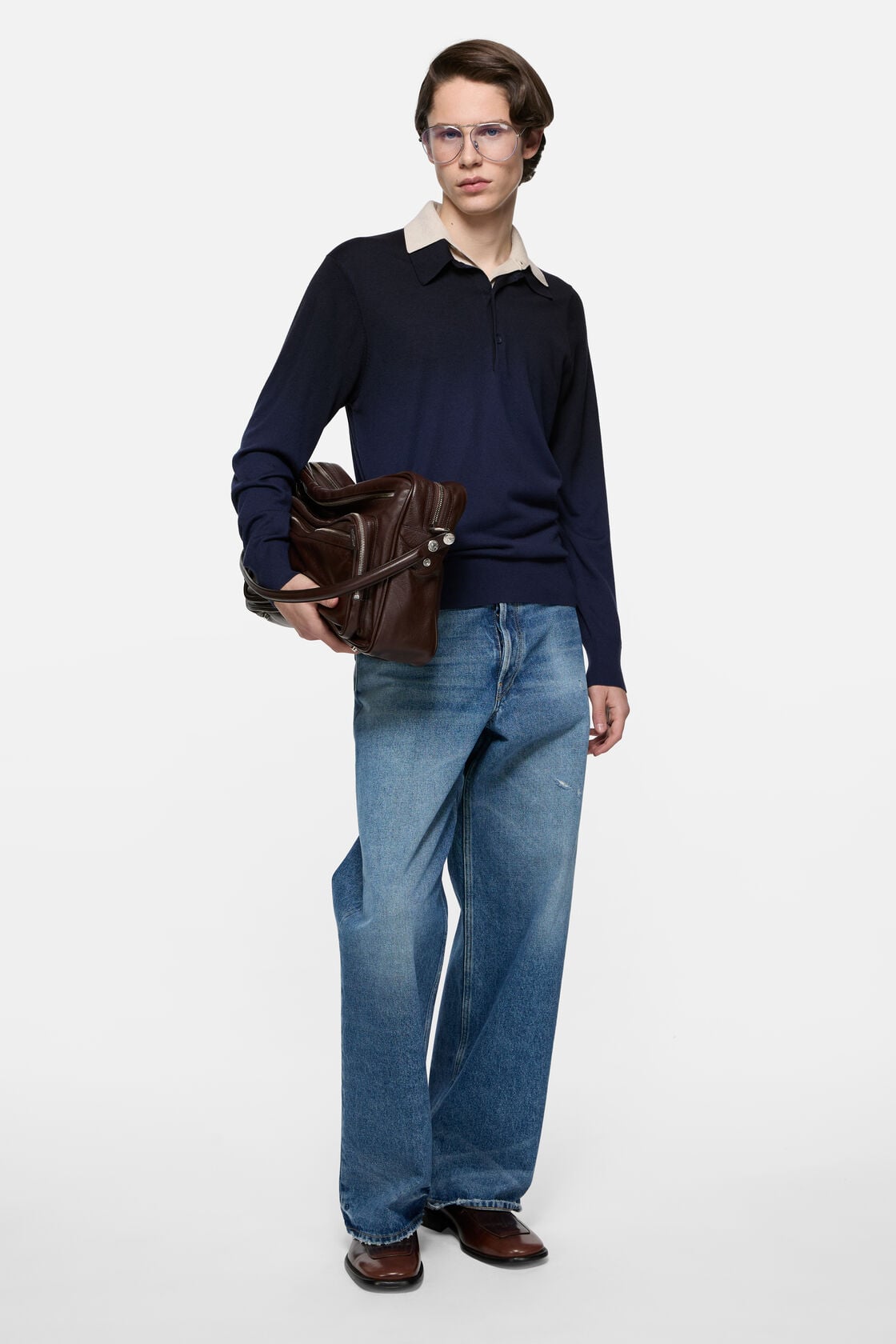
Knitwear operates in the €300 to €600 range. The house knits in merino, cashmere blends, and occasionally alpaca. The fits tend oversized but not sloppy — there's structure in the ribbing, in the way the hem sits. The Kalon face-patch sweater became a meme for a season, which means it's aged into either a piece you commit to or avoid entirely. The plain crewnecks and rollnecks, though, stay quietly useful. They layer under the coats. They work with the trousers. They don't demand anything except that you size up if you want the proportions the lookbook promised.
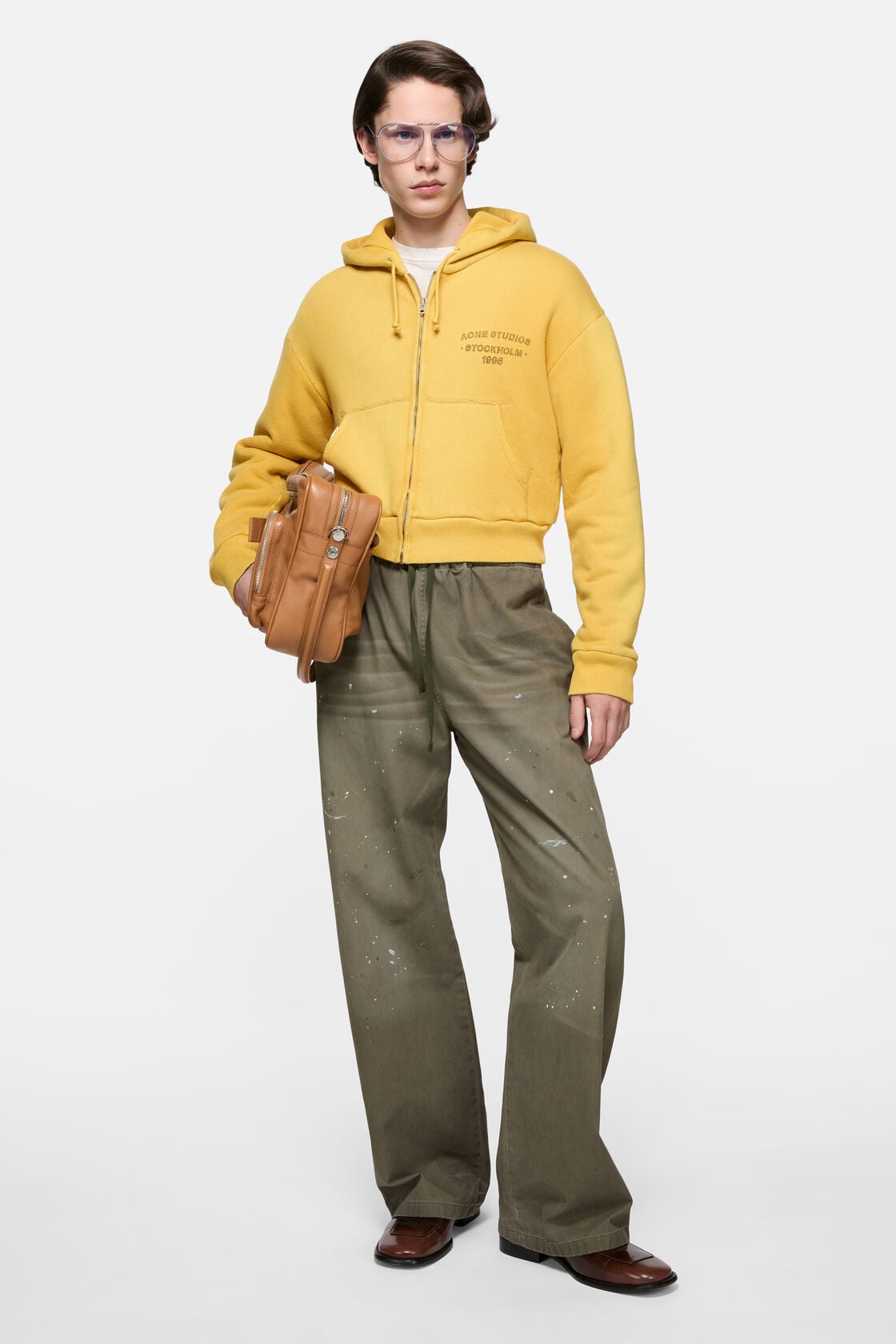
Trousers deserve attention. Acne Studios cuts them wide, pleated, cropped, or all three at once. The house uses wool blends, cotton twill, and occasionally leather. Prices range from €350 for cotton styles to €800 for wool suiting. The trick is the rise: it's higher than you expect, which changes how the fabric drapes and where your sweater should hit. Try them on. The fit doesn't translate from the hanger.
Boots anchor the whole operation. The square-toed ankle boot — often called the Bertine or a variant — retails around €600. It's chunky without being clumsy, and the block heel keeps you level on cobblestones. The house also does knee-high styles and lug-sole combat boots, all in the same vocabulary: matte leather, structured but not stiff, built for cities that require walking.
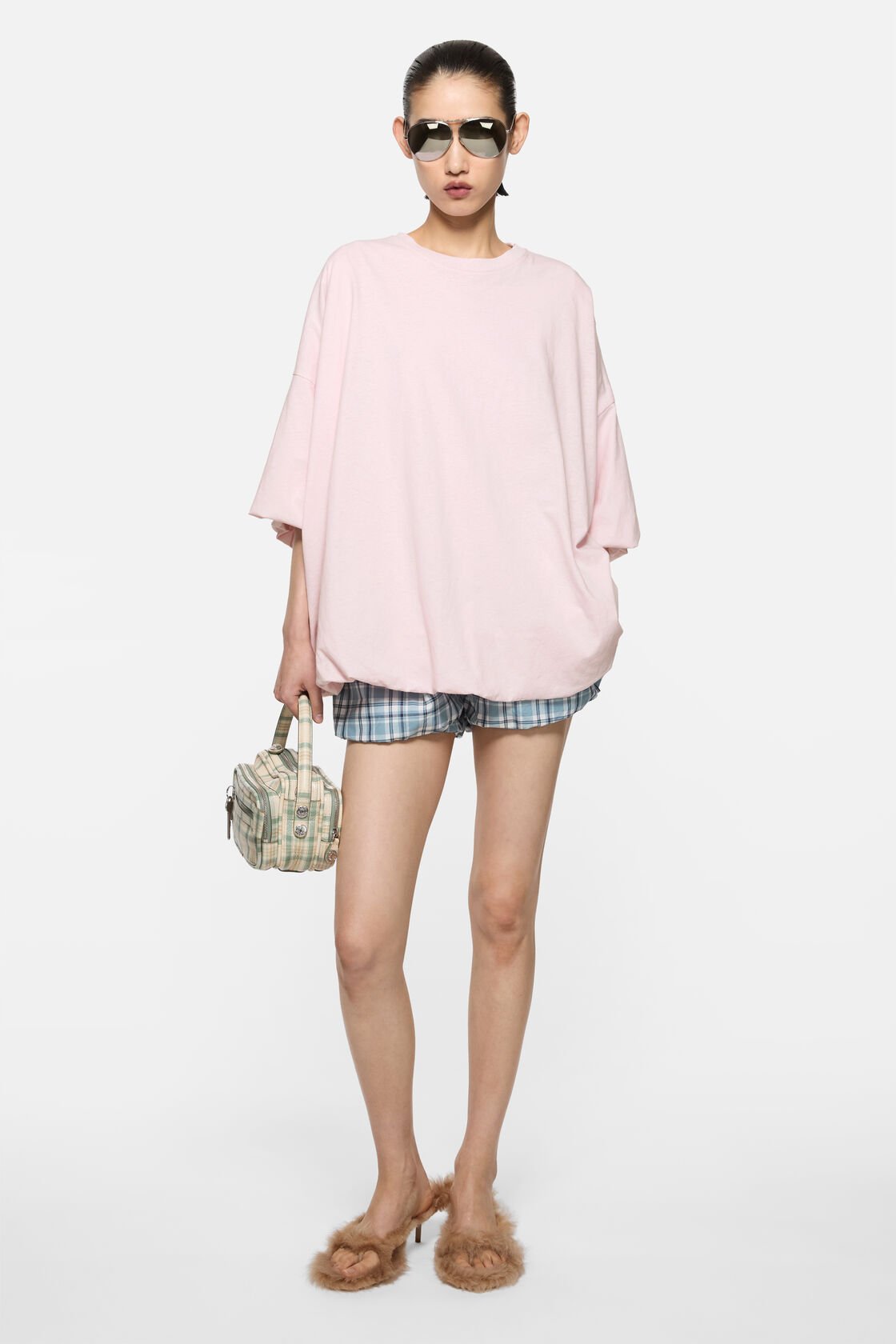
Bags exist but don't define. The Musubi hobo, with its knotted handle, had a moment around 2018. It's still in the lineup, still recognisable, still priced around €1,400. It's fine. It's not why you're here.
What to know before the till
Acne Studios sizing runs Scandinavian, which means it assumes height and breadth most ready-to-wear doesn't. If you're between sizes, go up — the house designs for ease, and the proportions depend on it. The sleeves will be long. The shoulders will drop. That's the point.
The fabric quality holds. Leather softens without cracking. Wool doesn't pill the way fast fashion does. Stitching stays tight. This isn't artisanal in the atelier sense — production runs through Portugal, Italy, and Eastern Europe depending on category — but it's consistent. You're paying for materials and cut, not for a story about a fifth-generation tanner in Tuscany.
Sales happen twice a year, typically January and July. Discounts range from 30 to 50 per cent, sometimes deeper on past-season colours. The core pieces — black Velocite, camel coat, plain knitwear — move fast. If you're committed, don't wait for the second markdown.
Resale is active. Vestiaire, The RealReal, and Vinted all carry Acne Studios in volume. Leather holds value better than knitwear. Coats from three seasons ago still sell near 60 per cent of retail if they're in good condition. The face-patch sweater does not. Learn the difference.
The house collaborates — with Mulberry, with Starter, with artists whose names you might not know yet. These capsules generate noise and occasionally something worth owning, but they're not the entry point. They're the detour you take once you know what the house does when it's just doing itself.
Where it stands now
Johansson still directs. The runway shows still happen in Paris, twice a year, with casting that skews tall and androgynous and soundtracks that feel like someone's older sibling made them a playlist in 2003. The house hasn't pivoted to logomania or leaned into quiet luxury as a marketing position. It just keeps making oversized coats and structured boots and trousers that require you to rethink where your hem should fall.
What Acne Studios offers is a vocabulary, not a uniform. You buy the Velocite and wear it with denim from A.P.C. or trousers from Lemaire or a dress from Totême. You buy the boots and they work with everything you already own because the house designed them to. It's not a system that demands total buy-in. It's a set of pieces that assume you'll edit the rest yourself.
The risk is that it's become too accessible, in the way that anything good and recognisable eventually does. You see the square-toed boot on every third woman in the Marais now. You see the oversized grey coat in line at Bonnie. That doesn't make them wrong. It just means the house succeeded at what it set out to do: make pieces people want to wear until they soften into something personal.
There's a photo Johansson posted years ago — a Polaroid of a Velocite jacket on a chair in a studio, the leather creased at the elbows, the lining just visible where the zip gaped. It looked like someone had been wearing it all day and would wear it again tomorrow. That's the test. Not whether it photographs well on the hanger, but whether it ages into your life or just sits there reminding you of the price tag.