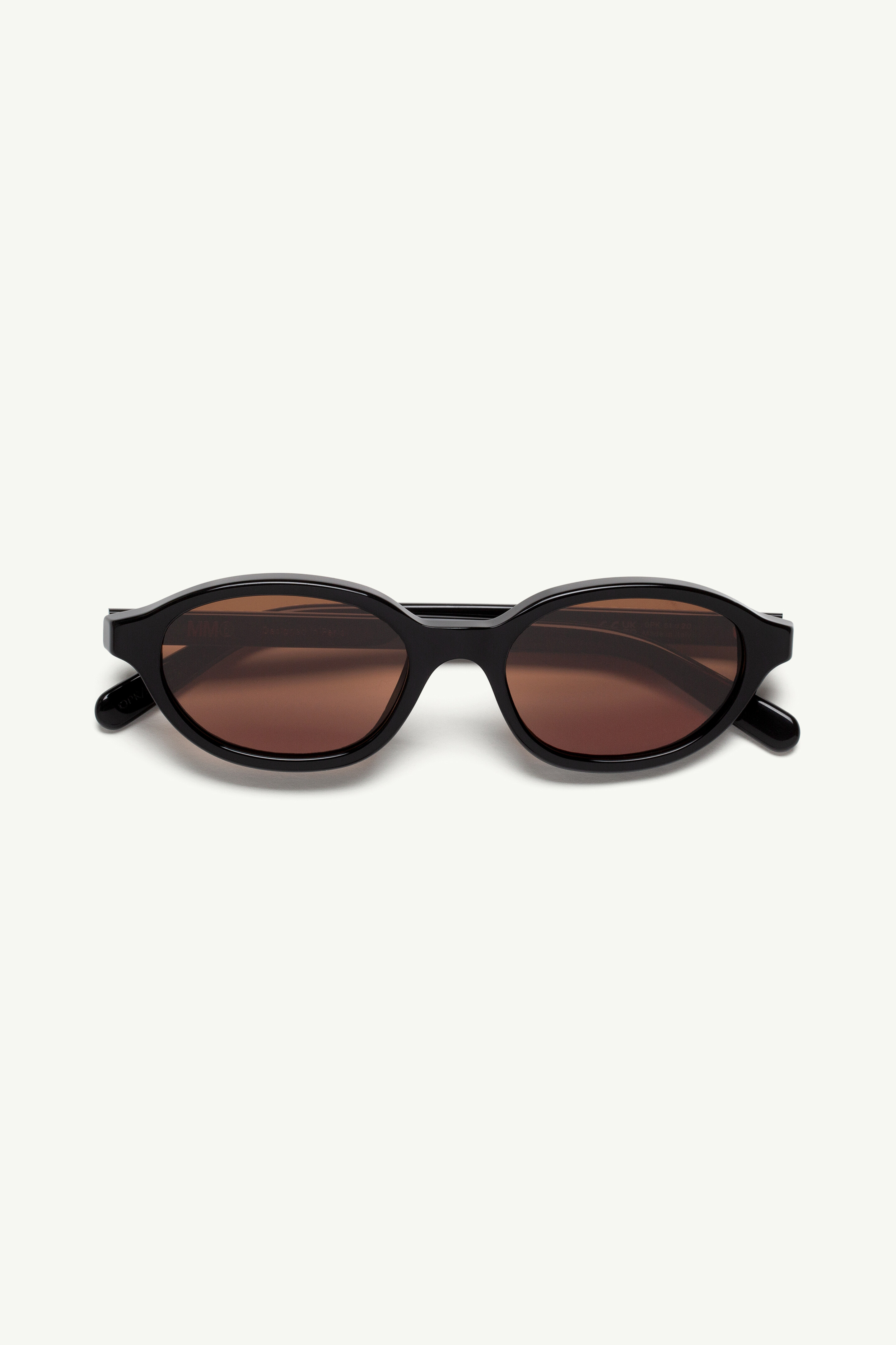
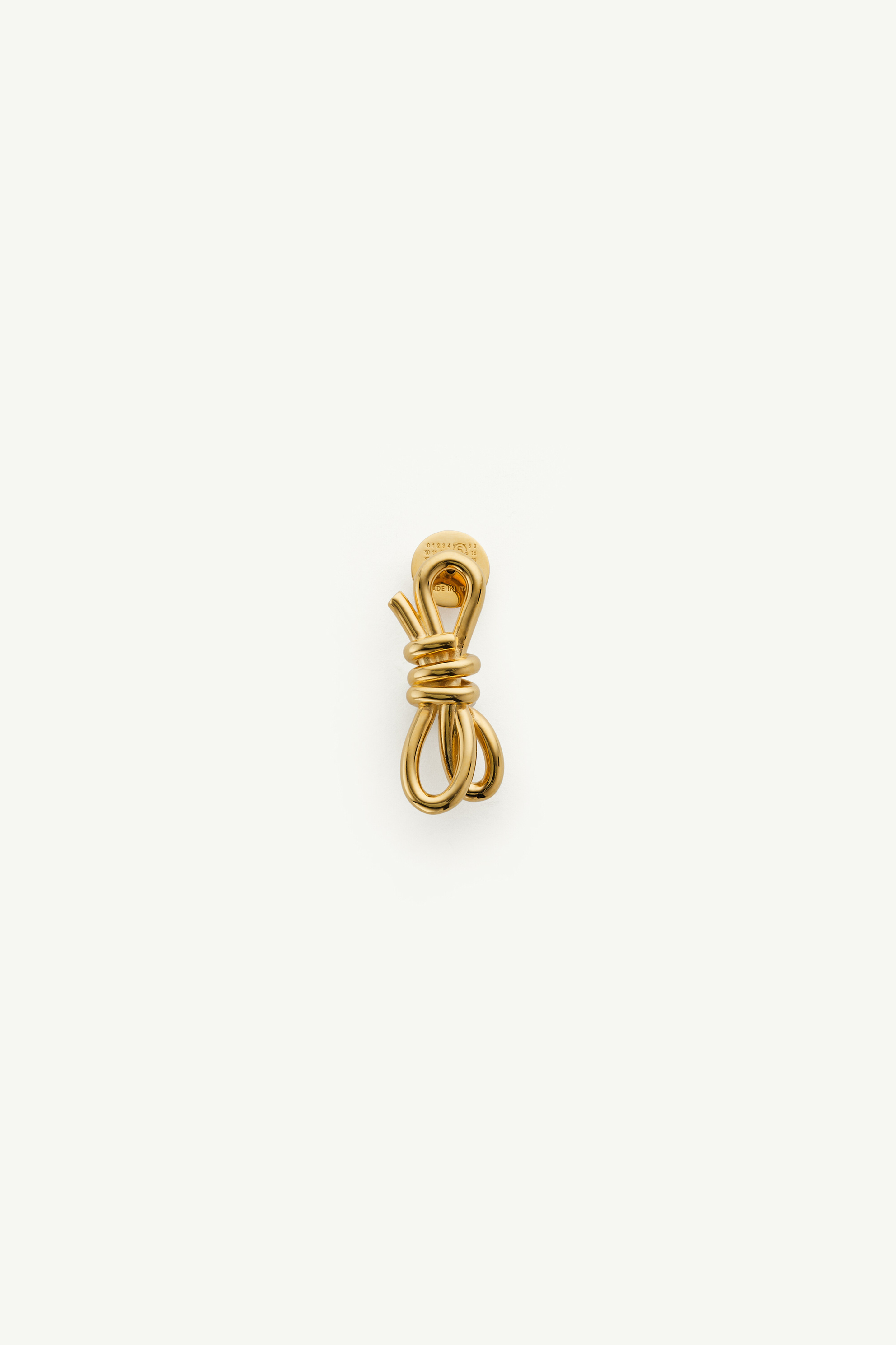
The white lab coat hangs in the archive
The white lab coat hangs in the archive. No name on the breast pocket. No initials embroidered at the cuff. It is the uniform Martin Margiela issued to his atelier staff in 1988, and it remains the clearest statement the house ever made about authorship: there isn't one. Or rather, there are dozens, and none of them sign their work.
That coat is still worn today. The house that began in a Paris squat, staging its first show in a playground in the twentieth arrondissement, now operates under LVMH and shows in the Grand Palais. The lab coats remain. So does the practice of removing all branded labels and replacing them with a blank white rectangle, four pick-stitches at each corner. These are not gestures. They are architecture.
1988–2009: Margiela présent, Margiela absent
Martin Margiela founded the house with Jenny Meirens in 1988. He had spent three years as Jean Paul Gaultier's assistant. He left to build something that didn't yet have a name in fashion: a system of refusal. No interviews. No photographs of the designer. No logos. The clothes were identified by a number stitched into the lining—0 to 23, each corresponding to a line. Line 1: womenswear. Line 6: basics. Line 11: accessories. Line 13: objects. The system was the brand.
The early collections worked by displacement. A sweater was a sweater because Margiela said it was, not because it looked like one. He took a vintage kid's sweater, cut it open, and scaled it up to fit an adult body. The sleeves were too short. The proportions were wrong. That was the point. He cast torsos in wax, dressed them, then melted the wax and kept the garment. The fabric held the memory of a body that no longer existed. He glued human hair to knit tops. He turned socks into sleeves. He took a leather jacket, cut it into a pattern, and remade it in silk—same construction, wrong material. The work was forensic.
Spring 1997 delivered the Tabi boot. It remains in production. The split toe comes from the fifteenth-century Japanese sock, which accommodates the thong of a sandal. Margiela made it in leather, added a heel, and turned it into a boot that could walk a Paris runway. The shape is confrontational. It asks the foot to do something it doesn't expect. That question—what happens when you shift one element—runs through every collection the house has made since.
Margiela himself stopped appearing in public early. By the mid-nineties, he no longer attended his own shows. Interviews were conducted by fax, responses unsigned, attributed to "Maison Martin Margiela." In 2008, he stopped designing. In 2009, he left the company entirely. The house continued. It had been built to.
2009–2014: Transition, silence, uncertainty
For five years, Maison Margiela operated without a named creative director. The design team, many of whom had worked under Margiela for a decade or more, continued to produce collections. They maintained the codes: deconstruction, the Tabi, the blank label, the numbered lines. But something had shifted. A house built on the refusal of individual authorship now faced a question it had never answered: what happens when the author leaves but the refusal remains?
The collections from this period are competent. They reference the archive carefully. They do not break new ground. This is not a critique—it is a description of what happens when a system designed to erase personality must operate without the personality that built the system. The work became about preservation. The atelier knew how to construct a Margiela garment. They did not yet know how to move the house forward.
LVMH had acquired a stake in 2002. By 2012, they held a majority. The commercial pressure was present but not yet dominant. Margiela had always operated at a small scale. The tension between the house's conceptual purity and the need to grow a business had existed from the beginning. Now it was the only tension in the room.
2014–present: Galliano et la spectacle retrouvée
John Galliano was appointed creative director in October 2014. The choice was not obvious. Galliano had spent the previous decade at Dior, building collections that were baroque, narrative-driven, and deeply personal. Margiela had built a house that refused narrative, rejected personality, and worked in white and beige. The fit seemed wrong.
It wasn't.
Galliano understood what the house needed: not a successor to Margiela, but a designer who could take the system and make it move again. His first collection for Margiela, spring 2015 Artisanal (the house's couture line, formerly Line 0), opened with a coat made entirely of broken porcelain plates. The plates were glued to a mesh base, each fragment placed by hand. The garment was unwearable in any practical sense. It was also unmistakably Margiela—an object that asked what a coat could be if you removed the assumption that a coat should be soft.
Galliano brought spectacle back. The Artisanal shows became events: models in full-face prosthetics, garments made from deconstructed vintage kimonos, a collaboration with a Parisian flea market that turned found objects into jewellery. But the spectacle was never empty. A coat made from a duvet still used the construction techniques Margiela had established in 1988. A dress built from gloves still carried the four white stitches on a blank label.
The Tabi expanded. Galliano made it in patent leather, in canvas, in collaboration with Reebok. He turned it into a pump, a sneaker, a thigh-high boot. The split toe remained. The question remained. The house's commercial line grew. Galliano introduced the Glam Slam bag in 2018—a quilted, pillow-soft shoulder bag that became the house's first widely accessible hit product. It shares almost no visual DNA with the deconstructed tailoring of the nineties, but it shares a method: take a familiar form, shift one element, see what happens.
In 2024, Galliano staged the Artisanal show in a former postal sorting facility. Models walked through a constructed landscape of oversized furniture and distorted domestic objects. A dress was made from a tablecloth, seams intact. A jacket was built from a rug. The show lasted eleven minutes. It was not about the future of fashion. It was about what happens when you take the logic of deconstruction and apply it to the scale of a room, a house, a world.
La maison aujourd'hui
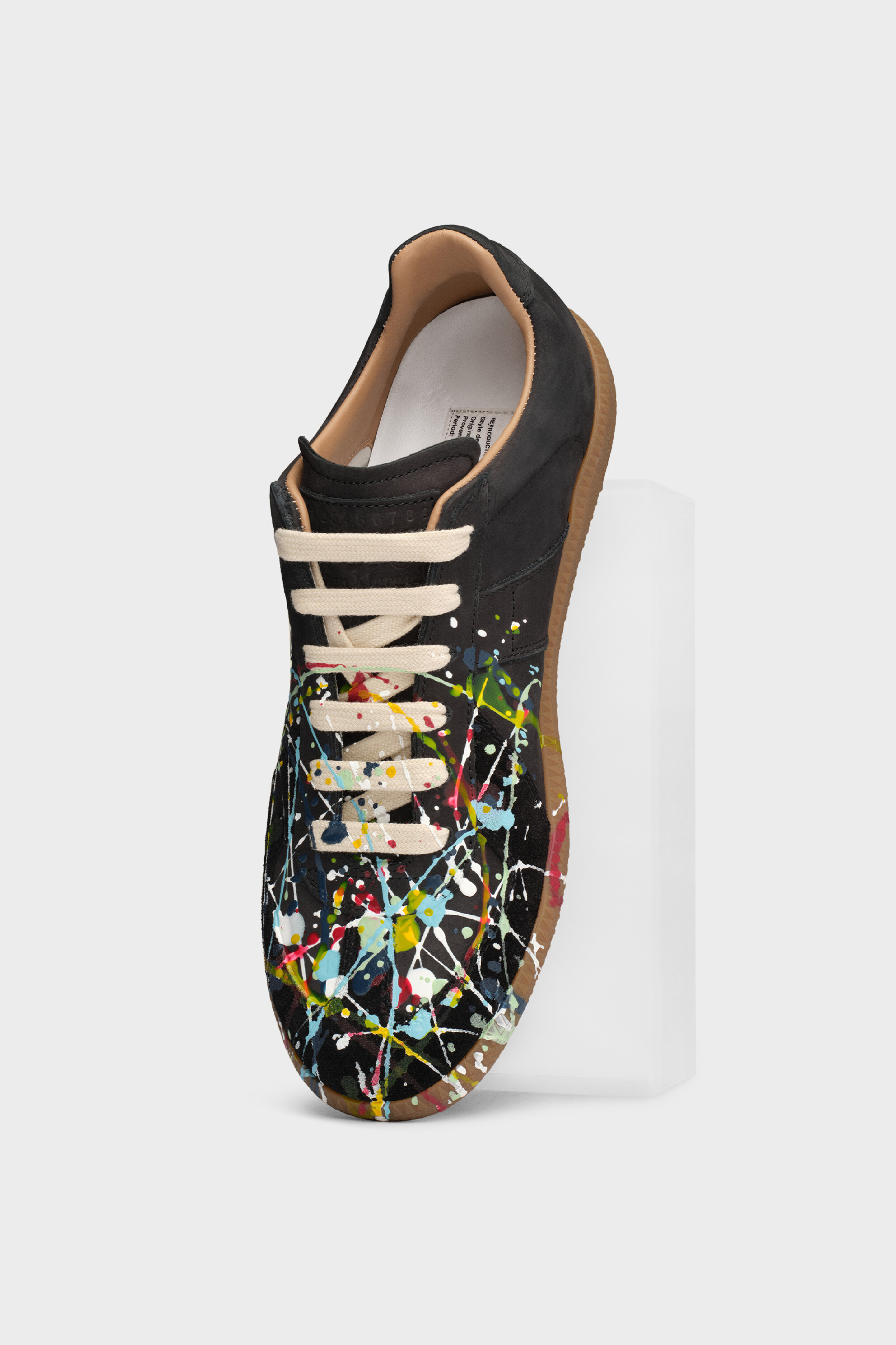
Maison Margiela now operates at two speeds. The Artisanal line continues to push the conceptual work—each piece is made by hand in the Paris atelier, often using techniques that take weeks to execute. The commercial lines deliver the Tabi, the Replica sneaker, the Glam Slam, and a ready-to-wear offering that has become significantly more accessible than anything the house produced in its first two decades. This is the compromise every house makes when it grows. Margiela makes it without apologising.
The tension is visible. A house founded on refusal now runs advertising campaigns. A system built to erase the designer now promotes Galliano's name in press materials. The white lab coats remain, but they are worn by an atelier that produces both one-of-a-kind couture and thousands of identical Tabi boots each season. The question is whether this constitutes a betrayal or an evolution.
The answer depends on what you think the house was for. If Margiela's project was purity—a refusal of commerce, personality, and compromise—then the current house fails that test. But if the project was a method, a way of looking at garments that asks what they are and what they could be, then the house is doing exactly what it was built to do. It is still asking the question. The question has simply moved into a larger room.
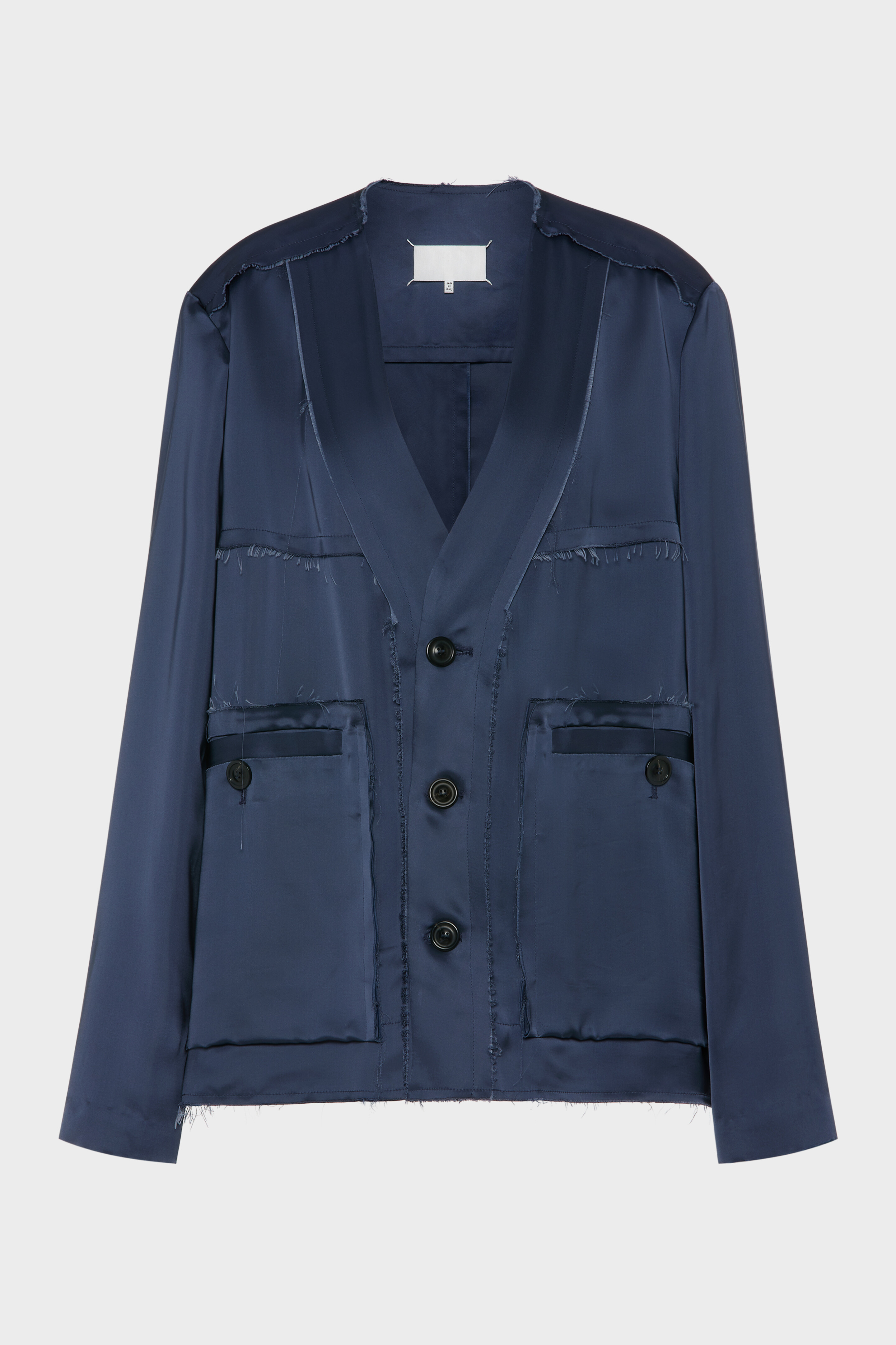
There is a photograph from the spring 1989 show. A model stands in a playground in the twentieth arrondissement, wearing a waistcoat made from a vintage military vest, the lining turned outward. Behind her, children play on a swing set. The garment is inside-out. The seams are visible. The construction is the design. Thirty-six years later, the house still works this way. The room is bigger. The seams still show.