The white lab coat hangs in the Margiela boutique on rue de la Paix like a question mark
The white lab coat hangs in the Margiela boutique on rue de la Paix like a question mark. It is the same coat Martin Margiela designed for his first atelier team in 1988, now sold as ready-to-wear for €890. The garment has not changed. The context has.
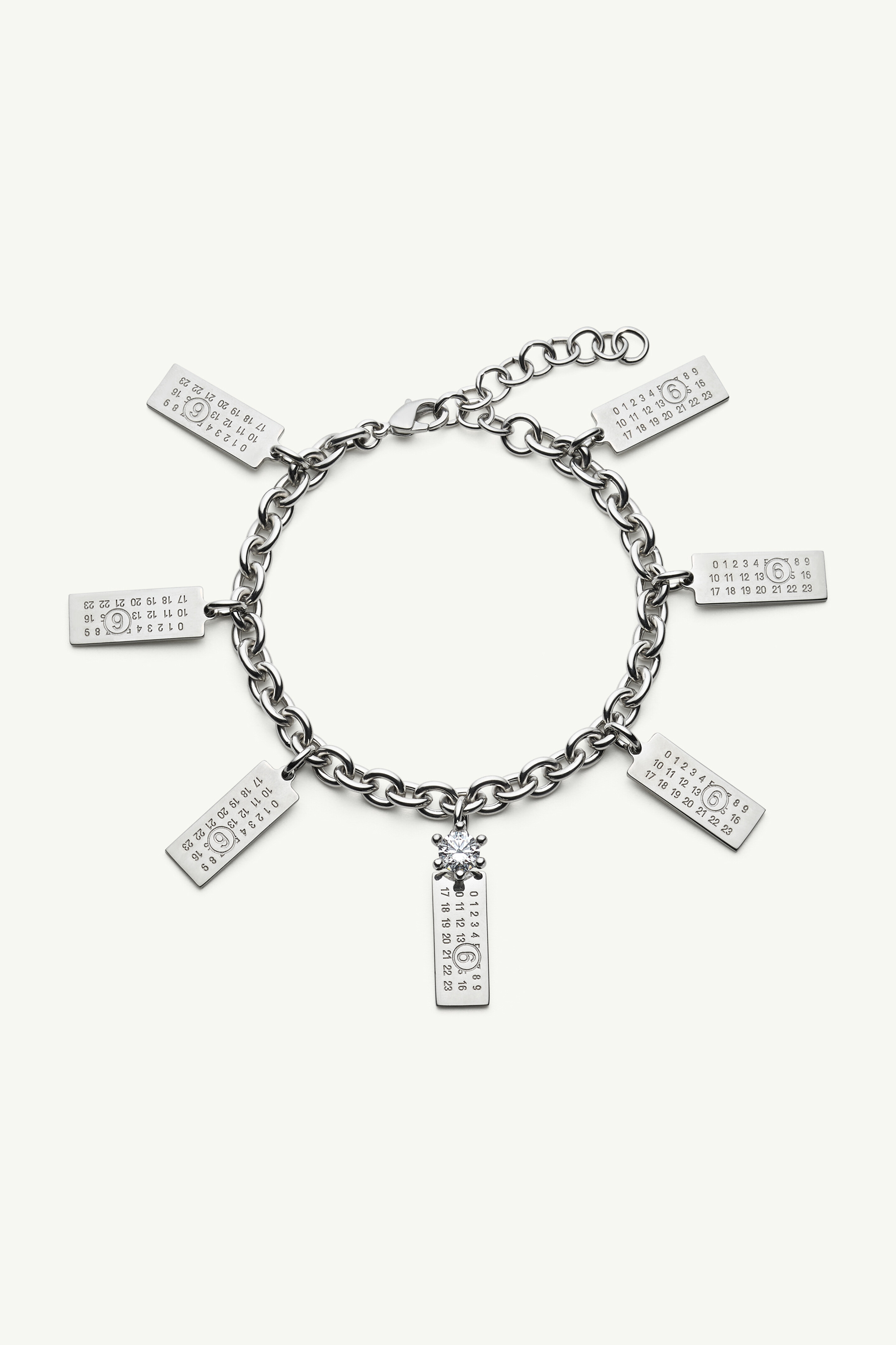
Maison Margiela occupies a strange position in 2025. It is simultaneously more visible and less legible than at any point in its history. The Tabi boot appears on ten thousand feet per fashion week. The numerical label system—0 through 23, each denoting a collection line—remains in place. But the house that built its reputation on anonymity now operates under the full glare of conglomerate ownership, celebrity collaboration, and algorithmic virality. The question is not whether Margiela has changed. It is whether what remains still carries the original charge.
The founding logic
Martin Margiela opened his maison in 1988 with a refusal. No interviews. No photographs of the designer. No logo on the garments, only a blank white label with four loose stitches at each corner. The collections were shown in peripheral locations: a children's playground in the 20th arrondissement, a Salvation Army depot, the courtyard of a disused school. Models wore wigs that obscured their faces. The clothes themselves were often constructed from salvaged materials—repurposed military socks became sweaters, a vintage waistcoat was enlarged and turned inside out.
This was not styling. It was methodology. Margiela treated garments as texts to be deconstructed and rewritten. Seams were exposed. Linings became exteriors. A jacket's internal structure—canvas, padding, boning—was rendered visible and worn on the outside. The work was conceptual but not precious. It could be worn, and it was.
The house found early support from a small constellation of retailers: Genevieve Barker in New York, Maria Luisa in Paris, Rossana Orlandi in Milan. These were merchants who understood that Margiela's refusal of branding was itself a brand position. By 1997, the maison had grown enough to warrant investment. Diesel founder Renzo Rosso acquired a stake, eventually taking majority control in 2002. Margiela himself left in 2009, his departure announced in a brief press release. No farewell collection. No interviews. Consistent to the end.
The Galliano era
John Galliano arrived in 2014. The appointment was a provocation. Galliano's previous work—maximalist, theatrical, deeply authorial—seemed antithetical to Margiela's ethos of anonymity and restraint. He had been dismissed from Dior three years earlier following a public incident. Maison Margiela became his rehabilitation.
What followed was not an imitation of the founder but a reinterpretation of the house codes through Galliano's vocabulary. The Artisanal collection—line 0, haute couture in all but name—became the site of experiment. Galliano took Margiela's deconstruction methods and pushed them toward spectacle. Garments were built from flea market finds, deconstructed and reconstructed with couture-level finishing. A coat made from broken china. A dress assembled from wooden puzzle pieces. Trompe-l'œil tailoring that appeared unfinished but was in fact meticulously engineered.
The work divided opinion. Some critics argued that Galliano had understood the assignment: Margiela's practice was always about transformation, and Galliano was transforming the transformation. Others saw a betrayal of the house's original restraint. The blank label remained, but the work had become unmistakably Galliano's—operatic, emotionally direct, hungry for applause.
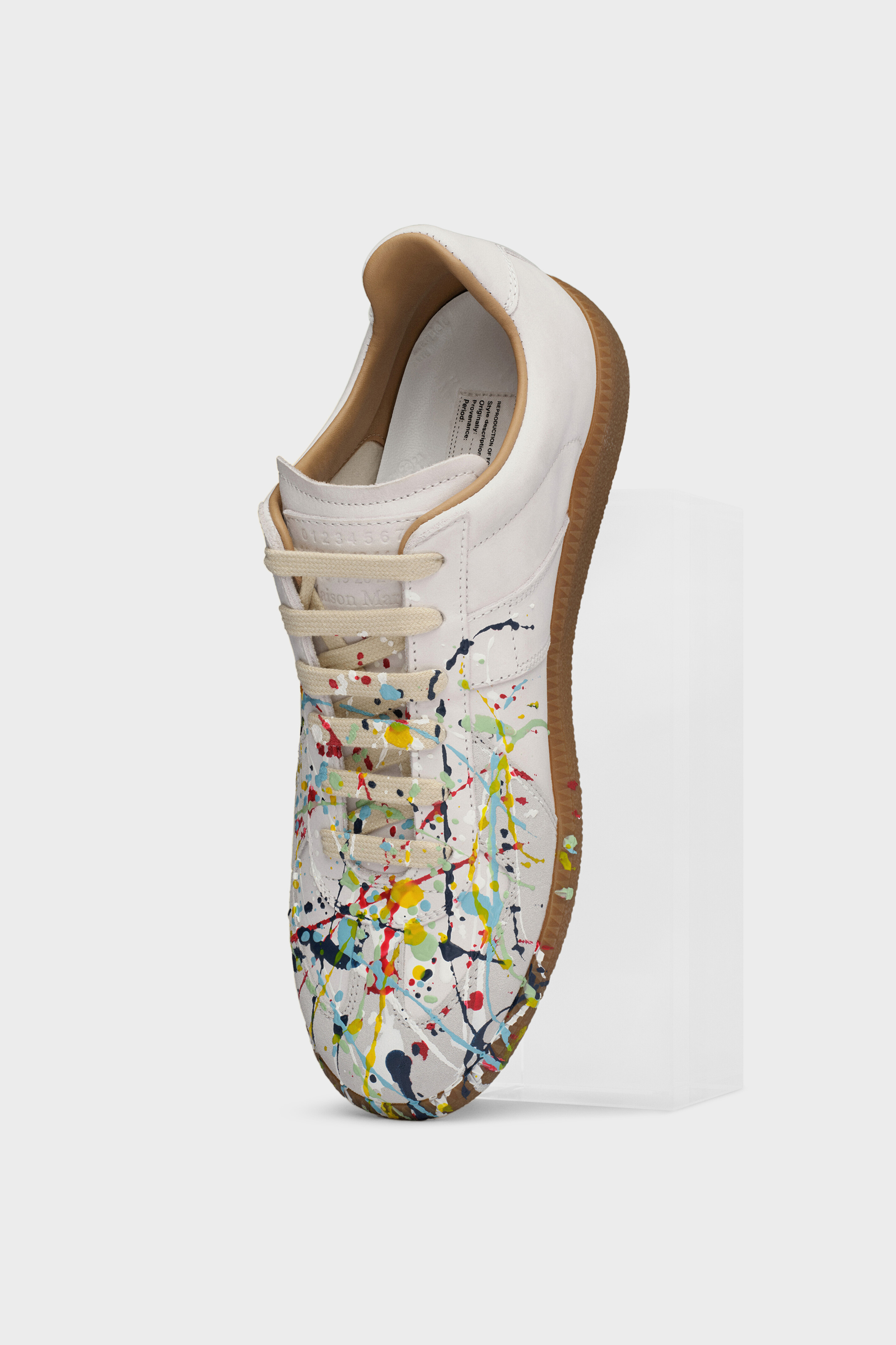
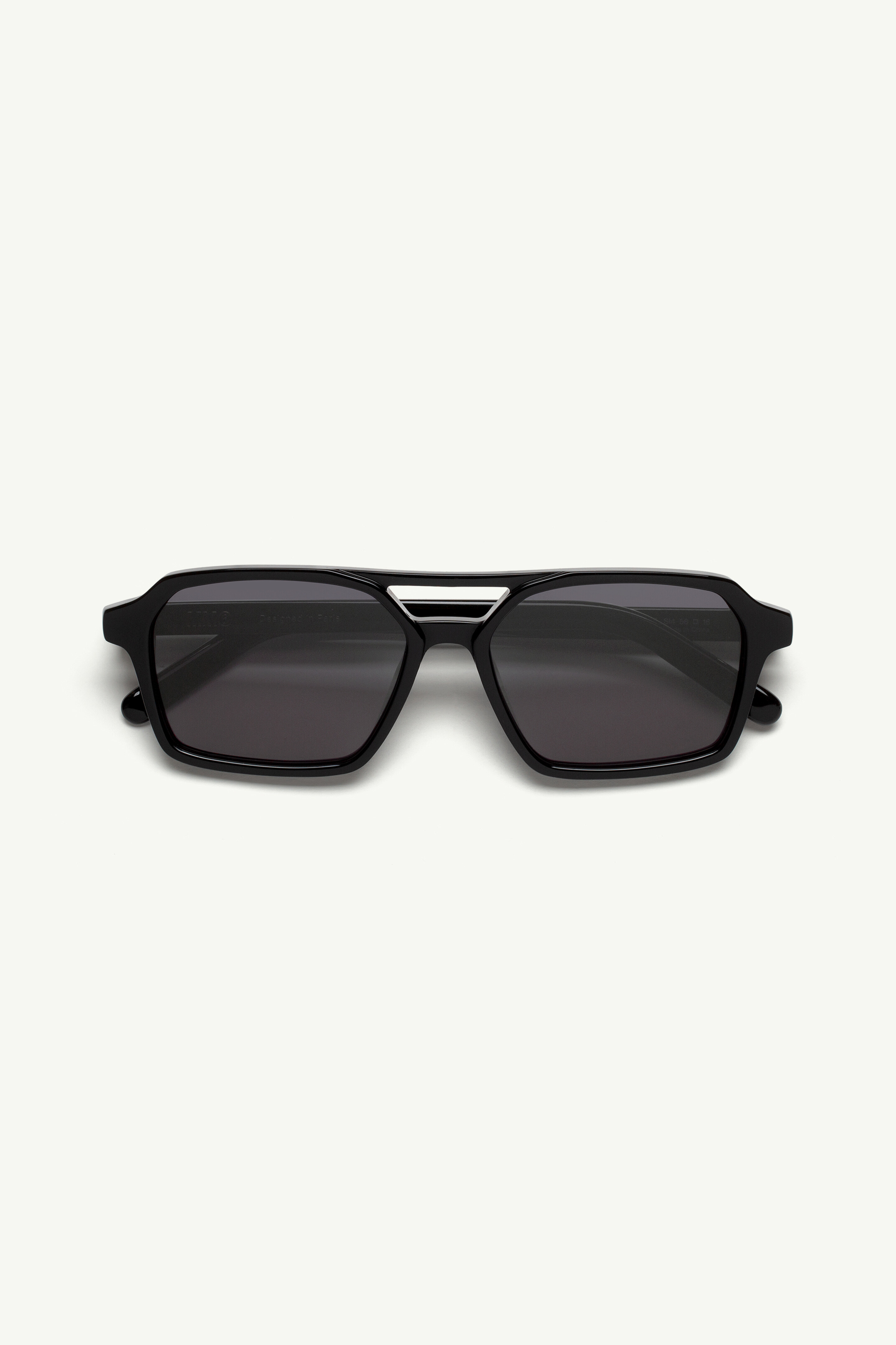
Commercially, the strategy worked. OTB, the holding company that owns Maison Margiela, does not break out revenue by brand, but industry estimates place annual sales above €200 million. The Tabi boot, the Glam Slam bag, the Replica sneaker—these are now recognisable products in a way that would have been unthinkable under the founder. The house has boutiques in 35 cities. It collaborates with Reebok on footwear and Gentle Monster on eyewear. In 2023, Galliano dressed Margot Robbie for the Barbie press tour, each look a high-concept riff on the doll's wardrobe. The images circulated widely. The house was no longer underground.
The current tension
Maison Margiela now operates across two registers that do not quite reconcile. On one hand: the Artisanal collection, shown twice yearly in Paris, attended by a small audience of editors and clients. These are clothes that take six months to make and cost five figures. They are reviewed seriously, archived by museums, studied by students. On the other hand: the main-line ready-to-wear, the Replica sneakers in four colourways at Ssense, the Tabi boot available for next-day delivery.
This is not inherently a problem. Most houses operate across multiple price tiers. But Margiela's founding premise was a rejection of exactly this kind of segmentation. The original collections did not distinguish between high and low, couture and street. A deconstructed army surplus jacket was shown alongside a hand-stitched evening coat. The point was that both were equally valid sites of inquiry.
Under Galliano, the hierarchy has reasserted itself. The Artisanal work is positioned as the house's creative engine, the proof of concept. Everything else is product. The white lab coat in the boutique window is no longer a uniform. It is merch.
The house's visibility has also changed its audience. Margiela was once the domain of a specific kind of customer: architects, gallerists, people who read Apartamento and owned first-edition Comme des Garçons. Now the Tabi boot is as likely to appear on a 22-year-old in Shibuya who discovered the house through TikTok. This is not a value judgment. It is a shift in context. The garment is the same. The conversation around it is not.
Where it stands
Maison Margiela will show its Artisanal collection in January 2026. Galliano has been at the house for over a decade now, longer than Margiela himself. The work continues to generate attention. The business continues to grow. OTB has indicated no plans to replace him.
But there is a question the house has not answered. What does it mean to sustain a practice built on refusal when refusal is no longer possible? The blank label is still there, but it now shares space with a brand universe of collaborations, capsules, and carefully managed scarcity. The Tabi boot is still in production, but it is also a meme, a shorthand, a signal.
Martin Margiela has not given an interview since leaving the house. He lives in Belgium, reportedly painting. The clothes he made between 1988 and 2009 are now collected, studied, exhibited. They have become historical objects. Meanwhile, the house that carries his name continues to produce, season after season, under different hands.
In the rue de la Paix boutique, the white lab coat still hangs. The stitching is precise. The fabric is heavy cotton, slightly stiff. It fastens with snaps, not buttons. If you buy it, they will wrap it in white tissue and place it in a white box. The label inside has four stitches, one at each corner. The garment has not changed. The room around it has.