The white label is sewn on the outside
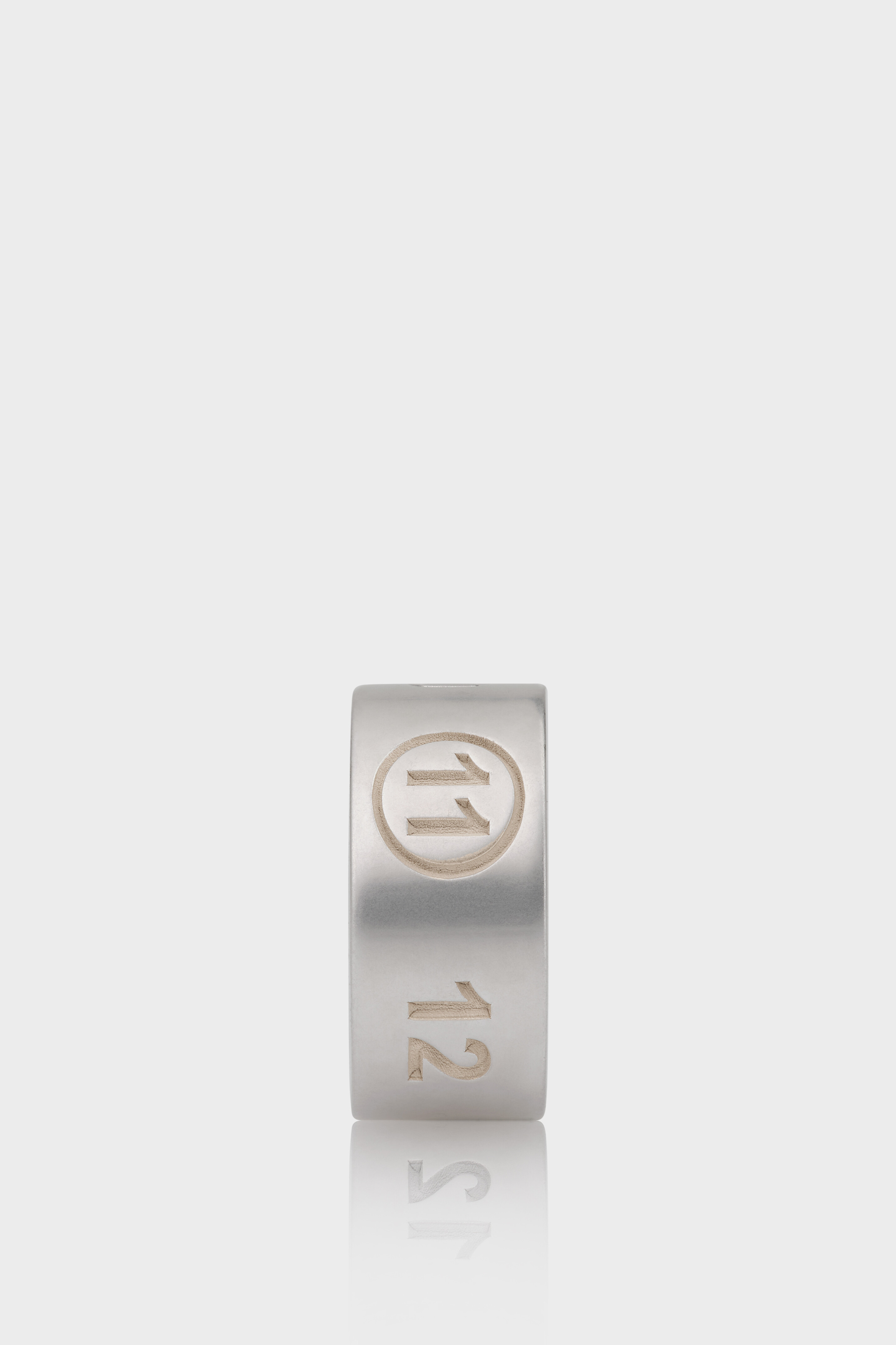
The white label is sewn on the outside. Four stitches at each corner, blank except for a string of numbers — 0 through 23 — one circled in black thread. That's it. No logo, no name, nothing you could photograph for proof. Martin Margiela introduced the system in 1989 as an anti-branding gesture, a refusal of the monogram economy that was swallowing Paris whole. Thirty-five years later, the label remains, but most of what made Margiela Margiela has been paved over by red-carpet gowns and Tabi boots on every fashion editor south of Copenhagen.
This is not about those boots.
The founding logic
Margiela opened his maison in 1988 with Artisanal, the line that would become Line 0. The idea was simple: take old garments, deconstruct them, rebuild them into something new. A military sock became a sweater. A vintage dress was split down the back, lined with silk, turned into a waistcoat. The seams were left raw. The stitching was visible. The whole enterprise was a middle finger to the idea that fashion should hide its labour.
He showed his first collection in a derelict playground in the 20th arrondissement. Models walked on cracked tarmac. There were no front-row seats because there were no seats. The clothes — oversized blazers with the lining on the outside, trousers with exposed zippers running the wrong way — looked like they'd been assembled in a squat. Which, in a sense, they had. The atelier was in a former garage in Romainville. Margiela and his team worked on trestle tables under fluorescent strips.
The press called it deconstruction, a term Margiela never used. He preferred 'reconstruction'. The difference matters. Deconstruction implies tearing things apart for the sake of it. Reconstruction suggests you're building toward something.
The signatures no one talks about
The Tabi boot is the house's most recognised piece, lifted from a fifteenth-century Japanese work sock and turned into a split-toe stiletto. Fine. Everyone knows the Tabi. What they don't know is the flat seam.
Margiela used flat-felled seams — the kind you see on a Levi's inseam — on tailored garments. Topstitched, visible, industrial. It was a way of making a jacket read as workwear without turning it into a chore coat. You see it on the early blazers, the trench coats, the shirt-jackets that predated the entire overshirt category by a decade. It's still there on some of the Artisanal pieces, though you have to look for it now.
Then there's the scale. Margiela worked in exaggerated proportions long before Demna or Vaccarello made it house style elsewhere. But the exaggeration was specific. He didn't just make things big. He made them wrong. Sleeves that stopped at the elbow. Trousers that pooled at the ankle but fit tight at the thigh. Collars that stood three inches off the neck. The effect was unsettling in a way that oversized tailoring today — which is mostly just large — isn't.
The colour palette was another signature, though no one calls it that. Beige, grey, white, black, occasionally a flat navy. No prints. No patterns. When he did use colour, it was usually in the lining or the interior construction, invisible unless you opened the garment. A red silk lining in a grey coat. A blue cotton backing on a waistcoat. The idea was that the wearer would know, even if no one else did.
And the glove-leather treatment. Margiela took kid gloves — the kind your grandmother kept in a drawer — and used them as fabric. He'd cut them up and reassemble them into tops, skirts, even trousers. The result was a garment that moved like cloth but had the surface texture of skin. It was deeply strange. It still is, on the rare occasions the house does it.
The Galliano era and what it costs
John Galliano took over in 2014, fresh from rehab and exile, and turned Margiela into a spectacle. The Artisanal shows became events. The clothes became costumes. The whole thing became about him, which is precisely what Martin Margiela had spent two decades avoiding.
To be fair, Galliano understands construction. The tailoring is sharp. The draping is technically flawless. The Artisanal pieces — when they aren't being worn by Zendaya on a red carpet — are still built with care. But the logic has shifted. Where Margiela's work was about making the invisible visible, Galliano's is about making the visible spectacular. The seams are still exposed, but now they're covered in crystals. The proportions are still exaggerated, but now they're exaggerated in the direction of drama rather than discomfort.
The numbered label system remains, though it's been streamlined. Line 1 is women's main collection. Line 10 is men's. Line 0 is still Artisanal. But the codes have been bent toward accessibility. The Tabi has been issued in dozens of materials, heights, and iterations. The Glam Slam bag — a quilted, padded shoulder bag that launched in 2018 — has become the house's commercial anchor. It's a good bag. It's also the opposite of everything Margiela stood for, which was the refusal to make a signature bag in the first place.
There's a tension here that the house hasn't resolved. Galliano needs to sell bags and boots to fund the Artisanal line. The Artisanal line is what gives the house credibility. But the more successful the bags become, the less the house resembles the maison that Martin built. It's not a collapse. It's a shift. Whether that shift is sustainable is another question.
What remains
The atelier is still in Paris, though it's no longer in a garage. The numbered labels are still sewn on the outside. The flat seams still appear, if you know where to look. And the Artisanal line — whatever else you can say about Galliano's tenure — is still being made.
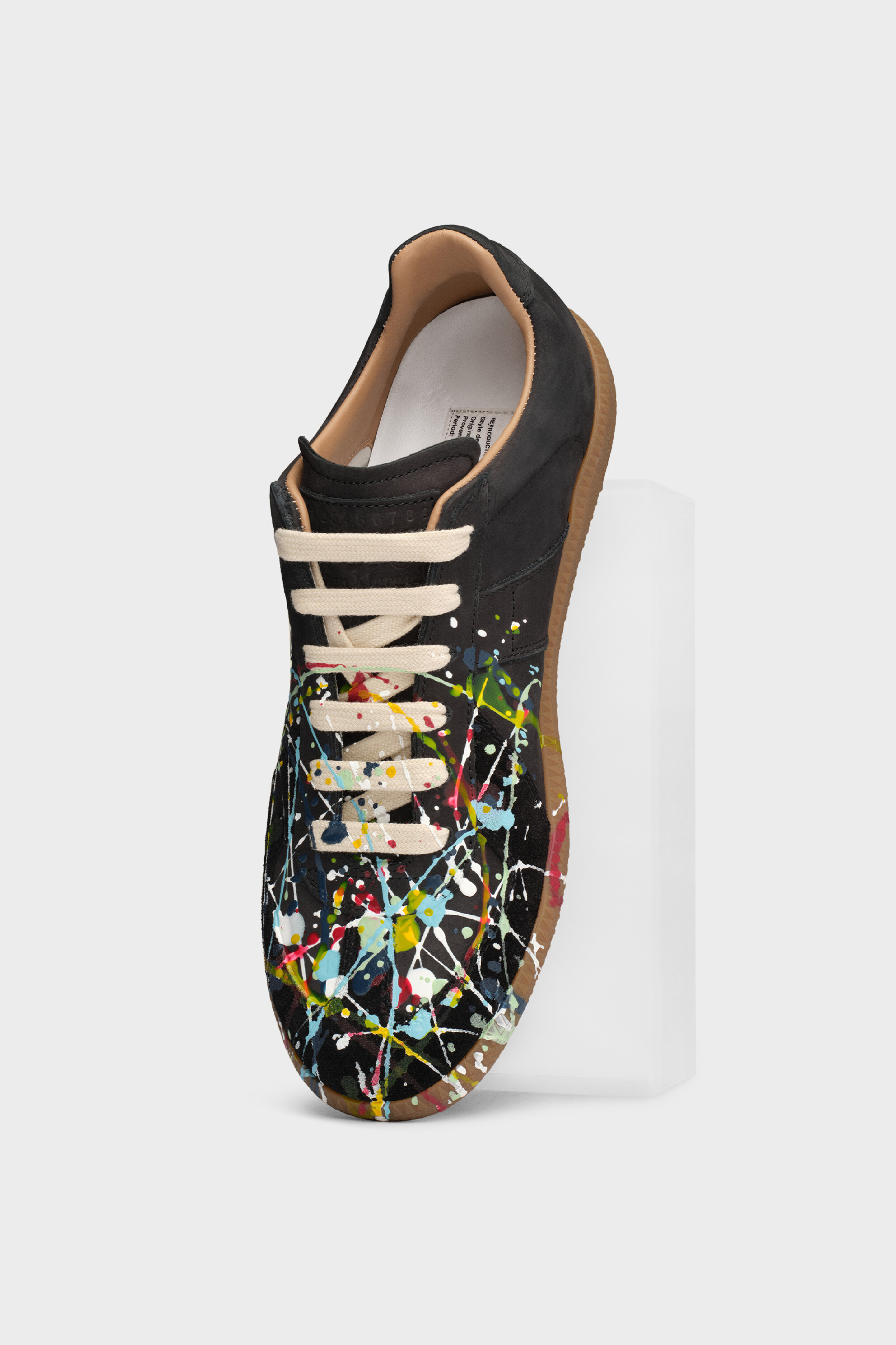
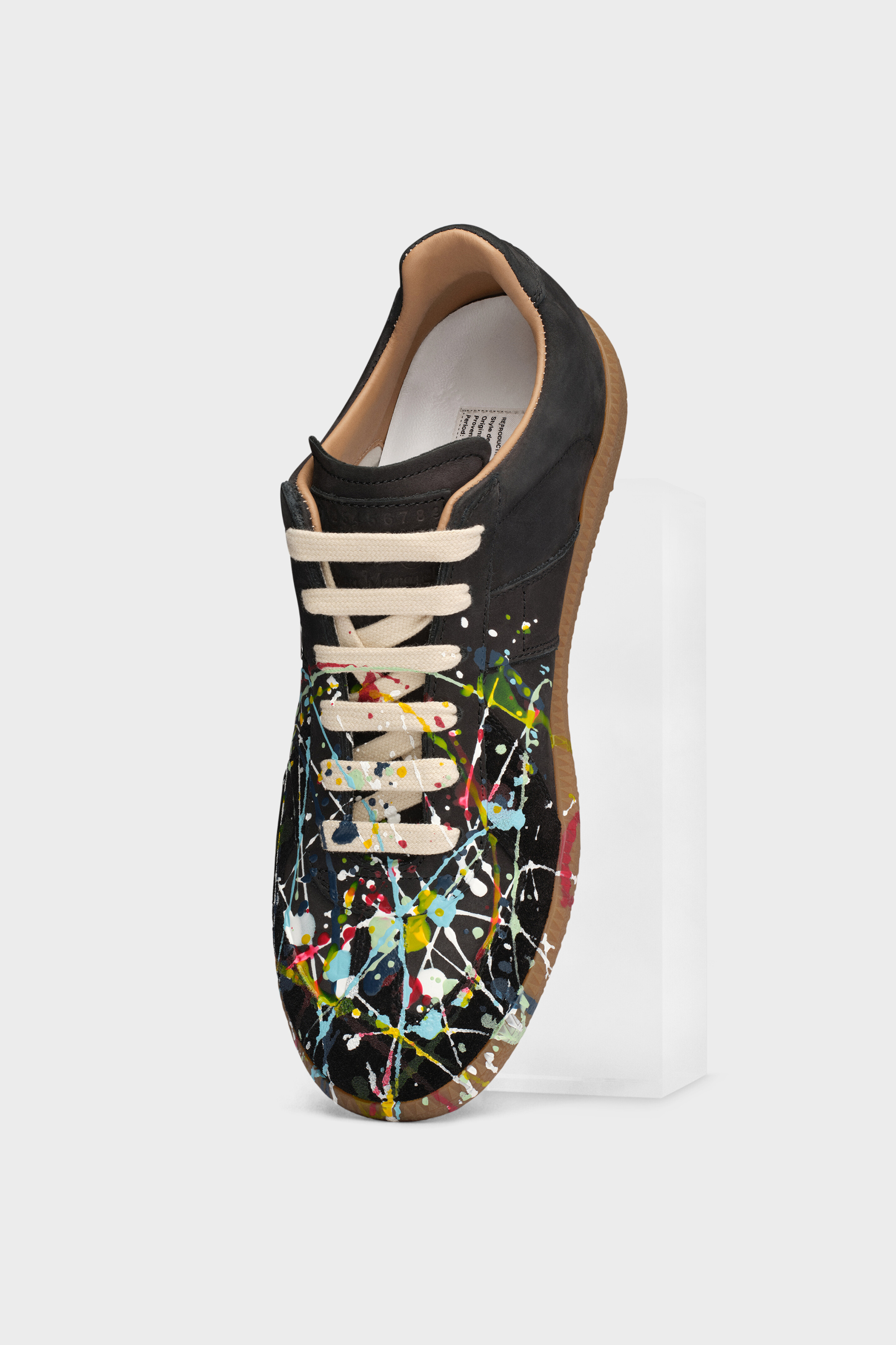
There's a garment from the Spring 2023 Artisanal collection that gets at what's left. It's a coat, constructed from vintage denim jackets, cut apart and reassembled so that the pockets sit at odd angles and the collar doesn't quite close. It's covered in hand-painted brushstrokes, white on blue, like someone tried to erase it and gave up halfway. The seams are raw. The stitching is visible. It looks, in other words, like something Martin Margiela might have made in 1992.
Except it doesn't. It looks like a Galliano interpretation of a Margiela idea, which is not the same thing. The difference is in the finish. Margiela's work had a kind of blankness to it, a refusal to seduce. This coat wants to be looked at. It wants to be photographed. It wants, in short, to be fashion.
Which is fine. Fashion is what Maison Margiela is now. But it's worth remembering what it was: a garage in Romainville, a blank label, a flat seam on a jacket that didn't fit. The things that made it strange. The codes we've forgotten.