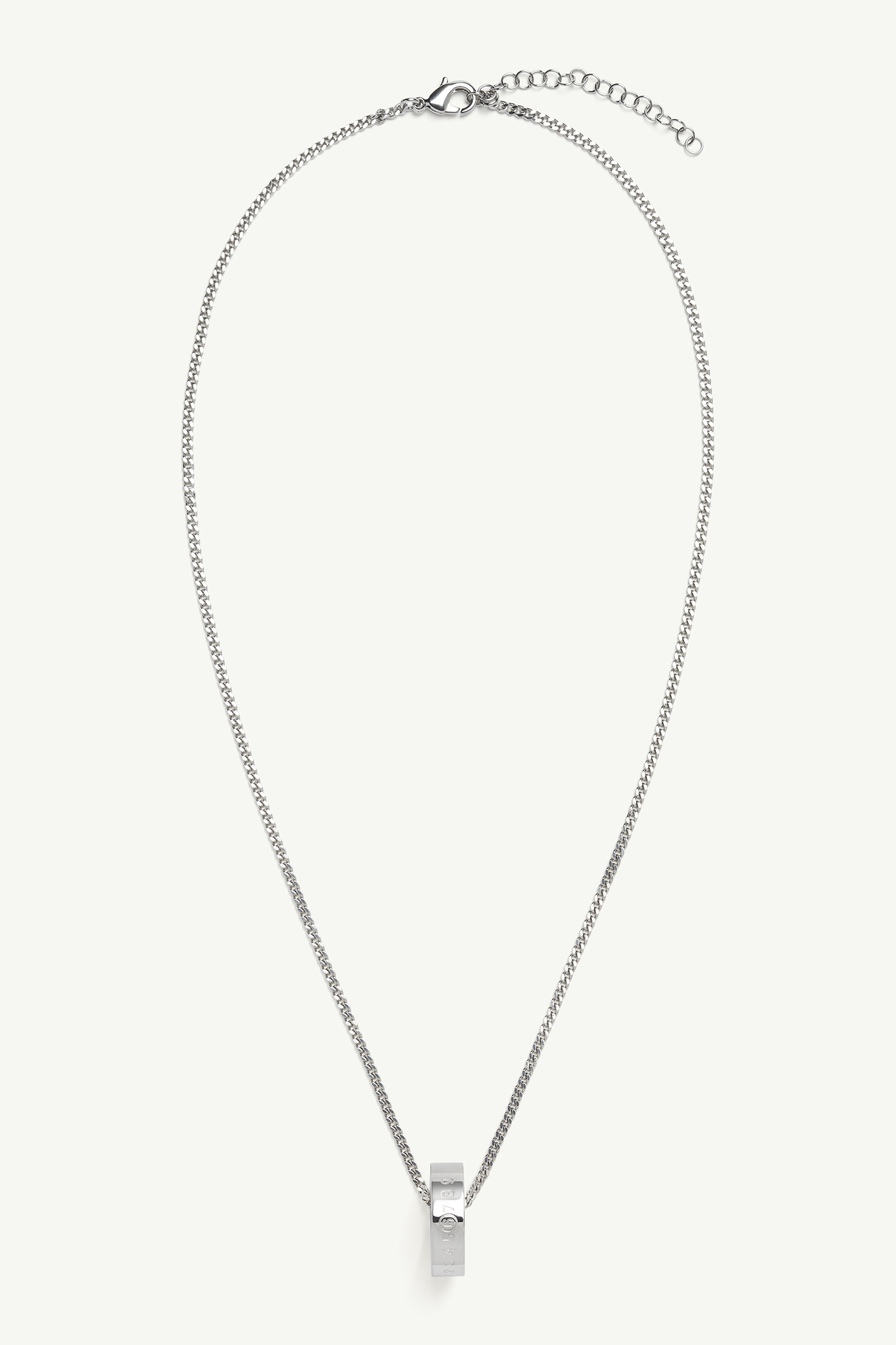
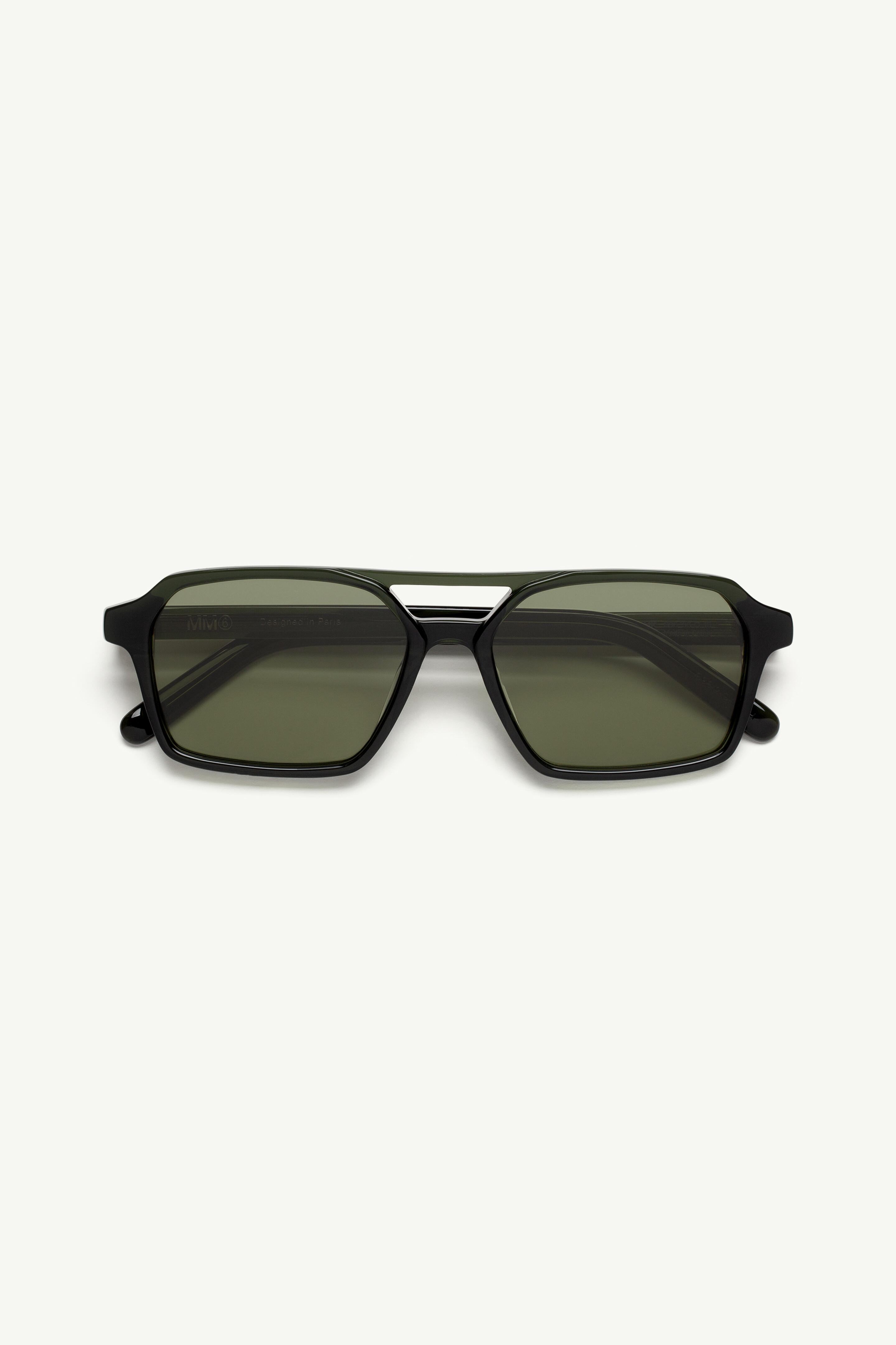
The white Tabi boot sits on a plinth at the entrance to the Margiela retrospective at Palais Galliera
The white Tabi boot sits on a plinth at the entrance to the Margiela retrospective at Palais Galliera. Not behind glass. Not roped off. Just there, at shin height, split toe catching the gallery light. A guard stands three metres away. In four hours, no one touches it. The distance is instinctive.
Maison Margiela has always operated at that distance — present, influential, untouched by the hands that want to claim it. Founded in 1988 by Martin Margiela and Jenny Meirens, the house built its reputation on refusal: no interviews, no photographs of the designer, no logo until it became the absence of a logo. The white label with four pick-stitches at each corner was the only signature. The garments spoke in a language of deconstruction, reconstruction, and a kind of forensic honesty about what clothing is — fabric, thread, the human form underneath.
Margiela himself left in 2009. The house continued under a team structure for five years, then John Galliano arrived in 2014. That decade has rewritten what Margiela means, and the question now is not whether the house has changed — it has — but whether what it has become still carries the original genetic code or whether we are watching something else entirely, wearing the name like a secondhand coat.
Galliano's Margiela: spectacle as method
Galliano does not make quiet clothes. His first collection for the house, shown in January 2015, opened with a model in a flattened trench coat, the sleeves distended, the proportions alien. The silhouette recalled Margiela's oversized tailoring from the nineties, but the affect was different. Where Martin Margiela's work felt like a question — what if we moved the seam here? — Galliano's feels like a declaration. The garments are louder, more theatrical, more explicitly concerned with beauty as a form of armour.
The Artisanal collections, shown during haute couture week, have become the house's public face. These are the images that circulate: models in trompe-l'œil gowns that appear to be nude body paint, in deconstructed suiting that reads as sculpture, in silhouettes so extreme they require engineering. Galliano has said he approaches these pieces as a form of therapy, a working-through of his own collapse and recovery after his dismissal from Dior in 2011. The clothes carry that weight. They are about transformation, about the self as a site of construction.
This is not Martin Margiela's method, but it is not dishonest to the house's history either. Margiela always worked with transformation — the Replica line, the garments made from vintage military socks, the 1997 spring collection where models wore wigs of their own hair colour to erase identity. Galliano has taken that interest and turned the volume up. The house now operates at two registers: the Artisanal work, which is about spectacle and the runway as a form of storytelling, and the main collections, which translate that energy into wearable propositions. The Tabi boot, the glove shoe, the four-stitch logo — these continue. Around them, Galliano builds.
The commercial house
Margiela is owned by OTB Group, the Italian conglomerate that also holds Diesel, Viktor & Rolf, and Jil Sander. OTB does not break out Margiela's financials separately, but the house is estimated to generate between €250 million and €300 million in annual revenue. That is small compared to the LVMH or Kering stables, but it represents consistent growth since Galliano's arrival. The Tabi boot, in particular, has become a volume driver — not in the sense of mass production, but in the sense that it anchors the house commercially. It is the piece that people buy when they want to signal they understand.
The house has also expanded its accessories business. The Glam Slam bag, introduced in 2018, is quilted, soft-bodied, and carries a logo that is both visible and deniable — the four stitches are there, but you have to know to look. It has sold steadily, particularly in Asia, where the house has opened new stores in Seoul, Shanghai, and Tokyo. The Tokyo flagship, in Shibuya, is spare and white, the interiors unchanged since Margiela's tenure. The product has changed. The frame has not.
This is the tension that defines the house now. Margiela under Galliano is commercially successful in a way it never was under its founder. The runway shows generate press. The Artisanal pieces appear on red carpets. The house has a visible identity in a way that runs counter to its original ethos, which was about invisibility, about letting the work exist without the cult of personality. Galliano is a personality. His story — the fall, the rehabilitation, the redemption arc — is part of how the house is read now. That is not Margiela's language. It is Galliano's.
What remains
The question, then, is what constitutes the house's identity when the founder is gone and the creative director operates from a different philosophy. There are the recurring codes: the Tabi, the white lab coats worn by atelier staff, the blank labels, the numerical system that categorises each garment by type (0 for Artisanal, 1 for women's main line, 10 for men's, 11 for accessories, and so on). These are still in place. But codes are not the same as a point of view.
What Margiela and Galliano share is an interest in the garment as a site of investigation. For Margiela, that investigation was conceptual, almost scientific. He treated fashion as a system to be examined, its conventions exposed and questioned. For Galliano, the investigation is emotional. He uses the garment to explore identity, trauma, beauty, transformation. Both approaches are valid. Both are rigorous. But they produce different objects.
A Margiela piece from 1994 — say, a sweater knitted to look like it is inside-out, seams exposed, the construction made visible — asks the wearer to reconsider what finish means. A Galliano piece from 2023 — a coat that appears to be melting off the body, held in place by internal boning — asks the wearer to reconsider what the body can be. The first is about the object. The second is about the subject. The house has moved from one to the other.
This is not a decline. The work is technically accomplished, often extraordinary. The Artisanal collections are among the most ambitious shown during any couture season. But it is a different house. Whether that matters depends on what you think a fashion house is — whether it is a set of ideas that must remain consistent, or whether it is a structure that can hold different ideas over time, the way a building holds different tenants.
A coat, a question
At the Palais Galliera retrospective, near the exit, there is a coat from Margiela's final collection in 2009. It is oversized, the shoulders dropped, the sleeves too long. It is made from grey wool, and the lining is exposed at the hem, flipped out so you see the inside and the outside at once. A small label is sewn into the collar: four white stitches, nothing else.
In the next room, there is a gown from Galliano's autumn 2023 Artisanal collection. It is constructed to look like cracked porcelain, white on white, the surface fractured into geometric shards. It is breathtaking. It is also not a garment you could wear without assistance, without a team, without the infrastructure of a certain kind of life.
Both pieces are called Margiela. Both carry the four stitches. A visitor stands between them for a long time, looking from one to the other, and then leaves without touching either. The distance remains.