The workroom on Via del Corso still has the cutting table Adele Casagrande used in 1918
The workroom on Via del Corso still has the cutting table Adele Casagrande used in 1918. Not the original surface — that's been replaced twice — but the frame, the height, the position relative to the window. When Karl Lagerfeld first visited the atelier in 1965, he moved it six inches to the left. Silvia Venturini Fendi moved it back in 1994. The table hasn't moved since.
Fendi is a house built on fur, sustained by leather, and currently animated by a version of Roman irreverence that sells. But the through-line isn't a material or a mood. It's a structural fact: five sisters ran this house for forty years, and everything that's happened since has been a negotiation with that model.
Adele, Edoardo, and the Casagrande workshop
Adele Casagrande opened a leather and fur workshop in 1918 on Via del Plebiscito. Small-scale production, mostly repairs and bespoke commissions for Roman clients who wanted fur linings replaced or handbags refurbished. In 1925 she married Edoardo Fendi. He had no design training but understood retail: he opened the first Fendi boutique on Via del Plebiscito the same year, positioned the workshop's output as luxury rather than service, and put the Fendi name on the door.
The couple had five daughters between 1931 and 1946: Paola, Anna, Franca, Carla, Alda. All five entered the business. By the early 1950s, the structure was already unusual — not one heir apparent but a quintet running design, production, retail, and expansion in tandem. Paola handled furs and product development. Anna took leather goods and accessories. Franca managed customer relations and the boutique. Carla oversaw business operations. Alda dealt with sales and later took on a more strategic role in expansion.
The model worked because they divided authority without fragmenting vision. When Fendi began producing its first ready-to-wear fur pieces in the 1950s, the sisters didn't hire outside. They promoted from the atelier, brought in technical experts for specific processes, and kept creative direction internal. The house grew, but it didn't professionalise in the way LVMH-owned brands would later require.
Lagerfeld, the double F, and the forty-year contract
Karl Lagerfeld signed on in 1965. He was twenty-nine. The contract had no end date, which should have been a red flag for both parties but turned out to be the structure the relationship needed. Lagerfeld wasn't brought in to overhaul the house. He was brought in to solve a specific problem: Fendi's fur pieces were technically accomplished but visually heavy, and the market was starting to want lightness.
Lagerfeld's first collection for Fendi introduced techniques that treated fur like fabric. He had pelts shaved, perforated, layered with silk and leather, cut into geometric insets. A sable coat from 1966 weighs less than a wool overcoat. The effect wasn't just technical innovation — it repositioned fur as something you could wear in daylight, in transit, without looking like you were performing wealth.
The double F logo came a year later. Lagerfeld sketched it in under a minute during a meeting, two mirrored Fs that read as a monogram but also as a graphic device that could be scaled, rotated, flipped. It appeared first on hardware, then linings, then as jacquard on the Baguette's canvas iterations in the late 1990s. The logo is now so embedded in the house vocabulary that it's easy to forget it wasn't there at the start.
Lagerfeld stayed until his death in 2019. Fifty-four years. The relationship worked because the sisters never asked him to be a brand architect. They asked him to make product, and he did — collection after collection, with almost no fallow seasons. He designed Fendi's furs and ready-to-wear while running Chanel, his own label, and intermittent collaborations elsewhere. The pace should have produced incoherence. Instead it produced volume, and volume gave the house range.
Silvia, the Baguette, and the accessory that saved the house
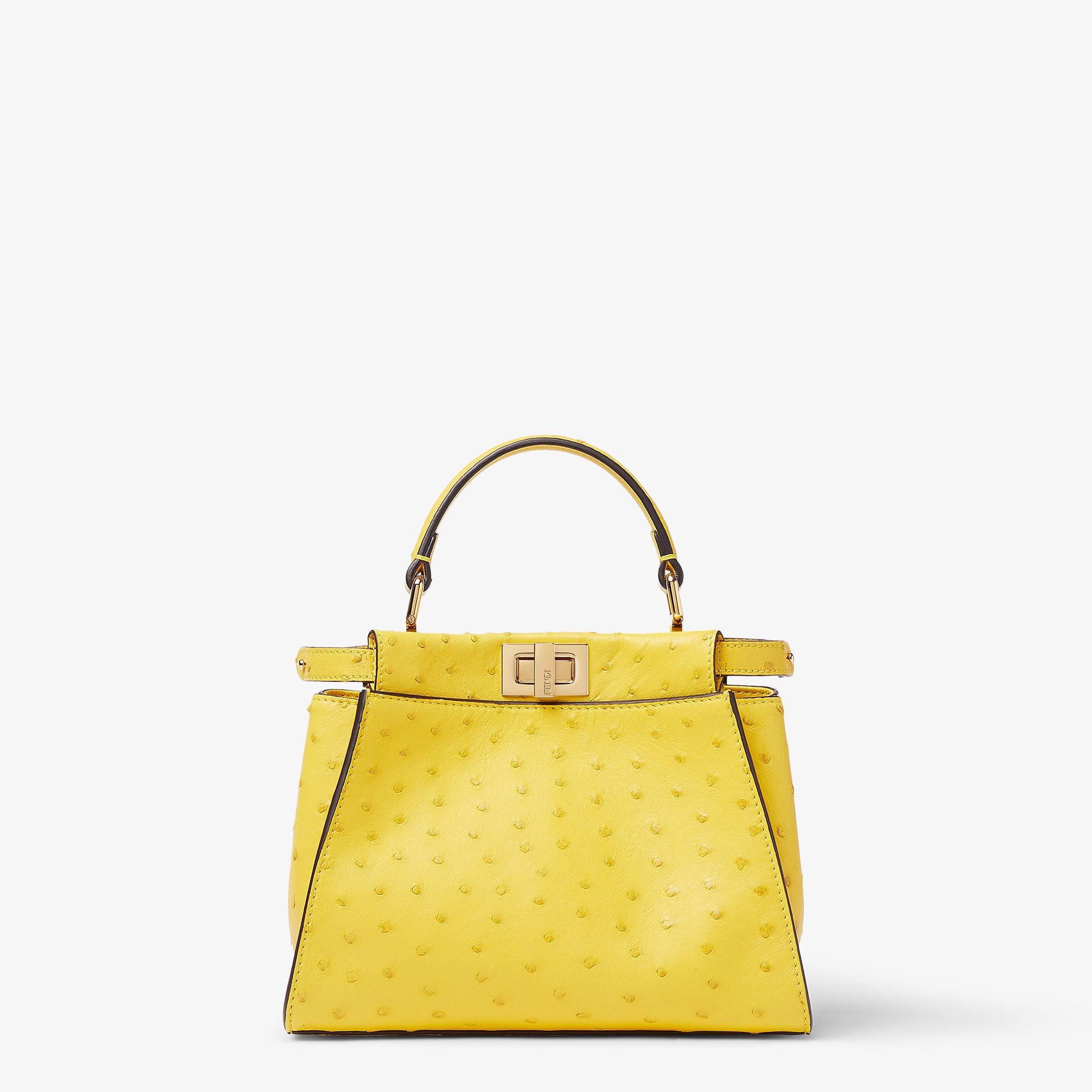
Silvia Venturini Fendi is Anna's daughter. She joined the house in 1994, initially handling accessories and menswear. In 1997 she designed the Baguette: a small underarm bag with a short strap, designed to be carried like a loaf of bread tucked under the arm. The shape wasn't new — similar silhouettes had appeared in the 1940s — but the execution was. Silvia introduced the Baguette in multiple materials per season: embroidered canvas, python, mink, denim, sequins. The bag became a platform for surface variation rather than a single fixed object.
The Baguette sold. It sold enough that Fendi's revenues doubled between 1997 and 2000. It appeared on Sex and the City in 1999, and the resulting demand spike forced the house to expand production beyond its usual atelier capacity. For the first time, Fendi had a product that moved faster than the house could make it, and that velocity changed the business model.
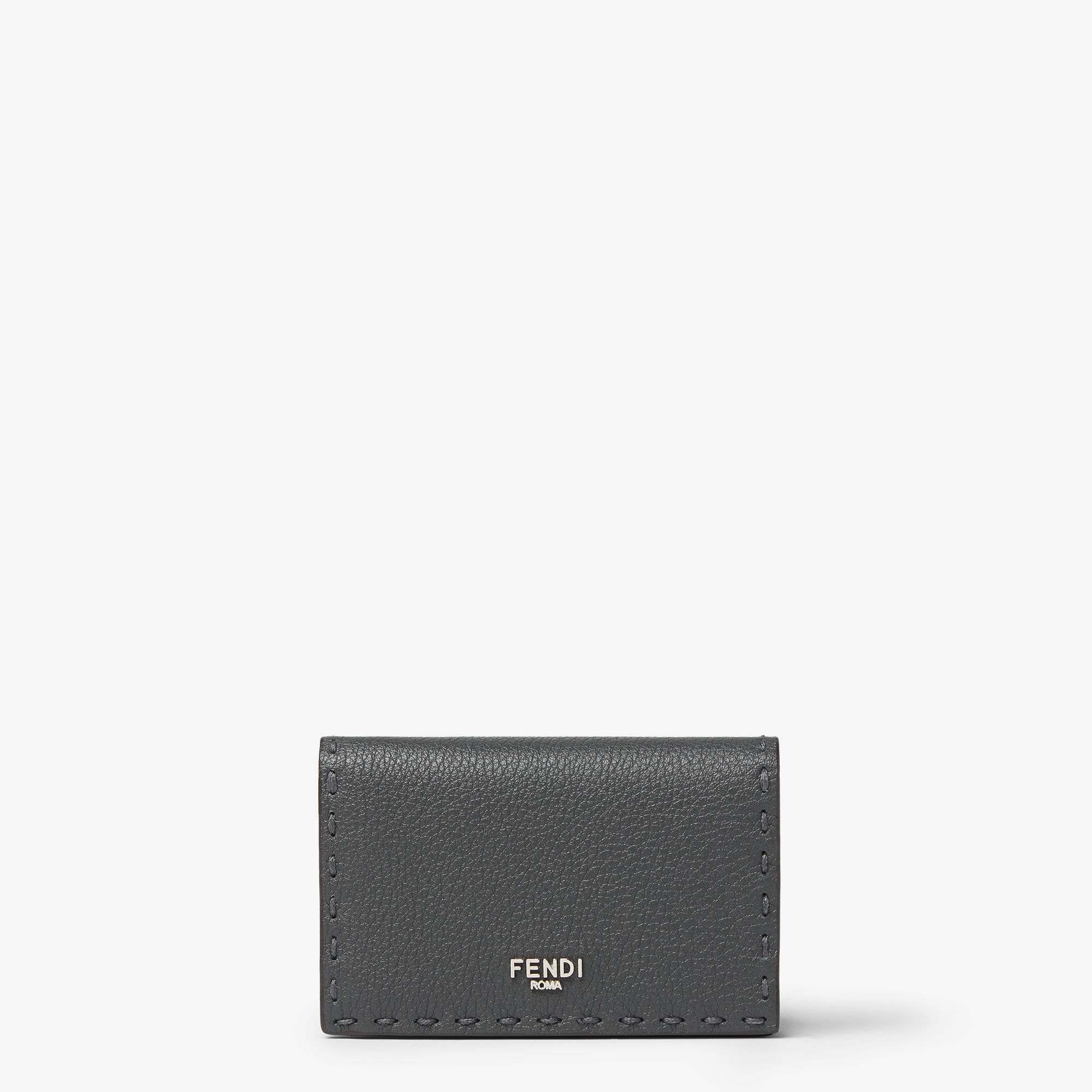
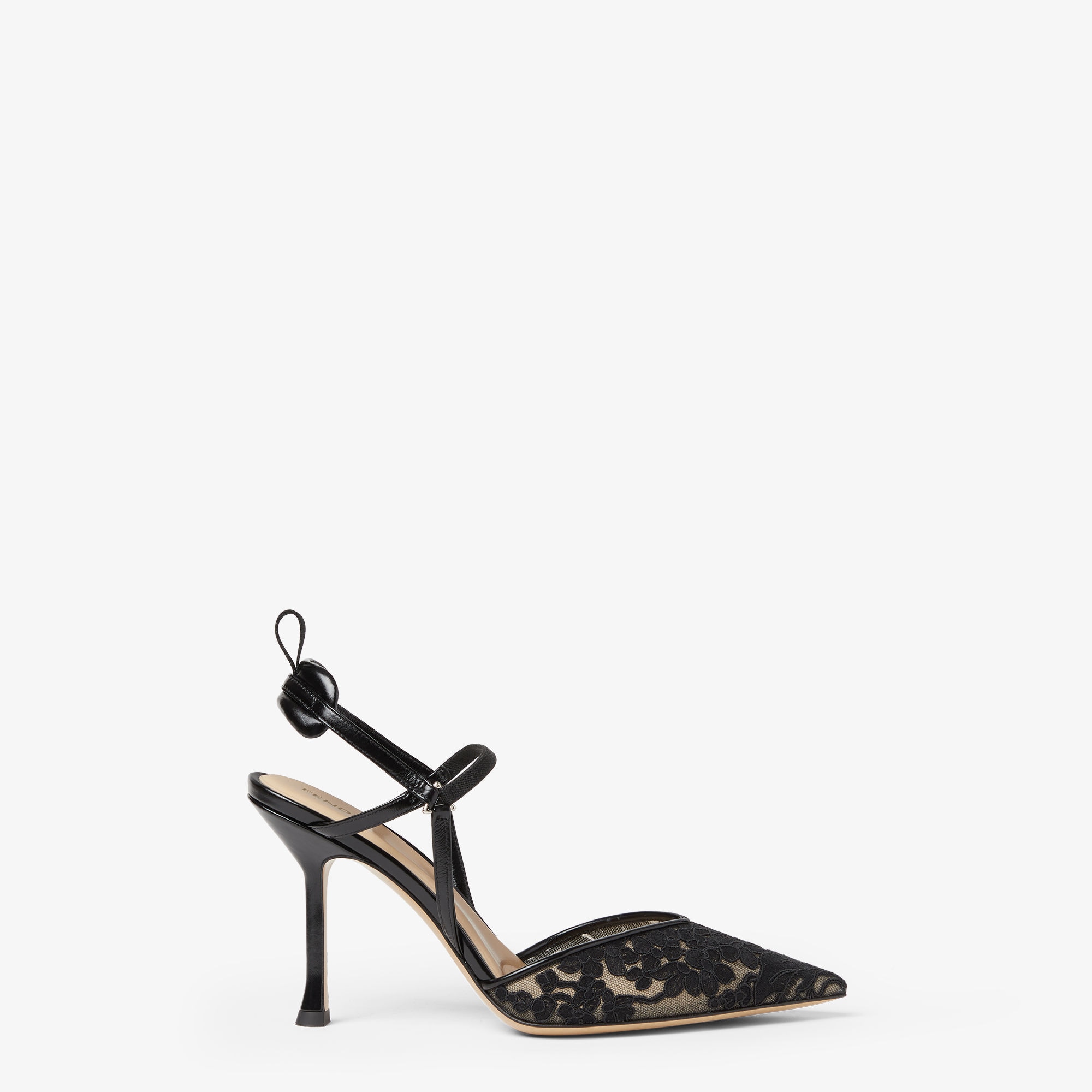
Silvia is still at Fendi. She runs accessories and menswear, positions that sound secondary but account for the majority of the house's revenue. Her work tends toward the wearable rather than the conceptual — bags that function as bags, outerwear that layers without excess volume, shoes that don't punish the wearer. It's a counterweight to the more theatrical elements of the women's ready-to-wear, and it's kept the house commercially stable through multiple ownership changes.
LVMH, Kim Jones, and the question of what Fendi is now
Fendi has been majority-owned by LVMH since 2001. The five sisters retained creative control until their gradual retirements and deaths — Carla in 2017, Anna in 2013, Franca in 2020, Alda in 2021. Paola is still alive but no longer active in the business. The family structure that defined the house for half a century is gone.
Kim Jones took over women's ready-to-wear in 2020. He'd come from Dior Men, where he'd built a model based on collaboration, archival reference, and product that photographed well on Instagram. At Fendi, he's leaned into the fur heritage — his second collection featured a coat made from 180 mink tails, each one hand-knotted — but he's also introduced a streetwear-inflected ease that sits oddly against the house's traditional codes. A shearling bomber from his autumn 2023 collection retailed for €18,000. It sold.
Jones's Fendi is faster, younger, more willing to court hype. But it's also less Roman. The house used to feel specific to a city and a set of clients who valued craft over novelty. Now it feels like a luxury brand that happens to be based in Rome, which is a different thing. The atelier is still there. The techniques are still intact. But the centre of gravity has shifted from the workroom to the runway, from the client to the image.
Silvia is still in the building. She still moves the cutting table back when someone tries to optimise the layout. The table stays where it is, and the rest of the house moves around it.