The zipper runs vertically, not horizontally
The zipper runs vertically, not horizontally. It's a small thing — the sort of detail one notices only after the fact, when the hand has already learned the gesture. Tom Ford placed it that way on his first handbag for Gucci in the mid-nineties, a soft hobo in cognac leather that predated the Horsebit revival by two seasons. The vertical pull allowed the bag to collapse inward when empty, creating a slouch that read as deliberate rather than defeated. No one wrote about it at the time. The press was too busy cataloguing the velvet hipsters and the unbuttoned shirts.
Thirty years on, the codes we remember — the plunging neckline, the high-gloss sensuality, the ad campaigns that skirted the edge of decency — have calcified into shorthand. Tom Ford means sex. Tom Ford means glamour. Tom Ford means a certain idea of the nineties, frozen in amber and reheated every few years when fashion decides it's time to revisit that particular register of provocation. But the maison's actual vocabulary, the one that operated beneath the surface spectacle, has gone quiet. Not lost, exactly. Forgotten.
The Founding Grammar
Tom Ford launched his eponymous line in 2005, after a decade and a half spent remaking Gucci and then Yves Saint Laurent. He arrived with capital, with name recognition, with a reputation for control so exacting it bordered on tyranny. What he did not arrive with was an atelier tradition. No archive to mine, no house codes to reinterpret. He built the language from scratch, and he built it around a handful of principles that had little to do with the overt eroticism that dominated the press coverage.
First: the shoulder. Every Tom Ford jacket, from the earliest seasons, carried a sleeve head that sat slightly forward of the natural shoulder line. Not aggressively — this wasn't the power dressing of the eighties — but enough to create a subtle cant, a posture that suggested forward motion even when standing still. The effect was architectural without being rigid. One could wear the jacket over a slip dress, as the lookbooks often showed, and the silhouette held.
Second: the inner waistband. Tom Ford trousers, particularly in the men's line, featured a grosgrain ribbon stitched inside the waistband, positioned to sit against the small of the back. It served no structural purpose. The trousers would have held their shape without it. But the ribbon created a point of contact, a reminder that the garment was engineered for the body rather than simply draped over it. Clients who owned multiple pairs reported that they could identify a Tom Ford trouser by touch alone, eyes closed, within two seconds of pulling it on.
Third: the hardware. Every zipper pull, every button shank, every clasp on the early accessories carried the same matte gunmetal finish. Not polished, not antiqued — a flat, non-reflective grey that photographs read as black. The choice was deliberate. Tom Ford wanted the closures to recede, to become part of the garment's surface rather than punctuation marks. He once told an interviewer, in a rare moment of technical candor, that he considered visible hardware 'a failure of design.' The quote didn't make it into the final piece.
The Hermès Detour
By 2010, the house had established itself as a commercial proposition. The beauty line, launched in 2006, was printing money. The flagship on Madison Avenue had waiting lists for made-to-measure suiting. The ready-to-wear showed in Milan, then London, then back to New York — a peripatetic schedule that reflected Tom Ford's resistance to the traditional fashion calendar. He showed when the collection was ready, not when the Chambre Syndicale decreed.
But the accessories remained, for lack of a better word, correct. Well-made, certainly. Expensive, appropriately. Yet they lacked the obsessive specificity that characterized the tailoring. The bags were bags. The shoes were shoes. Functional, attractive, forgettable.
The shift came quietly, around 2012, when Tom Ford began working with a small atelier outside Florence that had previously supplied Hermès. The partnership was never announced. No press release, no behind-the-scenes documentary. But the work changed. The leather goods began to carry construction techniques borrowed from harness-making: box stitching on the gussets, hand-burnished edges, a particular method of setting the handle that distributed weight across the bag's frame rather than concentrating it at two stress points.
The Jennifer bag, introduced in 2013 and named for Jennifer Aniston, exemplified the new approach. At first glance: a structured top-handle, vaguely Kelly-adjacent, available in black or chocolate or dove grey. Unremarkable. But the handle itself was a single piece of leather, folded and stitched in a continuous loop, with no join visible from any angle. Achieving that required a hide large enough to yield a forty-centimetre strip without blemish — which meant sourcing from a specific tannery in Tuscany that processed full-grain calfskin in limited runs twice a year. The bag was never marketed as rare or exclusive. It simply was.
The Discreet Signatures
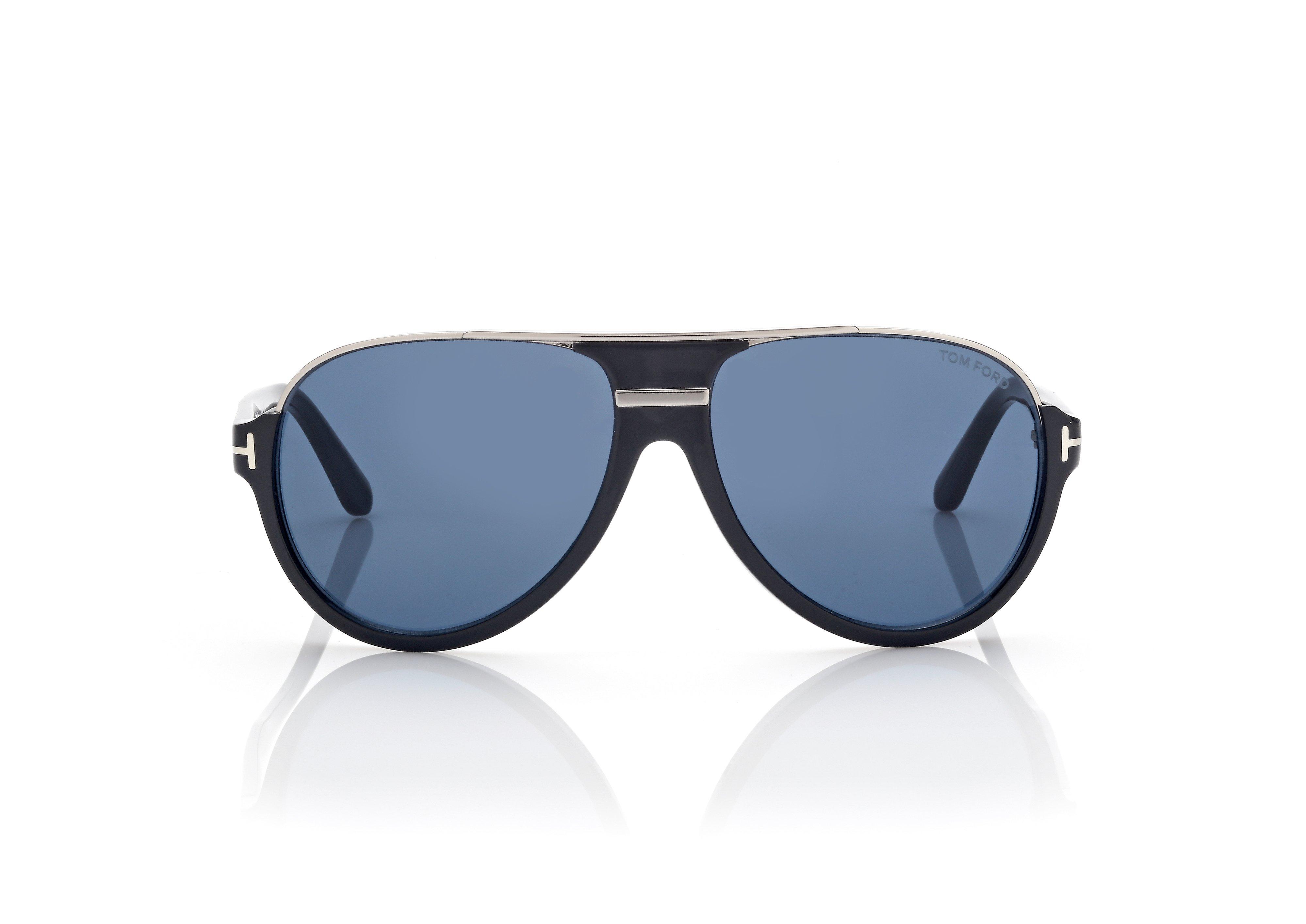
Tom Ford's eyewear line, launched in partnership with Marcolin in 2005, operated under a similar logic. The frames carried no visible branding on the front. The logo appeared only on the interior of the temple, a small serif wordmark that could be read only when the glasses were folded and set down. This was not modesty. Tom Ford is not modest. It was a calculation: that the frames' proportions — slightly oversized, with a bridge that sat fractionally higher than the standard placement — would become recognizable without requiring a label to announce them.
The calculation proved correct. By the early 2010s, a certain type of client wore Tom Ford optical frames the way an earlier generation had worn Oliver Peoples: as a signal of discretion, of knowing without needing to show. The frames were expensive, yes, but not obscenely so. They occupied a space between fashion accessory and optical instrument, designed to be worn daily rather than rotated seasonally.
The fragrance line followed a parallel trajectory. Oud Wood, released in 2007, predated the current oud obsession by half a decade. It was not, strictly speaking, an oud fragrance — the note was blended with rosewood and cardamom, softened to the point where it read more as texture than scent. What it did, and what the subsequent Private Blend releases continued to do, was establish olfactory codes that operated independently of the fashion line. One could wear Oud Wood and never own a Tom Ford garment. The fragrance existed as its own language, adjacent to but not dependent on the runway vocabulary.
The Peter Hawkings Era
Tom Ford sold the company to Estée Lauder in 2022 and stepped back from design the following year. Peter Hawkings, who had worked alongside him since the Gucci days, took over as creative director. The appointment made sense on paper: institutional knowledge, shared aesthetic sensibility, a smooth transition. But the codes, those quiet signatures, began to loosen.
The Spring 2024 collection showed the shift. The tailoring remained sharp, the silhouettes recognizable. But the shoulder had migrated backward, aligning with the natural shoulder line rather than sitting forward. The trousers no longer carried the grosgrain ribbon. The hardware — now supplied by a different foundry — had acquired a subtle sheen, a reflectivity that caught light rather than absorbing it. These were not dramatic changes. Most reviews didn't mention them. But the grammar had shifted, the syntax loosened.
Whether this represents evolution or dilution depends, one supposes, on how much weight one assigns to those original codes. Peter Hawkings has spoken, in interviews, about wanting to make the house 'more accessible,' a term that tends to mean different things depending on who's deploying it. The most recent collection included jersey separates, relaxed trousers, knitwear that could be worn to a meeting or a dinner without requiring a complete costume change. Practical, certainly. Commercially astute, probably. But the obsessive specificity — the vertical zipper, the forward shoulder, the matte hardware — has receded.
What Remains
There's a photograph, not widely circulated, from Tom Ford's final fitting session before stepping down. He's standing in the atelier, hands in pockets, watching a tailor adjust the sleeve pitch on a navy jacket. The tailor is using a technique called 'roping the sleeve head' — a method of easing the sleeve cap into the armscye that creates a subtle roll at the shoulder. It's a Savile Row technique, rarely seen in ready-to-wear because it adds thirty minutes to the construction time and requires a level of hand-finishing that most factories won't accommodate.
Tom Ford is not touching the jacket. He's not giving direction. He's simply watching, the way one watches a process that has been repeated so many times it no longer requires instruction. The tailor knows the pitch, knows the roll, knows that the sleeve must sit forward by exactly eight millimetres. The knowledge is embedded, procedural. It doesn't need to be spoken.
Whether that knowledge survives the transition — whether it can survive any transition, when the person who encoded it is no longer in the room — is the question the house now faces. The bags still carry the box stitching, for now. The frames still sit high on the bridge. But codes, unlike logos, require constant repetition to remain legible. Stop repeating them, even for a season, and they begin to fade. Not all at once. Just enough that the hand, reaching for the zipper, has to search for a moment before finding the pull.