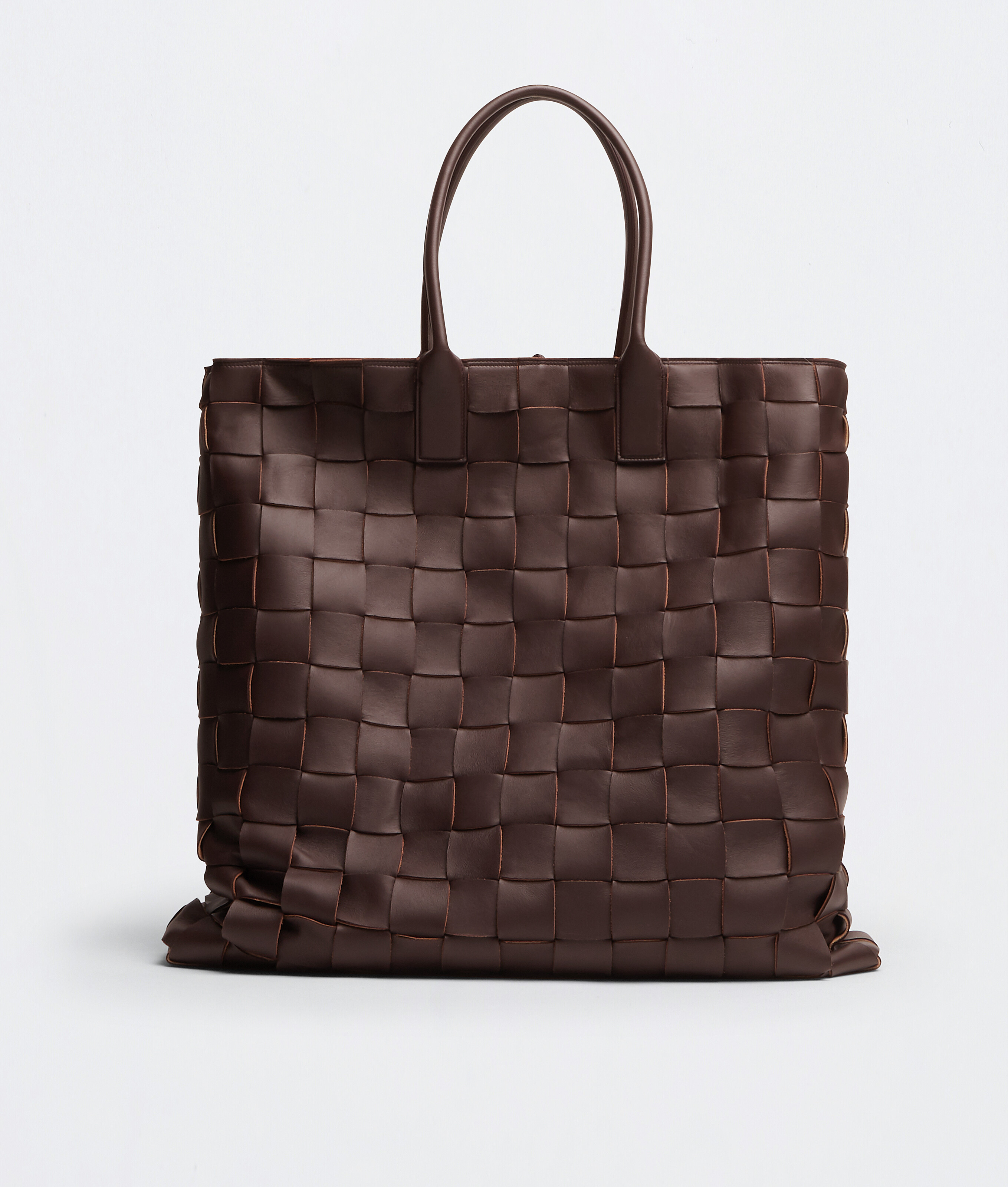
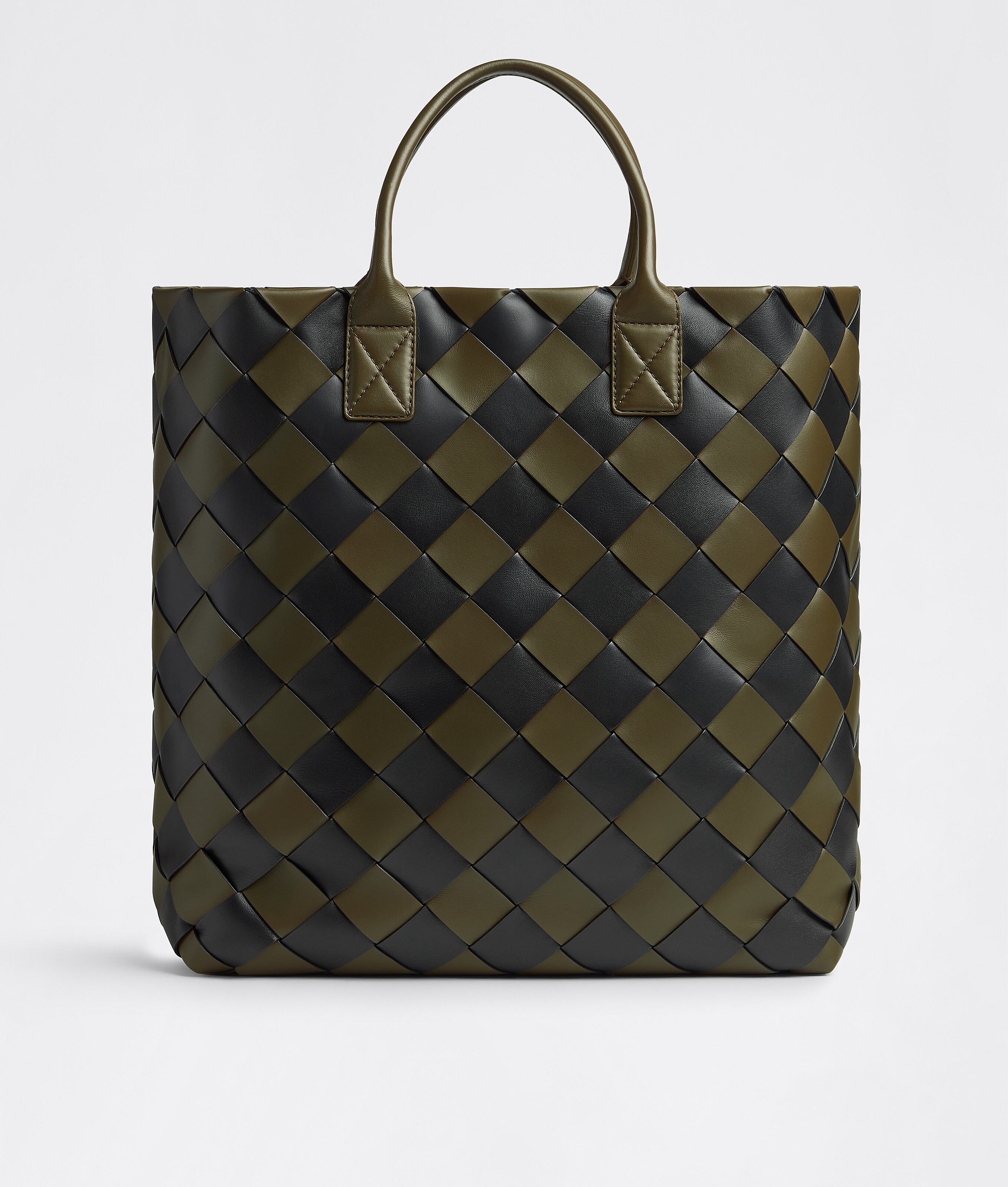
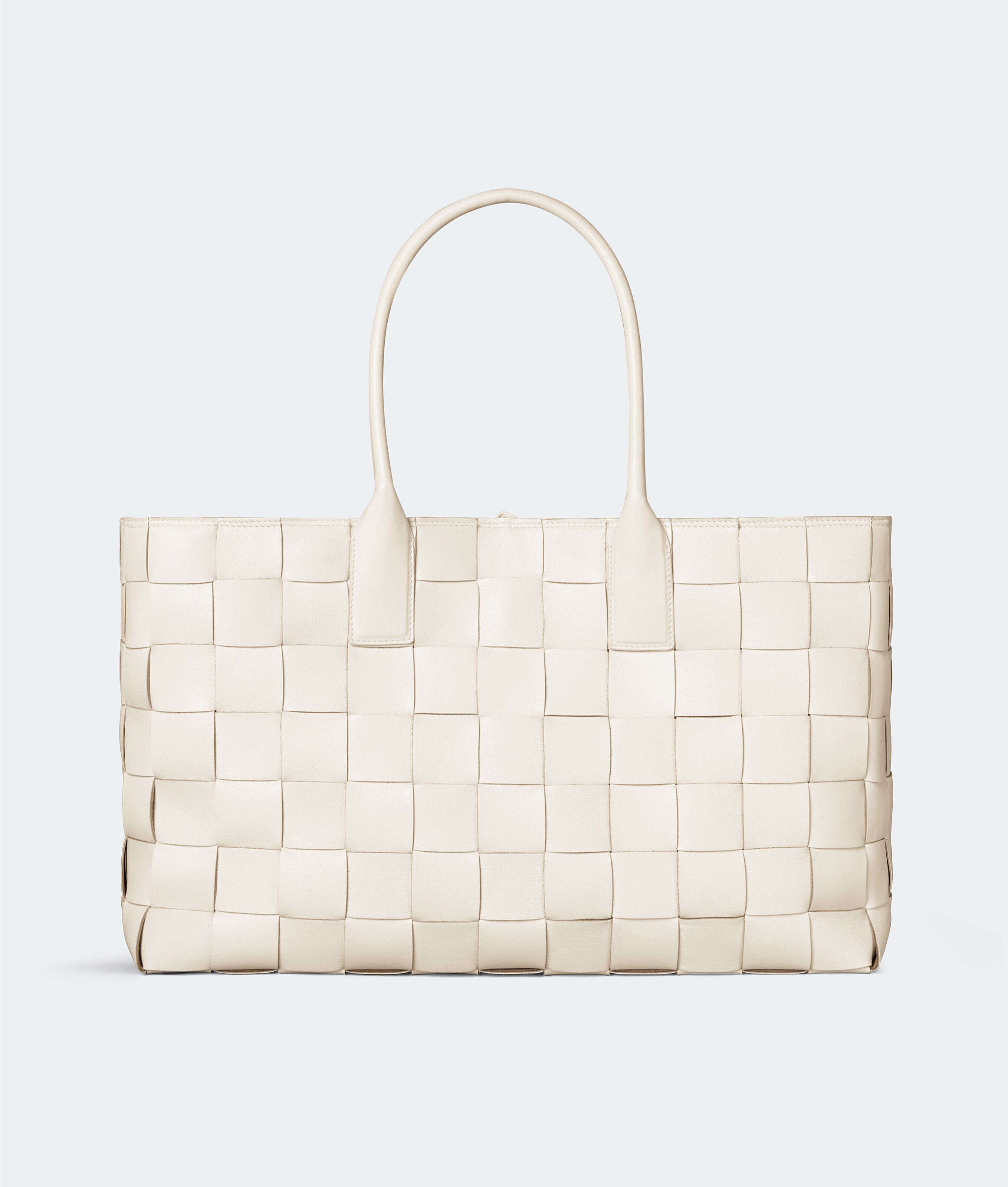
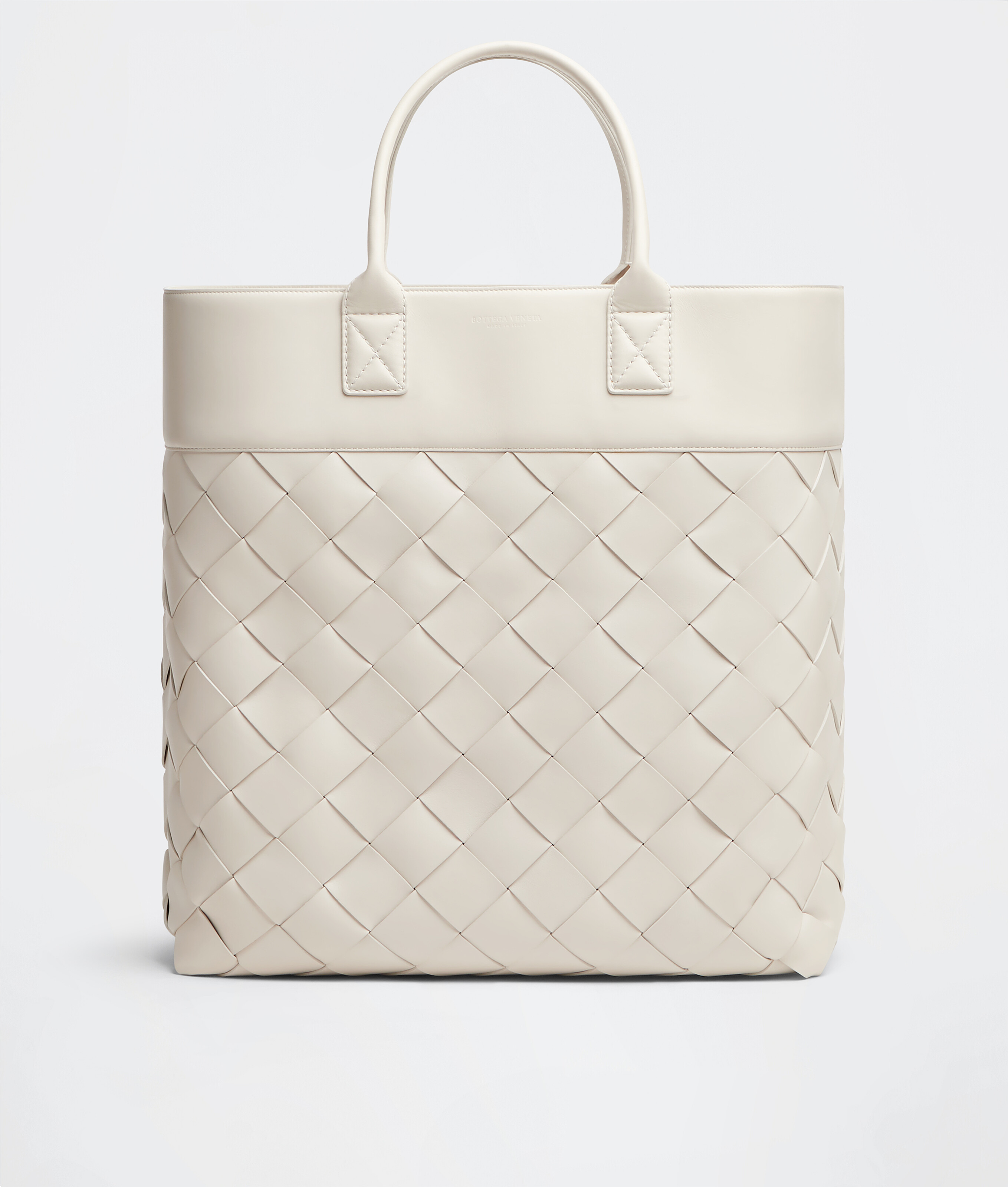
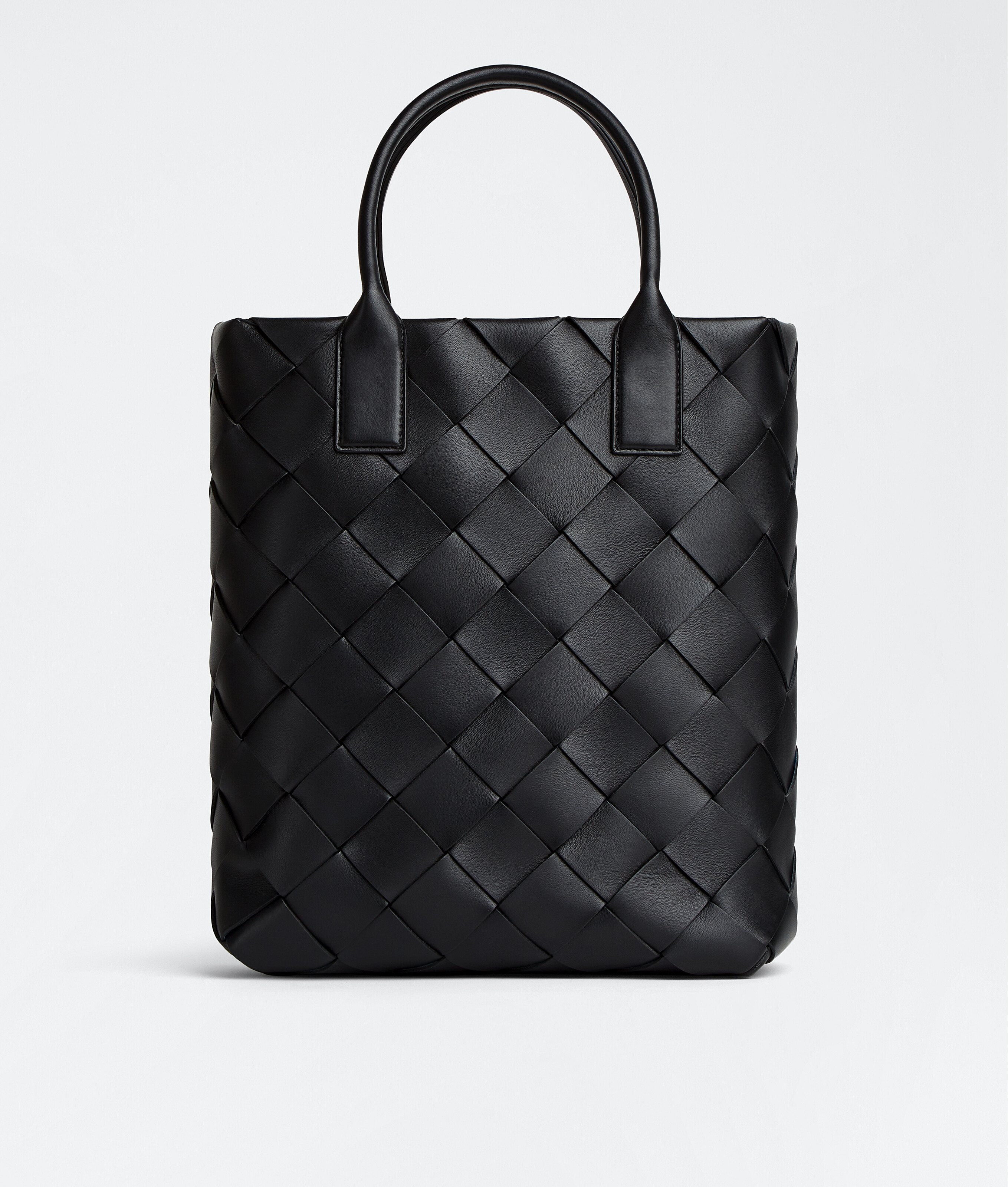
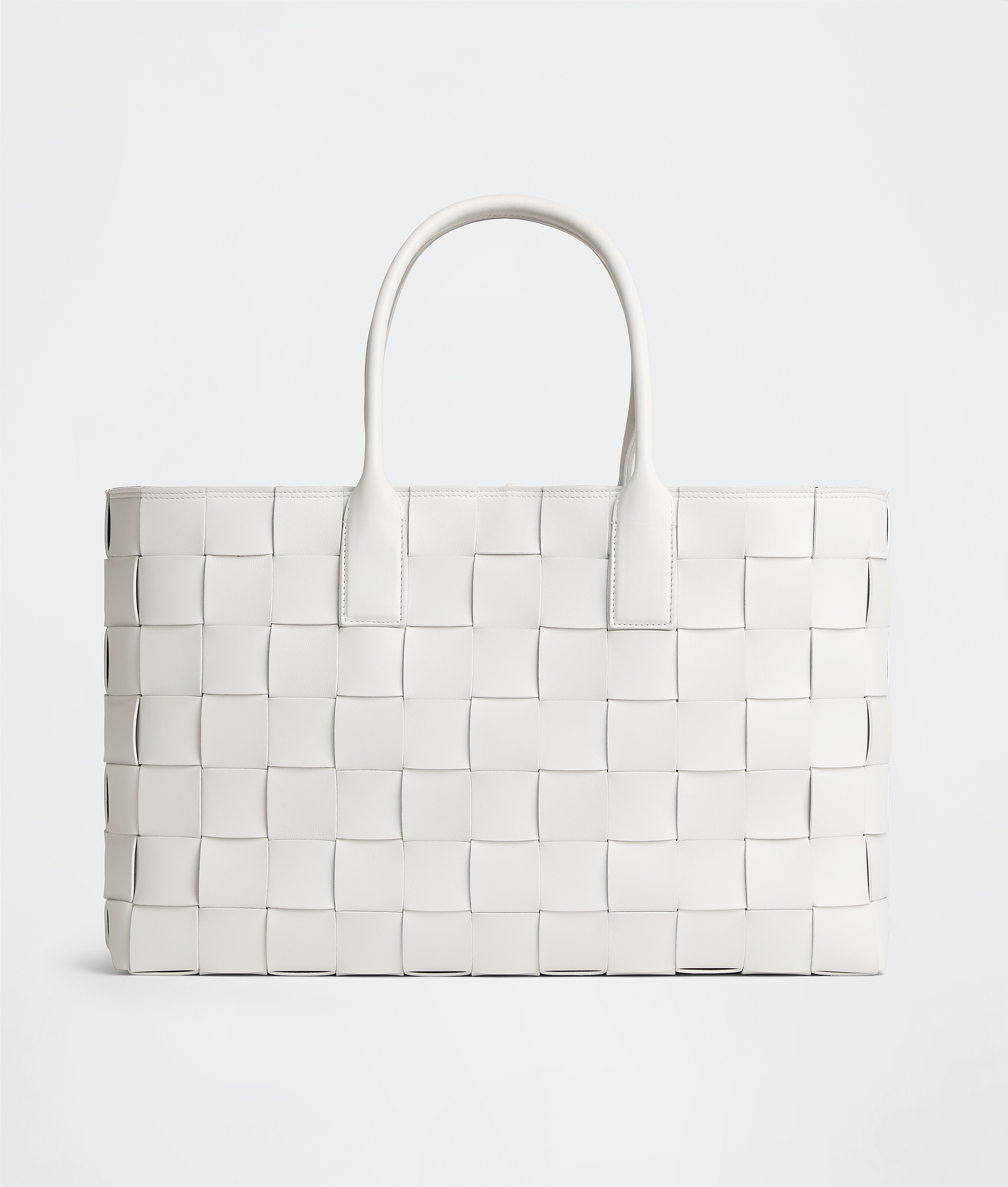
There is a photograph from 1978, somewhere in the archive, of a woman boarding a plane at Linate
There is a photograph from 1978, somewhere in the archive, of a woman boarding a plane at Linate. She carries a woven leather bag the colour of burnt sienna, no hardware, no logo. The bag looks soft enough to sleep on. It also looks like it cost more than the flight.
That bag, and the ten thousand like it that followed, built Bottega Veneta. Not through marketing. Through craft so legible you could spot it across a departure lounge.
Vicenza, 1966
Michele Taddei and Renzo Zengiaro opened the first atelier in the Veneto, a region already thick with leather workshops. The name was literal: Bottega Veneta translates to Venetian workshop. They hired artisans who knew intrecciato weaving, a technique that laced thin strips of nappa into a flexible, durable surface. No stitching showed. No branding either, at least not on the outside. The only logo sat inside, discreet, stamped into the lining.
The house made bags, small leather goods, luggage. It sold through department stores and a handful of boutiques. By the mid-seventies, American buyers were placing orders. The intrecciato became recognisable without announcing itself—a rare trick in an industry already tilting toward monograms and metal plaques. Bottega Veneta's tagline, coined later, was accurate: "When your own initials are enough."
The work was slow. A single Veneta bag required up to two days of weaving. The leather had to be supple enough to bend without cracking, firm enough to hold its shape under weight. Nappa worked. So did certain calf leathers, tumbled and buffed until they felt like cloth. The house didn't make status symbols. It made objects you wanted to touch.
By the early eighties, Bottega Veneta had boutiques in New York, Paris, Tokyo. It also had a problem: the intrecciato was easy to knock off. Counterfeiters flooded the market with woven vinyl. The house's discretion, once an asset, became a liability. Without loud branding, how do you prove provenance? Sales slipped. The founders sold to a group of investors in 1987. The house drifted through the nineties, changing hands twice more, losing coherence.
Tomas Maier, 2001
Gucci Group acquired Bottega Veneta in 2001 and installed Tomas Maier, a German designer who had worked at Hermès and Sonia Rykiel. Maier understood two things immediately: the intrecciato was non-negotiable, and everything else needed rebuilding.
He kept the weave. He expanded the colour range—not into brights, but into thirty shades of grey, rust, moss, slate. He introduced new leathers: cervo, a milled deerskin; crocodile, woven so tightly it looked like fabric from a distance. He designed the Cabat, an unlined tote that required sixteen hours of weaving and cost, at launch, around $4,000. It had no pockets, no zipper, no structure. It was also impossible to fake convincingly.
Maier's Bottega Veneta was quiet in a way that read, by the mid-2000s, as radical. No logo bags. No It-girl campaigns. No collaborations with streetwear brands or contemporary artists. The house showed at Milan Fashion Week but didn't chase trends. A Bottega coat from 2005 looked, in cut and cloth, much like one from 2015. This was intentional. Maier was building a wardrobe, not a series of viral moments.
The strategy worked. By 2010, Bottega Veneta's revenue had grown tenfold. The Knot clutch, introduced in 2001, became a red-carpet fixture without ever appearing in an ad. The Veneta hobo, a slouchy shoulder bag with a single twisted knot, sold steadily for over a decade. Celebrities carried them. So did bankers, gallerists, women who didn't want to be photographed holding the same bag as everyone else on their block.
Maier also understood that discretion required context. He opened ateliers in Vicenza and Montebello, hired more artisans, invested in training programmes. He shot campaigns in empty rooms with natural light, no models' faces visible, just hands holding bags or adjusting hems. The clothes themselves—soft trousers, unstructured blazers, slip dresses in silk or leather—were designed to move. Bottega Veneta under Maier felt like the opposite of fashion. It felt like dressing.
He left in 2018, after seventeen years. The house had become, by then, one of the most profitable in the Kering portfolio. It had also become predictable.
Daniel Lee, 2018
Daniel Lee was thirty-two when he took over. He had worked under Phoebe Philo at Céline, then spent time at Maison Margiela. He kept the intrecciato. He kept the no-logo stance. Then he changed nearly everything else.
Lee's first collection, for Spring 2019, included the Pouch: a clutch shaped like a softened rectangle, gathered at the top with a magnetic clasp. It looked, depending on the angle, like a cloud or a dumpling. It also looked unlike any bag Bottega Veneta had made before. The Pouch sold out within weeks. By the end of the year, it was everywhere—not in the logo-bag sense, but in the way the Cabat had been a decade earlier. You knew it when you saw it.
Lee introduced square-toed boots and sandals with padded straps, exaggerated in scale but wearable. He showed coats with sleeves that pooled at the wrist, trousers with pleats that broke in unexpected places. The colours stayed muted—cream, khaki, forest green—but the silhouettes were sharper, stranger. A Lee-era Bottega Veneta look could photograph flat and still feel three-dimensional in person, which is a hard thing to engineer.
He also leaned into the house's craft in ways that felt contemporary without being gimmicky. The intrecciato appeared on outerwear, on boots, on jewellery cast in silver to mimic woven leather. Lee showed bags made from a single piece of leather, no seams, shaped by hand over wooden forms. He brought back the Sardine, a boxy top-handle from the house's early years, and turned it into a bestseller by making it smaller and adding a detachable strap.
The work was still slow. A Kalimero bag—a gathered drawstring style introduced in 2020—required a full day of pleating and stitching. But Lee's Bottega Veneta moved faster in the market than Maier's ever had. The house opened a flagship in New York, expanded in Asia, started showing co-ed collections. Revenue grew by double digits. Lee won Designer of the Year at the British Fashion Awards in 2019.
He left in 2021. Kering didn't give a reason. The house went quiet for six months.
Matthieu Blazy, 2021–present
Matthieu Blazy had been Lee's right hand, overseeing design and development. When he was named creative director in November 2021, the industry assumed continuity. Blazy's first collection, for Fall 2022, made it clear he had his own ideas.
The intrecciato was still there, but treated differently—looser, more organic, sometimes frayed at the edges. Blazy introduced bags that looked unfinished, seams exposed, leather raw at the cut. He showed a coat made from scraps of previous collections, pieced together like a quilt. It shouldn't have worked. It did.
Blazy's Bottega Veneta is more material-focused than either Maier's or Lee's. He has used fish leather, paper-thin lambskin, denim woven to look like intrecciato. His silhouettes are softer than Lee's, less architectural, but no less specific. A Blazy jacket fits close through the shoulders and falls away at the waist. A Blazy skirt pools at the ankle but never drags. The clothes feel considered without feeling stiff.
The bags have followed suit. The Andiamo, introduced in 2023, is a structured top-handle with a curved base, somewhere between a doctor's bag and a lunch pail. It comes in calf, crocodile, and a woven leather-denim hybrid. The Gemelli, a clutch with two interlocking compartments, requires four artisans and sixteen hours to complete. Both styles sold strongly, but neither has achieved Pouch-level ubiquity. Blazy seems fine with that.
He has also leaned into the house's archive in ways that feel less like nostalgia and more like research. A recent collection included reimagined versions of bags from the 1970s, updated with new closures and proportions. Blazy has said, in interviews, that he wants Bottega Veneta to feel "alive," which is a vague word that makes sense when you see the clothes. They look like someone is about to put them on, or just took them off.
The house is in a different position now than it was under Maier or Lee. It is larger, more visible, more scrutinised. It also remains, somehow, the brand people mention when they want to signal that they are not interested in signalling. The intrecciato still works. So does the absence of a logo. So does the fact that a Bottega Veneta bag, even now, looks like something you could carry for twenty years without it reading as dated.
There is a photograph from the Fall 2023 runway, shot from the wings. A model adjusts the strap of an Andiamo bag, her hand pressing into the leather to settle it against her ribs. The bag is tobacco-brown, unlined, soft enough that it folds slightly under its own weight. It looks, in that moment, exactly like the bag from 1978. It also looks nothing like it.