There is a photograph — grainy, slightly overexposed — from 1997
There is a photograph — grainy, slightly overexposed — from 1997. Four people in identical raw-denim jeans, legs splayed, sitting on a concrete floor somewhere in Stockholm. The jeans are stiff, unwashed, cut with a deliberate crudeness that reads now as foundational. At the time, they were a joke. One hundred pairs, made as a gift for friends and collaborators of a creative collective that called itself ACNE: Ambition to Create Novel Expressions. The collective had no particular interest in fashion. The jeans sold out anyway.
Twenty-seven years later, Acne Studios operates forty-odd stores across three continents, shows twice a year in Paris, and commands the sort of quiet institutional respect usually reserved for houses with a century's head start. How a collective born in adjacent disciplines — film, graphic design, advertising — became a maison in the classical sense is a question of timing, intuition, and a willingness to treat naivety as method rather than liability.
L'origine : collectif, pas couturier
Jonny Johansson did not train as a designer. He studied economics, worked in advertising, and in 1996 co-founded ACNE with three others: Mikael Schiller, Jesper Kouthoofd, and Tomas Skoging. The collective took on film projects, directed music videos, built brand identities. The jeans were incidental — a Christmas present, sewn up by a small factory outside the city. But the fabric was right: thirteen-ounce selvage denim from Kuroki in Japan, untreated, with a red stitched label that read 'ACNE JEANS'. Friends wore them. Then friends of friends. By 1998, the collective had spun off a separate entity to handle what had become, against all intention, a fashion business.
What Acne Studios lacked in technical training it compensated for with a kind of intelligent blankness. Johansson, who assumed the role of creative director by default, approached garment-making as a problem of form and context rather than heritage or handcraft. Early collections leaned heavily on denim, outerwear, knitwear — categories that permitted improvisation without requiring couture-level facture. The aesthetic, if one could call it that, was Scandinavian in the pejorative sense: muted, boxy, slightly austere. But the fit was considered. The fabrics, increasingly, were not.
By the mid-2000s, Acne Studios had developed a vocabulary. Oversized blazers with dropped shoulders. Cropped trousers that broke just above the ankle. Mohair sweaters in shades of grey that somehow read as neither minimal nor maximal but occupied a third category altogether. The house opened its first store in Stockholm in 2003, a raw-concrete space on Norrmalmstorg that felt less like retail than like walking into someone's unfinished loft. No vitrines. No gilt. Just racks, light, and a sense that you had stumbled into something before it was fully ready.
L'ère déterminante : Paris, pastel, et une certaine idée du cool
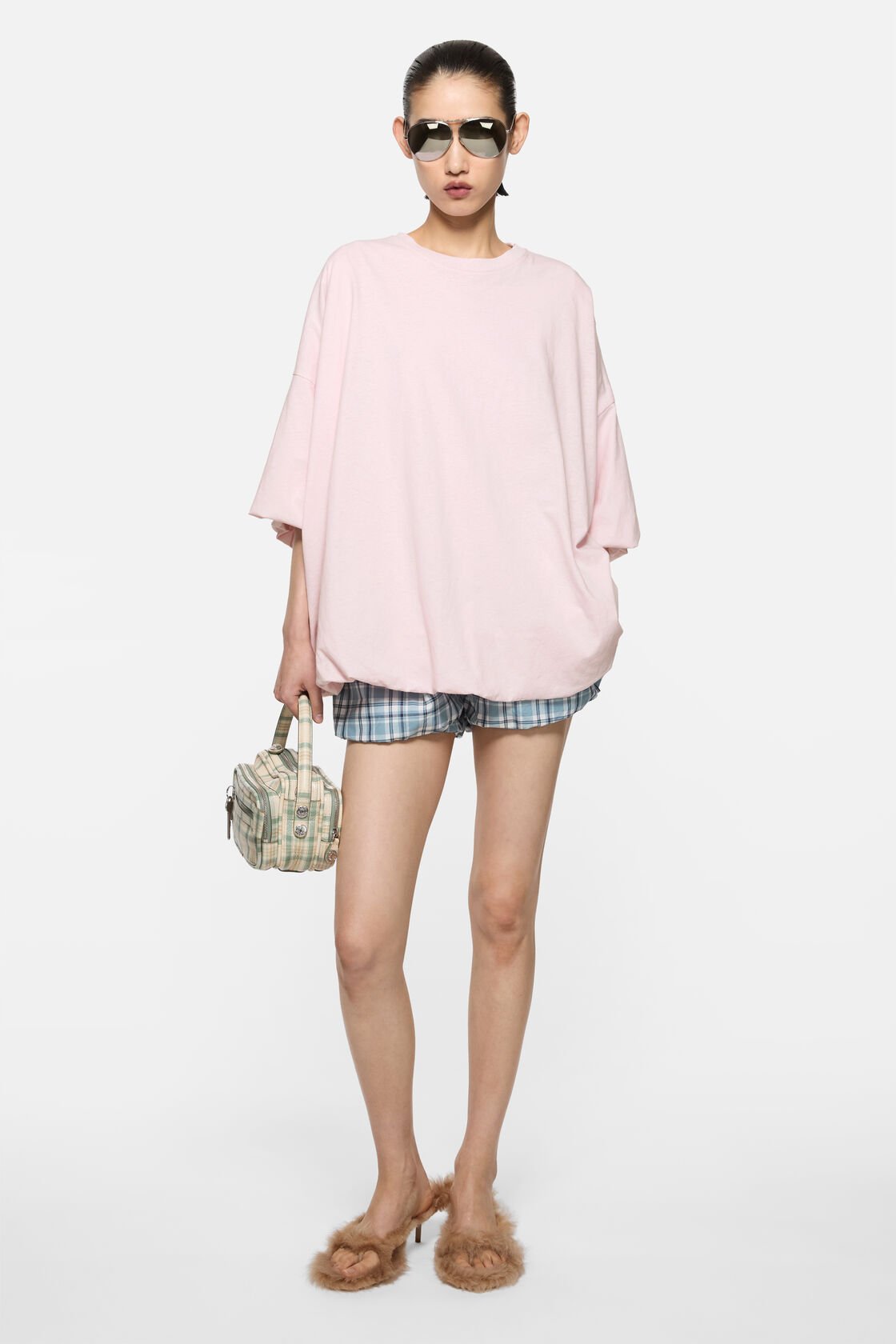
Acne Studios began showing in Paris in 2006. The decision was strategic — Stockholm, for all its design credibility, lacked the infrastructure and audience a growing house required. But the move also marked a shift in tone. Johansson, now working with a small in-house atelier, began to treat the runway not as a commercial preview but as a site for experiment. Colours crept in: dusty rose, powder blue, an occasional slash of canary yellow. Proportions grew stranger. A men's collection from 2012 featured trousers so wide they verged on skirts, paired with shrunken leather bombers that sat high on the waist. It should not have worked. It did.
What distinguished Acne Studios during this period — roughly 2008 to 2015 — was its refusal to perform coolness while somehow embodying it anyway. The clothes were awkward in ways that felt intentional. A scarf, for instance: the 'Canada' style, launched in 2010, was an oversized wool rectangle in a flat, saturated pink that became, inexplicably, ubiquitous. You saw it on stylists, on art students, on women in their fifties who had no particular interest in trends but recognised good cloth when they felt it. The scarf cost two hundred euros. It had no logo, no visible branding beyond a small woven label at the hem. It sold in the tens of thousands.
Johansson, in interviews from this era, often described his process as intuitive rather than intellectual. He did not reference archives or construct narratives around each collection. Instead, he worked from images, moods, fabrics he found compelling. A collection might begin with a photograph of Anita Pallenberg in 1968, or a swatch of Japanese denim, or the particular shade of green visible on a tiled wall in a Lisbon apartment. The result was clothing that felt specific without being legible — you could not quite place the reference, but you understood the gesture.
The house expanded rapidly. Stores in Tokyo, New York, London. Collaborations with Lanvin, with Fjällräven, with a rotating cast of artists and photographers who shared Acne Studios' sideways approach to branding. By 2015, the maison employed over two hundred people and generated annual revenues north of two hundred million euros. It had become, in other words, an institution. The question was whether it could remain interesting.
Maintenant : consolidation, et ce qui reste
In 2019, Acne Studios opened a flagship on the rue Saint-Honoré. The space, designed in collaboration with the British architect Max Lamb, featured poured-concrete floors, blackened-steel fixtures, and a staircase clad in pale oak that seemed to float without visible support. It was handsome, assured, expensive. It was also, one suspects, a declaration: we are no longer the scrappy collective from Stockholm. We are here.
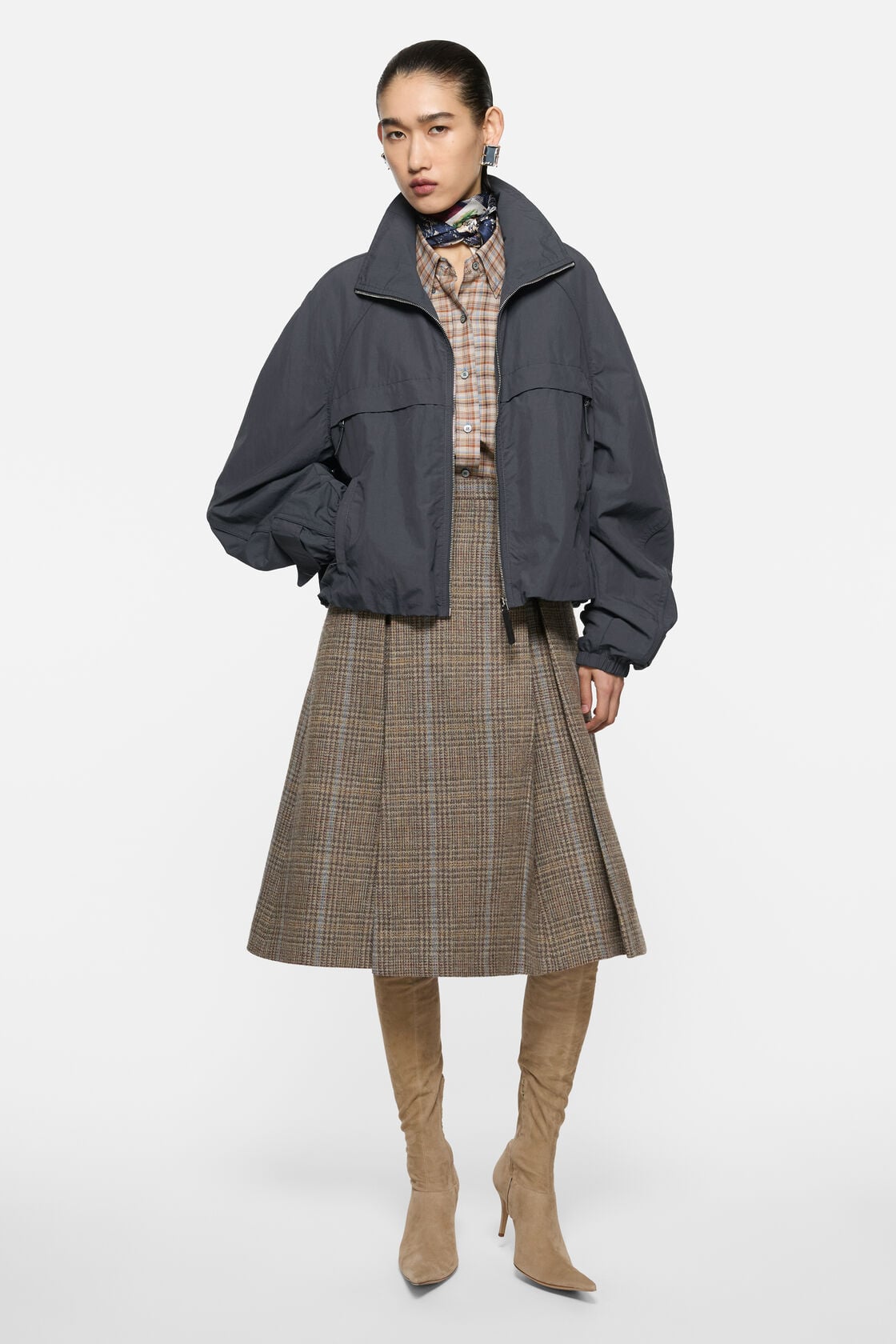
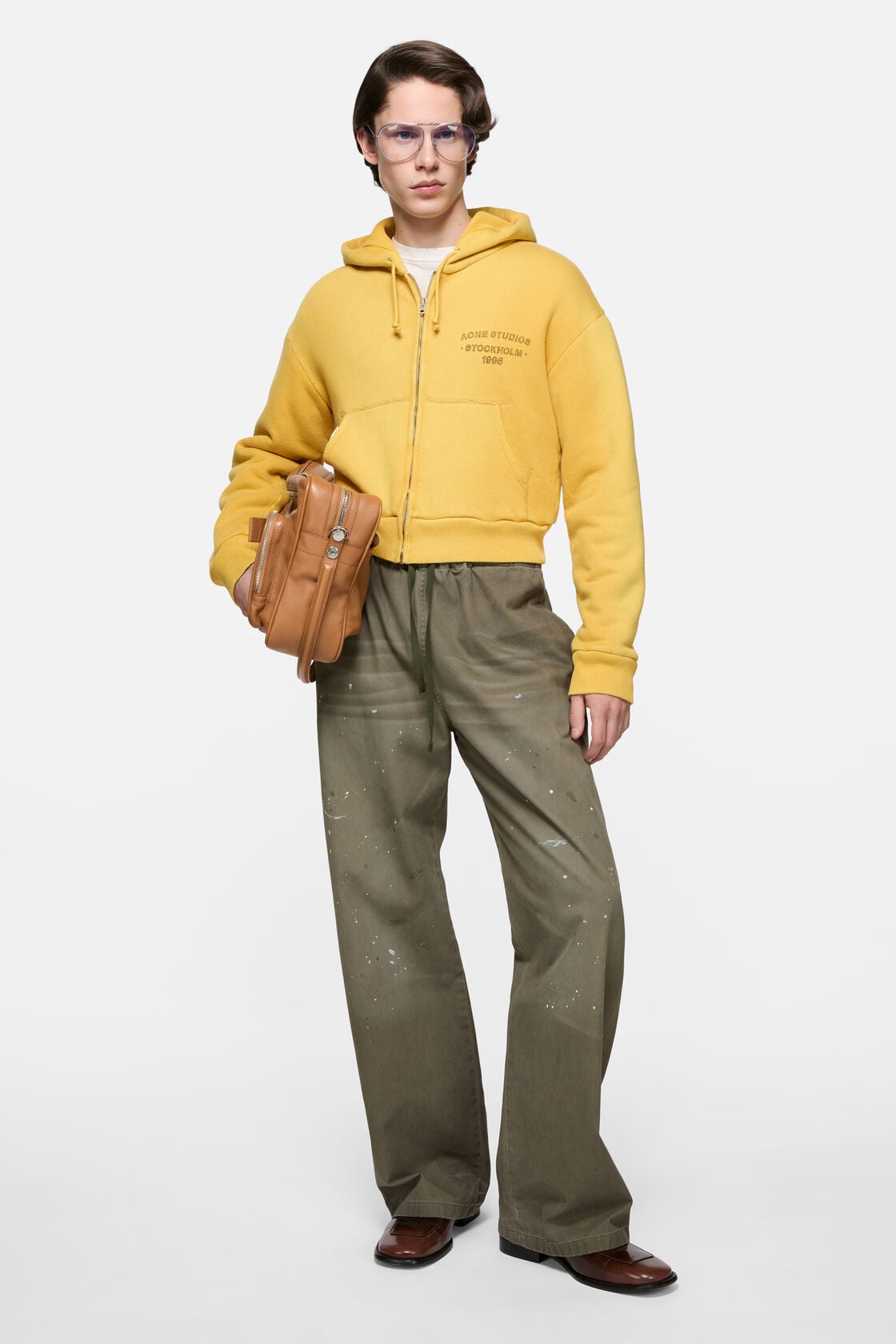
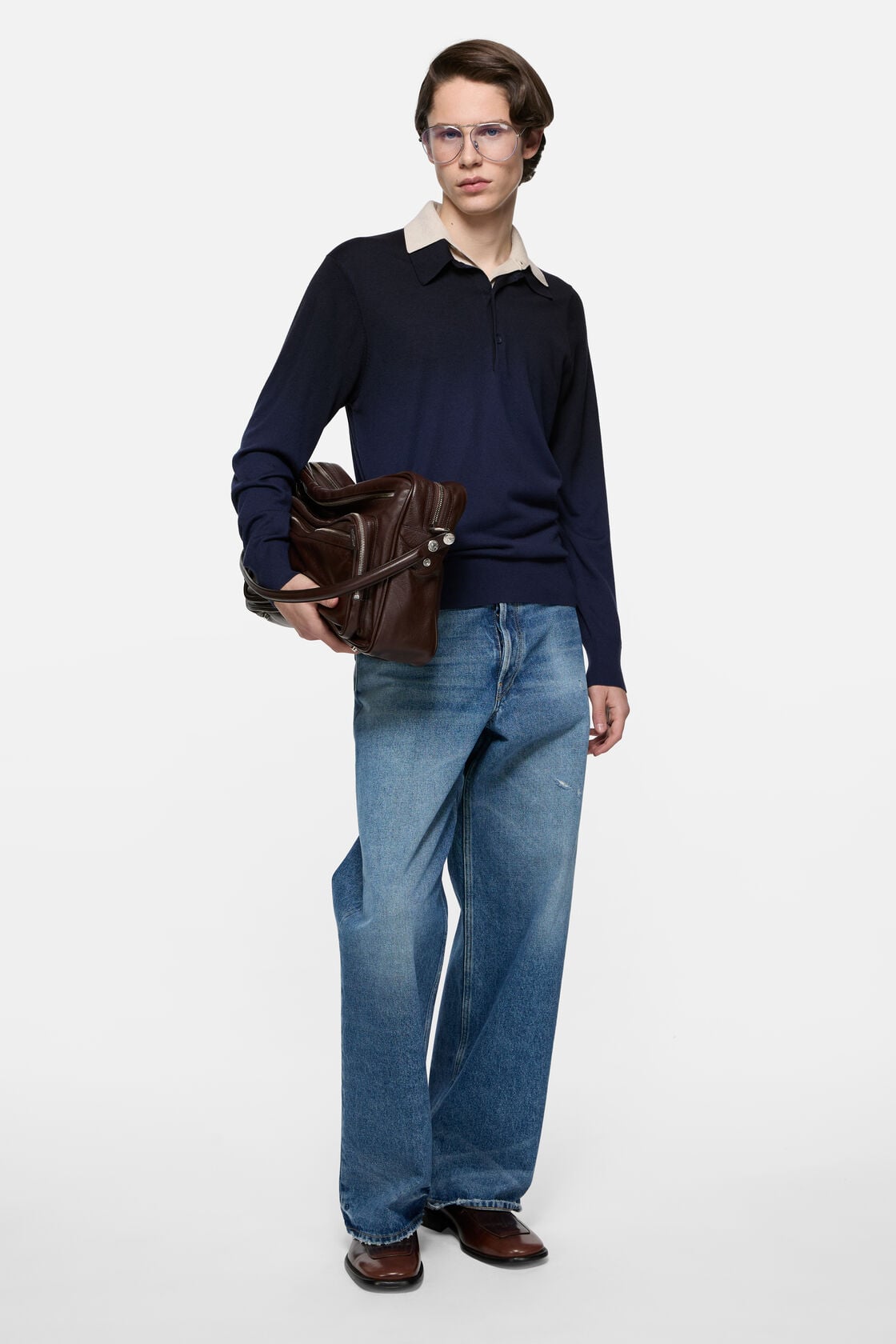
Johansson continues to design every collection, now working with a team of fifteen in a Paris atelier. The vocabulary has matured — sharper tailoring, more adventurous use of colour, an increased focus on leather and outerwear — but the underlying method remains consistent. He still begins with intuition. He still resists narrative. A recent men's collection featured oversized trench coats in washed navy cotton, paired with narrow trousers and chunky-soled derbies that recalled, without directly quoting, early-nineties rave culture. It was specific. It was also, crucially, wearable.
The house has not been immune to the pressures facing independent maisons in an era of consolidation. In 2024, rumours circulated — denied, then confirmed, then denied again — that Acne Studios was in talks with a larger group. Johansson, characteristically, declined to comment beyond noting that the maison remained "focused on the work." Whether that work can sustain itself outside the logic of conglomerate backing is an open question. What is not in question is the influence. You see it in the proportions favoured by younger designers, in the way certain shades of pink or grey have become shorthand for a particular kind of understated ambition, in the enduring presence of those raw-denim jeans, still in production, still cut to the original 1997 pattern.
There is another photograph, this one from a campaign shot in 2022. A model stands in an empty parking garage somewhere in Berlin, wearing a double-breasted coat in camel wool, trousers pooling slightly at the ankle, hands in pockets. The light is flat. The expression is neutral. It is not, by conventional measures, a beautiful image. But it holds. You look at it and understand, without needing it explained, what Acne Studios has always been after: not novelty for its own sake, but a way of making clothing that feels both considered and inevitable. Whether that constitutes a legacy or simply a very long run of good instincts is, perhaps, beside the point. The coat is still there. The concrete is still cold. The work continues.